Christopher Wool
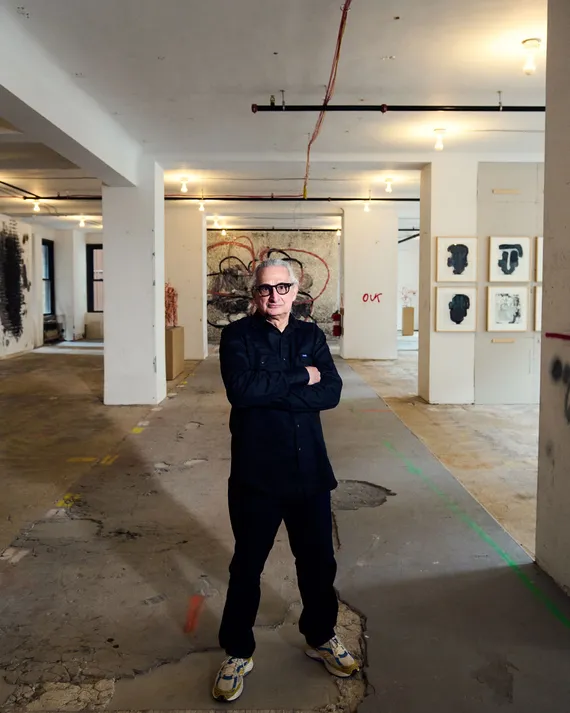
Christopher Wool: Language, Paint, Pure Freedom
Artist Spotlight · The Collection Editorial
“I want the painting to look like it was painted fast, even if it wasn't.”
Christopher Wool, interview with Robert Gober, 1993
Few living painters have so thoroughly rewired the conversation around what a picture can do, and right now, Christopher Wool feels more essential than ever. His retrospective at the Solomon R. Guggenheim Museum in New York, which traveled to the Los Angeles County Museum of Art in 2014, introduced a new generation of collectors and curators to the full sweep of his vision. In the years since, his presence in major institutional collections and at auction has only deepened, affirming what those who have followed his work since the 1980s already knew: Wool is one of the defining painters of his era, a figure who made language feel physical and abstraction feel urgent.
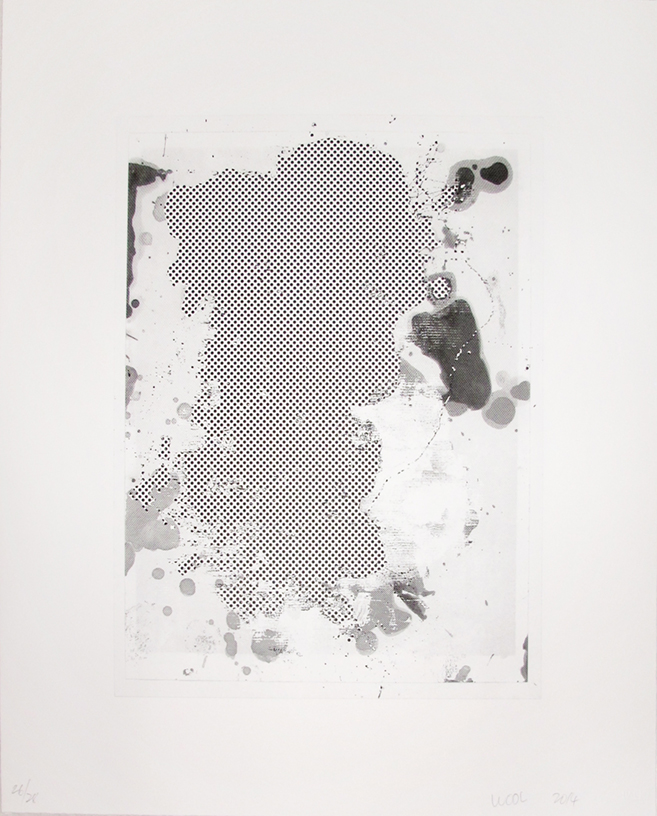
Christopher Wool
Portraits (B&W) 2, 2014
Wool was born in Boston in 1955 and came of age as an artist in New York City during one of its most creatively combustible periods. He arrived downtown in the late 1970s, when SoHo and the East Village were alive with noise, ambition, and a sense that the rules of contemporary art were up for grabs. The streets themselves were a kind of visual education, covered in graffiti, advertising, torn posters, and stenciled letters. Wool absorbed all of it.
He was never the kind of artist who looked to the academy for permission. He looked at the city, at pop culture, at the residue of industrial printing, and he asked what painting could borrow from those sources. His early work in the 1980s announced a sensibility unlike anything else in the New York scene. While neo expressionism was commanding galleries and auction houses, Wool was moving in a quieter, stranger direction.
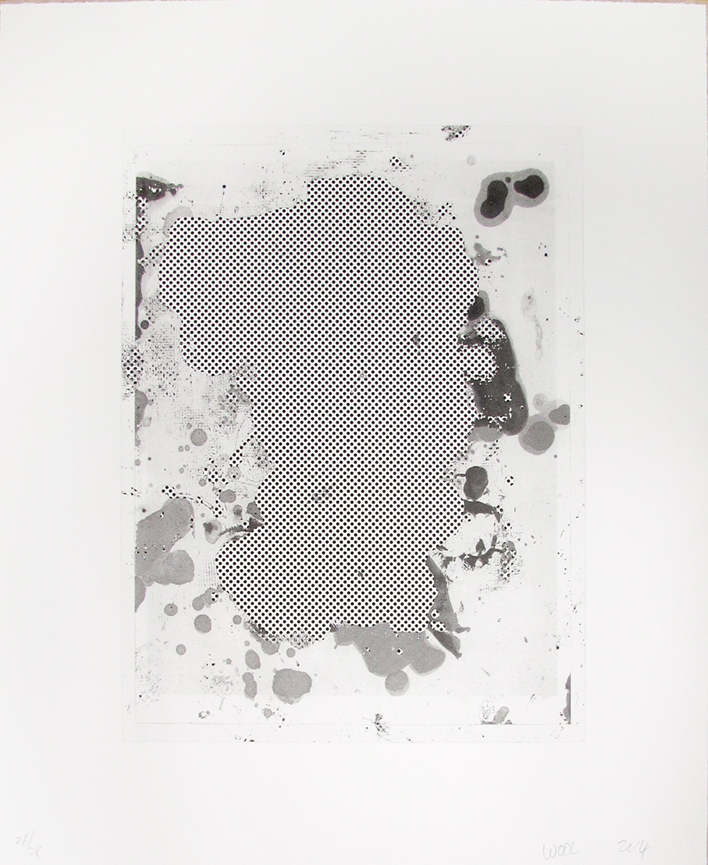
Christopher Wool
Portraits (B&W) 6, 2014
He began using rollers and house paint to apply decorative motifs, flowers and geometric patterns, onto aluminum panels, treating the surface of the painting like a wall rather than a canvas. These works had an unsettling flatness, a refusal to perform warmth or craft in the traditional sense. Then came the text paintings, and everything shifted. The word paintings that Wool produced from the late 1980s onward became the works that made him famous and that continue to define him in the public imagination.
“The best paintings are the ones that make you think they could have been done differently.”
Christopher Wool
Using stencils to apply blocky, compressed words across large aluminum panels, Wool created compositions that were simultaneously readable and abstract, familiar and deeply strange. Titles and phrases were run together without spacing, forcing viewers to slow down, to parse and decode. Works such as "And If You" from 1992, rendered in enamel on aluminum, exemplify this approach perfectly. The phrase is incomplete, suspended, a fragment that could belong to a sentence of tenderness or menace or bureaucratic indifference.
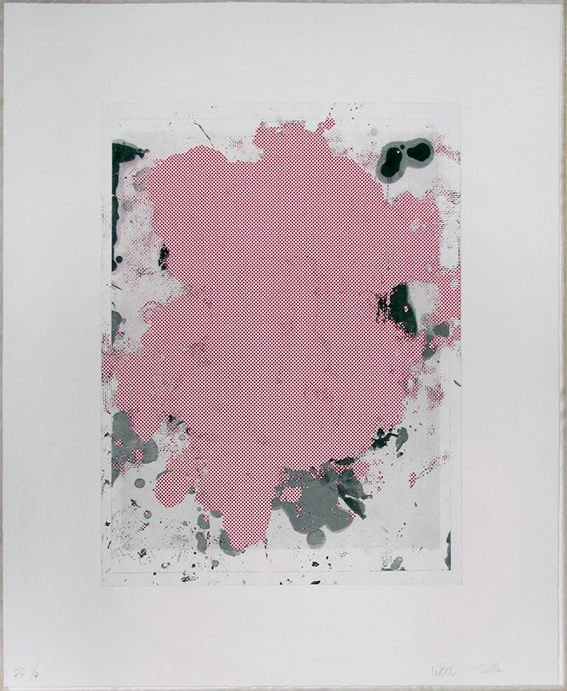
Christopher Wool
Portraits (Red) 3, 2014
That open endedness is precisely the point. Wool is not interested in delivering messages. He is interested in what happens to language when it is stripped of context and made to behave like paint. From the late 1990s onward, Wool expanded his practice in ways that surprised even devoted followers.
He began incorporating silkscreen, photographing his own paintings and printing them back onto new canvases, layering and disrupting the image in ways that questioned ideas of the original and the copy. He introduced gestural mark making more explicitly, allowing smears, drips, and erasures to coexist with his more mechanical processes. The resulting paintings felt like archeological sites, surfaces where multiple decisions and revisions were left visible rather than hidden. This willingness to expose process, to let the evidence of doubt and revision remain, is one of the things that places Wool in a lineage stretching back through Jasper Johns and Robert Rauschenberg.
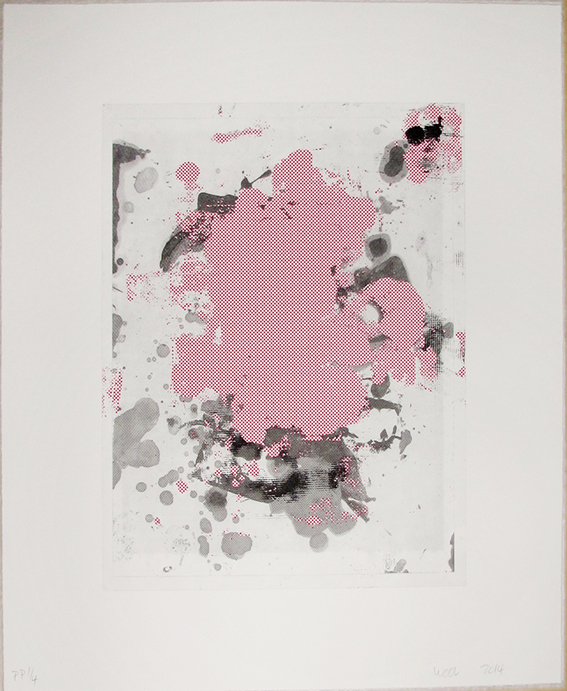
Christopher Wool
Portraits (Red) 4, 2014
He is in conversation with the entire history of American postwar painting, even as he refuses to be contained by it. The "Portraits" series of 2014, represented on The Collection by a striking suite of lithographs on Rives BFK White paper in both black and white and red, demonstrates how fluidly Wool moves between mediums while maintaining a completely consistent vision. These works carry the same compressed energy as the large scale paintings, the same sense that something has been reduced to its essential marks, that gesture and structure are in productive tension. As lithographs, they offer collectors a point of entry into Wool's world at a scale and price point that makes them genuinely accessible, without any compromise in the quality or intelligence of the work.
They are serious objects from a serious artist, made at the height of his powers. For collectors, Wool's market is one of the most consistently compelling in contemporary American art. His large text paintings have achieved significant results at major auction houses, with works selling well into the millions at Christie's, Sotheby's, and Phillips over the past two decades. The range of his output across paintings, drawings, and works on paper means that building a thoughtful collection around his practice is genuinely possible at multiple levels of the market.
Galerie Gisela Capitain in Cologne and Luhring Augustine in New York have long represented his work with care and intelligence, and works acquired through those galleries carry the kind of provenance that institutional collectors and serious private collectors both value. To understand Wool fully, it helps to think about him alongside artists who share his interest in the space between language and image, between concept and sensation. He belongs to a generation that also includes Robert Gober, Mike Kelley, and Richard Prince, artists who came of age after the great theoretical battles of the 1970s and found ways to make those ideas visceral and emotionally present. Like Prince, Wool is fascinated by appropriation and by the way meaning migrates through repetition.
Like Johns, he treats the familiar as something worth looking at slowly and carefully. But his voice is entirely his own. What makes Wool matter so profoundly today is his insistence on keeping painting strange. At a moment when the art world is flooded with work that aspires to comfort and legibility, his paintings offer resistance.
They ask questions rather than providing answers. They place language in the body of a painting and let the two fight it out. For anyone building a collection around the history of contemporary American art, engaging with Wool is not optional. He is one of the essential figures, a painter who has spent four decades proving that there is still something genuinely new to discover in the act of putting marks on a surface.
Explore books about Christopher Wool