Charles Mayton
Charles Mayton Paints the World We Scroll
Artist Spotlight · The Collection Editorial
Something is shifting in contemporary painting, and Charles Mayton is at the center of it. The New York based artist has been generating sustained and serious attention among collectors and curators drawn to work that refuses easy categorization, occupying a charged territory between the painterly and the digital, the handmade and the appropriated. His canvases and sculptural objects arrive at a moment when questions about image proliferation, screen culture, and the saturation of visual information have never felt more urgent, and Mayton addresses those questions with a rigor and wit that sets him apart from peers working adjacent themes. Mayton works from New York, a city whose restless energy and layered visual ecology seem to permeate every surface he touches.
Charles Mayton
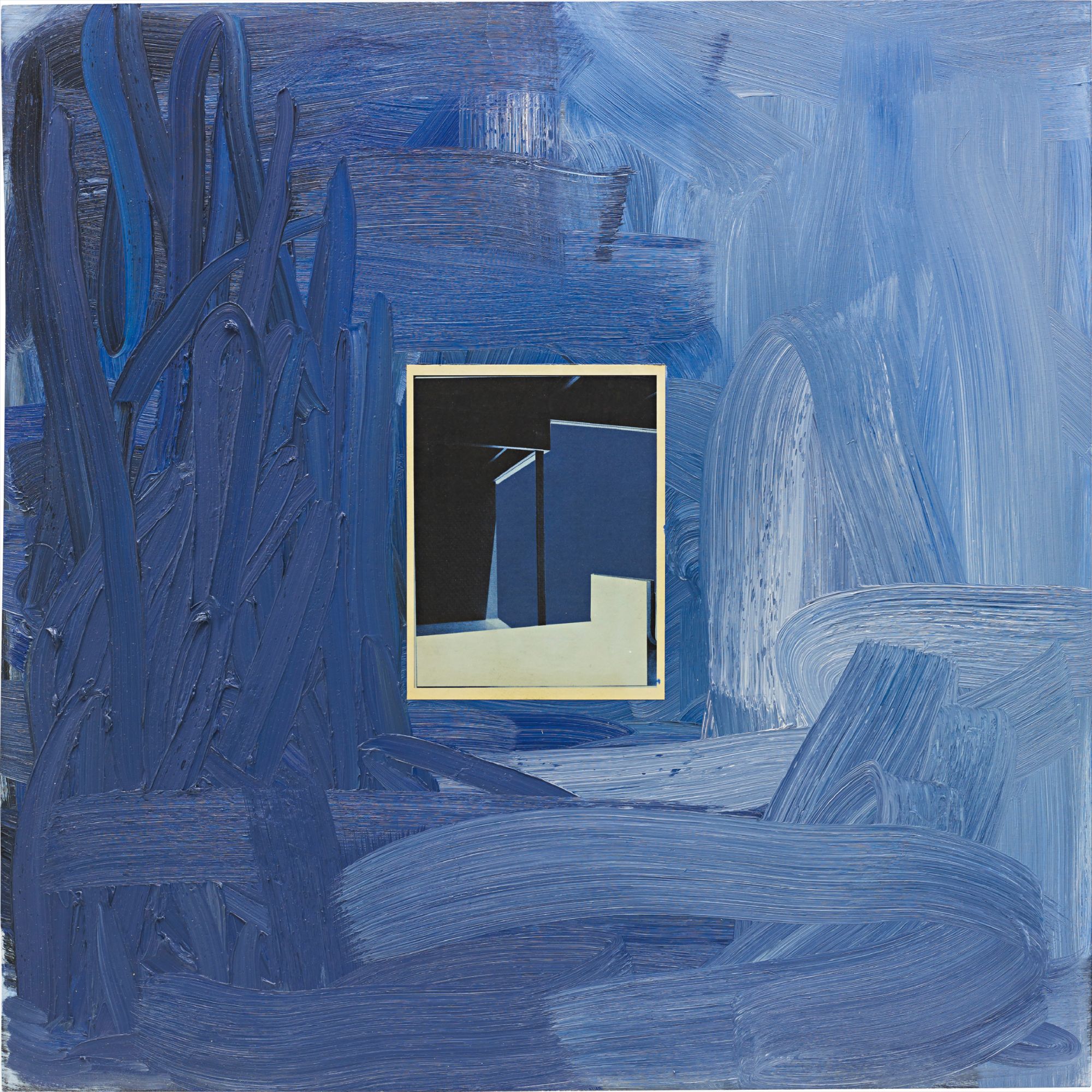
Nice Room (Blue Interior)
While the specifics of his early formation remain quietly held, what emerges clearly through his practice is a deep fluency in art history alongside an equally deep immersion in the textures of contemporary digital life. He is an artist who has clearly looked long and hard at painting, at theory, and at the endless churn of images that populate screens and feeds and shared folders. That dual literacy is not incidental to his work. It is the engine of it.
Mayton's practice is rooted in strategies of appropriation and détournement, a term borrowed from the Situationist International that describes the repurposing of existing cultural material to expose or subvert its original meaning. Where artists of the Pictures Generation, figures like Sherrie Levine, Richard Prince, and Cindy Sherman, turned their critical gaze on the mass media imagery of the late twentieth century, Mayton inherits that lineage and redirects it toward the visual vernacular of the internet age. The comparison is not merely flattering. It locates his practice within one of the most intellectually serious traditions in postwar art, a tradition concerned with how images construct reality and how representation shapes power.
Charles Mayton
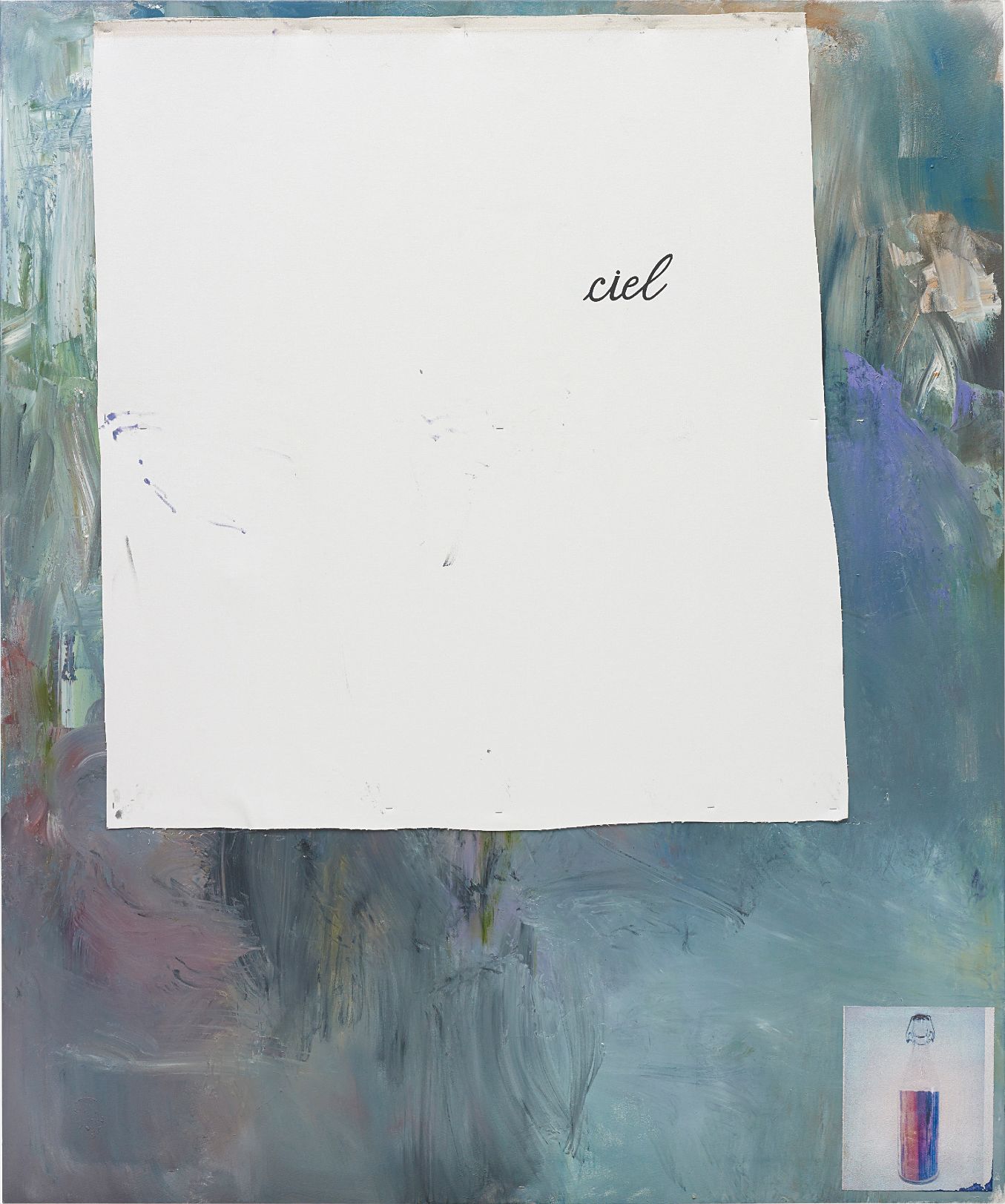
La Traversee difficile....looter's follies
What distinguishes Mayton within that tradition is his commitment to materiality. He is not a conceptualist working at a remove from physical making. His works are objects, genuinely and insistently so, and the tension between their conceptual scaffolding and their tactile presence is where much of their energy lives. Take "Nice Room (Blue Interior)", one of his most discussed works, executed in oil and collage on a cut hollow core door.
The choice of support is not decorative. A hollow core door is the most generic of domestic objects, mass produced, interchangeable, a thing found in rental apartments and suburban homes across the country. By painting on it, Mayton collapses the distance between the aspirational imagery of interior design culture, the curated rooms that circulate endlessly on social platforms and in lifestyle media, and the mundane physical reality of how most people actually live. The blue of the interior is at once seductive and slightly off, familiar and estranging.
Charles Mayton
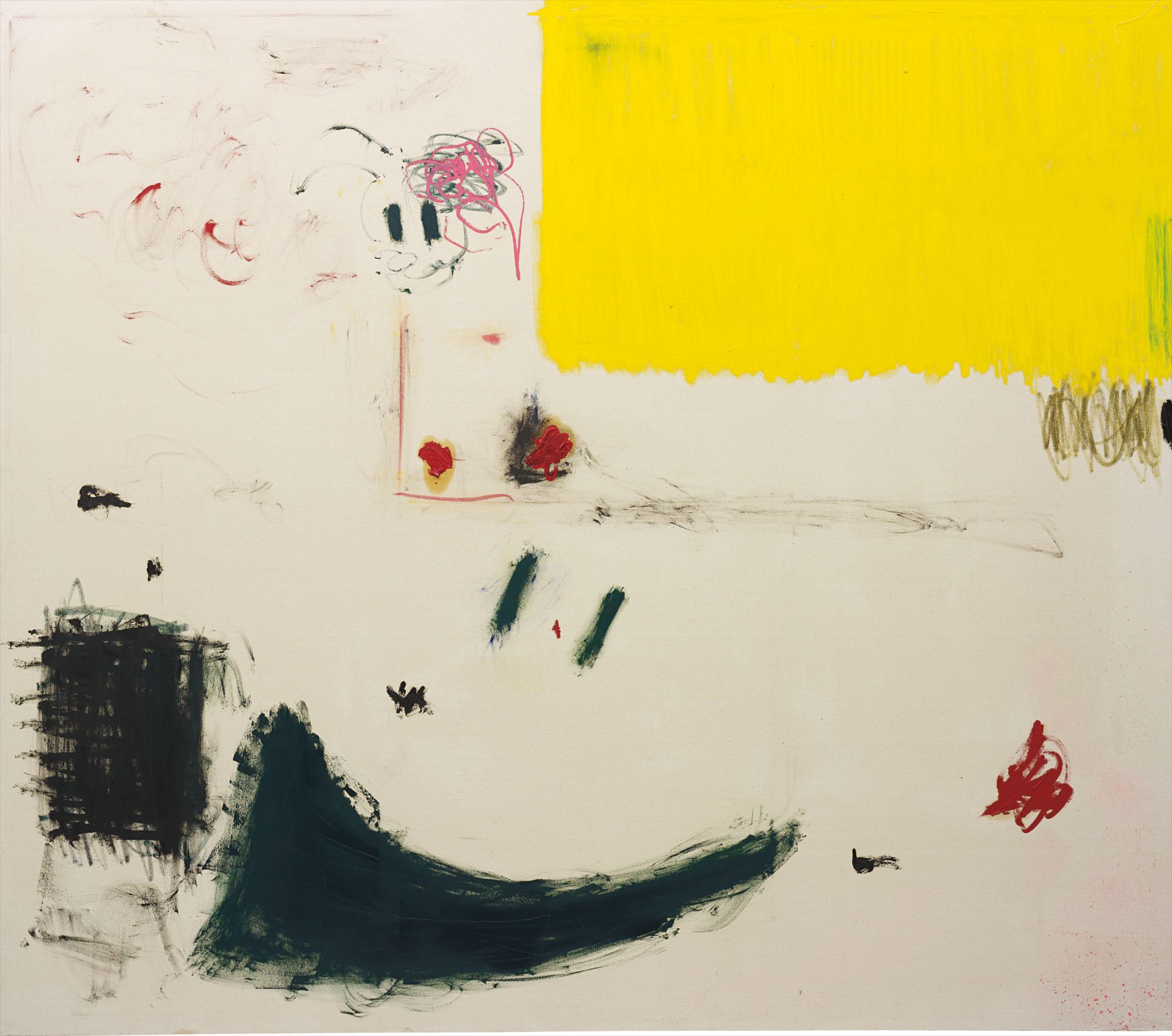
Flotsam Opus
"La Traversee difficile....looter's follies" extends this thinking into even more layered formal territory. The work brings together inkjet print on sandpaper, staples, and oil on canvas, a combination that reads as almost confrontationally eclectic until you sit with it and begin to understand its internal logic. The title nods toward René Magritte's 1926 painting "La Traversée difficile", a surrealist seascape that hovers between menace and absurdity, and Mayton's reclamation of that reference feels apt.
His practice, like Surrealism at its best, is interested in the uncanny life of ordinary images, in what happens when familiar visual material is displaced from its original context and made to behave strangely. The sandpaper as substrate is a choice that rewards attention: it abrades, it resists, it introduces friction into what might otherwise be a smooth act of appropriation. The word "looter" in the title carries its own freight, raising questions about who takes images, from where, and to what end. "Flotsam Opus" rounds out a view of Mayton's practice with its suggestion of accumulation and drift, the oceanic metaphor of flotsam pointing toward the experience of navigating an internet that produces images faster than any individual can process or make meaning from them.
The word "opus" complicates that reading with a note of ambition and formal seriousness, as if to insist that even within the noise, there is composition, there is intention, there is art. It is a characteristically Mayton move: the titles alone reward extended contemplation. For collectors approaching Mayton's work, the appeal is layered. On one level, these are paintings and objects of genuine visual sophistication, works that hold the wall with authority and reward sustained looking.
On another level, they represent a serious engagement with some of the most pressing conversations in contemporary art and culture. Collectors who have built around artists working in appropriation, materiality, and media critique will find in Mayton a natural and intellectually coherent addition to a collection. His works are made with care and conceptual precision, and they are priced at a moment when the artist's trajectory is clearly ascending. Acquiring work now, before that trajectory fully resolves into institutional recognition, is the kind of opportunity that serious collectors understand.
Mayton belongs to a broader contemporary conversation that includes artists such as Seth Price, whose work similarly interrogates the movement of images through digital and physical space, and Wade Guyton, who has explored the tension between painterly tradition and mechanical reproduction. One might also think of Josh Kline or Kate Steciw, artists who engage with consumer culture and digital imagery through hybrid material practices. Mayton is in distinguished company, and his work holds its own within that context with real confidence. What ultimately makes Charles Mayton an artist to watch, and to collect, is the sense that his practice is genuinely alive to the moment we are all living in.
He is not nostalgic for a pre digital world, nor is he uncritically celebratory of the one we inhabit. He is, instead, a precise and thoughtful observer of what it means to exist inside an economy of images that never stops producing, circulating, and consuming itself. His paintings and objects create space for reflection within that condition, and they do so with formal intelligence and a dry, knowing humor that feels entirely his own. That combination of critical depth and aesthetic pleasure is rare, and it is what will ensure that Mayton's work continues to matter as the culture he is responding to keeps changing around him.