Carlos Cruz-Diez
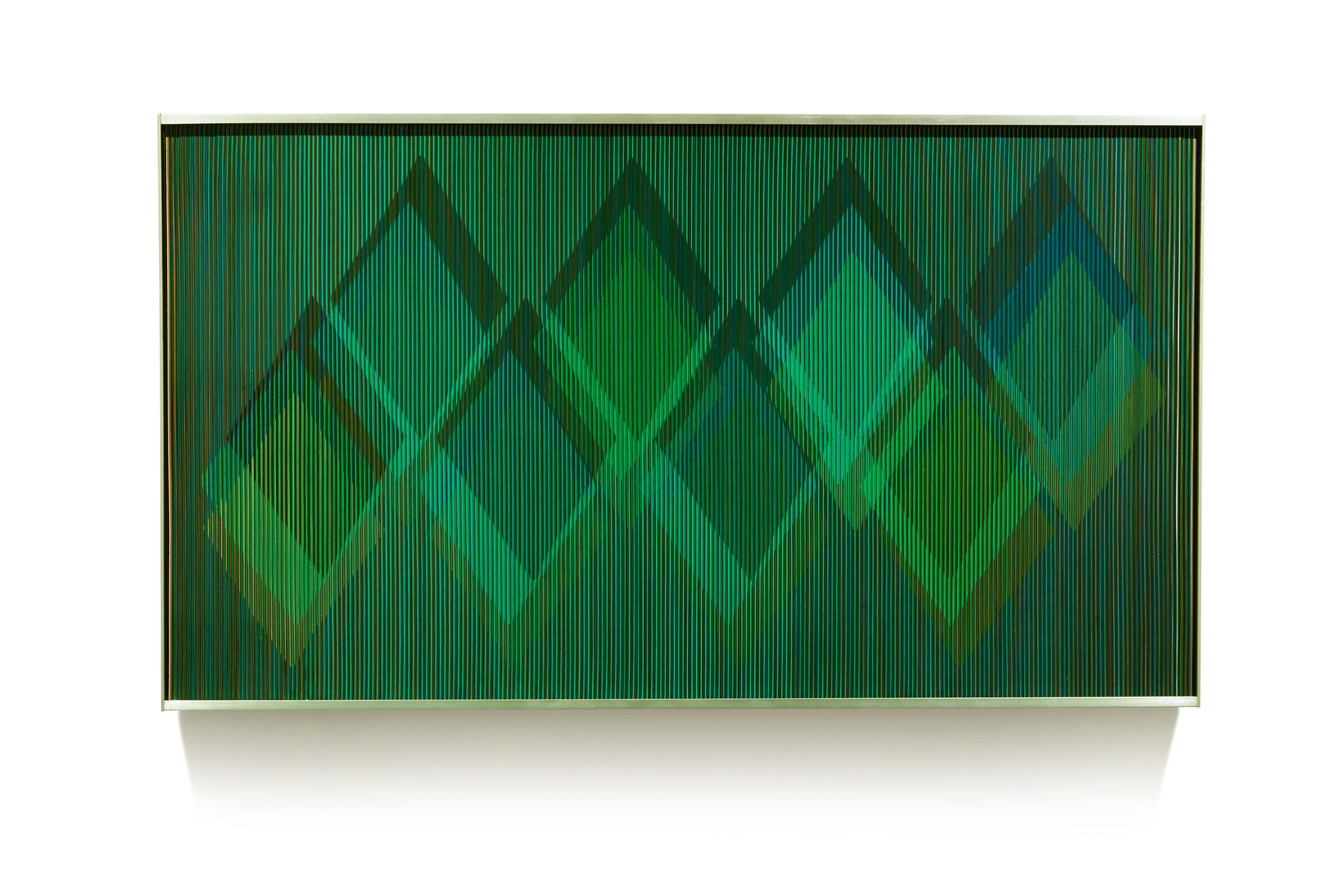
Carlos Cruz-Diez Made Color Come Alive
Artist Spotlight · The Collection Editorial
“Color is a situation, not a thing. It exists only in time, in space, and in the viewer's perception.”
Carlos Cruz-Diez
Stand in front of a Carlos Cruz Diez Physichromie and something unexpected happens. The color changes. Not because the light in the room has shifted, not because your eyes are tired, but because you moved, because you are alive and present in front of the work, and the work is responding to you in kind. This quality, so immediate and so physical, explains why major institutions from MoMA to Tate Modern to the Centre Pompidou have returned to his practice again and again, and why his 2019 retrospective at the Musée d'Art moderne de la Ville de Paris felt less like a farewell to a great career and more like a celebration of ideas still gathering momentum.
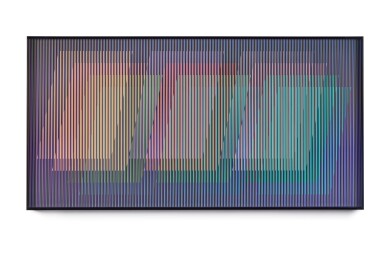
Carlos Cruz-Diez
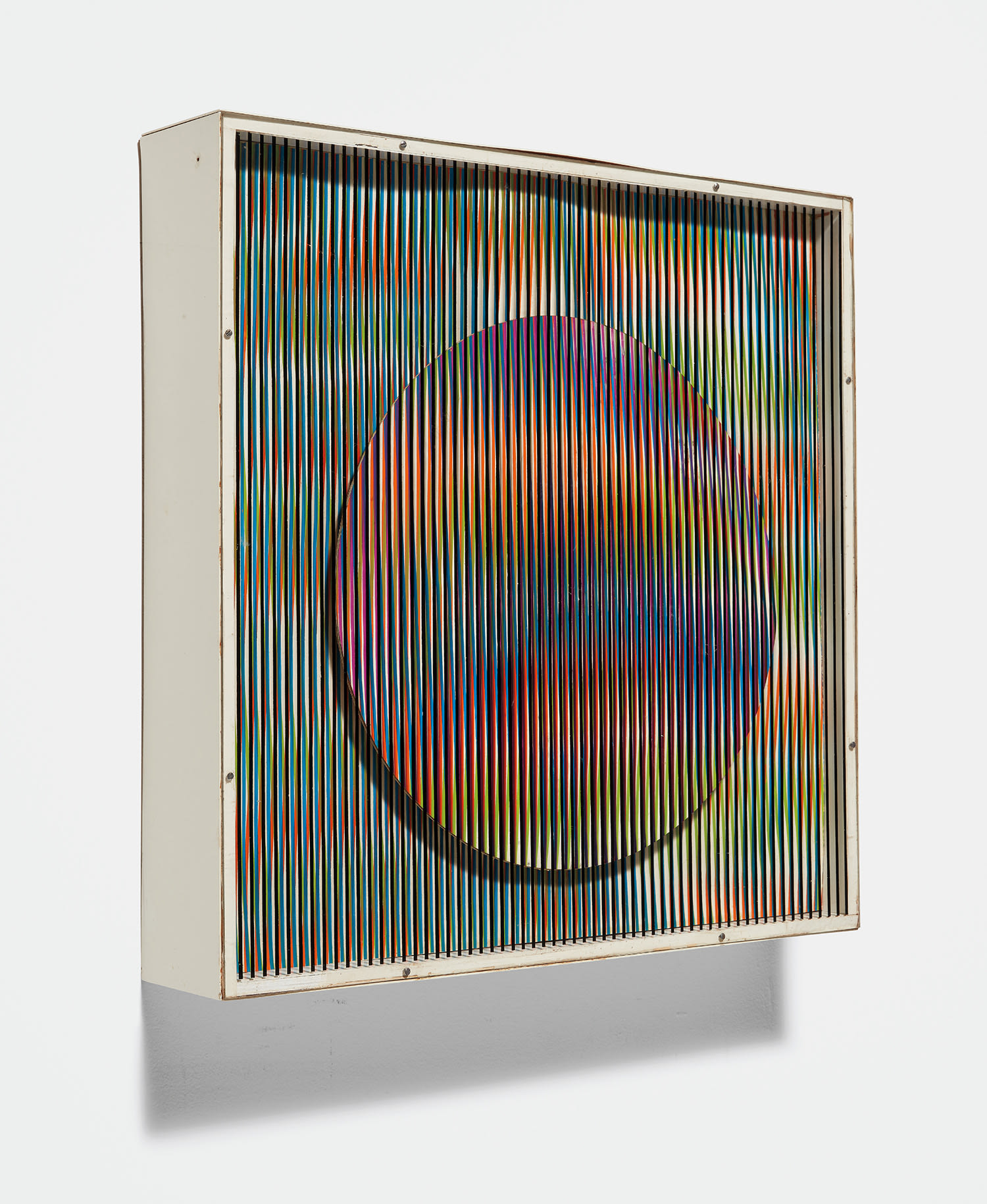
Chromointerférence Mécanique, 1970
Carlos Cruz Diez was born in Caracas, Venezuela, in 1923, and the city shaped him in ways that never left his practice. He trained at the Escuela de Artes Plásticas y Artes Aplicadas de Caracas through the 1940s, working in commercial illustration and graphic design while absorbing the visual energy of a rapidly modernizing Latin American capital. That commercial grounding gave him something academically trained painters sometimes lack: a deep, practical understanding of how color behaves in reproduction, in print, in the world outside the gallery. It is no accident that some of his most celebrated editions, including the landmark Transchromies portfolio published by Éditions Denise René in Paris, carry the precision and the sensory intelligence of a maker who understood both the fine art object and the printed image with equal fluency.
His move to Paris in 1960 proved decisive. The city was then the nerve center of kinetic and optical art, a moment when artists across Europe and Latin America were challenging the static picture plane with rigorous, almost scientific investigations into perception. Cruz Diez found his people in Paris, exhibiting with Galerie Denise René, the legendary gallery that had championed geometric abstraction and kinetic work since the postwar years and that represented, among others, Victor Vasarely and Jesús Rafael Soto. Cruz Diez had known Soto from Caracas, and the two men, alongside Alejandro Otero, formed a remarkable constellation of Venezuelan artists who between them redefined what painting could do with light, movement, and structure.
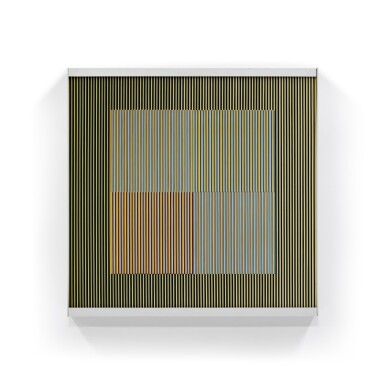
Carlos Cruz-Diez
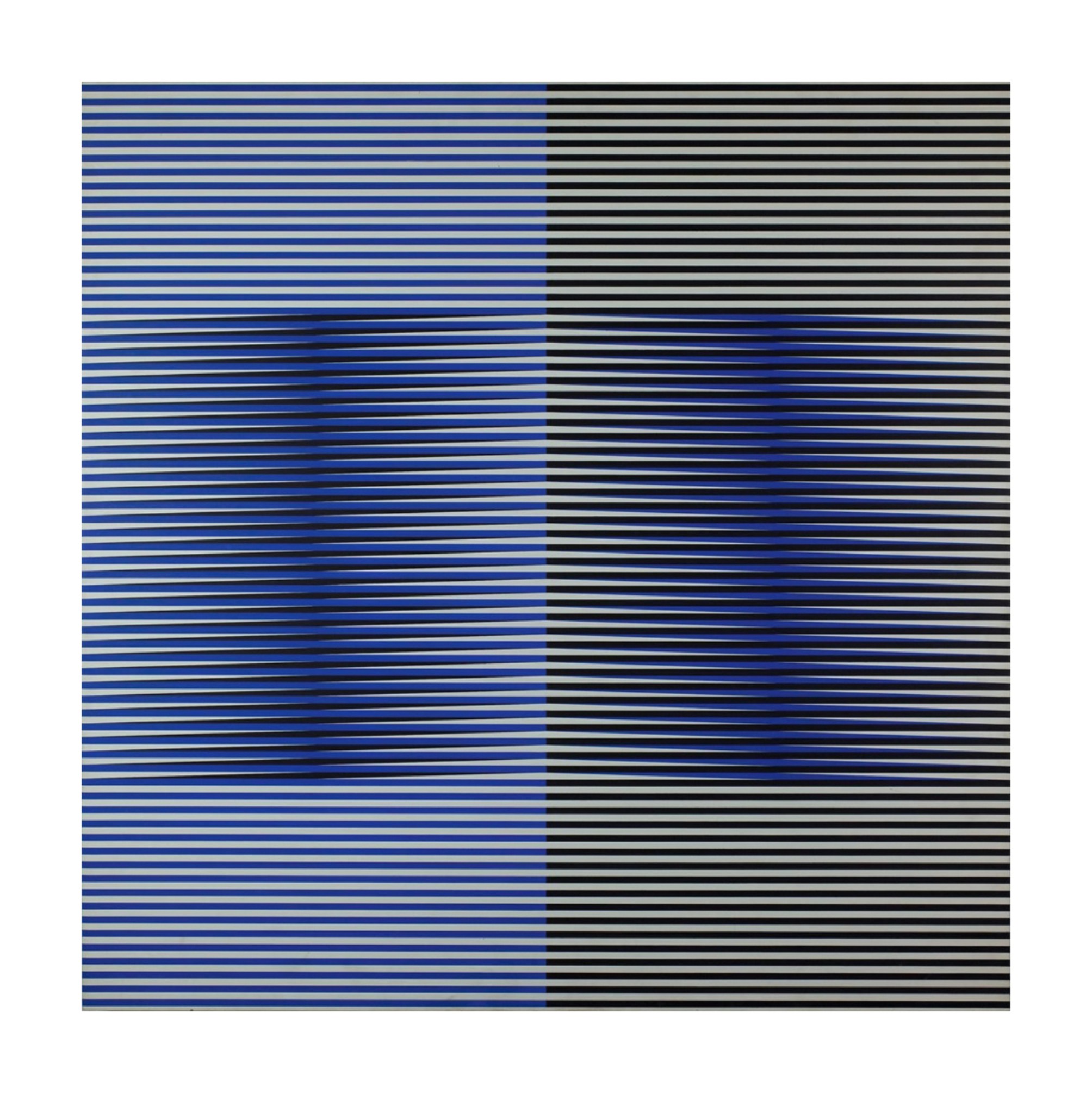
Inducción cromática, Serie A No. 2/4, 1979
But Cruz Diez was pursuing something distinct, something more radical in its focus: he was not interested in movement for its own sake. He was interested in color as an autonomous reality, a phenomenon that exists independently of form or object. This conviction produced three interconnected bodies of work that define his legacy. The Physichromies, begun in 1959, are constructions of colored plastic and cardboard elements fixed to a panel in precise vertical sequences.
“I am not interested in making beautiful objects. I am interested in making situations where color happens.”
Carlos Cruz-Diez, interview
As the viewer moves, the cells of color shift, overlap, and generate entirely new hues that exist nowhere in the physical work itself. They are not painted onto the surface. They are induced, summoned by the geometry of the structure and the biology of the eye. The Chromosaturations, first developed in the 1960s, take this logic to its environmental extreme: entire rooms bathed in pure red, green, or blue light, stripping away every visual reference point until color becomes the total environment.
Carlos Cruz-Diez
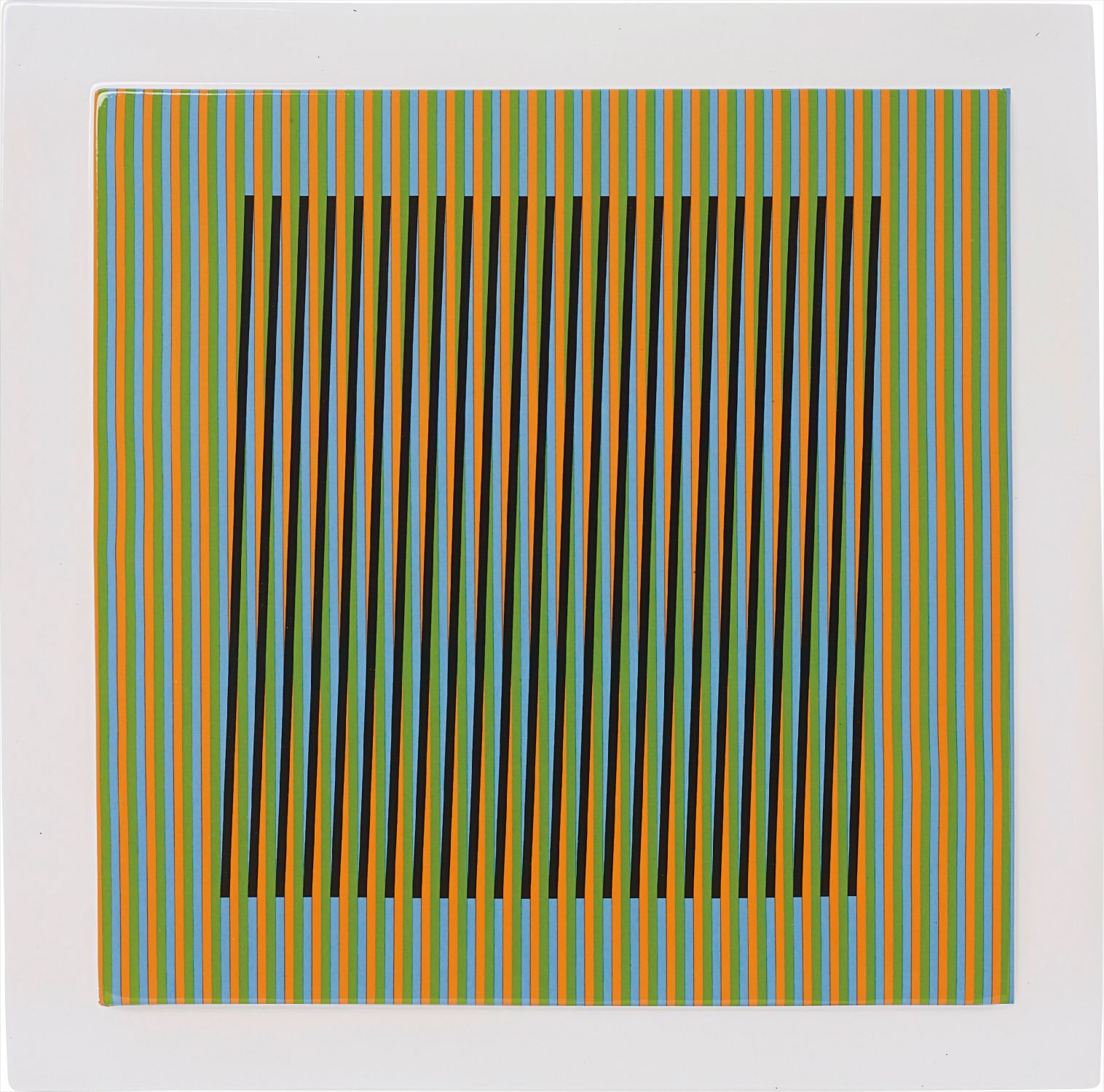
Céramique no. 8
And the Inductions Chromatiques explore how adjacent colors modify one another across a surface, making the eye itself a kind of participant in the completion of the work. Together these three strands constitute a coherent, lifelong philosophical argument about the nature of seeing. For collectors, the works Cruz Diez left behind represent one of the most intellectually rewarding and visually sustaining bodies of work in postwar art. The silkscreen editions, including the Transchromies portfolio from Éditions Denise René and the extraordinary Chromointerférence works printed on layered Plexiglas mounted to aluminium, demonstrate that his ideas translate fully into the multiple format without any loss of experiential power.
These are not documentation of an idea. They are the idea itself, fully realized. The Physichromies on panel, built from casein, cardboard, and plastic elements, are among the most sought works from the primary body of his practice, and pieces from the 1960s and 1970s carry particular weight in the market. His work has appeared consistently at Christie's, Sotheby's, and Phillips, with strong results reflecting sustained institutional and private demand across Europe, North America, and Latin America.
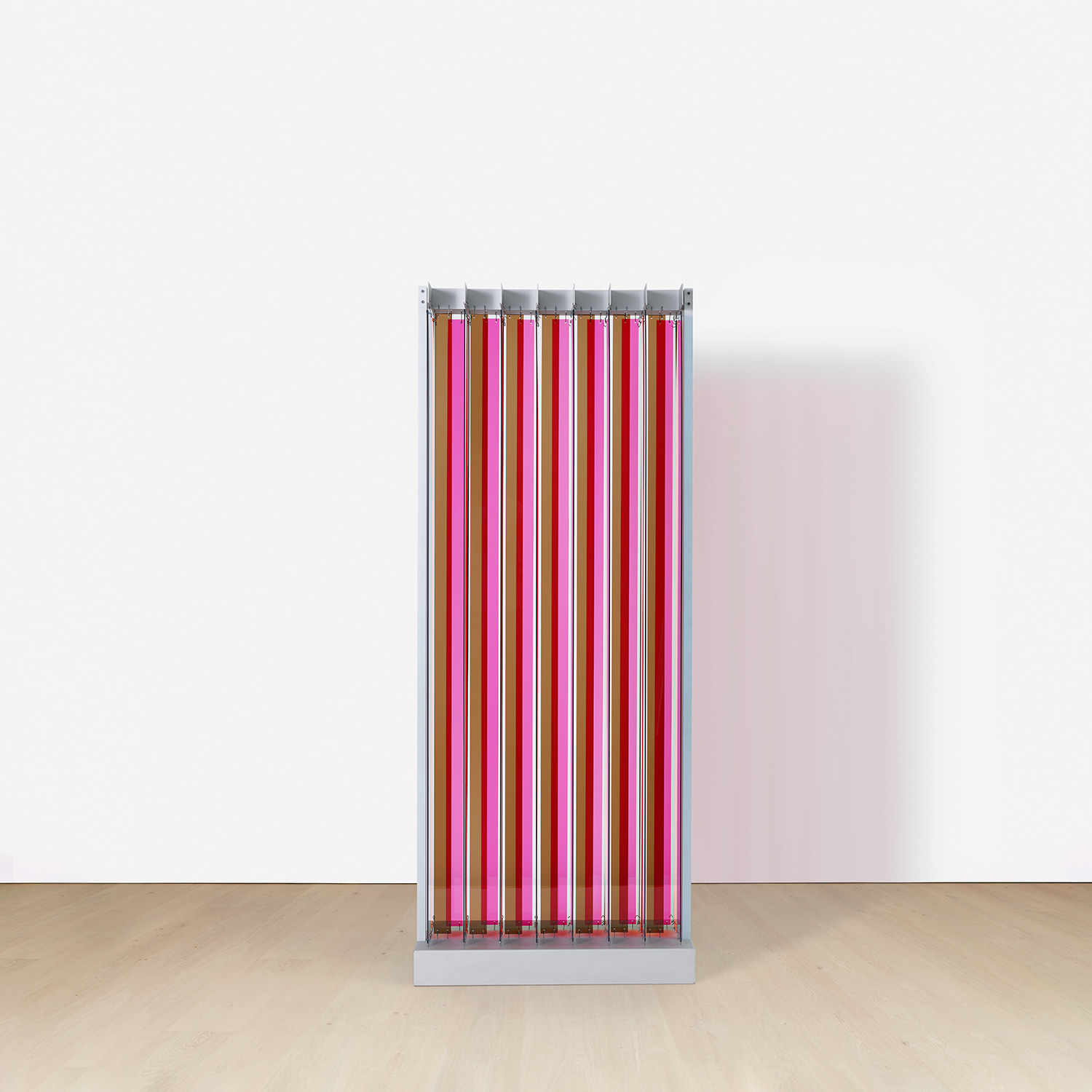
Carlos Cruz-Diez
(on a label affixed to the reverse)chromatography on, 2015
The aluminium silkscreen works from the early 1980s, such as the Color Aditivo Permutable series, offer a compelling entry point for collectors drawn to the rigour of his research at a scale and price appropriate to a broader range of collections. To place Cruz Diez in art historical context is to understand him as part of a genuinely international postwar project. His closest affinities are with the Op Art current most visible in the work of Bridget Riley in Britain and Vasarely in France, as well as with the kinetic sensibilities of Soto and the broader GRAV collective in Paris, which Cruz Diez participated in alongside François Morellet and Julio Le Parc. But where many Op artists treated optical illusion as the destination, Cruz Diez treated it as a starting point for a deeper inquiry into what color actually is and what it does to us.
His work anticipates the light and space installations of James Turrell and the immersive color environments that have become central to contemporary art discourse. In this sense he was ahead of a conversation the art world is still having. Carlos Cruz Diez passed away in Paris in July 2019, at the age of 95, having worked with undiminished intensity almost until the end. His foundation, established in Paris and deeply active in preserving and extending his legacy, continues to oversee the documentation and authentication of his practice.
Museums are still acquiring. Collectors are still discovering. The ideas he spent a lifetime refining, that color is not decoration, not background, not mood, but a living reality that acts upon us and changes with us, feel more urgent now than they did when he first began. In a world saturated with screens and simulated environments, the radical honesty of a Cruz Diez Physichromie, its insistence that what you see depends on where you stand and how you move, reads as both a formal achievement and a quiet lesson in attention.
That is the rarest kind of art: work that rewards the viewer who slows down and simply looks.
Featured Works
Explore books about Carlos Cruz-Diez