Callum Innes
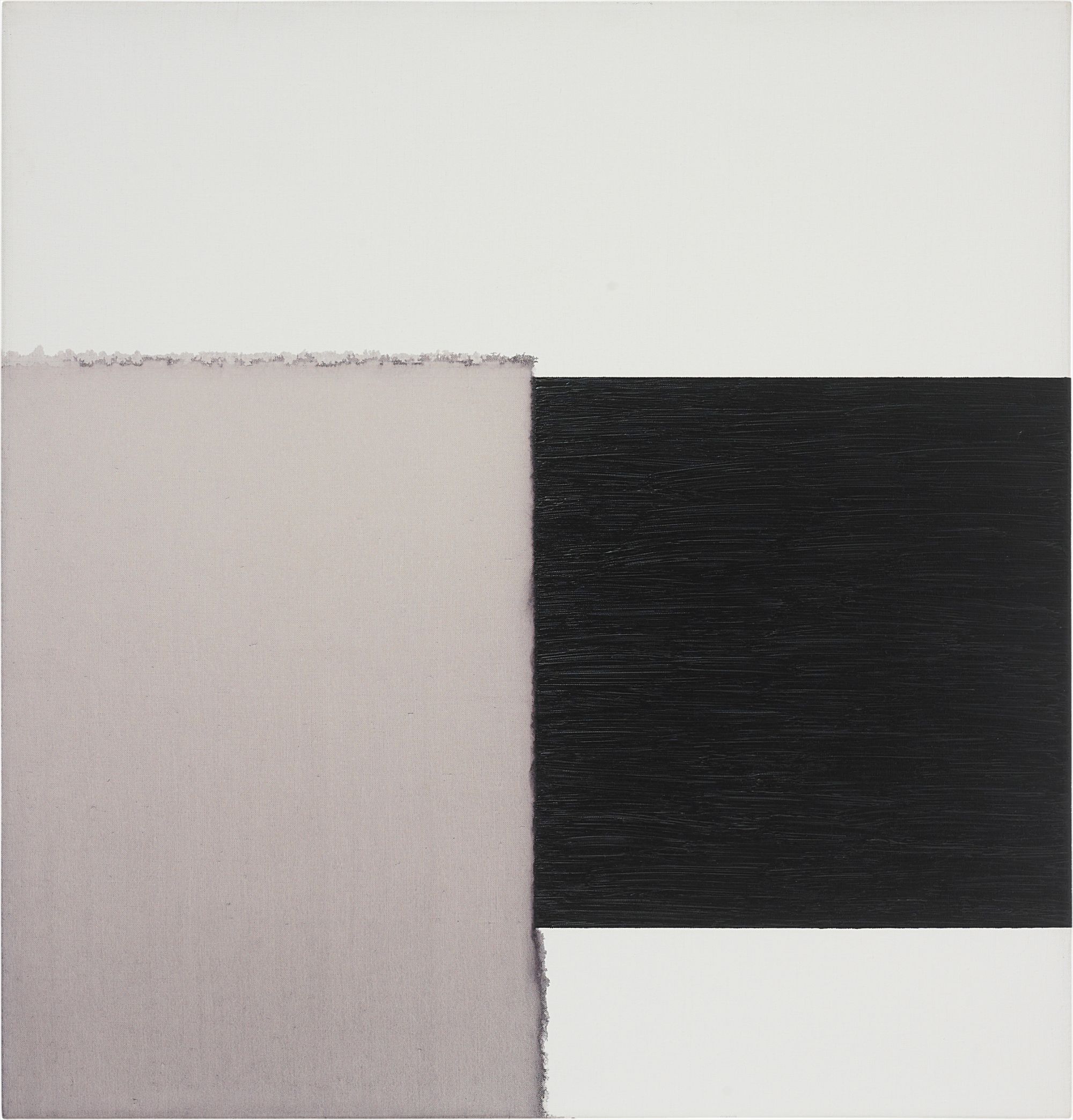
Callum Innes: Where Light Learns to Breathe
Artist Spotlight · The Collection Editorial
In the autumn of 2023, the Scottish National Gallery of Modern Art reaffirmed what the international art world has quietly understood for decades: Callum Innes is among the most important abstract painters working today. His canvases, luminous and spare, have a way of stopping conversation in a room. They ask something of the viewer that very few works dare to ask, which is simply to be still. That quality, so rare and so precisely cultivated, has made Innes one of the most sought after painters of his generation.
Callum Innes
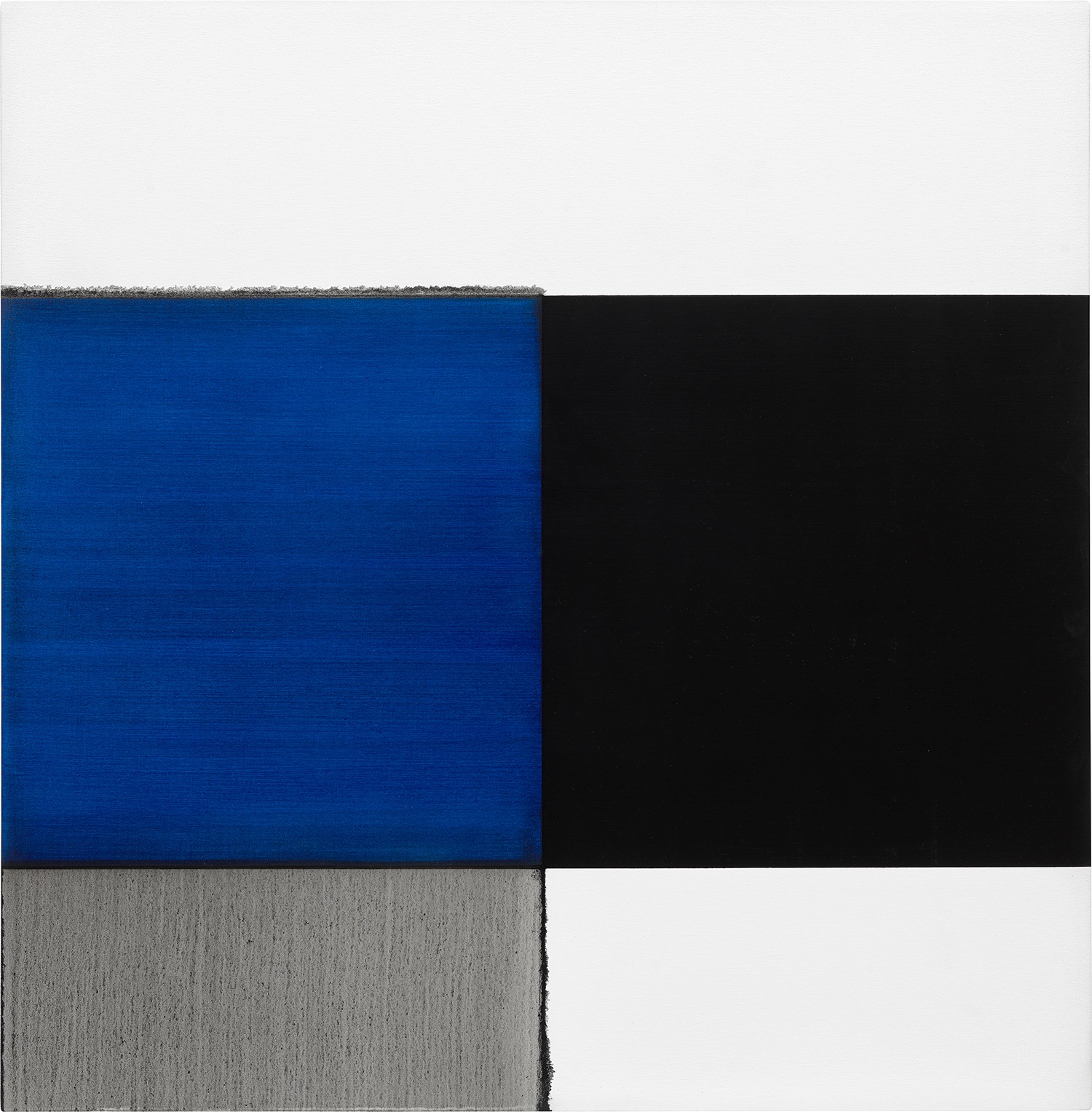
Exposed Painting Cobalt Blue, 2008
Innes was born in Edinburgh in 1962, and the Scottish capital shaped him in ways both visible and invisible. Edinburgh is a city of contrasts, of dark stone and northern light, of intellectual seriousness and romantic landscape tradition. He studied at Gray's School of Art in Aberdeen before completing his postgraduate training at Edinburgh College of Art, where he absorbed the rigorous legacy of Scottish painting while simultaneously reaching toward something more international in its ambitions. The influence of the European abstract tradition, particularly the meditative quietude of artists working in Germany and Scandinavia, found a natural resonance with the temperament he was already developing.
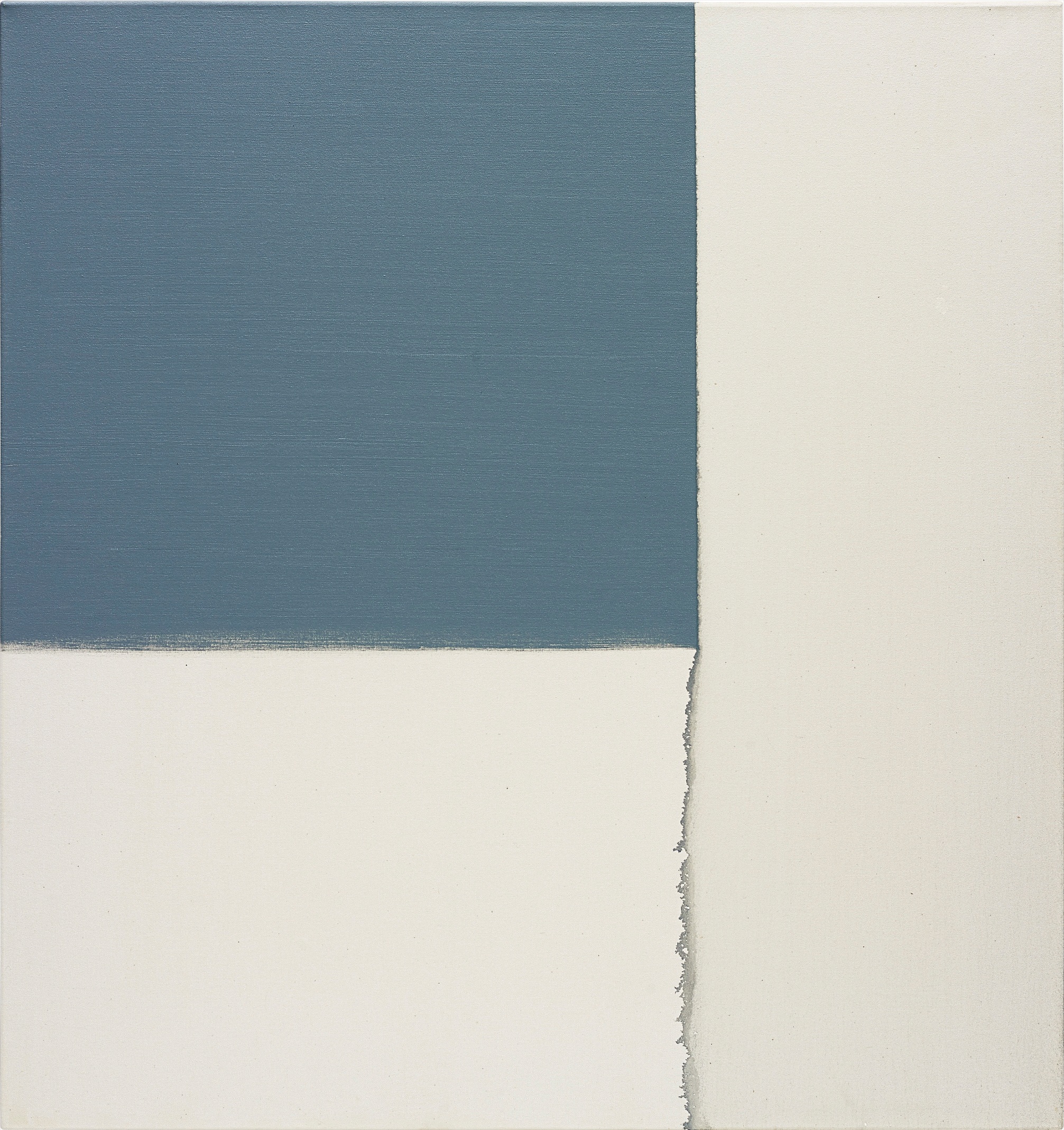
The pivotal turn in Innes's practice came in the late 1980s and early 1990s, when he began to develop the technique that would define his career. Rather than building up a surface through accumulation, he started working in reverse, applying oil paint to canvas and then dissolving it with turpentine, pulling the color back before it could fully settle. This act of removal became the heart of his method. What remained was not a residue of failure but something far more refined, a presence made more eloquent by the traces of what had been taken away.
Callum Innes
Exposed Painting, Grey, 1996
He arrived at a vocabulary that was entirely his own, and the art world took notice. His nomination for the Turner Prize in 1995 brought wider attention to a practice that had already earned deep respect among painters and curators who follow abstract art closely. The works Innes titles as his Exposed Paintings are the clearest expression of his thinking. In pieces such as Exposed Painting Cobalt Blue from 2008, a saturated field of blue occupies one portion of the canvas while the adjacent area is washed to near translucence, the ghost of the paint left clinging to the weave of the linen.
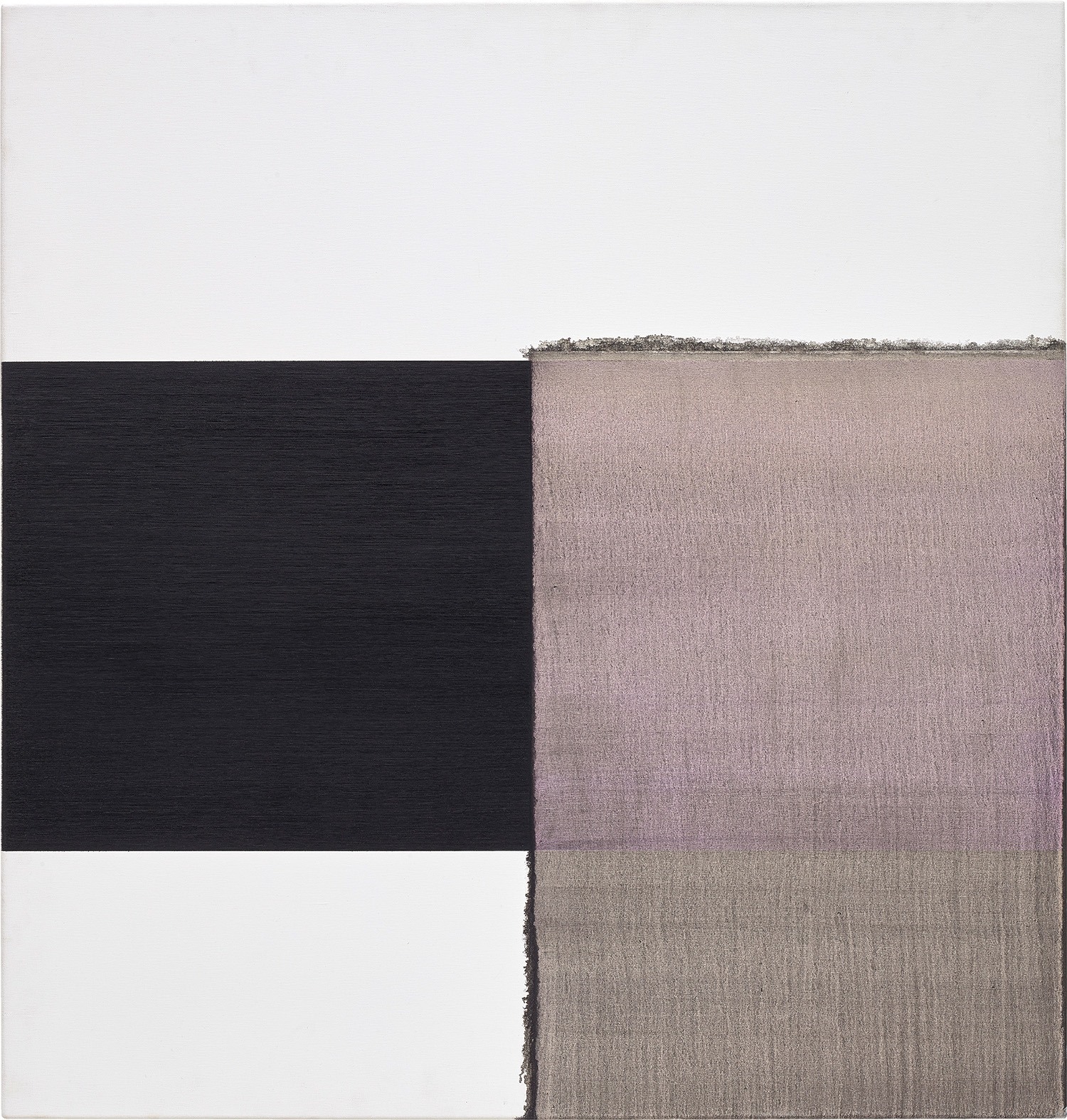
The effect is not of emptiness but of resonance, as though the color is still sounding after the note has been played. Exposed Painting Intense Black Red Violet from 2002 shows his command of chromatic tension: the deep, almost silent black pushes against a violet that seems to pulse with interior warmth. These are not decorative works. They carry genuine philosophical weight, engaging with questions about materiality, time, and the nature of perception that place them in dialogue with the most serious abstract painting of the twentieth century.
Callum Innes
Exposed Painting Intense Black Red Violet, 2002
Innes has been represented by Frith Street Gallery in London, a relationship that helped establish his standing within the British and European art markets. His work has been shown at major institutions including the Irish Museum of Modern Art in Dublin, and his presence in international art fairs has introduced him to collectors across Europe, North America, and Asia. What draws collectors to Innes is a combination of factors that rarely align so precisely in a single body of work. The paintings are visually arresting in person in a way that reproductions simply cannot communicate.
The surface of a linen or canvas support treated with his turpentine process has a texture that invites the eye to move slowly across it, discovering gradations of tone and evidence of the artist's process. Collectors who acquire one work almost invariably return for another. Within the broader arc of abstract painting, Innes occupies a specific and important position. His practice invites comparison with the Color Field painters of the American tradition, with artists such as Mark Rothko and Robert Ryman whose investigations of paint, surface, and color established a language that Innes both inherits and transforms.
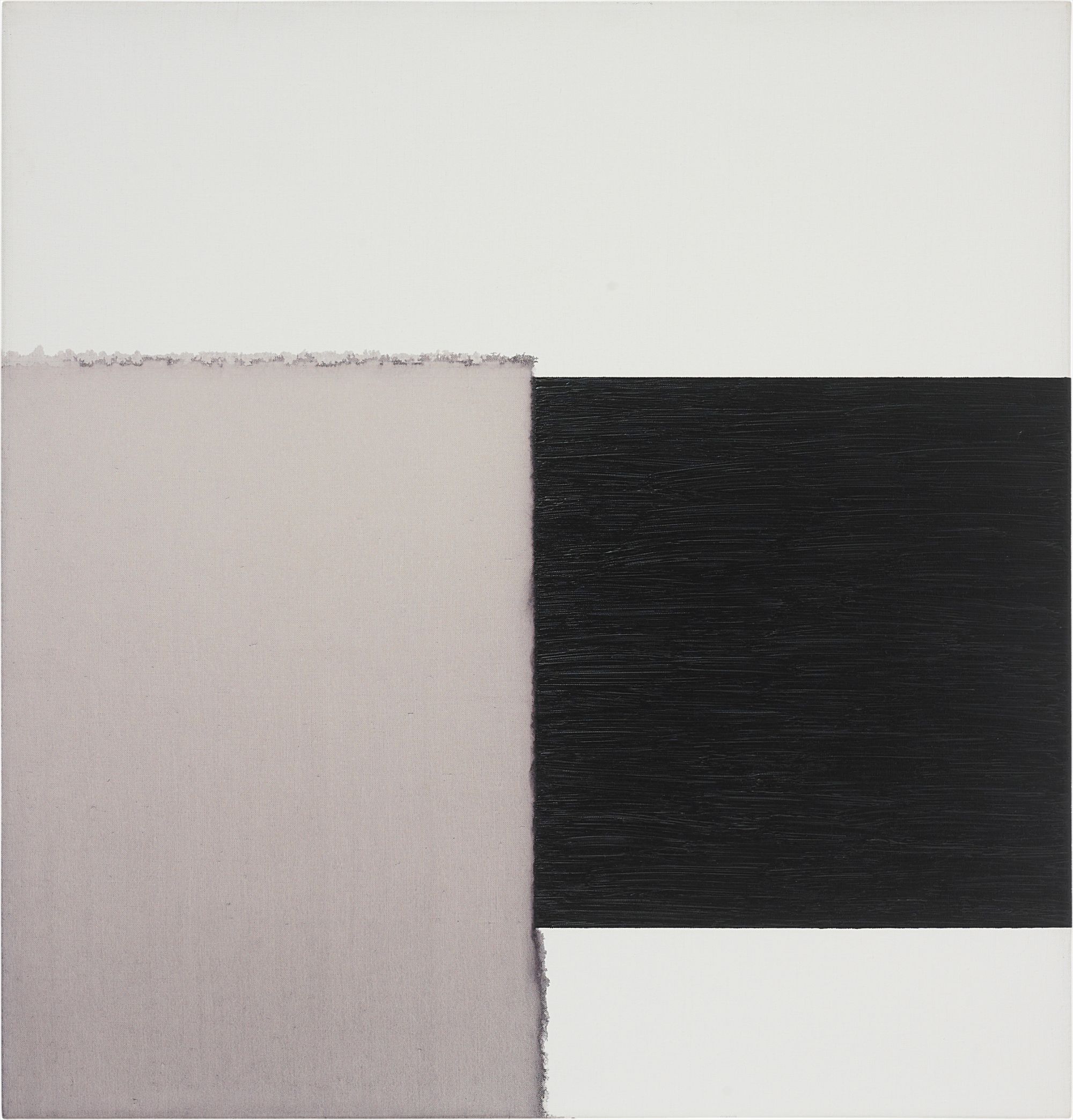
Callum Innes
Painting Paynes Grey/Red Oxide on White
At the same time, his European formation gives his work a different quality of restraint and material thoughtfulness. He shares something with the German painter Gerhard Richter in his willingness to subject painting to processes that resist pure expressiveness, and something with Sean Scully in his commitment to the emotional and philosophical possibilities of abstraction pursued over a long career with absolute consistency. Innes belongs to that tradition while remaining stubbornly, beautifully himself. For collectors approaching Innes for the first time, the Exposed Paintings on linen are often the recommended point of entry.
The linen support amplifies the warmth of his palette and makes the dissolution of the paint surface feel almost geological, as though one is looking at strata rather than a painting. Works from the period between the late 1990s and the 2010s represent the fullest expression of his mature thinking, and pieces such as Exposed Painting Paynes Grey/Violet on White demonstrate his ability to find drama and subtlety within an apparently minimal range of decisions. Paynes grey is a color that many painters find difficult, its blue green undertones requiring careful handling, and Innes uses it with a confidence that speaks to decades of accumulated knowledge about how paint moves and what it remembers. The legacy of Callum Innes is still being written, which is itself a testament to the vitality of his practice.
He continues to work and to show, and each new body of work confirms that his commitment to this specific territory of painting remains as urgent and as questioning as it was when he first began dissolving paint from canvas more than three decades ago. In a period when the art world sometimes mistakes novelty for significance, Innes stands as a reminder that depth comes from sustained attention, from returning to the same questions with fresh intelligence year after year. His paintings do not resolve their tensions. They hold them, and that is precisely why they endure.
Explore books about Callum Innes