Blinky Palermo
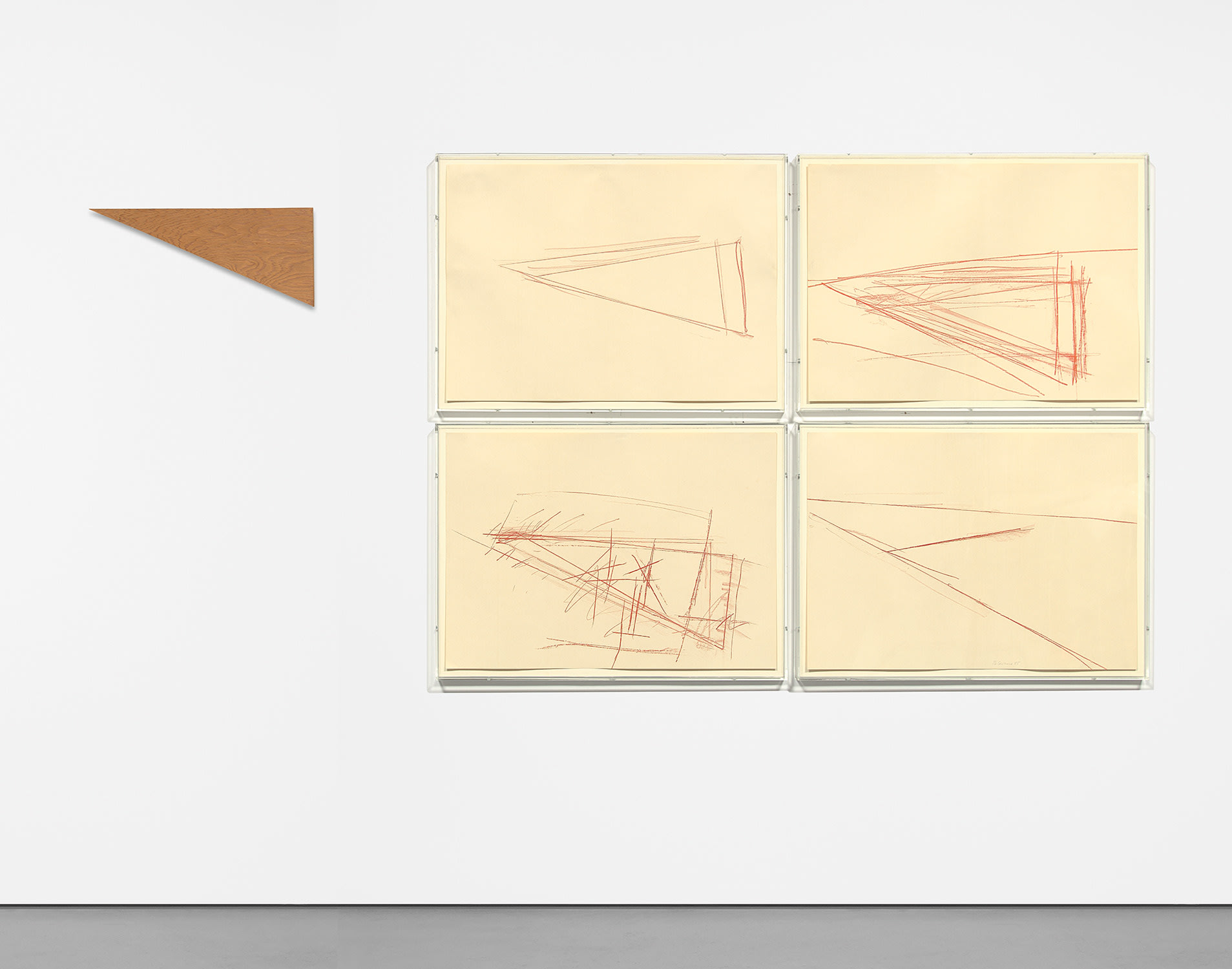
Blinky Palermo, Color's Most Poetic Visionary
Artist Spotlight · The Collection Editorial
There are artists whose brevity of life seems almost impossible to reconcile with the breadth of what they left behind. Blinky Palermo, the German painter, object maker, and printmaker who died in 1977 at just thirty three years old, compressed a lifetime of formal invention into barely a decade of serious practice. Today, his works hang in the permanent collections of the Museum of Modern Art in New York, the Dia Art Foundation, and the Städtische Galerie im Lenbachhaus in Munich, where they continue to astonish visitors with their peculiar combination of stillness and urgency. A major retrospective organized by Dia in the early 2000s reintroduced his practice to a new generation of collectors and curators, and interest in his work has only deepened since.
Blinky Palermo
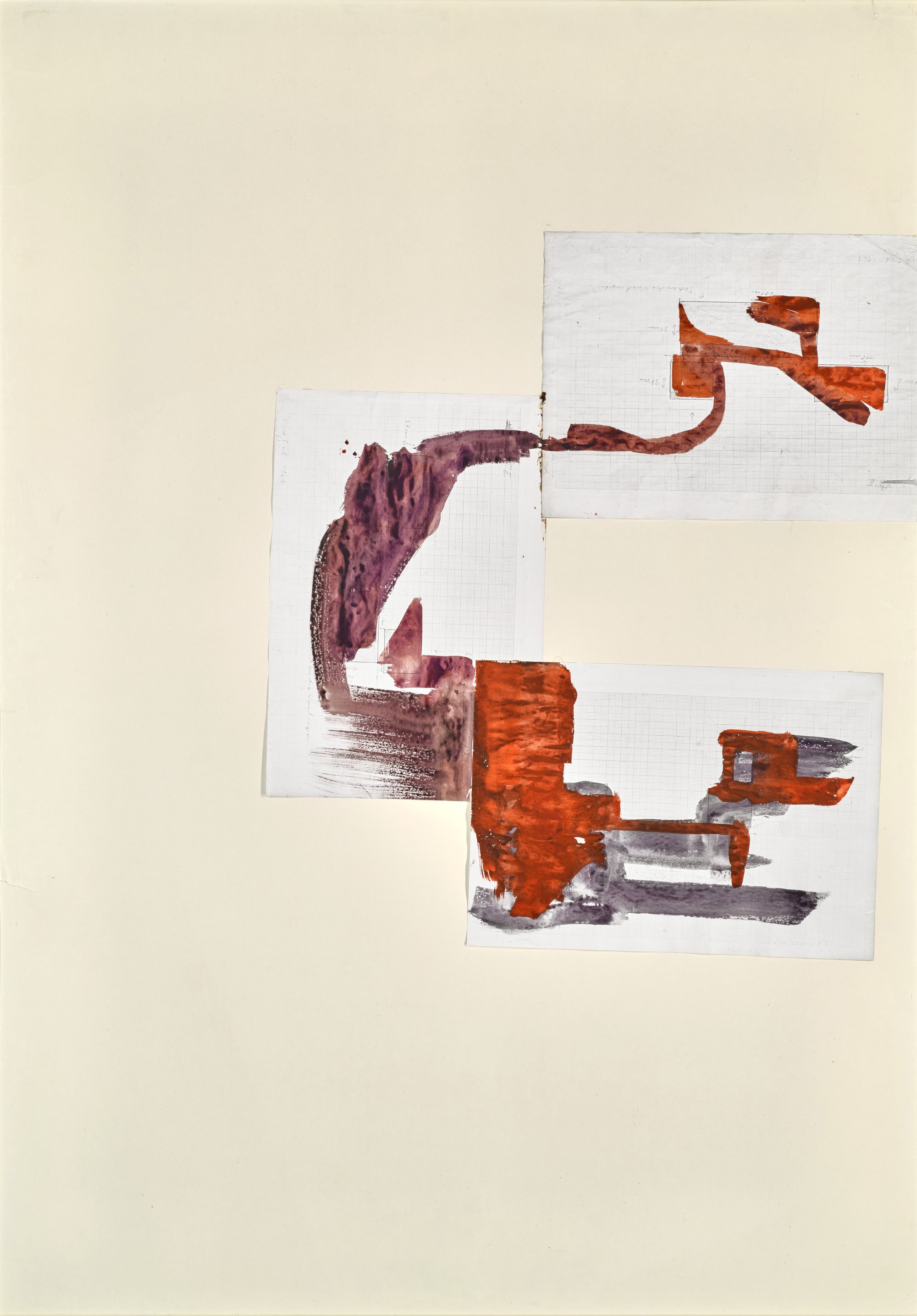
Captagon, 1969
When a Palermo appears at auction, the room pays attention. He was born Peter Heisterkamp in Leipzig in 1943, during the final, convulsive years of the Second World War, and was adopted shortly after birth by the Schwarze family, who raised him in Münster. The nickname Blinky Palermo was reportedly bestowed upon him by fellow students at the Kunstakademie Düsseldorf, where he enrolled in 1962, on account of a resemblance to the American boxing manager Blinky Palermo, a colorful figure from the world of professional boxing. He kept the name, and it suited him: there was always something slightly borrowed, slightly theatrical, and entirely his own about the identity he constructed through his art.
He studied under Joseph Beuys, one of the great pedagogical presences of postwar European art, and the relationship was formative without being overshadowing. Palermo absorbed Beuys's commitment to material as meaning and his insistence on art as a transformative social act, then quietly redirected those energies toward something more interior and sensory. At Düsseldorf, Palermo also became close to Gerhard Richter and Sigmar Polke, two painters who were in their own ways renegotiating the terms on which German art could speak after the catastrophe of the Nazi period. But where Richter turned to photography and Polke to irony, Palermo moved toward abstraction with an almost monastic focus.
Blinky Palermo
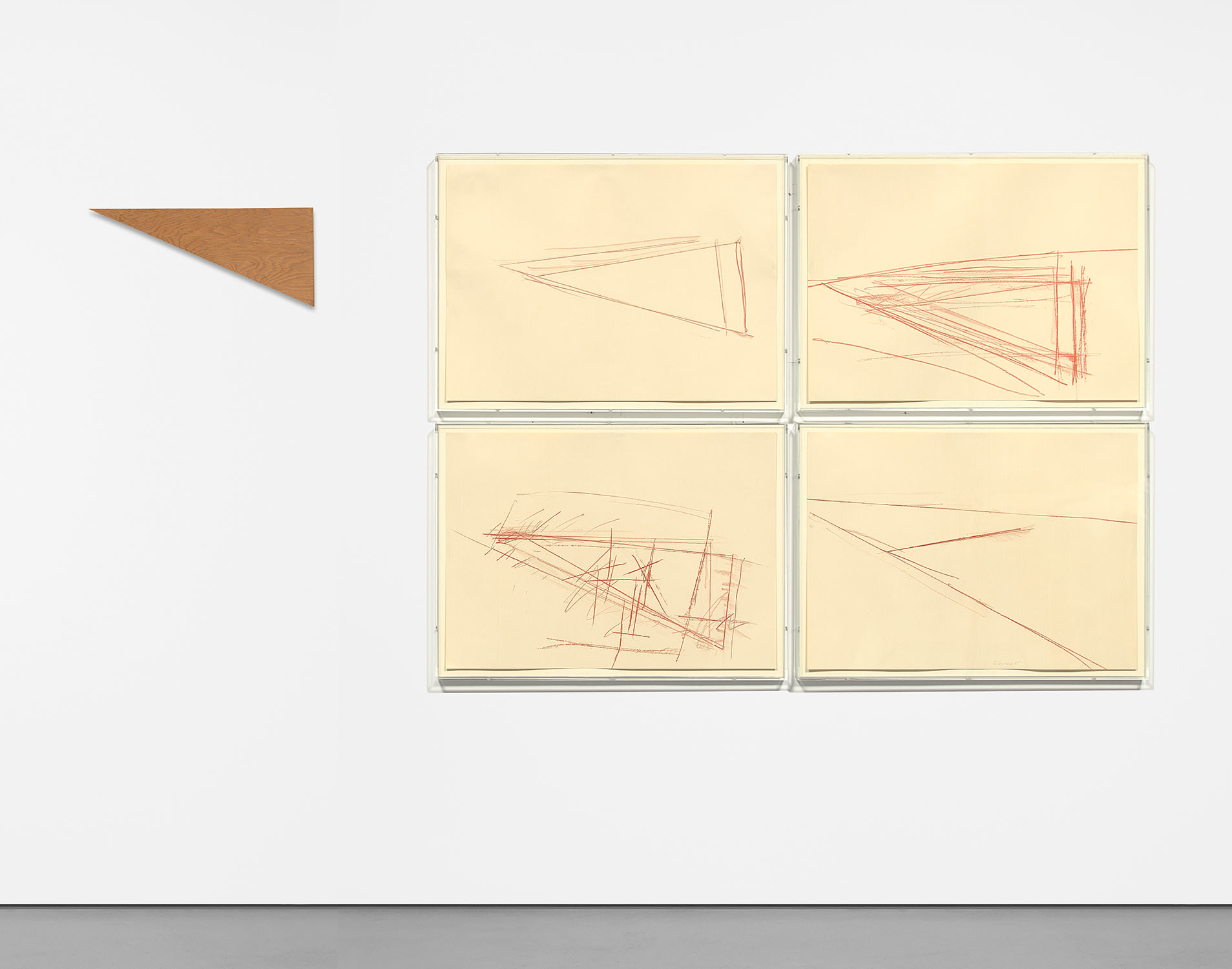
Happier than the Morning Sun 'to Stevie Wonder'
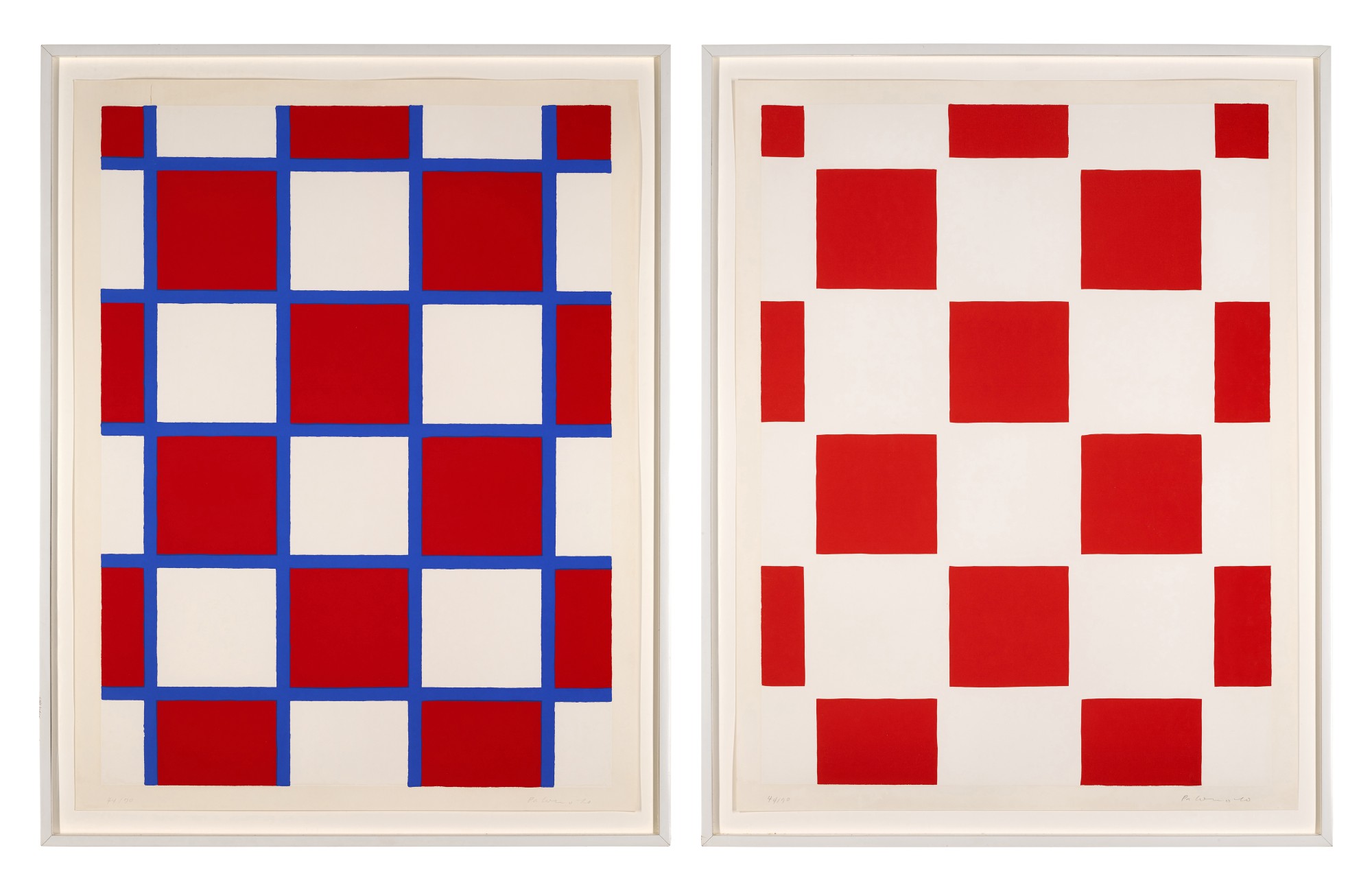
His earliest mature works, produced in the mid 1960s, included shaped canvases and fabric pictures in which bolts of commercially dyed cloth were sewn together and stretched over wooden supports. These fabric works had an immediate, disarming quality: they looked almost domestic, almost decorative, and then revealed themselves as profoundly considered meditations on the relationship between color, form, and the architectural space they inhabited. Throughout the late 1960s and into the 1970s, Palermo's practice expanded to include works on paper, wall paintings executed directly onto gallery surfaces, and eventually the metal paintings he produced in New York in the final years of his life. His prints, including the screenprint Flipper from 1970 and the portfolio produced in connection with his mural at the Hamburger Kunstverein, demonstrate the same qualities that make his paintings so compelling: an economy of means that generates extraordinary richness, and a sensitivity to color relationships that feels less calculated than intuited.
The Hamburger Kunstverein portfolio, comprising lithographs and a screenprint in burnt umber on wove paper, is a particularly beautiful example of how Palermo approached printmaking not as reproduction but as an extension of his spatial thinking. Each sheet carries the weight of a considered decision about proportion, tone, and the pause between one element and the next. Among the works available to collectors through The Collection is Captagon from 1969, a watercolour and paper collage on card that exemplifies Palermo's gift for combining found and applied material into something that transcends either category. There is also Happier than the Morning Sun, a tribute to Stevie Wonder that speaks to the warmth and cultural openness Palermo brought to his practice even as it remained rigorously abstract.
Blinky Palermo
Flipper (J.8), 1970
These works reward sustained attention. They are not works that announce themselves loudly; they work on the viewer gradually, adjusting the temperature of the room, so to speak, through the quiet insistence of their color and form. Collectors who live with Palermo report that the experience of his work changes over time, which is the mark of an object with genuine depth. In the context of art history, Palermo occupies a distinctive and somewhat solitary position.
He is often discussed alongside the Minimalists, and the comparison is not without basis: his stripped forms and interest in seriality connect him to Donald Judd and Robert Ryman. But where American Minimalism often aspired to objecthood, to the elimination of the artist's hand and presence, Palermo's work retained a lyricism and an emotional warmth that align him equally with Paul Klee, whom he admired, and with the Color Field painters working in New York. He was a transatlantic figure in the deepest sense, spending significant time in New York in the 1970s, and his metal paintings from that period engage in a quiet, respectful dialogue with the American tradition while remaining entirely European in sensibility. Artists such as Günther Förg and Imi Knoebel, both also associated with the Düsseldorf milieu, share something of Palermo's commitment to reduced, color driven abstraction, and collectors who respond to one often find themselves drawn to the others.
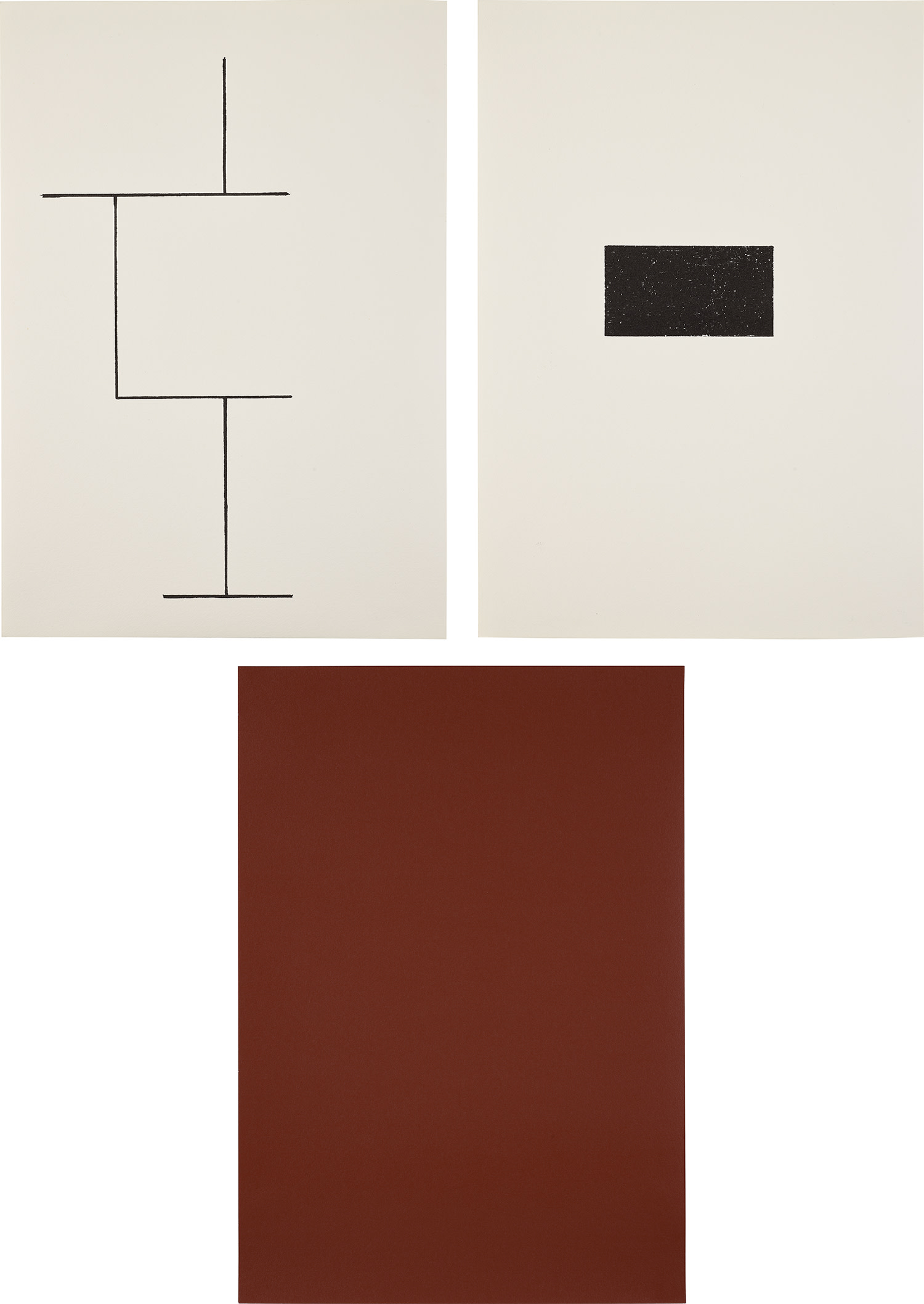
Blinky Palermo
Mappe zur Wandmalerei Hamburger Kunstverein (Portfolio for Mural at the Hamburger Kunstverein) (J. 33)
The market for Palermo has matured considerably since his rediscovery in the 1990s. Works on paper and prints are a compelling entry point for collectors, offering genuine access to his visual thinking at a range of price points. The fabric works and metal paintings command significant sums when they appear, which is not often: Palermo was not prolific, and the institutional absorption of his work into major permanent collections means that strong examples are genuinely rare. Provenance matters here, as it does with any artist of this stature, and the prints that come with documentation of their original editions carry particular authority.
For collectors building a collection oriented around postwar European abstraction, a Palermo is not simply an acquisition: it is an argument about what art can do, about the sufficiency of color and form as instruments of meaning. Blinky Palermo died in the Maldives in February 1977, at the age of thirty three, under circumstances that were never fully explained. What he left behind is a body of work of startling coherence and beauty, the achievement of an artist who knew exactly what he was doing and did it with complete conviction. Fifty years on, his influence is visible in the work of painters across Europe and North America, and the conversations he began about color, space, and the relationship between art and architecture remain as alive and as necessary as they were when he first stretched those bolts of dyed fabric over their wooden supports in Düsseldorf.
To encounter a Palermo for the first time is to understand, almost immediately, why people who love painting love him so fiercely.
Explore books about Blinky Palermo
Blinky Palermo: Retrospective
Dia Art Foundation
Blinky Palermo: Paintings, Drawings, Prints
Heiner Bastian
Blinky Palermo: Works on Paper
Michael Semff
Blinky Palermo: Monograph
Jürgen Harten