Bert Stern
Bert Stern: Light, Legend, and Lasting Grace
Artist Spotlight · The Collection Editorial
“I want to take pictures that last forever. I want people to look at them and feel something.”
Bert Stern
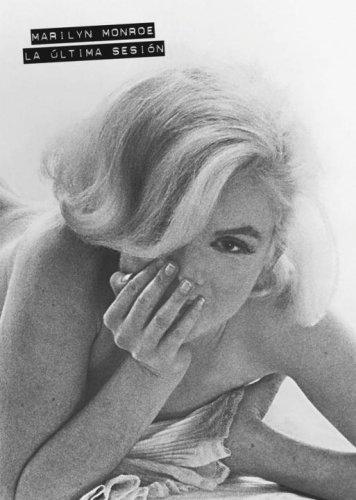
There is a photograph that stops you cold. Marilyn Monroe reclines against white linen, her gaze tilted just slightly away from the camera, her expression hovering somewhere between mischief and melancholy. Bert Stern made this image in the summer of 1962 at the Bel Air Hotel in Los Angeles, working across three sessions that would collectively become known as The Last Sitting. It remains one of the most studied, most reproduced, and most emotionally complex bodies of work in the history of American photography.
Bert Stern
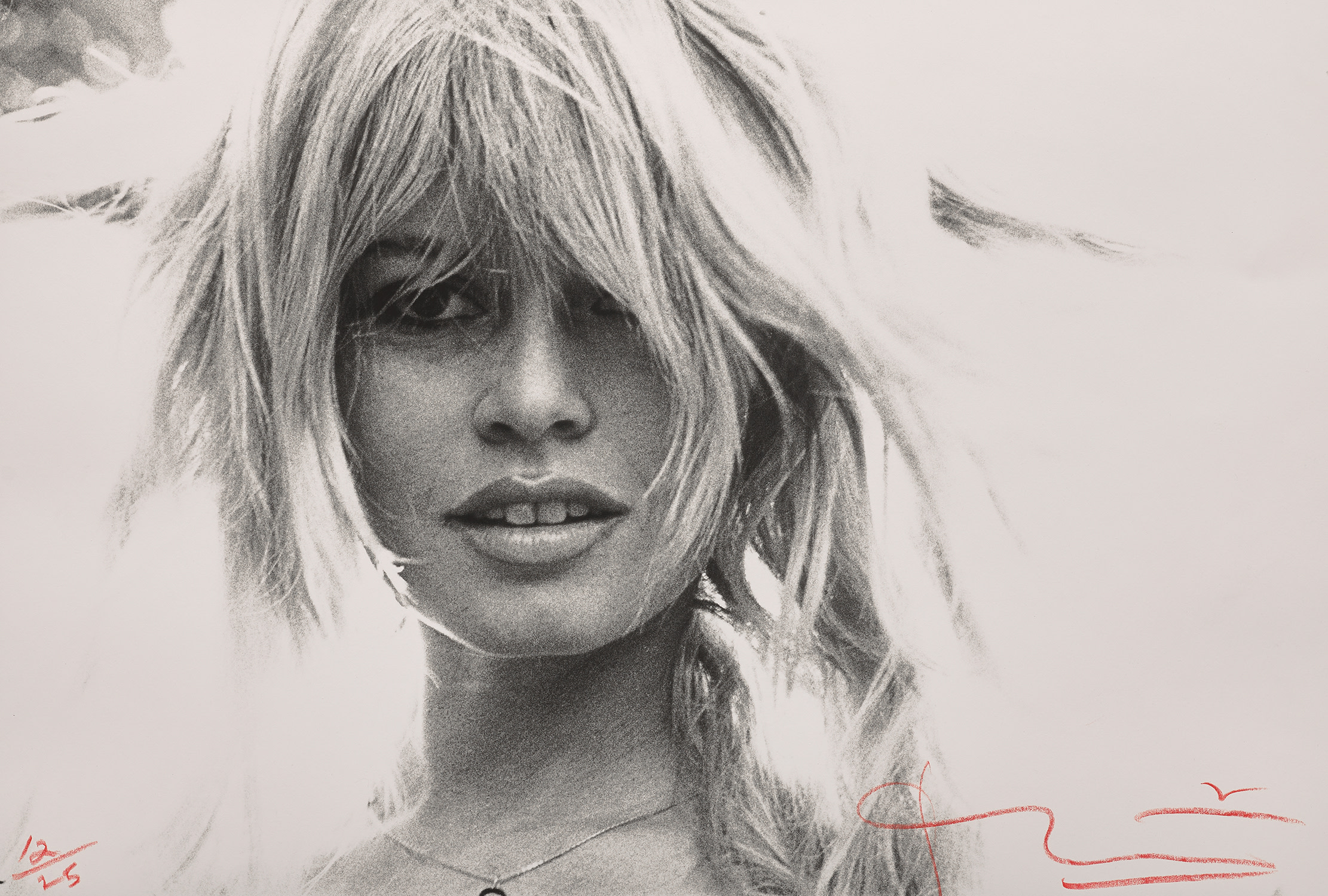
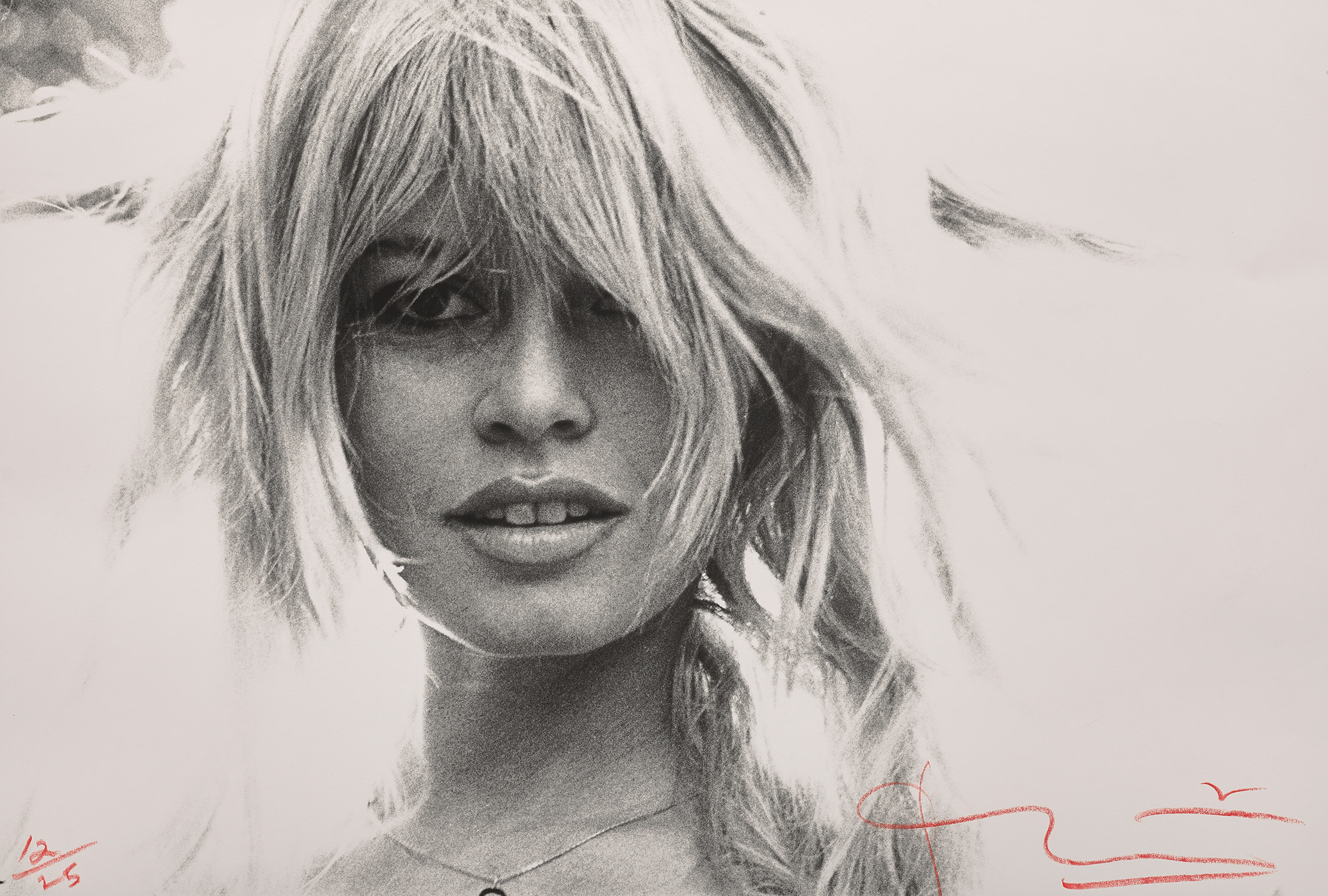
Brigitte Bardot
More than six decades later, these images continue to command serious attention at auction, inspire museum programming, and draw new generations of collectors into the orbit of a man who understood, more instinctively than almost anyone, that a photograph could hold an entire life inside it. Bert Stern was born in Brooklyn, New York, in 1929. He grew up during the Depression, in a household that offered little in the way of formal cultural education, and he left school early, finding his way into the world through energy, ambition, and an almost preternatural sensitivity to visual possibility. His first sustained encounter with professional photography came through working in the mailroom at Look magazine in the late 1940s, an experience that immersed him in the editorial and commercial currents of postwar American image making.
He taught himself by looking, absorbing the work of the great photographers around him, and eventually began assisting in studios where the grammar of light and composition became a daily practice rather than an abstract ideal. By the mid 1950s, Stern had established himself as a commercial and editorial photographer of genuine distinction. His 1955 advertisement for Smirnoff vodka, shot in Egypt with the Pyramids of Giza reflected in a martini glass, became one of the most celebrated advertising images of the decade and announced the arrival of a photographer who thought cinematically, who understood that a single frame could carry narrative weight and surreal beauty in equal measure. That image also cemented his reputation for technical mastery, particularly his extraordinary command of light and reflective surfaces, qualities that would define his practice for the rest of his career.
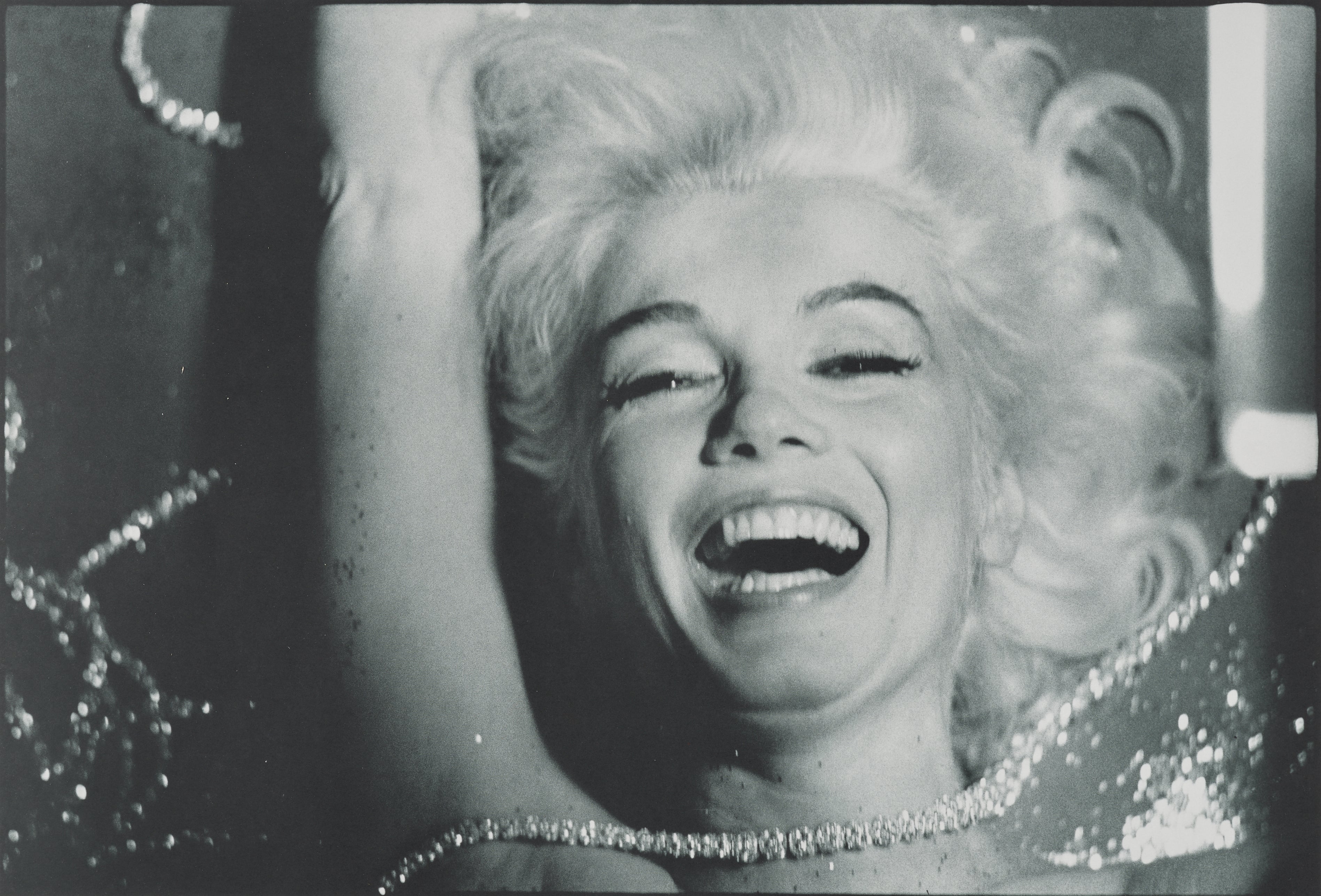
Bert Stern
Marilyn Monroe from the series The Last Sitting, 1962
Stern did not simply illuminate his subjects. He sculpted them. In 1958, Stern made Jazz on a Summer's Day, a documentary film capturing the Newport Jazz Festival in Rhode Island that stands as one of the essential documents of American music and culture. The film features luminaries including Louis Armstrong, Thelonious Monk, and Anita O'Day, and its visual style brought a photographer's eye to the language of documentary cinema with results that felt entirely fresh.
The film was praised upon its release and has only grown in critical stature over the decades. It speaks to the breadth of Stern's vision, his refusal to be confined by the boundaries of any single medium, and his genuine passion for the cultural life of his era. He was not a documentarian in the traditional sense. He was a portraitist who understood that music, like a face, has its own interior light.
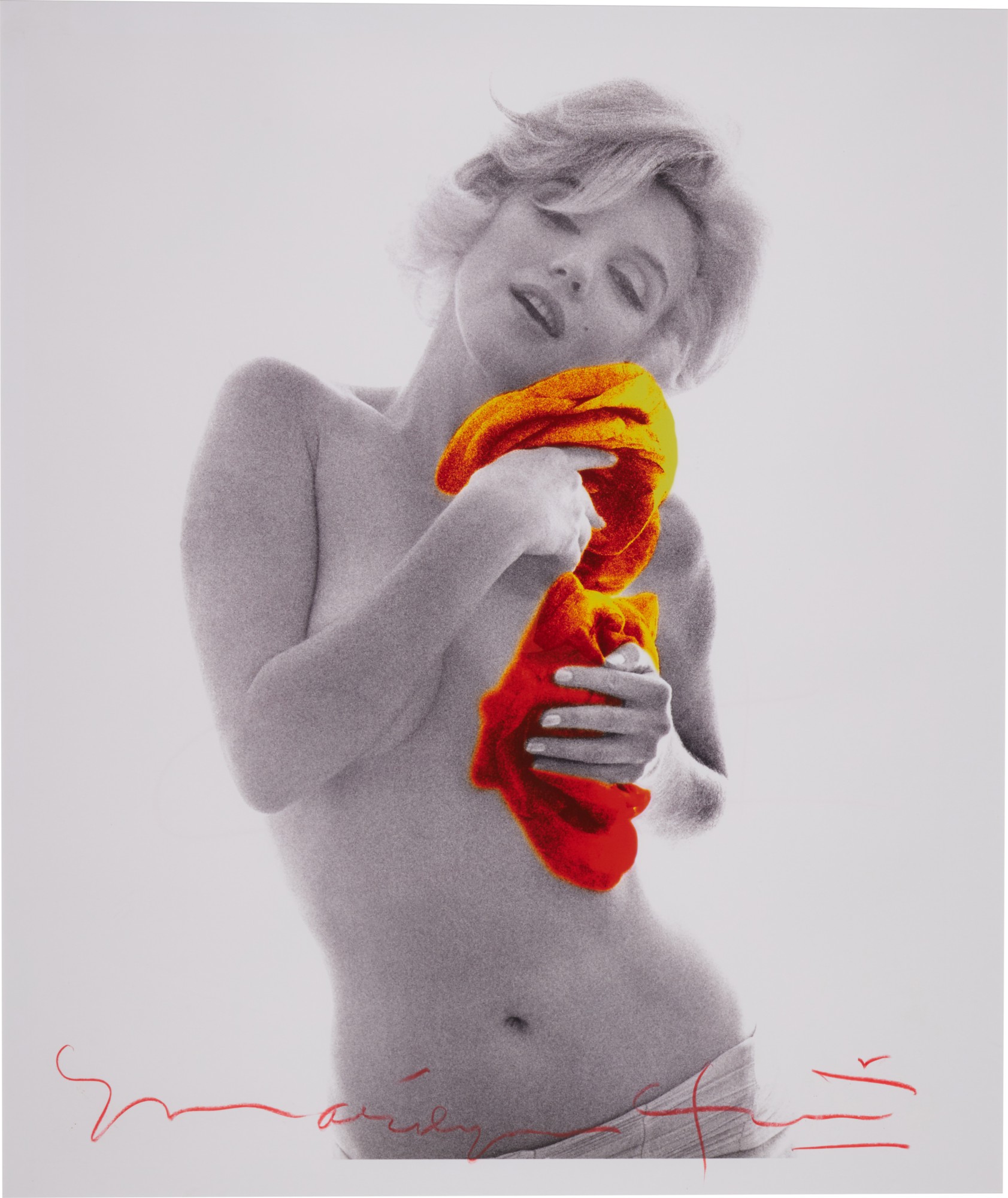
Bert Stern
'Marilyn Monroe Orange Roses', (From the Last Sitting For Vogue), 1962
The Last Sitting sessions with Marilyn Monroe in July 1962 represent the apex of Stern's career and one of the singular achievements in twentieth century portrait photography. Monroe died just six weeks after the final session, which gave the images an immediate and overwhelming weight of historical significance. But to reduce them to their biographical context is to misread what Stern actually accomplished. These photographs are studies in collaboration and trust.
Monroe was a seasoned and sophisticated subject who had her own strong ideas about how she wished to be seen, and she engaged with Stern as a genuine creative partner. She is variously playful, luminous, guarded, and nakedly present across these frames, and Stern's genius lay in creating the conditions in which all of those registers could coexist. The prints from The Last Sitting, including the celebrated Shorewood Atelier portfolio of ten chromogenic prints published in 1978, have become cornerstone holdings for serious collectors of American photography. Stern's work for Vogue magazine placed him at the center of American fashion photography's golden era.
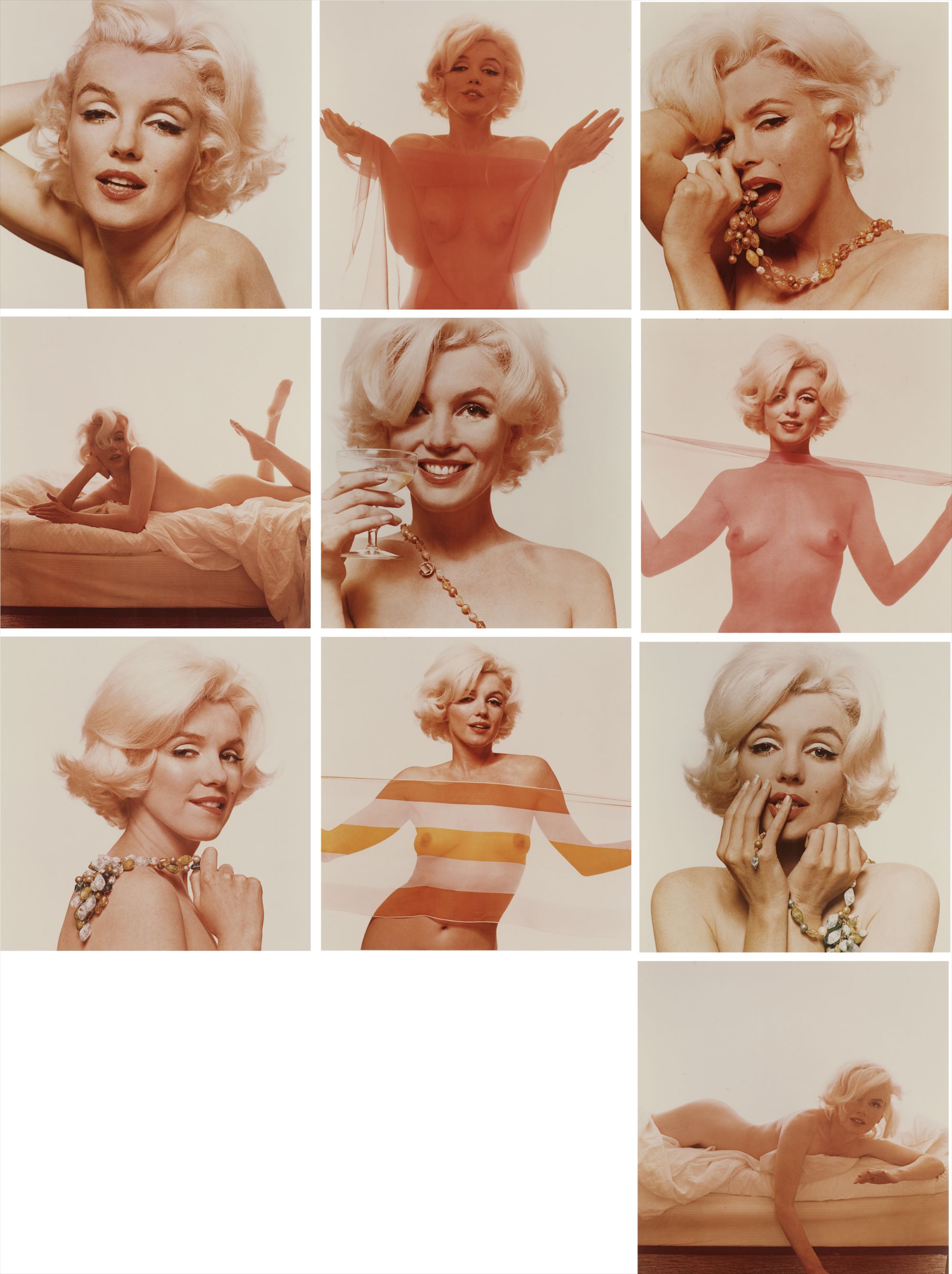
Bert Stern
Marilyn Monroe, The Last Sitting
He contributed images to the publication across several decades, working alongside editors and art directors who recognized in him a photographer whose sensibility was simultaneously glamorous and psychologically acute. His fashion work was never merely decorative. Even in the most conventionally beautiful images, there was a quality of attention, a sense that the person inside the clothes was the real subject, that distinguished his editorial photography from that of his contemporaries. His portrait of Brigitte Bardot, available as an archival pigment print from 2009, exemplifies this quality perfectly.
Bardot is both icon and individual, both surface and depth. For collectors approaching Stern's market today, the range of available works reflects the full span of his practice and offers genuine opportunities across different price points and collecting priorities. The Last Sitting prints, particularly those from established portfolios with clear provenance, represent the strongest and most historically significant holdings. Works such as Marilyn with Apricot Roses from The Last Sitting and Marilyn Monroe Orange Roses carry an especially vivid intimacy and have performed consistently at auction over the past two decades.
Later printed archival pigment prints offer collectors access to the imagery at more accessible levels, while gelatin silver prints from earlier periods carry their own distinct material character. Collectors drawn to the intersection of photography and American cultural history will find Stern's work resonating with that of contemporaries such as Richard Avedon, Irving Penn, and Philippe Halsman, photographers who shared his conviction that portraiture was among the most serious and demanding of all artistic practices. Bert Stern died in New York in June 2013 at the age of eighty three, leaving behind a body of work that defines a particular moment in American visual culture with extraordinary clarity and feeling. He was a self made artist in the fullest sense, someone who built his vision from the ground up through curiosity, technical rigor, and an abiding belief that the camera, in the right hands, was capable of genuine revelation.
His images of Monroe remain the ones most often cited, and rightly so. But the fullness of his legacy encompasses documentary cinema, fashion, celebrity portraiture, and commercial photography elevated to the level of art. To collect Stern is to hold a piece of the mid twentieth century American imagination at its most luminous and most alive.
Explore books about Bert Stern