Barnaby Furnas
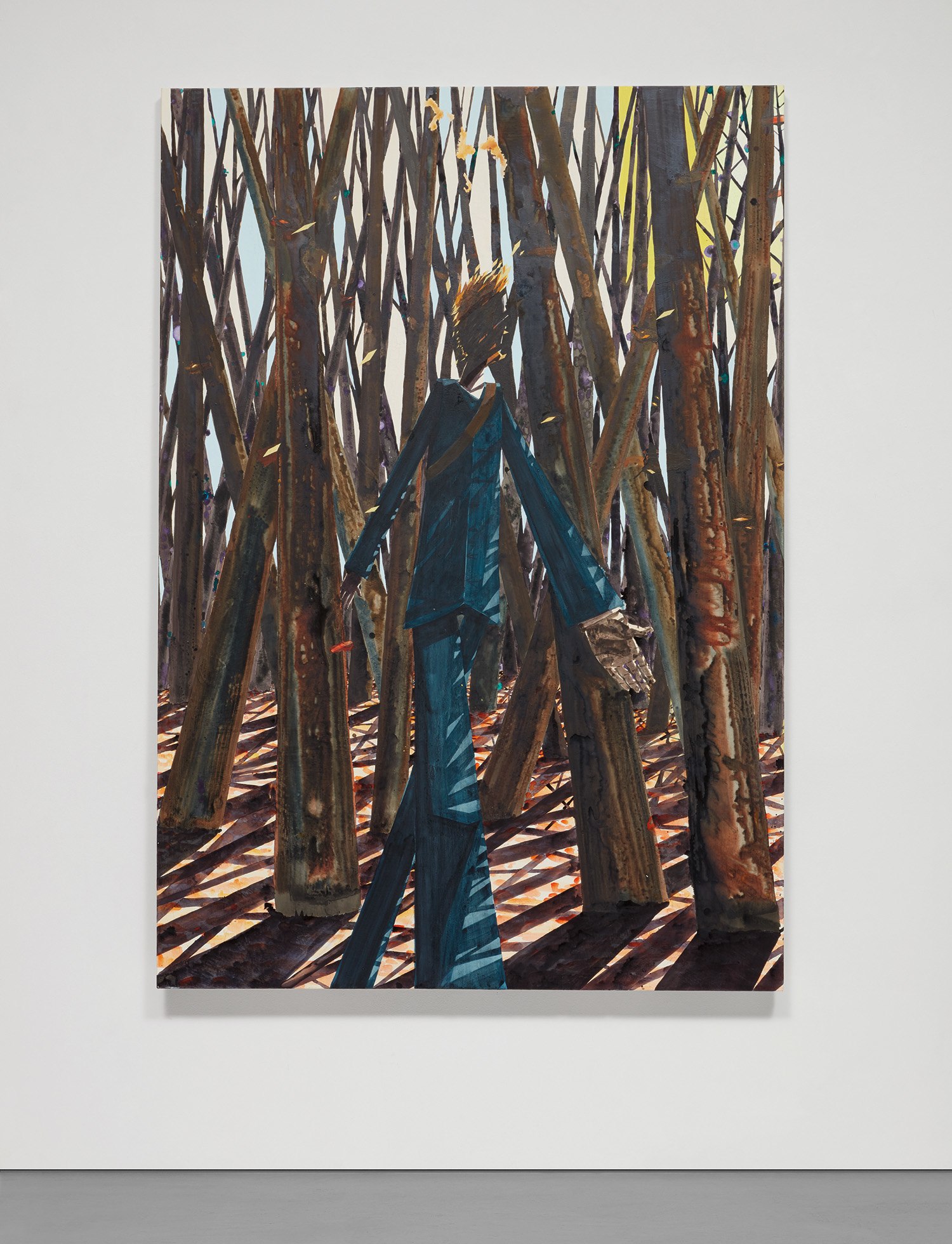
Barnaby Furnas Burns Beautifully and Bright
Artist Spotlight · The Collection Editorial
There is a particular kind of American painter who arrives not with a whisper but with a full throated roar, and Barnaby Furnas has been making that noise since the early 2000s when he emerged from New York's downtown scene with canvases that felt like they were actively on fire. His work gained serious institutional attention through his representation with Marianne Boesky Gallery in New York, where exhibitions confirmed him as one of the most viscerally compelling voices of his generation. The art world took notice not merely because his paintings were loud or large, though they are often both, but because beneath the explosive surfaces lay a genuinely rigorous intelligence grappling with the deepest currents of American history and human mortality. To stand in front of a Furnas is to feel something shift in the chest, a recognition that painting can still be an urgent, necessary act.
Barnaby Furnas
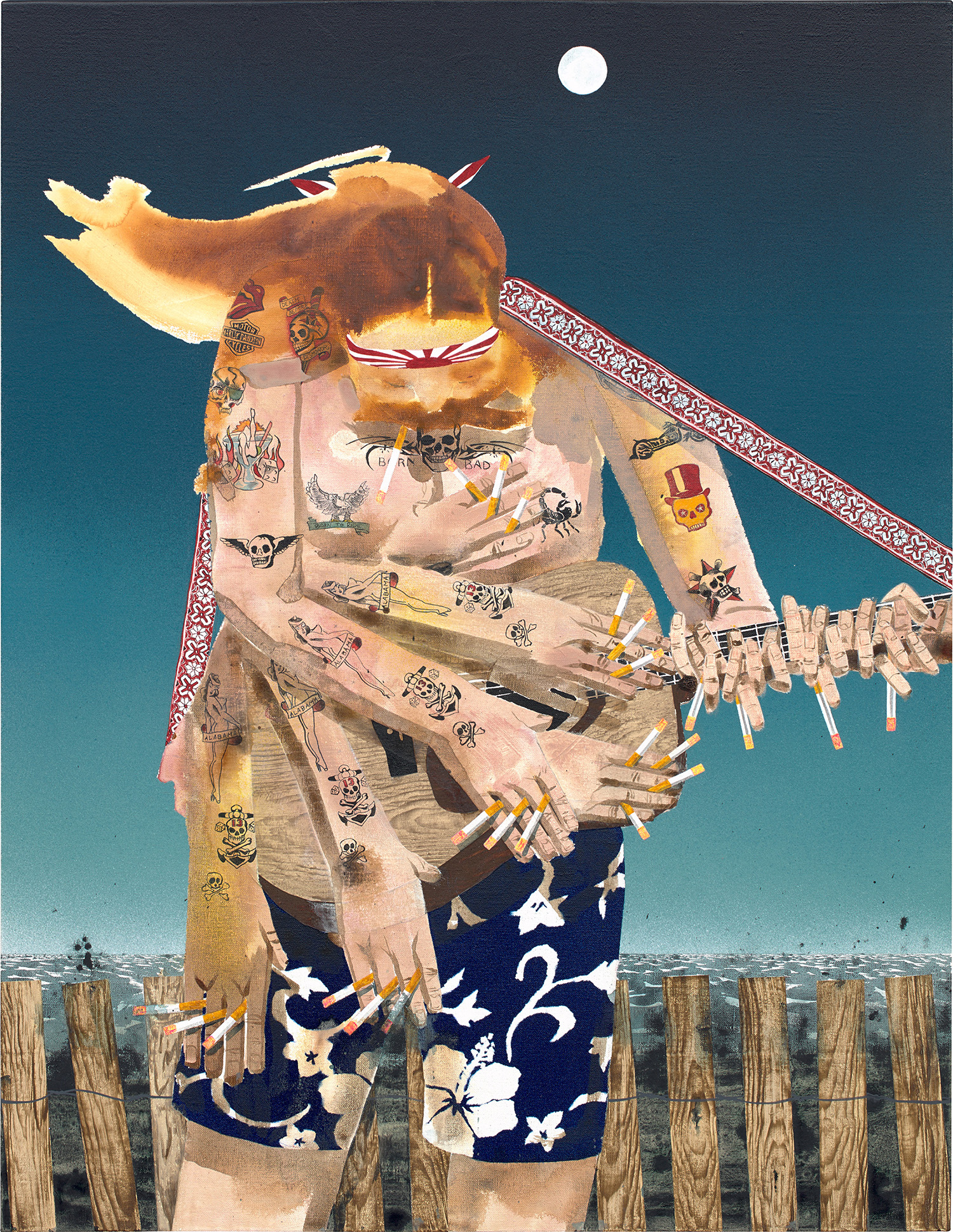
Street Musician (Atlantic City)
Furnas was born in 1973 and came of age in an America saturated with both the mythology of its own violent past and the unresolved tensions of its present. He studied at the School of Visual Arts in New York, where he developed the technical foundations that would eventually support some of the most formally inventive painting practices of his era. The city itself was a formative force, its energy and friction feeding directly into the kinetic charge that would define his mature work. New York in the 1990s and early 2000s offered a young painter a remarkable crucible, a moment when the downtown gallery scene was alive with ambition and the question of what painting could still do felt genuinely open.
The signature element of Furnas's practice is his use of urethane paint, a material more commonly associated with industrial applications than fine art, which he sprays, pours, and coaxes across canvas to achieve effects that conventional oils or acrylics simply cannot replicate. The results are surfaces of extraordinary chromatic intensity, where blood reds and neon oranges seem to emanate their own light, where liquid gesture captures the precise moment of impact or catastrophe. This is not expressionism in the loose, emotional sense of the word but something far more controlled and intentional, a technique honed over years to serve a very specific pictorial vision. The marriage of urethane with more traditional materials including dye, ink, acrylic, and water dispersed pigments gives his work a layered physicality that rewards close looking as much as it rewards the first overwhelming impression from across a room.
Barnaby Furnas
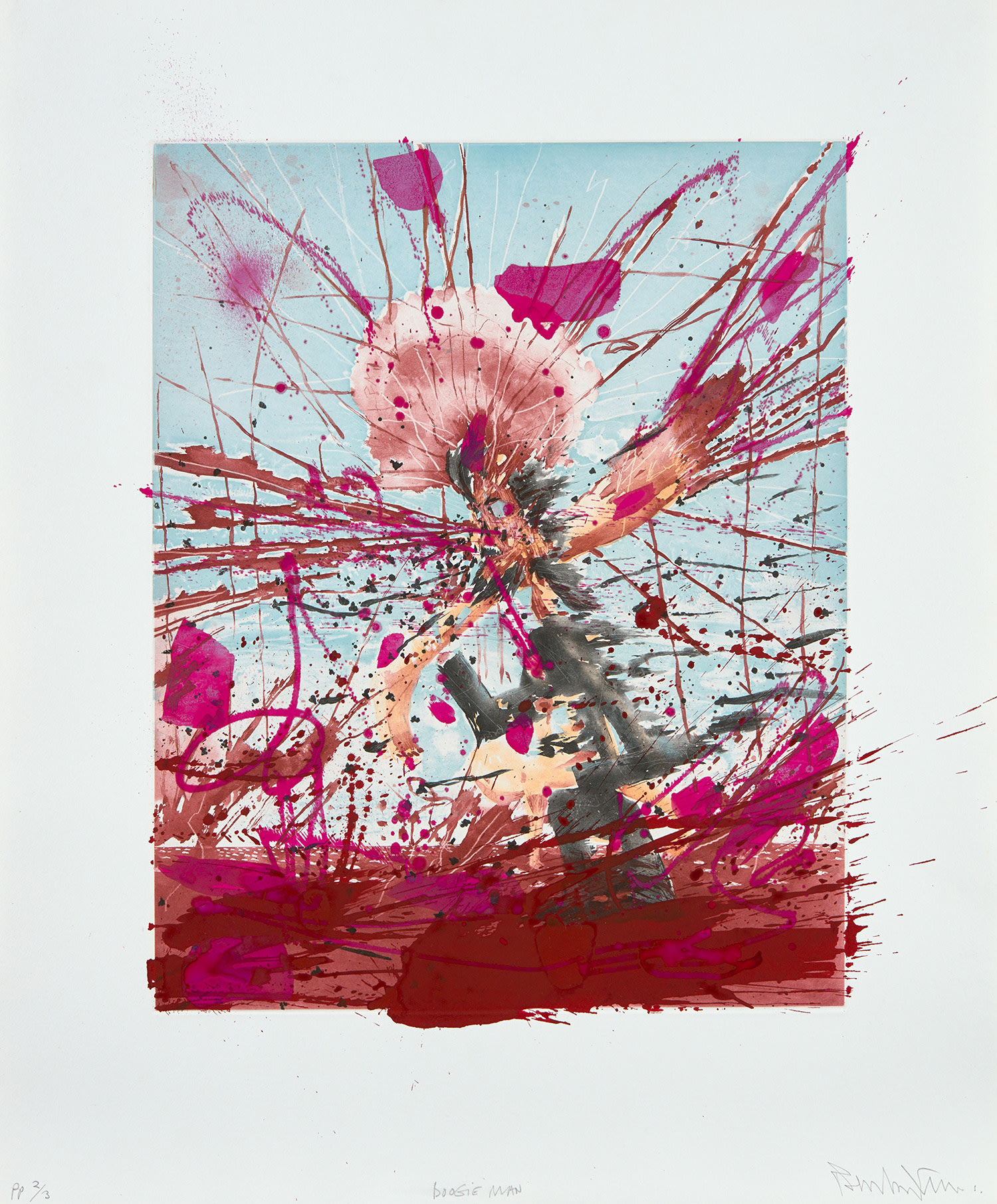
Boogie Man
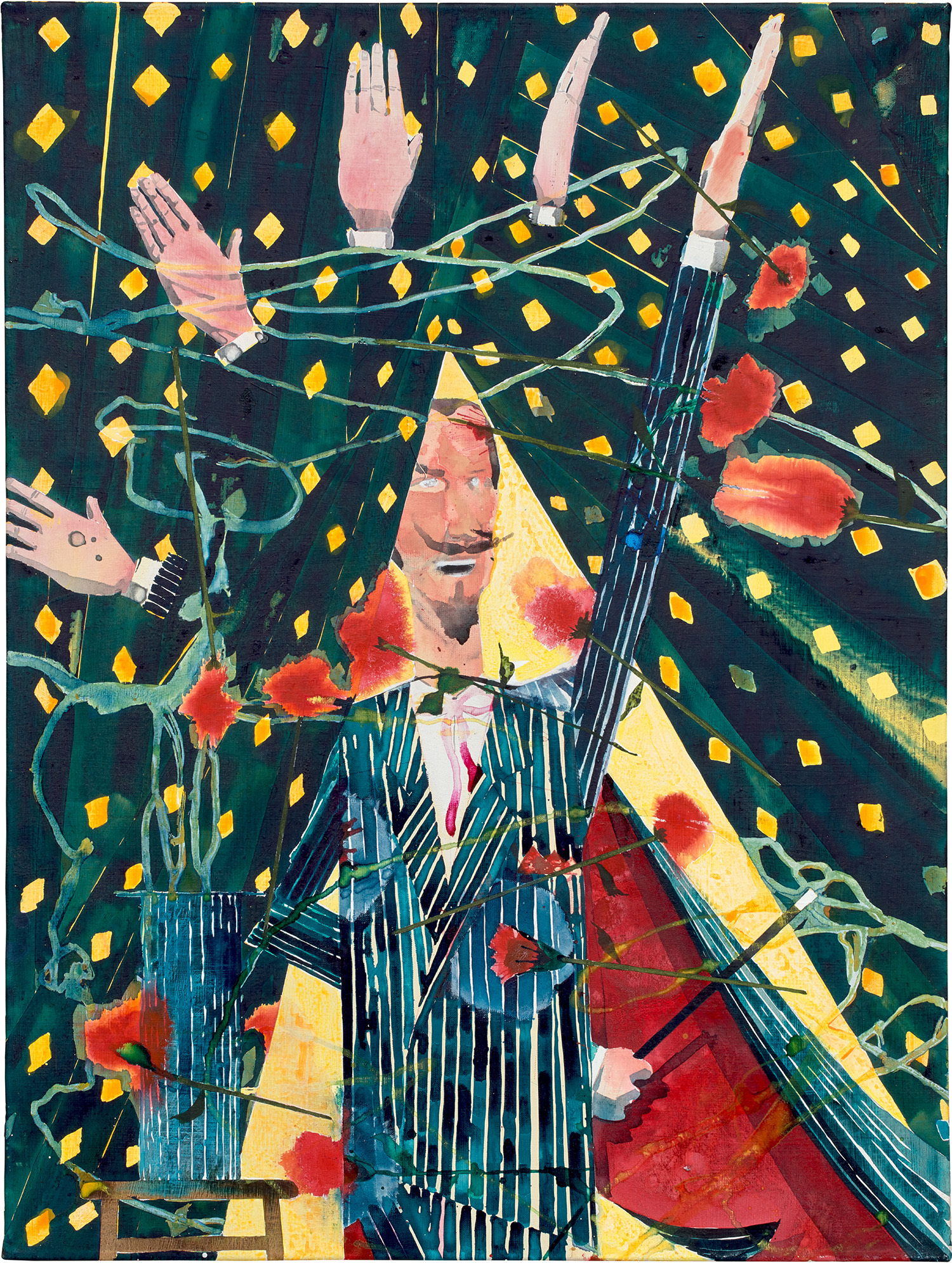
The subject matter Furnas returns to with the devotion of a true believer includes Civil War battles rendered in apocalyptic splendor, floods of near biblical proportion, scenes of resurrection and ruin, and figures caught in moments of transformation or extremity. Works like "Maestro" from 2005, rendered in urethane and ink on canvas, demonstrate how he channels historical and mythological weight into purely painterly energy. "Resurrection (White)", executed in urethane and dye on canvas, approaches the sacred with the same unflinching directness he brings to scenes of carnage, finding in the resurrection narrative not comfort but raw, almost terrifying vitality. "The Twins" from 2011, made with water dispersed pigment, graphite, transfer paper and acrylic on canvas, shows his ongoing interest in duality, pairing, and the symmetries that run through both religious iconography and American folk mythology.
Each of these works rewards the collector who lives with it, revealing new depths as the light changes and one's own relationship to the imagery deepens over time. The breadth of Furnas's practice is perhaps underappreciated by those who know him primarily through his large scale urethane paintings. Works on paper and in print, including etchings and aquatints such as "Boogie Man", demonstrate a facility with intimate scale and traditional printmaking processes that speaks to a classically grounded sensibility operating beneath the pyrotechnics of the painted surface. Pieces like "Street Musician (Atlantic City)", made with water dispersed pigments, colored pencil, Saral transfer and acrylic on linen, and "Concert (Grey)", made with acrylic and Saral transfer paper on linen, show a more tender, observational side of his practice, one engaged with the textures of American vernacular life rather than its mythological extremities.
Barnaby Furnas
Maestro, 2005
The work on calfskin, such as "Bad Back" in pigment, urethane, and ink, pushes into even more unusual material territory, finding in the animal substrate a resonance with the bodily themes that run throughout his imagery. Collectors who build across the full range of his output gain a richer, more complete portrait of an artist whose range is considerably wider than any single iconic image can suggest. In market terms, Furnas represents the kind of proposition that sophisticated collectors find increasingly compelling: a painter with strong institutional validation, a distinctive and technically demanding practice that cannot be easily imitated, and a body of work that has accumulated genuine art historical meaning over more than two decades. His paintings appear regularly at the major auction houses, and secondary market interest has remained consistent among collectors who understand that his particular combination of formal innovation and thematic ambition occupies a genuinely singular position in American painting.
For those building collections with an eye toward both aesthetic pleasure and long term significance, the full range of his output including works on linen, canvas, paper, and exotic supports offers multiple points of entry at different scales and price levels. Furnas belongs in conversation with artists like Dana Schutz, Cecily Brown, and Neo Rauch, painters of his generation who have used figurative and narrative painting as a vehicle for genuine psychological and historical inquiry. The legacy Furnas is building, painting by painting, is one that takes seriously the capacity of art to hold the most difficult aspects of American experience without flinching and without aestheticizing them into comfort. His floods are genuinely frightening, his battle scenes genuinely mournful, and his resurrections genuinely strange, which is to say they achieve what the greatest history painting has always achieved, a transformation of the past into something that illuminates the present with unwanted and necessary clarity.
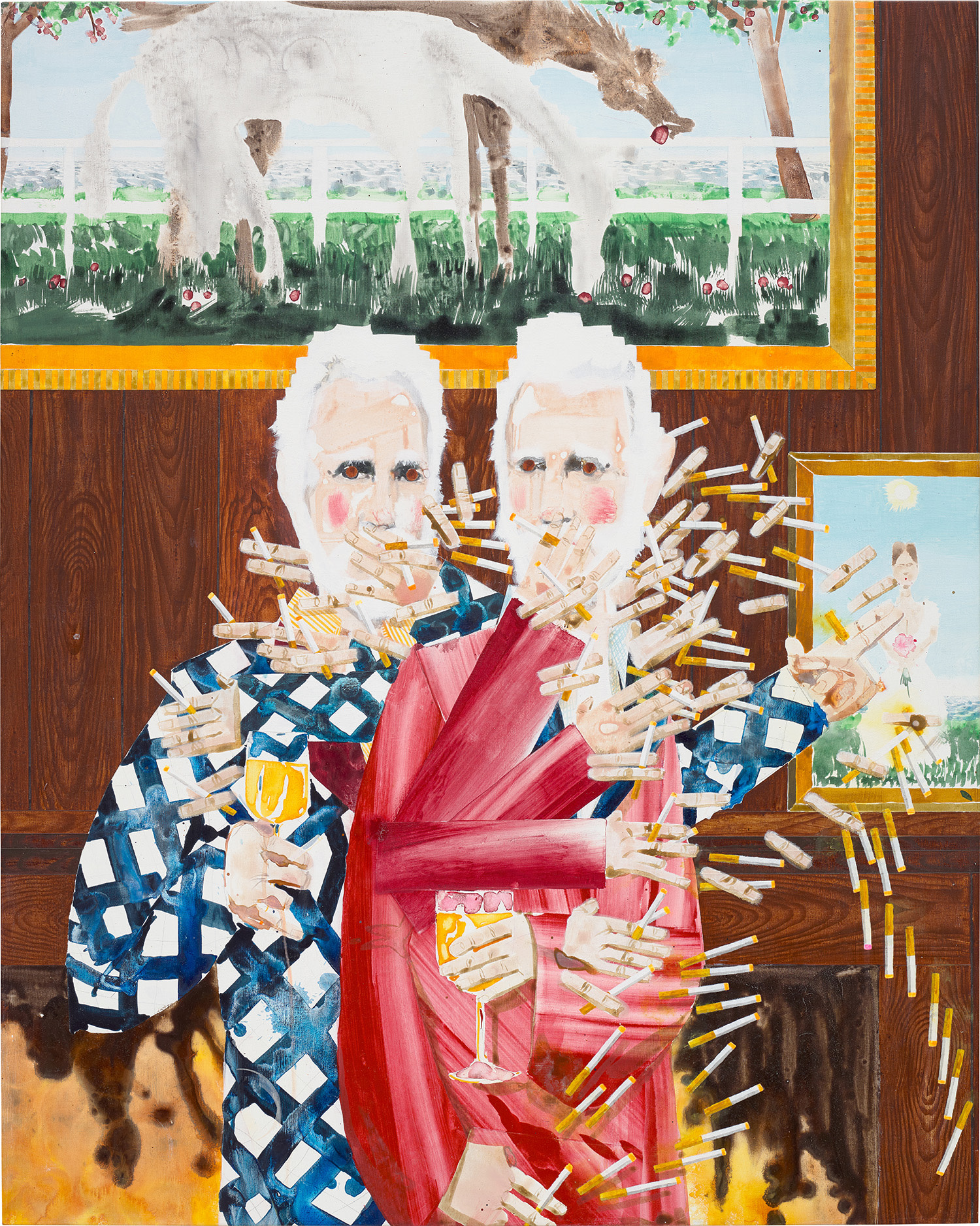
Barnaby Furnas
The Twins, 2011
As American culture continues to reckon with its myths of violence, redemption, and apocalypse, Furnas's work seems not merely relevant but prophetic, the product of an artist who understood earlier than most that these were not historical curiosities but living forces. To collect Furnas is to invest in one of the most honest and exhilarating engagements with American identity that painting has produced in the past quarter century.
Explore books about Barnaby Furnas