Banks Violette
Banks Violette Makes the Darkness Luminous
Artist Spotlight · The Collection Editorial
“I think the condition of something can be shifted by its proximity to a crime or an event and then it does become haunted and inhabited by something.”
Banks Violette
In the considered world of contemporary sculpture, few artists have so precisely mapped the territory between subcultural mythology and formal rigor as Banks Violette. His work has earned sustained attention from major institutions, most notably the Whitney Museum of American Art in New York and the Museum of Contemporary Art Detroit, two venues whose endorsement signals an artist operating at the highest level of critical seriousness. What makes Violette's recognition so compelling is not simply the institutional stamp of approval but the way his practice has continued to deepen and accumulate meaning across more than two decades, growing more resonant the longer one spends inside it. Born in 1973, Violette came of age in an America where heavy metal music, evangelical Christianity, and suburban restlessness existed in a volatile proximity to one another.
Banks Violette
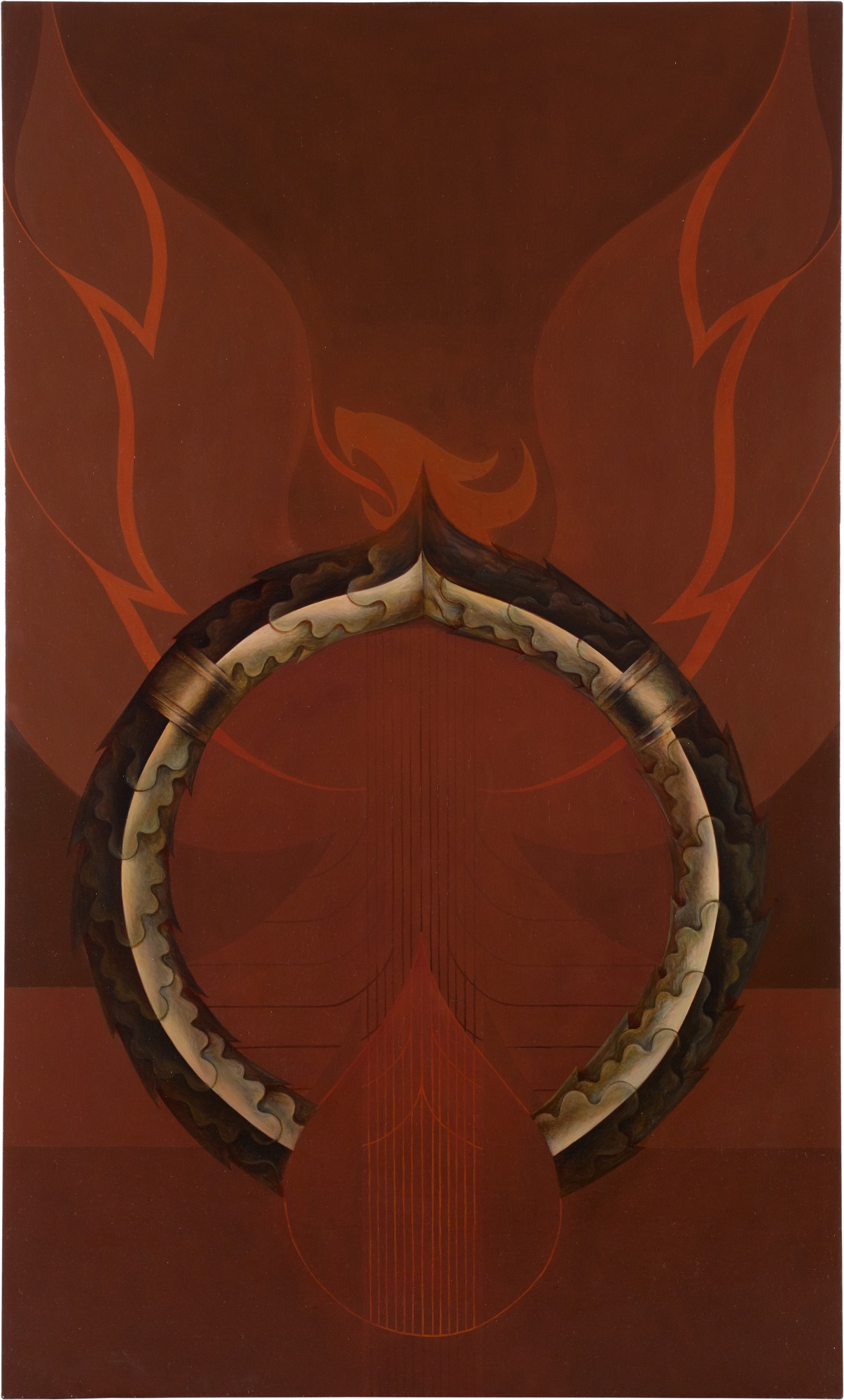
Standard (Bergen Pro-Model), 2000
These forces did not cancel each other out so much as fuse into something stranger and more potent. Growing up with access to the imagery and ideology of extreme music subcultures, Violette absorbed the visual language of metal album covers, the theatrical nihilism of black metal aesthetics, and the deeply American mythology of outsider rebellion. These were not passing influences but formative encounters that would eventually become the conceptual architecture of an entire artistic practice. Violette studied at the School of Visual Arts in New York, immersing himself in a city that was simultaneously processing its own histories of violence, urban decay, and cultural reinvention.
New York in the 1990s was a crucible for a generation of artists who refused easy categorization, and Violette found his footing among peers who understood that serious art could carry the weight of subcultural specificity without condescending to it. His early work demonstrated an extraordinary material intelligence, an ability to transform industrial substances like salt, black pigment, cast metal, and resin into objects that felt both relentlessly physical and strangely spectral. The development of Violette's artistic language is inseparable from his choice of materials, which reads almost like a poetic index of his themes. Salt, that ancient preservative and symbol of incorruptibility, appears throughout his sculptures encrusted onto surfaces in ways that suggest both crystalline beauty and the residue of something catastrophic.
Banks Violette
This work is number 7 from an edition of 20.
Cast aluminum and cast bronze carry the weight of permanence, of things meant to outlast their makers, while epoxy and polystyrene introduce a synthetic uncanniness that modern industrial production has made available. Works like "ghost" from 2002, constructed from epoxy, polystyrene, cast fiberglass, plywood, and IV units of water, demonstrate how Violette uses material accumulation not to decorate a surface but to stage a kind of conceptual event. The sculpture does not represent haunting so much as it performs it. Among his most discussed bodies of work are the pieces that directly engage with the imagery of motorsport and heavy metal iconography, rendered in his characteristic monochrome palette.
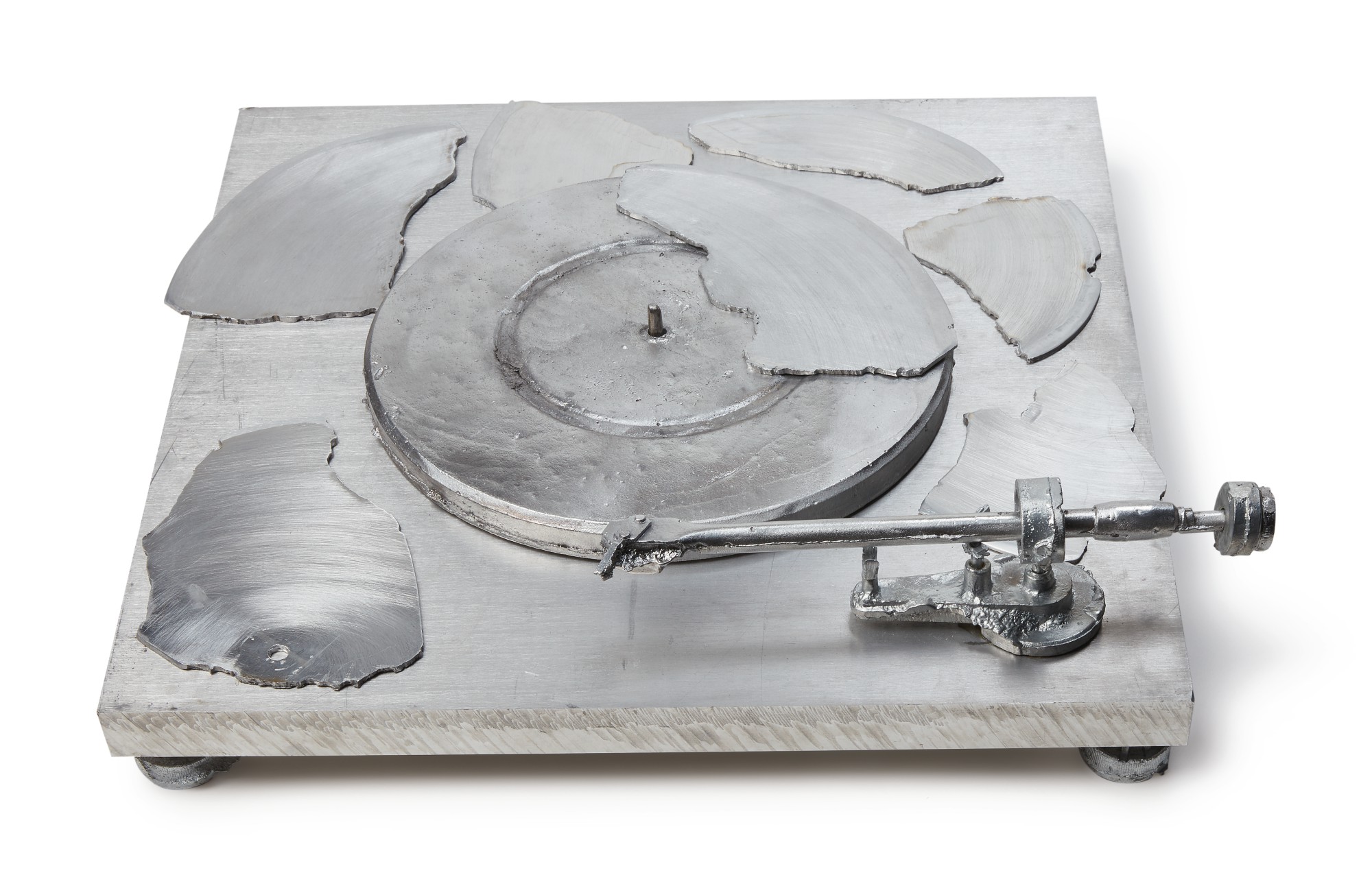
"Monte Carlo SS(1)" and "Motorhead (Inverted)" exemplify his strategy of taking culturally loaded objects and images and submitting them to a process of formal estrangement. By inverting, fragmenting, or materializing these references in unexpected substances, Violette strips away their familiar context and forces a confrontation with the raw symbolic energy beneath. "To Be Titled (Broken Record)" from 2008, cast in aluminum across eight parts, carries this logic into a meditation on fragmentation itself, on the broken thing as an object of contemplation rather than mere wreckage. The work is quietly monumental, each of its eight components insisting on its relationship to the others while maintaining its own discrete presence.
Banks Violette
To Be Titled (Broken Record), 2008
Collectors are drawn to Violette for reasons that go beyond aesthetic novelty, though novelty is certainly present. His work offers something rarer: a coherent and sustained philosophical vision rendered in objects of genuine formal beauty. The editioned works, including cast bronze pieces incised with the artist's monogram, offer points of entry that make his practice accessible without diminishing its seriousness. "Standard (Bergen Pro Model)" from 2000, executed in oil on linen, shows the painter's eye that underlies even his three dimensional work, a sensitivity to surface and tone that gives everything he touches a quality of considered intention.
For the collector who wants an artist with genuine intellectual depth as well as visual power, Violette represents an exceptional opportunity. His market has developed steadily, supported by institutional validation and a critical reputation that has only grown more secure with time. In the broader landscape of contemporary art, Violette occupies a position adjacent to artists who share his interest in subculture as serious subject matter and in the poetics of darkness as a formal problem. His work invites comparison to the sculptural investigations of artists like Paul McCarthy, who similarly mines American popular and subcultural mythology for materials, and to the installation practices of artists such as Mike Kelley, whose engagement with adolescent culture and its emotional residue shares something of Violette's sensibility.
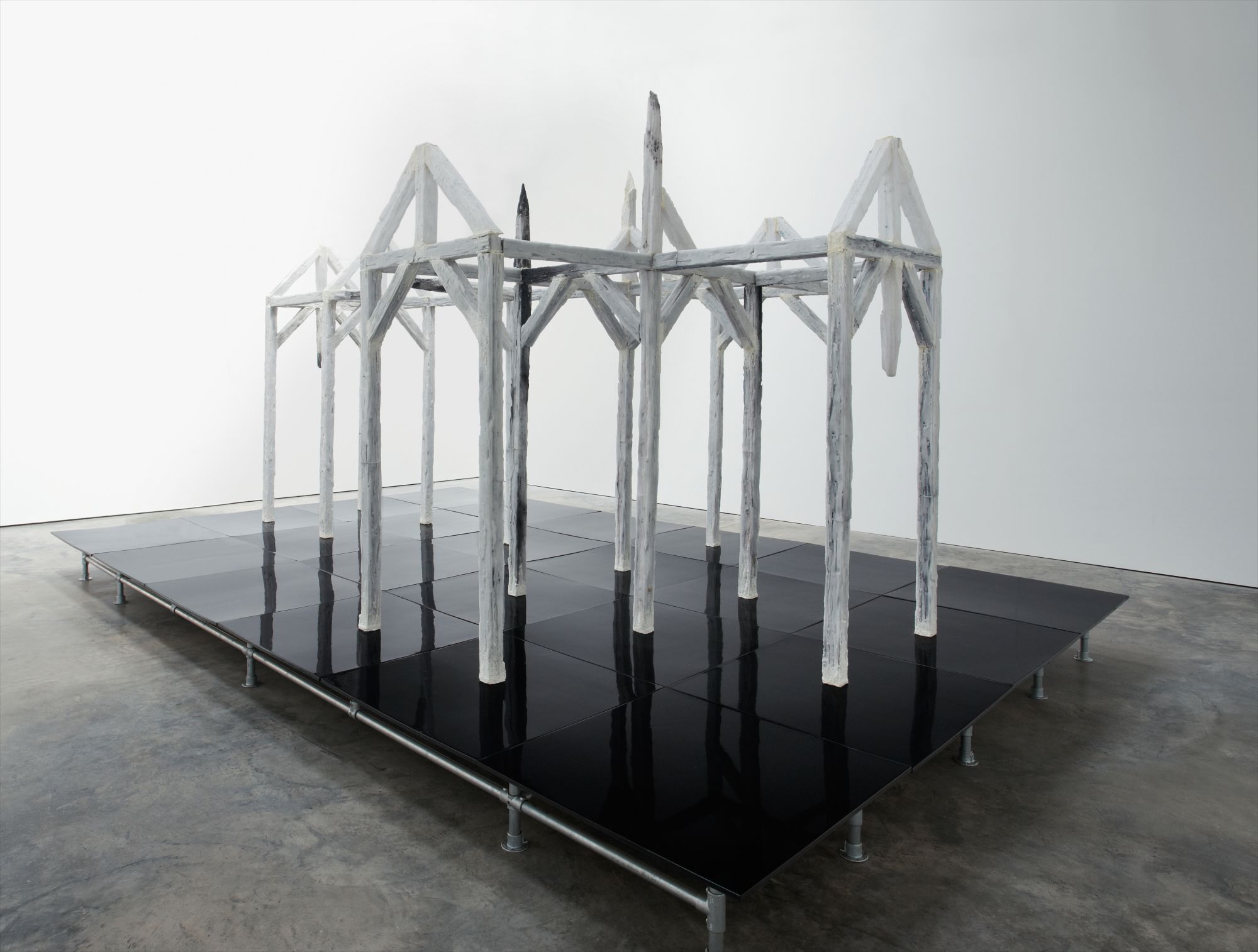
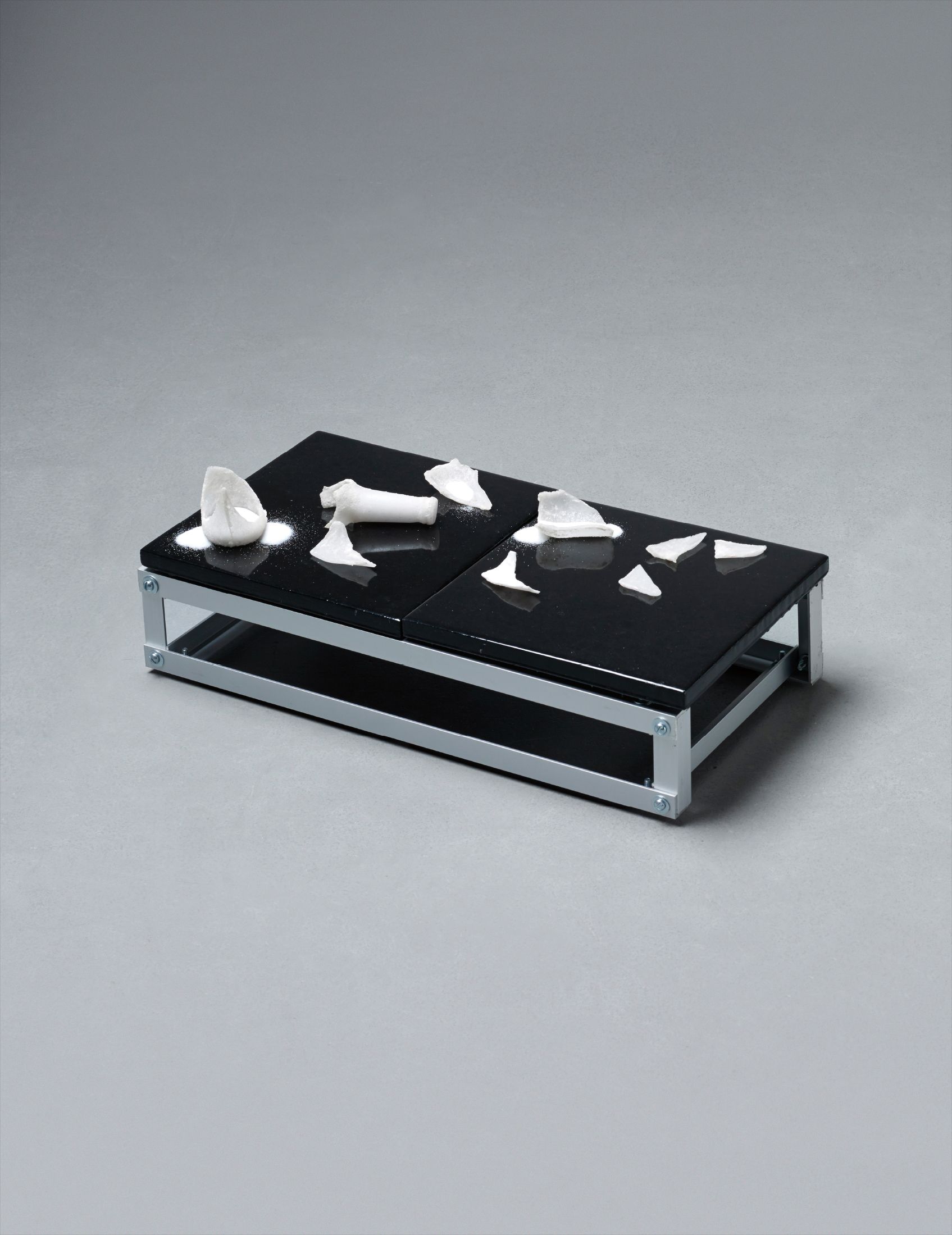
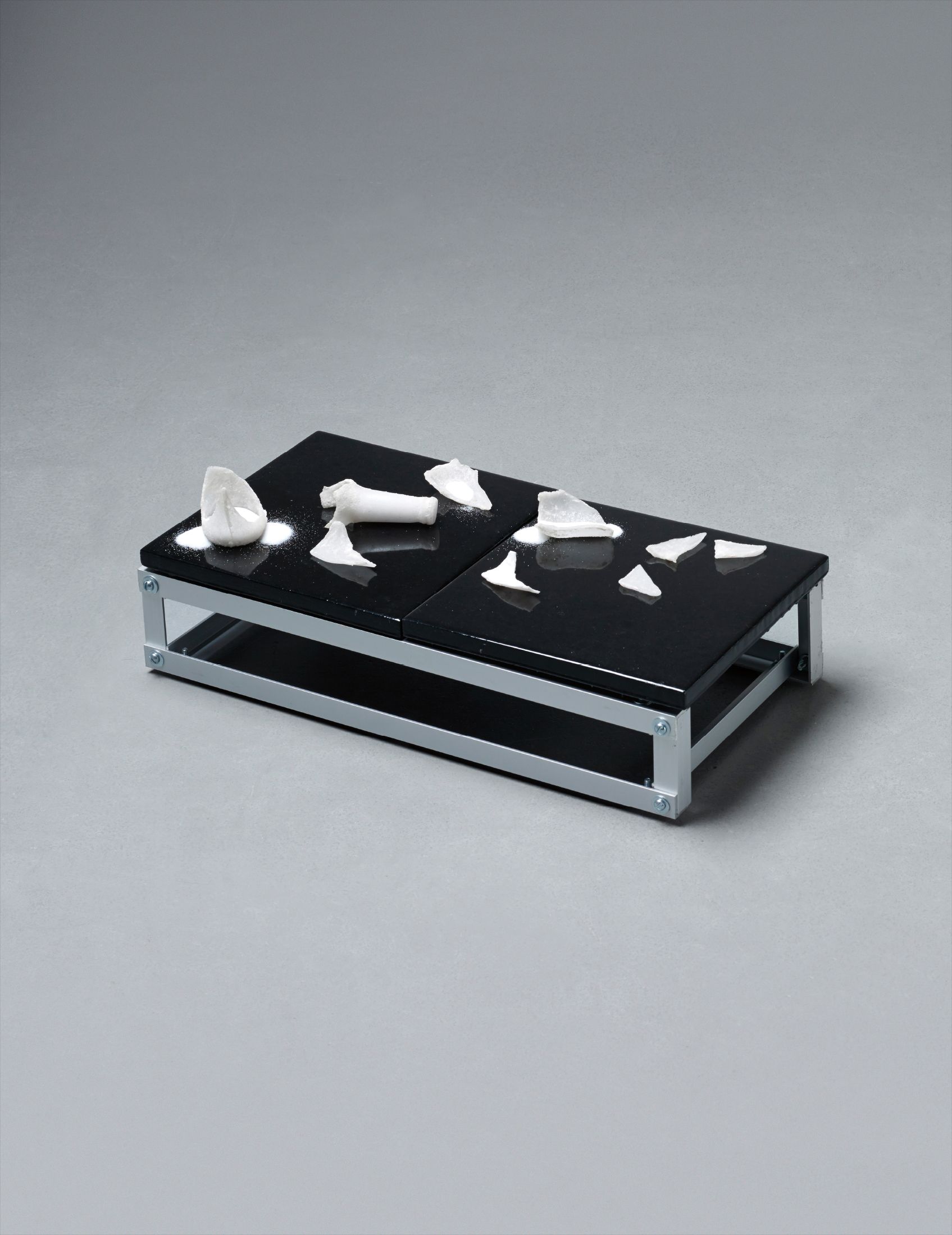
Banks Violette
bonded salt, salt, polyurethane, polymer medium, ash, epoxy, wood, galvanized steel, steel hardware
There is also a meaningful connection to the tradition of Minimalism and post Minimalism, in the way Violette's commitment to monochrome severity and industrial material creates a conversation with figures like Richard Serra and Robert Morris, even as the content departs radically from their concerns. Violette himself has spoken with precision about what drives his practice, articulating a belief that objects can be transformed by their proximity to significant events, that something of the energy of a moment can become embedded in a material form and remain there, available to those who approach it with attention. This is not mysticism but a kind of rigorous phenomenology, a belief in the capacity of physical things to carry meaning across time. It is what makes his sculptures feel inhabited rather than merely constructed, and it is what ensures that his practice will continue to reward collectors and institutions willing to commit to its particular demands.
In a contemporary art world that frequently rewards spectacle over substance, Banks Violette has built something more valuable: a body of work that only becomes more powerful the more deeply you enter it.