Axel Hütte
Axel Hütte Finds Light in the World
Artist Spotlight · The Collection Editorial
There is a particular kind of silence that settles over a room when an Axel Hütte photograph is on the wall. It is not emptiness, but presence, the feeling that the landscape or cityscape before you has been caught mid breath, suspended between what it is and what it means. In recent years, institutions and collectors across Europe and the United States have returned with renewed attention to Hütte's decades long investigation of place, light, and the human relationship with the natural and built environment. His work commands significant interest at auction and in the secondary market, with chromogenic prints and large format face mounted works appearing regularly at Christie's, Sotheby's, and Phillips, where collectors compete for pieces that, once acquired, rarely circulate again.
Axel Hütte
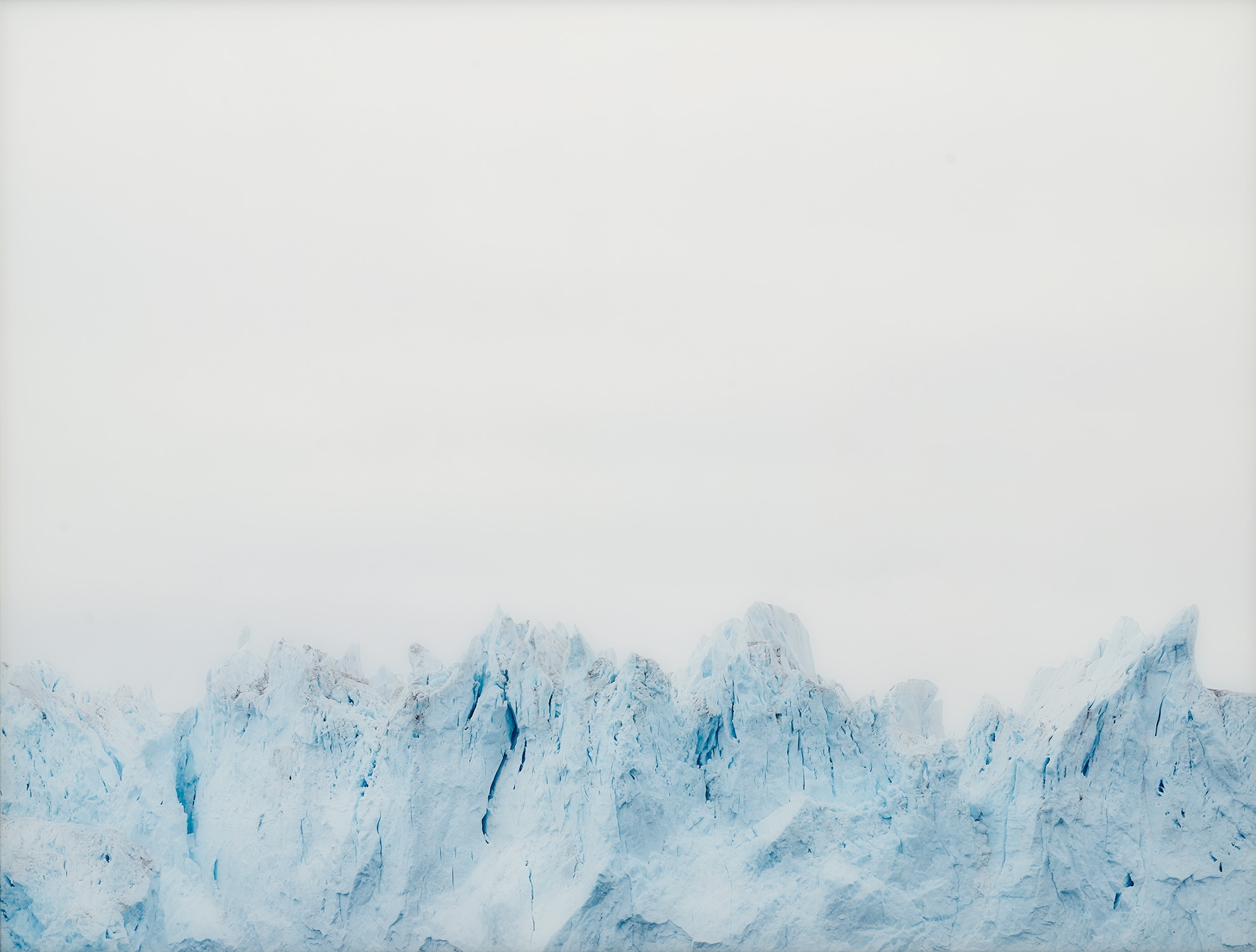
Illusisat, Glacier
Axel Hütte was born in Essen, Germany, in 1951, a city shaped by postwar reconstruction and the industrial weight of the Ruhr region. That formative geography, part ruin and part renewal, cultivated in him an early sensitivity to the tension between human ambition and natural endurance. He studied at the Kunstakademie Düsseldorf beginning in the 1970s under Bernd and Hilla Becher, the legendary conceptual photographers whose systematic documentation of industrial structures became one of the most influential pedagogical lineages in the history of photography. The Becher class, as it came to be known, produced an extraordinary generation including Andreas Gursky, Thomas Struth, Candida Höfer, and Thomas Ruff, and Hütte stands as one of its most quietly commanding voices.
While his peers often pursued scale as a declaration, filling gallery walls with monumental prints that overwhelmed through sheer size, Hütte developed a practice defined by restraint and atmosphere. Through the 1980s and into the 1990s he traveled extensively, photographing forests, rivers, mountains, and urban margins with a patience that bordered on devotional. He was less interested in the drama of a place than in its duration, the way a landscape persists regardless of whether anyone is looking. Works from this period, including his celebrated forest interiors and water studies, established the contemplative register that would define his mature voice.
Axel Hütte
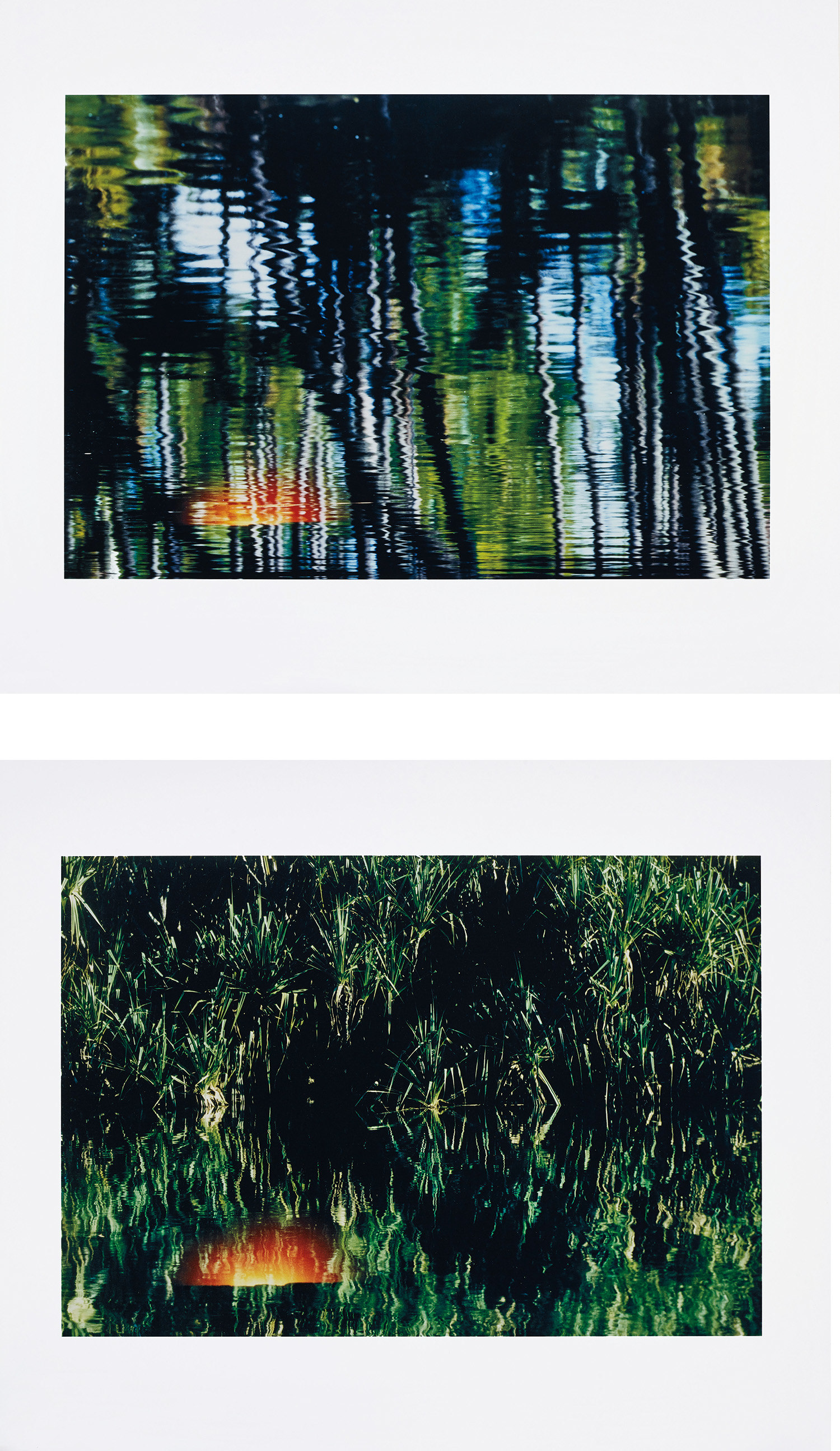
Sunset 1; and Sunset 2, from Double Exposure
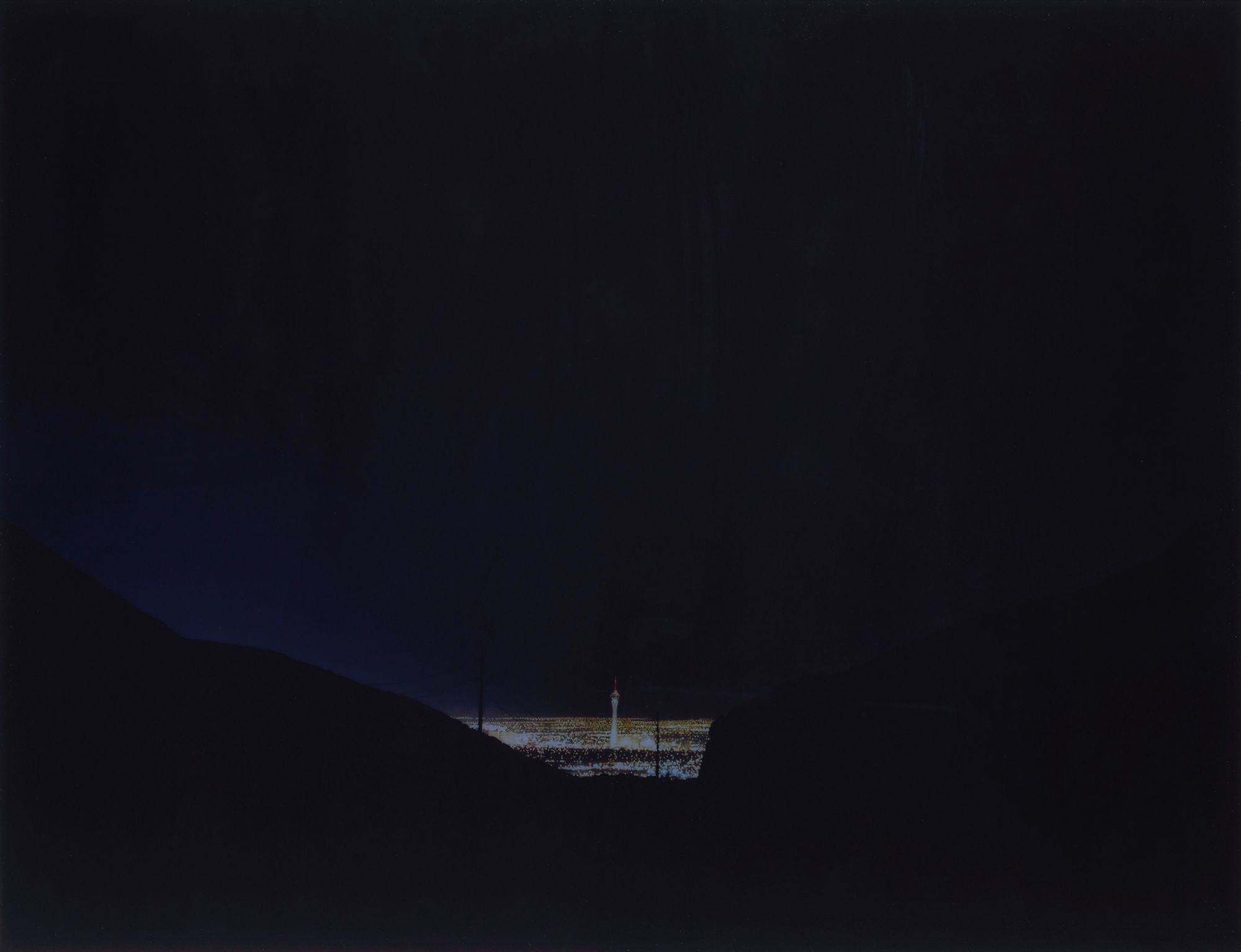
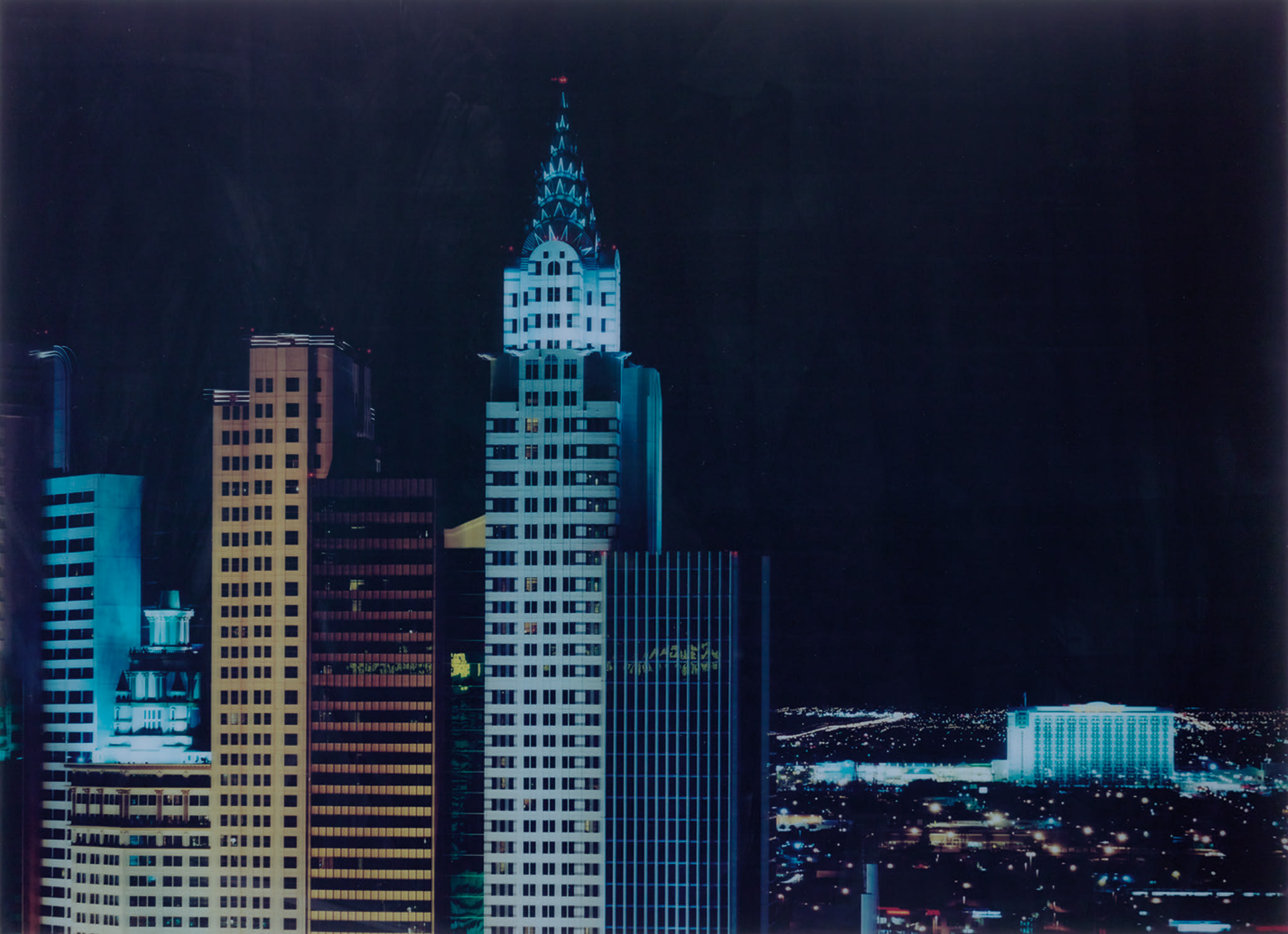
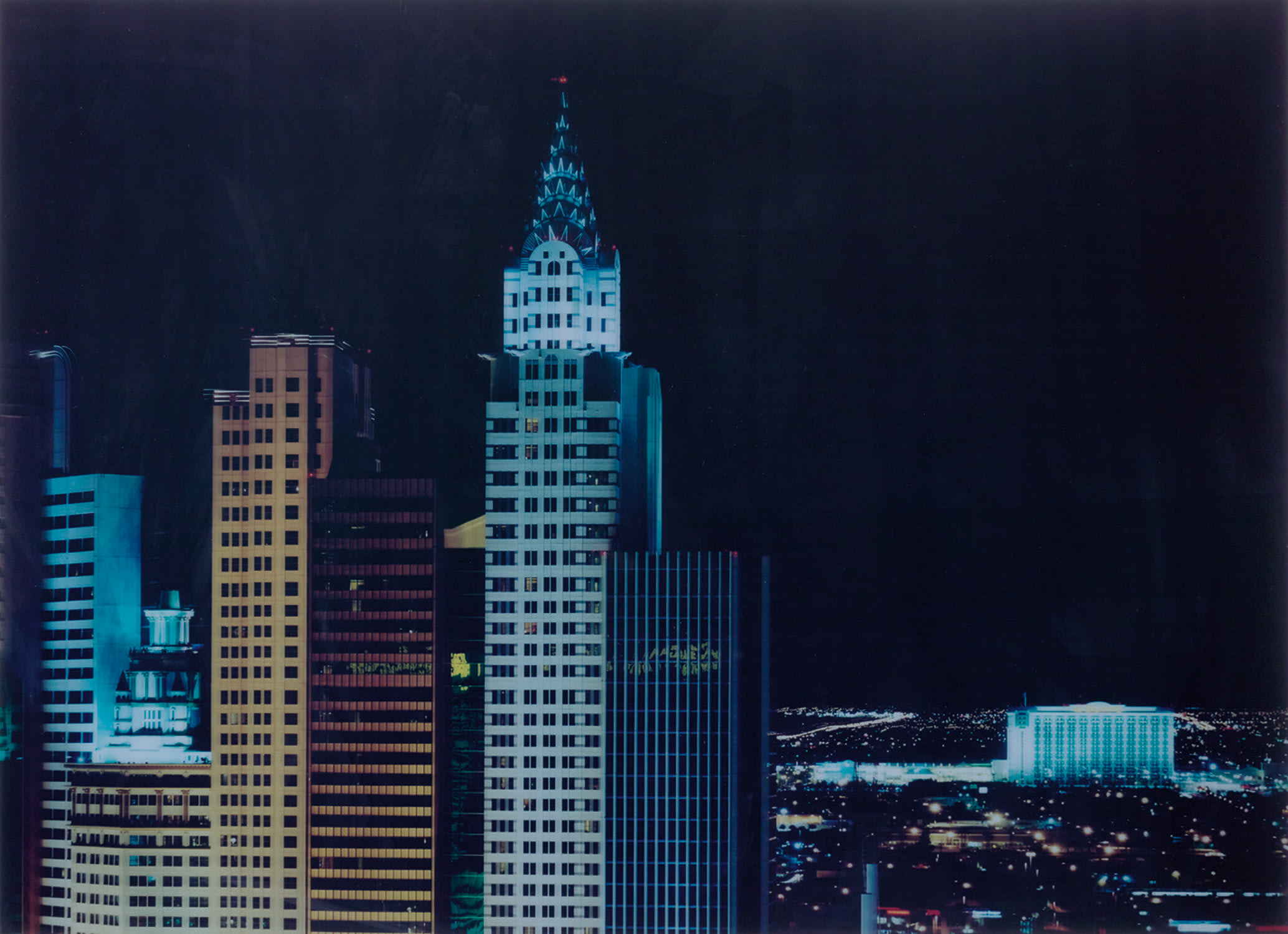
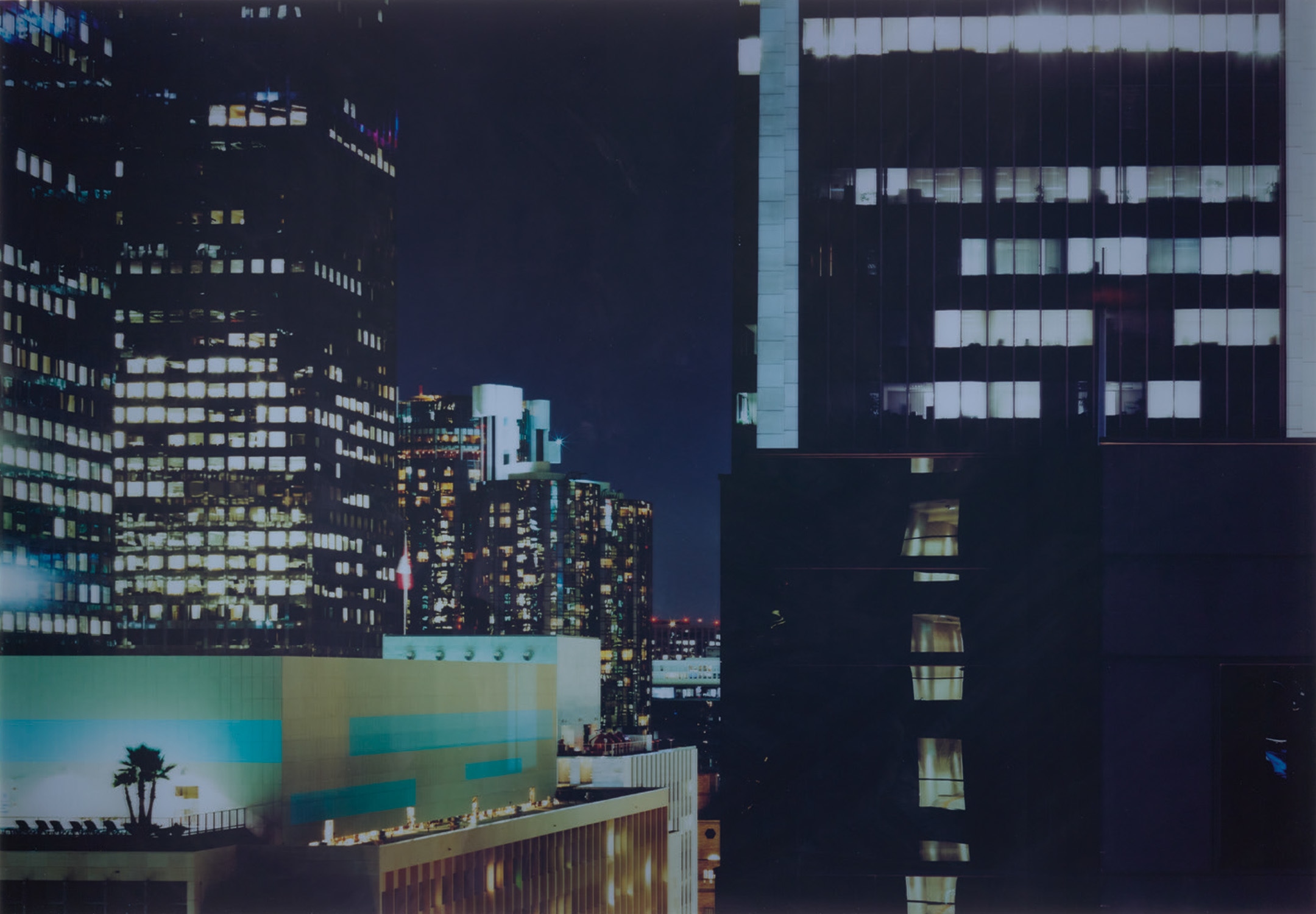
The breadth of Hütte's geography is one of the first things that strikes a careful viewer of his work. He has photographed the glaciers of Ilulissat in Greenland, the dense waterways of the Brazilian Amazon near Ariau, the desert light of the American Southwest, and the layered urban textures of New York and Los Angeles. His Las Vegas series, which includes works such as Stratosphere Tower and the New York New York hotel, approaches the artificial spectacle of that city not with irony or critique but with something closer to wonder, as though the accumulated illusions of Las Vegas are simply another form of landscape deserving the same sustained gaze. His Los Angeles Standard Hotel photograph carries a similarly generous attention, finding in that modernist structure a stillness that the building's designers likely never imagined.
His Double Exposure series, published by Edition Schellmann in Munich and New York, represents one of the most collectible bodies of work in his catalogue. Sunset 1 and Sunset 2, both signed and numbered in pencil and issued in an edition of 45 with 10 artist's proofs, demonstrate his interest in layering perception, in asking whether two moments of the same event can ever truly be the same. The archive copy sets, annotated with the designation AC, carry particular significance for serious collectors. Edition Schellmann, with its long history of publishing works by artists including Joseph Beuys and Andy Warhol, lent these photographs an institutional context that positioned Hütte firmly within the conversation of postwar European art publishing.
Axel Hütte
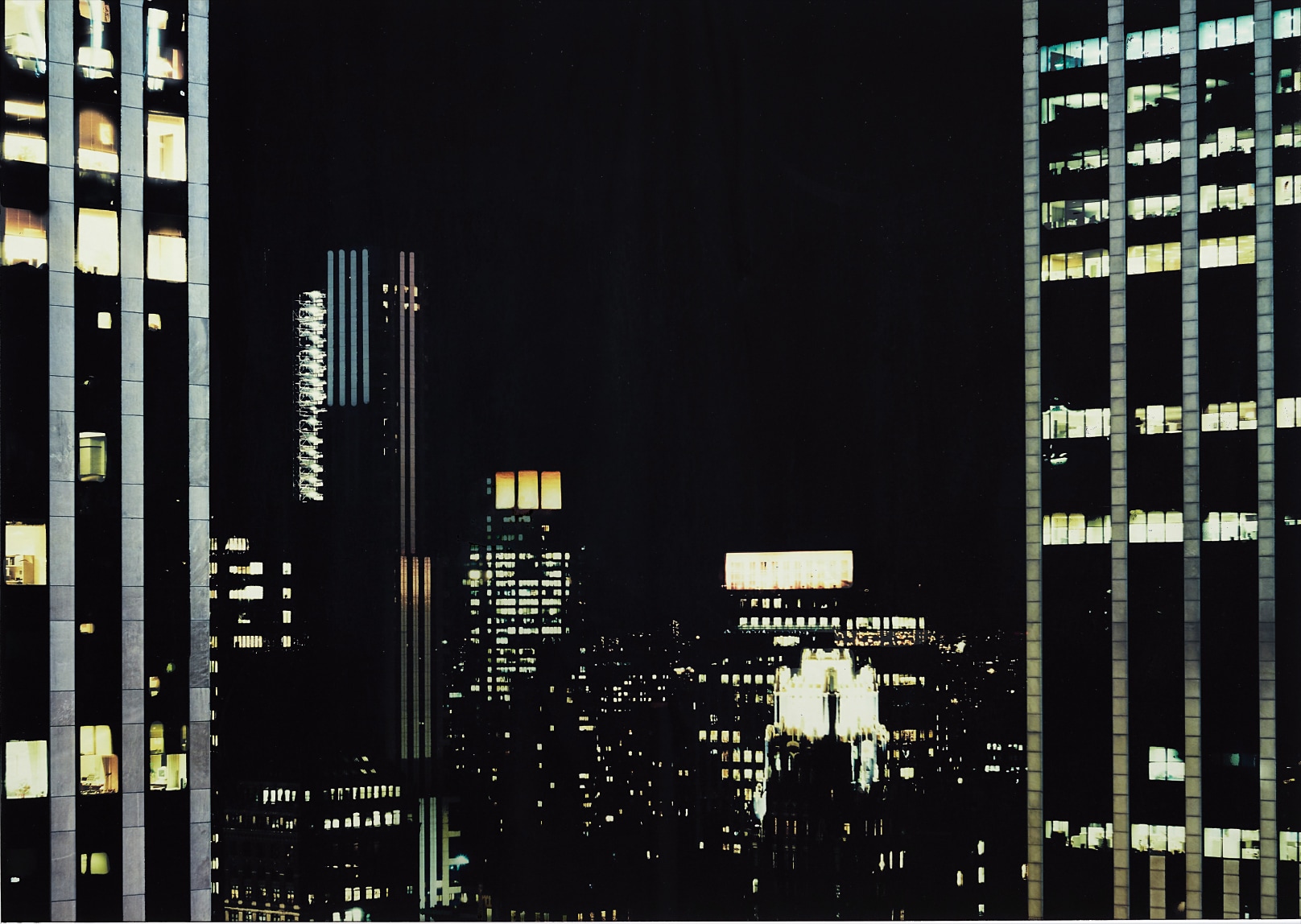
Bryant Park, New York
For collectors approaching Hütte's work, the chromogenic print is the medium most associated with his vision. Face mounted to Plexiglas, as in works like Griethausen Wasser, the surface takes on a luminosity that makes the image feel lit from within rather than illuminated from without. This technical choice is not merely aesthetic but philosophical. The Plexiglas mount dissolves the boundary between photograph and viewer, creating an immersive encounter that rewards prolonged looking.
Works from his nature series, including Kakadu National Park I from Australia and the Akbota I from 1999, show the full range of his chromogenic palette, from the saturated greens of tropical wilderness to the cool blues of northern ice. Within the broader context of the Düsseldorf School, Hütte occupies a distinctive position. Where Gursky pushes toward the epic and Struth toward the sociological, Hütte remains committed to the lyrical. His closest spiritual kin might be found not only among his schoolmates but also in the traditions of German Romantic landscape painting, in the work of Caspar David Friedrich, where the natural world is a theatre for interior experience.
Axel Hütte
Los Angeles, Standard Hotel
There is also a kinship with the quiet photography of Hiroshi Sugimoto, whose seascapes share Hütte's interest in duration and elemental reduction, and with the atmospheric landscapes of Elger Esser, another Becher student who pursued a more painterly photographic language. The legacy of Axel Hütte rests on something that resists easy categorization. He has spent more than four decades teaching us how to look at the world without rushing toward conclusions, without reducing a place to its postcard version or its symbolic value. His photographs ask for time, and they reward it.
In an era of accelerating imagery, when attention is the scarcest resource and every surface competes for it, the experience of standing before a Hütte print feels almost countercultural, a quiet insistence that the world, seen carefully, is inexhaustible. Collectors who have lived with his work consistently describe a deepening relationship over years, the sense that the image reveals more the longer it is known. That quality, rarer than any technical brilliance, is the true measure of his achievement.
Featured Works