Arthur Dove
1
Works
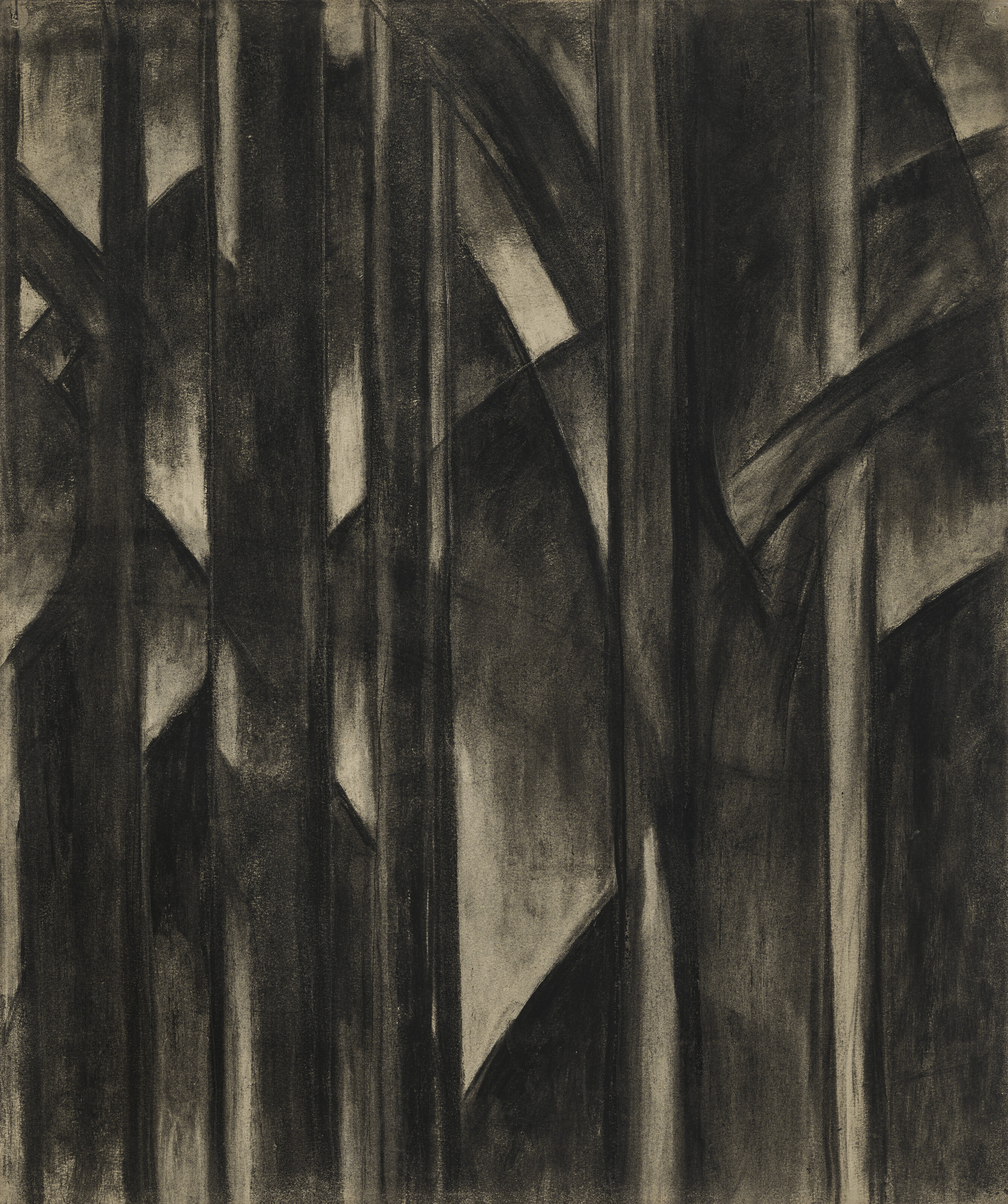
Arthur Garfield Dove was a pioneering American modernist painter who is widely recognized as one of the first American artists to create purely abstract works. Born in Canandaigua, New York, Dove initially worked as a commercial illustrator before traveling to Europe in 1907-1909, where he was exposed to the avant-garde movements of Fauvism and early Cubism. Upon returning to the United States, he became associated with Alfred Stieglitz's influential circle at 291 Gallery in New York, exhibiting there regularly and forming lasting friendships with other American modernists including Georgia O'Keeffe, John Marin, and Marsden Hartley. Dove's artistic practice was characterized by his organic abstractions derived from nature, reducing landscapes, plants, and natural phenomena to their essential forms and rhythmic patterns. His works from the 1910s, such as his "Extractions" series (1910-1911), are considered among the earliest non-representational paintings in American art. He employed a distinctive vocabulary of rounded, biomorphic shapes and a muted, earthy palette to evoke the spiritual essence of natural forms rather than their literal appearance. Notable works include "Fog Horns" (1929), "Ferry Boat Wreck" (1931), and "That Red One" (1944), which demonstrate his ability to translate sensory experiences, sound, movement, and atmosphere, into visual equivalents. Despite facing financial hardship throughout much of his career, Dove remained committed to his experimental approach and continued to innovate, creating assemblages and collages that incorporated found materials. His work bridged American Transcendentalist philosophy with European modernist aesthetics, influencing subsequent generations of abstract painters. Today, Dove is celebrated as a crucial figure in American modernism, with his works held in major museum collections including the Metropolitan Museum of Art, the Whitney Museum of American Art, and the Phillips Collection in Washington, D.C., which houses the largest collection of his paintings.
Artists in conversation