Antonio Tempesta
Antonio Tempesta, Master of Magnificent Motion
Artist Spotlight · The Collection Editorial
Picture Rome in the final decades of the sixteenth century, a city crackling with creative ambition and papal patronage, its studios thick with the smell of ink and varnish. Into this charged atmosphere came a young Florentine artist whose restless eye and tireless hand would produce one of the most astonishing bodies of printed work the Western world had ever seen. Antonio Tempesta, born in Florence in 1555, arrived in Rome and never truly left, spending the better part of five decades filling copper plates and canvases with storms of horses, tumbling gods, and embattled soldiers rendered with a ferocity of line that still commands attention across the centuries. His story is one of extraordinary industry married to genuine artistic vision, and collectors and scholars alike are finding fresh reasons to celebrate it.
Antonio Tempesta
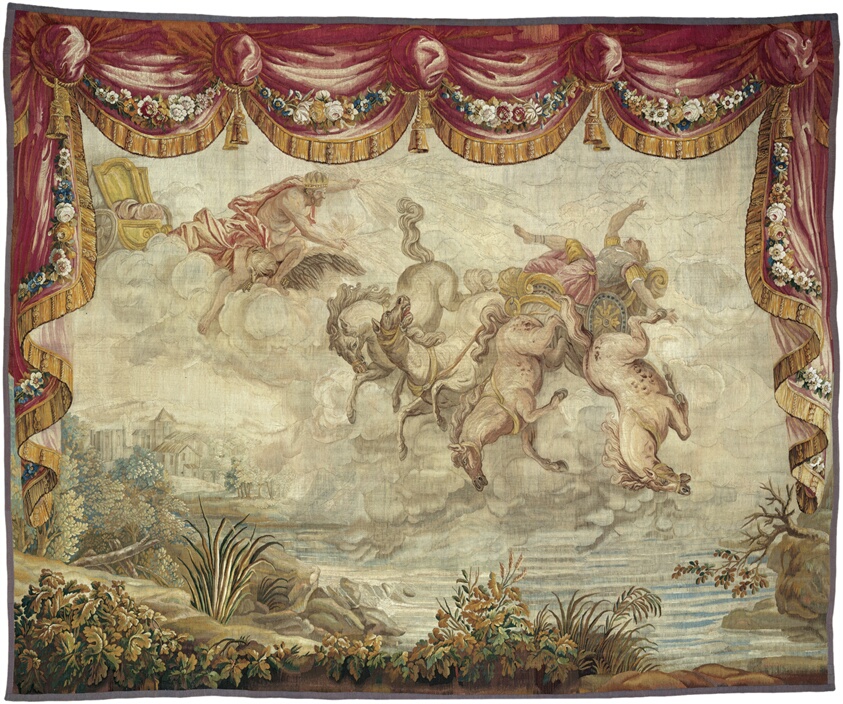
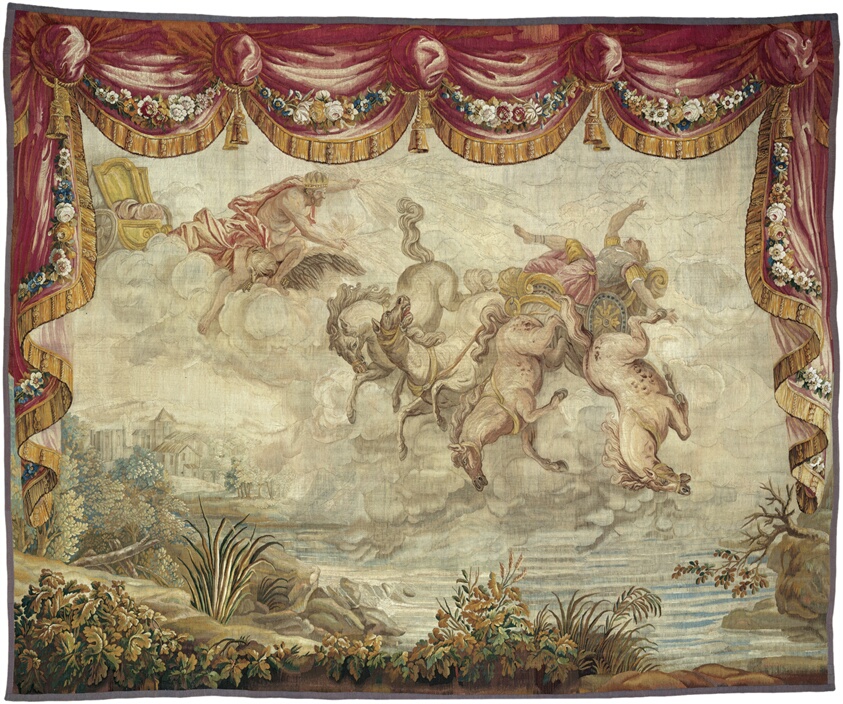
The Fall of Phaeton, 1776
Tempesta came of age in Florence under the formative guidance of the Flemish painter Jan van der Straet, known widely as Stradanus, a figure who was himself a titan of the late Mannerist moment and a celebrated contributor to the decorative schemes of the Medici court. From Stradanus, the young Tempesta absorbed a passion for the kinetic image, for the arrested moment of the hunt, the charge, the mythological confrontation caught at its most electrically alive. This was an education not simply in technique but in a way of seeing the world as perpetual drama, a sensibility Tempesta would carry with him for the rest of his long working life. He also participated in the ambitious fresco campaigns of Giorgio Vasari at the Palazzo Vecchio in Florence, an early immersion in large scale narrative painting that sharpened his instinct for compositional architecture and storytelling across complex, populated scenes.
When Tempesta settled in Rome, likely in the late 1570s, he encountered a print culture of enormous sophistication and commercial reach. He trained and collaborated with Flemish and Italian engravers working in the orbit of the great publishing houses, absorbing the technical vocabulary of engraving before developing an etching practice of remarkable fluency and speed. It is the etchings above all that define his legacy. Working with a freedom that engraving's slower, more laborious method rarely permitted, Tempesta achieved a crackling energy in his line, a shorthand for musculature, fur, foliage, and flame that was entirely his own.
Antonio Tempesta
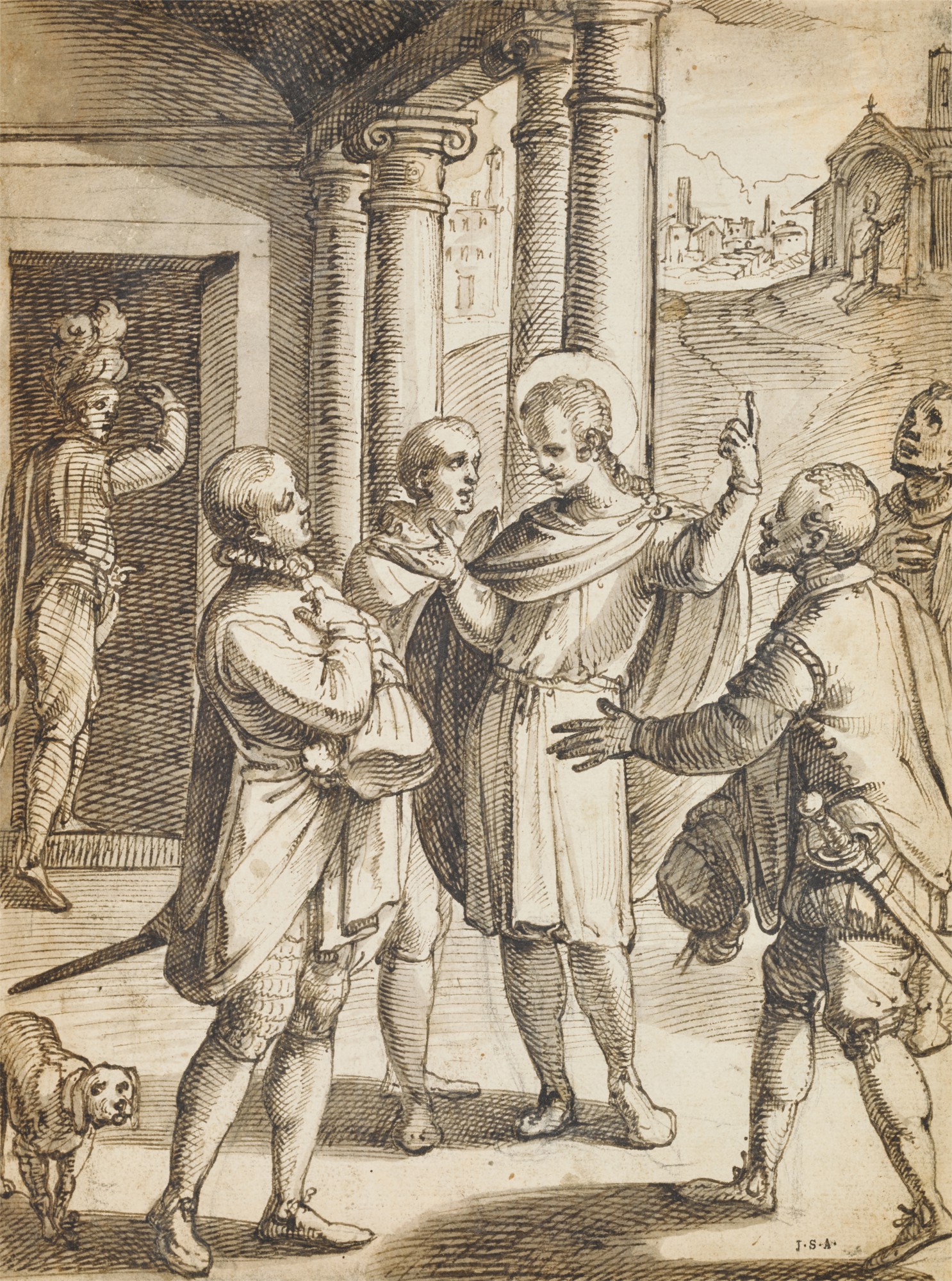
A) St. Benedict receiving the homage of the Pope and of Kings, Knights and Cardinals B) Scene from the Life of Saint Benedict
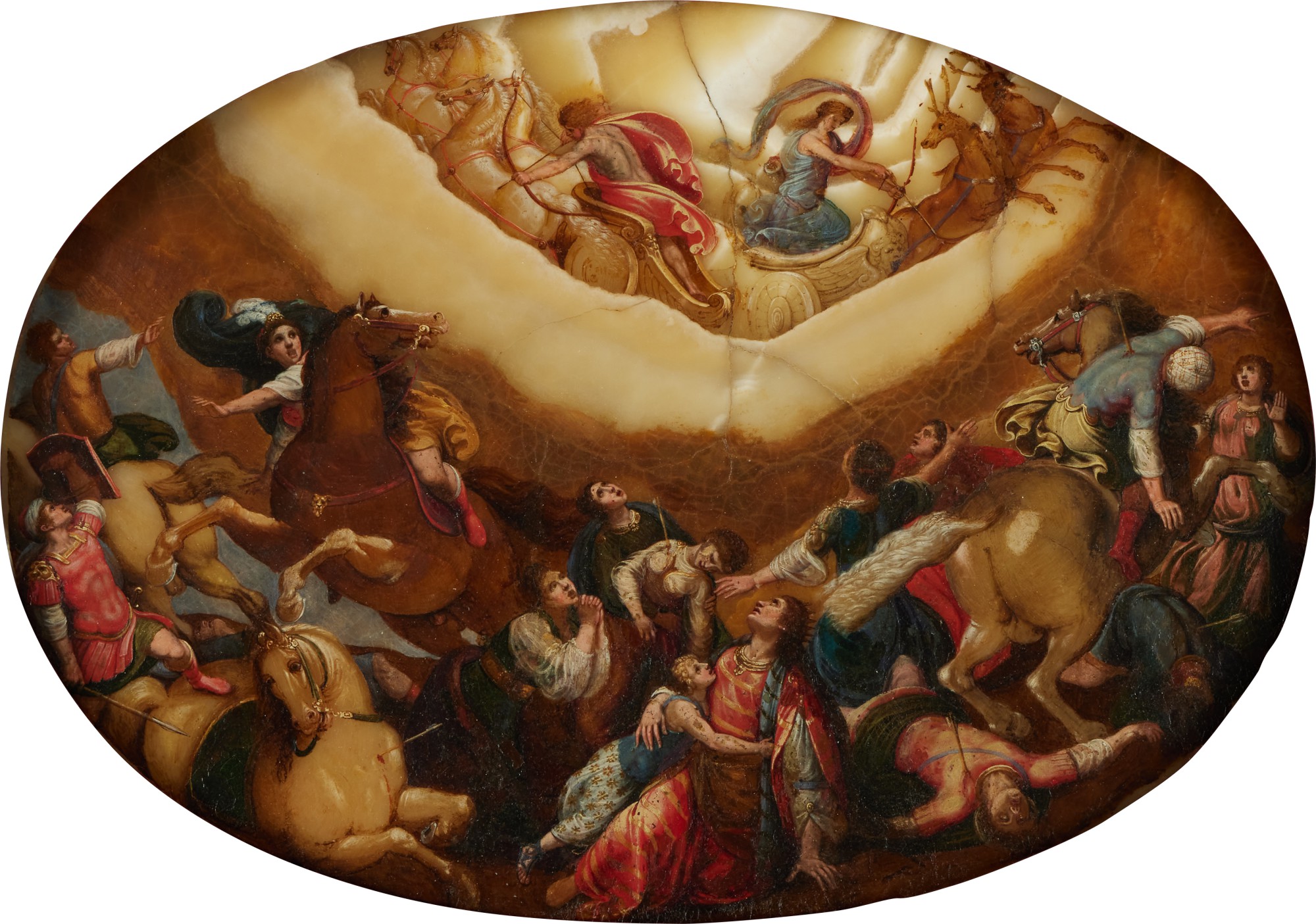
Over the course of his career he produced well over fifteen hundred prints, a figure that staggers the imagination and places him among the most prolific printmakers of any era in European art. His subject matter was as wide as his ambition. Hunting scenes, battles ancient and modern, the lives of saints, mythological narratives drawn from Ovid and Virgil, maps, equestrian studies, scenes from the Old Testament: Tempesta moved between these worlds with confident ease, always returning to his great obsession with animals and with bodies in violent, graceful, or devotional motion. The work titled The Death of Niobe's Children, rendered in oil on alabaster laid on slate in an oval format, shows the more intimate, precious side of his practice, the use of alabaster as a support giving the painted surface a luminous, almost otherworldly glow entirely suited to a scene of divine retribution.
Similarly, the pair of drawings depicting scenes from the Life of Saint Benedict reveals his command of pen, brown ink, and wash over chalk, compositions built with economy and clarity and clearly intended as cartoons for translation into another medium. These works demonstrate that Tempesta was not merely a printmaker but a draughtsman of considerable refinement, comfortable in the language of disegno that underpinned all serious Italian artistic practice. The tapestry version of The Fall of Phaeton, woven in wool and silk in a slit and double interlocking technique, stands as a testament to the extraordinary afterlife of his designs. Tempesta's compositions circulated so widely through his prints that they served as source material for craftsmen and artists across Europe, from weavers in the great ateliers of Brussels and Paris to painters in the studios of Prague and Antwerp.
Antonio Tempesta
The death of Niobe's children
This dissemination was not accidental. He worked closely with publishers and print dealers who understood that his imagery, with its combination of classical learning and visceral drama, spoke to a pan European audience hungry for narrative imagery of quality and ambition. In this sense Tempesta was not simply an artist but an image economy unto himself, a one man supply chain of visual culture for the late Mannerist and early Baroque world. For collectors today, works on paper and prints by Tempesta represent an accessible and genuinely rewarding entry point into the art of the late sixteenth and early seventeenth centuries.
His etchings appear regularly at the major auction houses and through specialist Old Master dealers, and while the finest impressions of his celebrated hunting and battle series command serious attention, there remains a healthy range of material available to collectors at varying levels of engagement. Condition and the quality of the impression are paramount considerations: early impressions, before the copper plates wore down under repeated printing, show a crispness and tonal richness that later states cannot match. The rarer painted works and drawings, when they come to market, are keenly contested precisely because they offer direct insight into a creative process usually glimpsed only through its reproductive output. To understand Tempesta's place in art history is to appreciate the dense web of influence connecting the Northern and Southern European artistic traditions in this period.
He sits in productive dialogue with contemporaries such as Hendrik Goltzius in the Netherlands, whose virtuoso engraving technique defined the northern print world, and with the Roman milieu of figures like Cherubino Alberti. He drew on the compositional discoveries of Giovanni Bologna and the energy of the Florentine Mannerist tradition, while his Roman years brought him into contact with the early stirrings of the Baroque, a moment when the static hierarchies of Mannerism were beginning to give way to something more immediate and emotionally direct. Tempesta belongs to this hinge moment, and his work carries the excitement of an art in productive transformation. What makes Antonio Tempesta lastingly significant is precisely this quality of generous, unguarded energy.
He made no pretense to the lofty singularity of a Michelangelo or a Raphael, but he understood better than almost anyone of his generation how images move through the world, how they lodge in the imagination and inspire makers and dreamers far beyond the original moment of creation. His prints hung in princely collections and modest households alike, shaping the visual vocabulary of an entire continent. For collectors and admirers who encounter his work today, whether in the luminous intimacy of an oil on alabaster or the urgent scratched lines of an etching, there is the abiding pleasure of meeting an artist who gave everything to the image, and whose generosity of invention has lost none of its power.
Explore books about Antonio Tempesta