Anish Kapoor
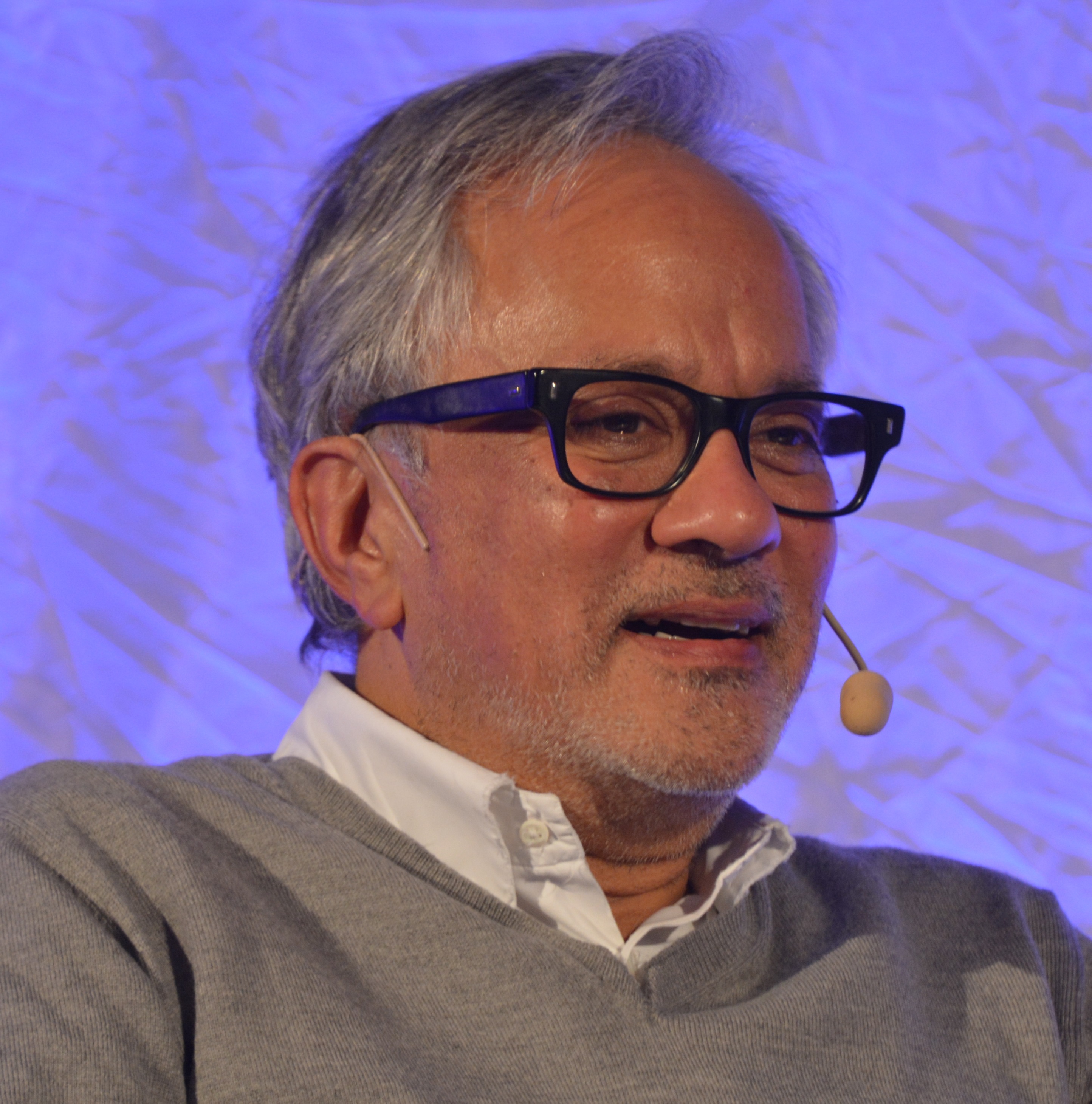
Anish Kapoor: Sculptor of the Infinite
Artist Spotlight · The Collection Editorial
“I am interested in making work about what I cannot see, about what lies beyond the visible.”
Anish Kapoor
In the autumn of 2023, visitors to the Galleria dell'Accademia in Venice stood transfixed before Anish Kapoor's monumental installation "Dirty Corner," a work that had already electrified public discourse across Europe. That same year, his retrospective engagements across major institutions reaffirmed what the art world has understood for decades: Kapoor is not merely one of the most significant sculptors alive, but one of the defining artistic minds of the last half century. His ability to transform inert material into portals of perception, works that seem to breathe and pull the viewer inward, has made him a touchstone for collectors, curators, and philosophers of art alike. The market, never slow to recognize genius, has responded in kind, with major works commanding prices well into the millions at auction houses including Christie's and Sotheby's.
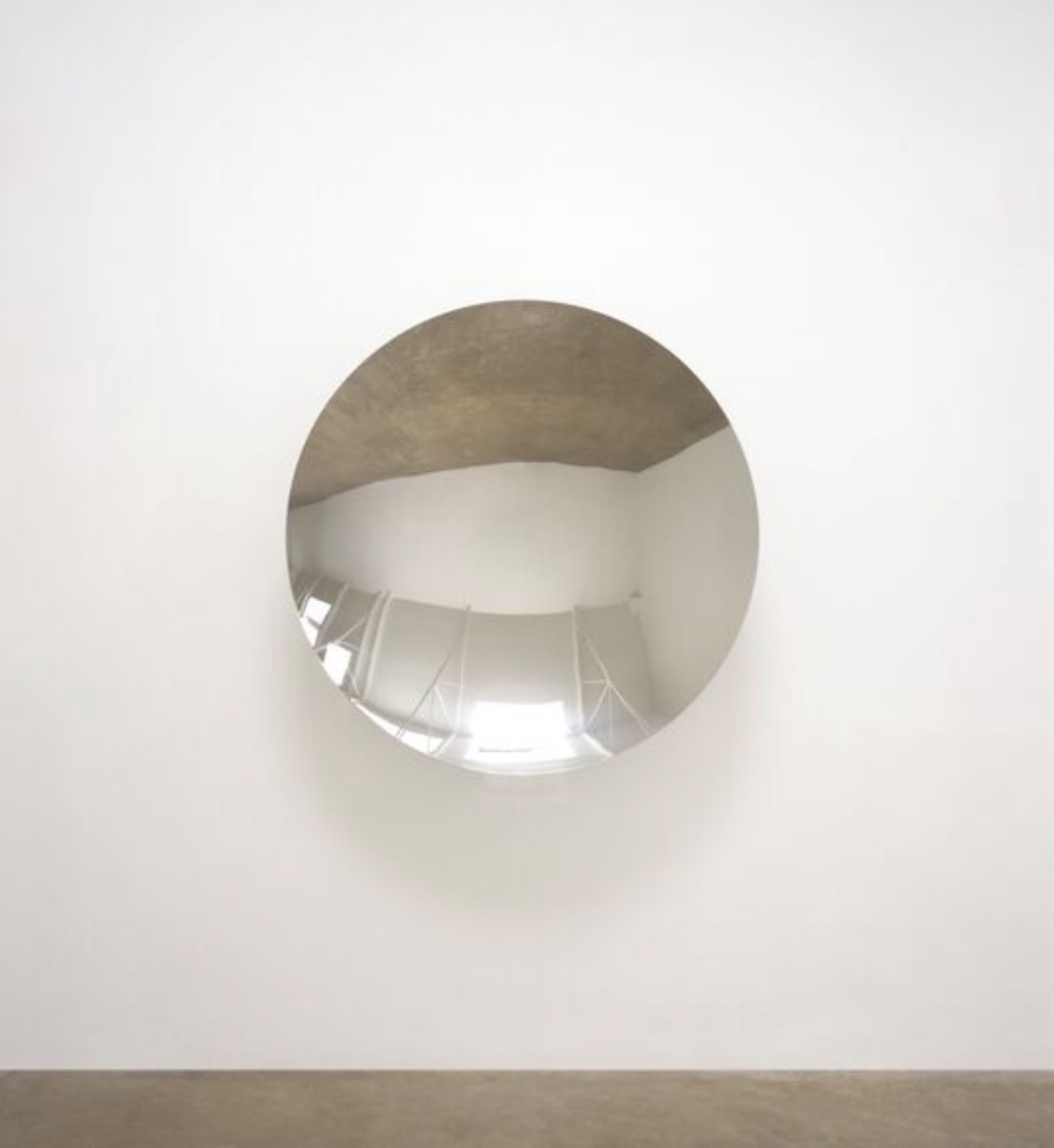
Anish Kapoor
Untitled, 2006
Anish Kapoor was born in Mumbai in 1954, the son of a Hindu father and a Jewish Iraqi mother, a heritage that seeded in him a profound sensitivity to ritual, myth, and the space between worlds. He spent his formative years in India before relocating to London in the early 1970s, first enrolling at Hornsey College of Art and later completing his studies at the Chelsea School of Art and Design. London in that era was alive with the friction between tradition and radical reinvention, and Kapoor absorbed it all without surrendering the interior landscape he carried from Mumbai. That tension between East and West, between the sacred and the secular, between presence and absence, would become the animating pulse of his entire practice.
Kapoor rose to international attention in the 1980s as a central figure in the New British Sculpture movement, alongside artists such as Tony Cragg and Richard Deacon. His early works were deceptively simple: geometric forms dusted or submerged in intensely saturated dry pigments, vivid magentas, cobalt blues, and cadmium yellows that seemed to radiate light from within. These pieces, shown to great acclaim at the Kunsthalle Basel in 1985 and later at the British Pavilion during the 1990 Venice Biennale, where he represented Great Britain and won the Premio Duemila prize, established his reputation as an artist capable of making the material world feel genuinely metaphysical. The pigment works were not decorative.
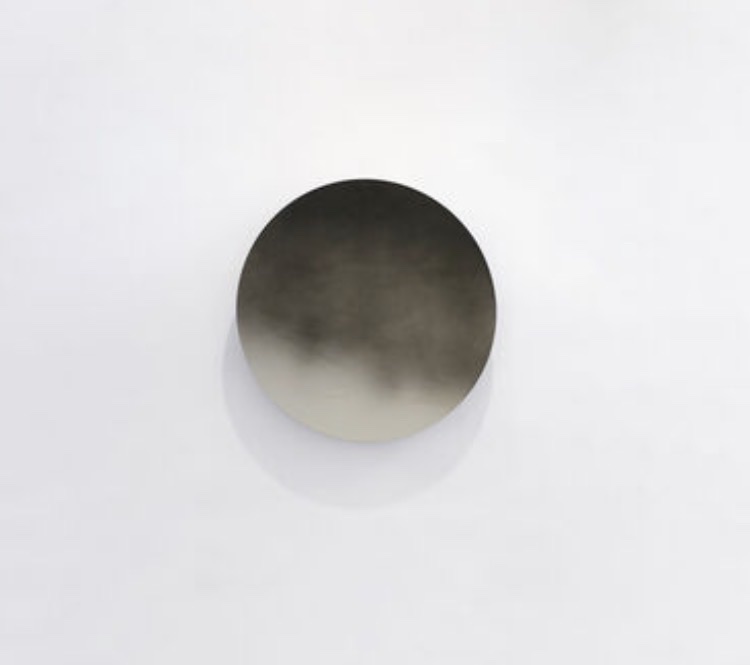
Anish Kapoor
Black Mist, 2019
They were investigations into how color and form could dissolve the boundary between object and atmosphere. Through the 1990s and into the 2000s, Kapoor turned increasingly toward reflective and concave forms, works in highly polished stainless steel that captured and distorted the world around them. "Cloud Gate," installed permanently in Chicago's Millennium Park in 2006, became a genuine cultural landmark, a public sculpture that millions of people experience each year not as passive observers but as participants whose own reflections become part of the work. That same capacity to implicate the viewer, to make looking feel like a kind of becoming, runs through works such as "Sky Mirror" and the various Non Object series.
“All art must go beyond the mere object and in some sense deal with the sacred.”
Anish Kapoor, interview with Homi K. Bhabha
His stainless steel pieces, including "Non Object (Spire)" from 2007, negotiate the edge of visibility itself, producing forms that seem to vanish into their own reflections. These works are represented on The Collection and offer collectors a direct encounter with one of the most rigorously conceived bodies of work in contemporary sculpture. Kapoor's engagement with darkness and void reached a new frontier with his collaboration with Surrey NanoSystems, which led to his exclusive artistic rights to use Vantablack, a substance that absorbs 99.96 percent of visible light.
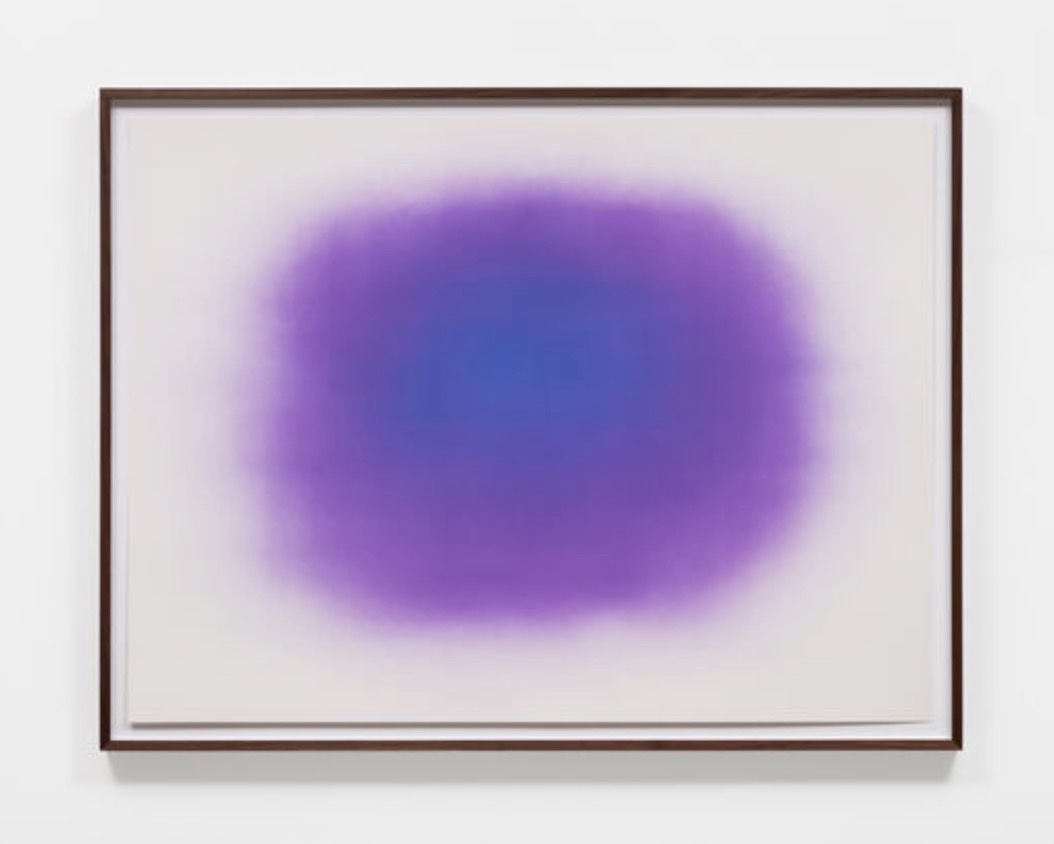
Anish Kapoor
Flow 3, 2019
Works incorporating this material, along with his ongoing explorations in resin, lacquer, and mixed pigment, reveal an artist who remains restlessly curious about the outer limits of perception. His lacquered stainless steel pieces, such as "Red mix 2 over Oriental Blue" from 2020, layer color and reflection in ways that feel simultaneously industrial and painterly, ancient and urgently contemporary. The works on paper, including etchings such as "Yellow Rising" from 2018 and "Flow 3" from 2019, demonstrate that even in more intimate formats, Kapoor commands a compositional authority that rewards sustained attention. For collectors, Kapoor represents one of the most compelling propositions in the contemporary market.
His works appear regularly at the major international auction houses and continue to perform with remarkable consistency. The breadth of his output means that entry points exist across a wide range of formats and price levels, from the commanding stainless steel sculptures that anchor institutional and major private collections to the richly worked etchings and works on paper that offer genuine depth of engagement at a more accessible scale. Collectors drawn to artists who operate at the intersection of philosophical inquiry and material mastery, figures such as James Turrell, Richard Serra, or Olafur Eliasson, will find in Kapoor a natural companion and a foundational pillar for any serious contemporary collection. Within the broader arc of art history, Kapoor occupies a singular position.
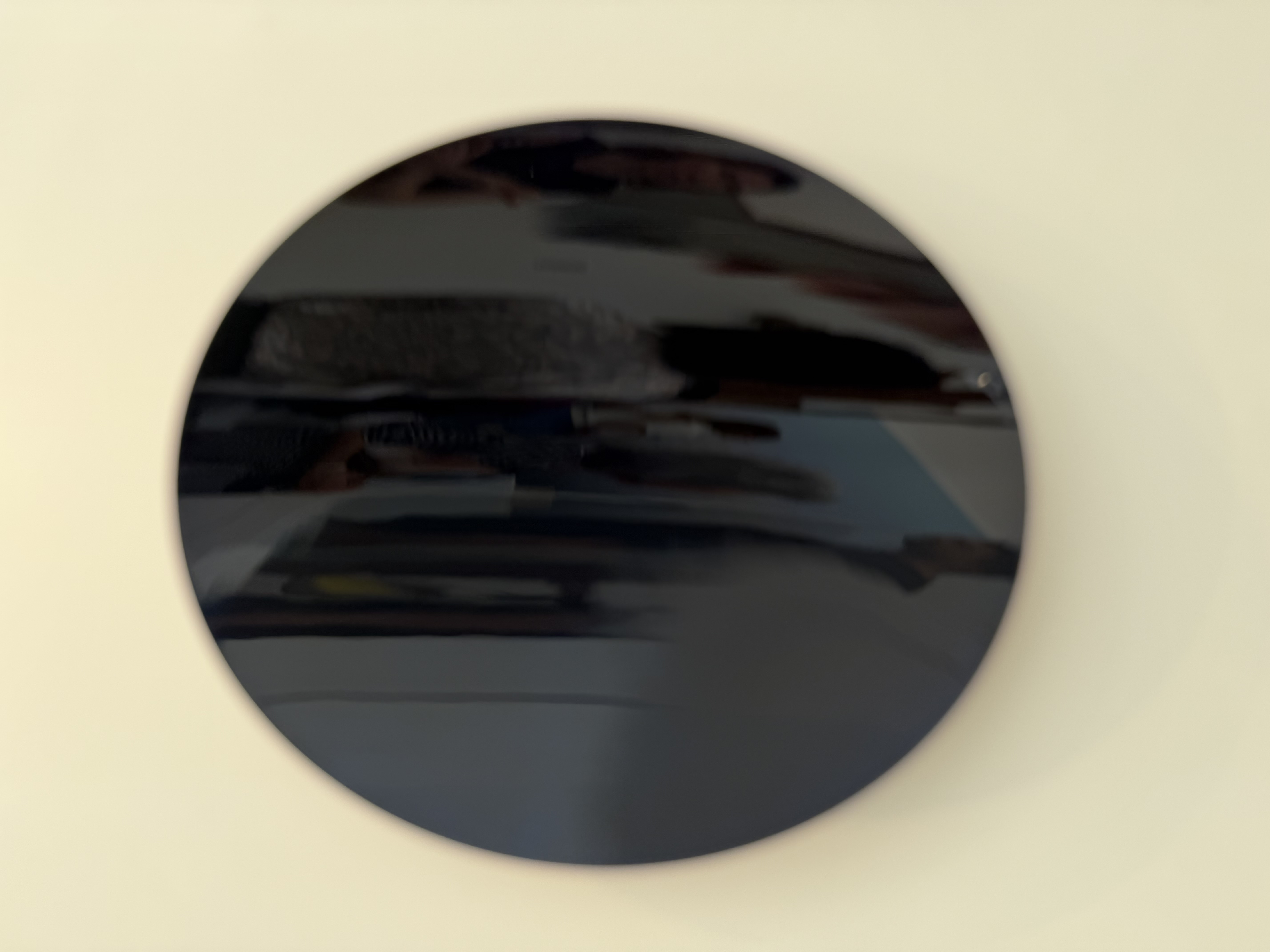
Anish Kapoor
Red mix 2 over Oriental Blue, 2020
He inherits something from the Minimalists, from Donald Judd's faith in the integrity of materials and Robert Irwin's pursuit of perceptual experience, but he routes these concerns through a sensibility that is irreducibly his own, shaped by phenomenology, by the traditions of the sublime in both Western and South Asian thought, and by a genuine wonder at what matter can do when an artist listens to it carefully. His influence on a generation of sculptors and installation artists is unmistakable, and institutions from the Tate Modern to the Guggenheim Bilbao have recognized him as a figure whose practice reshapes the spaces it inhabits. Kapoor has described his ambition as a desire to make works that exist not as objects but as events, occasions for something to happen between the viewer and the world. Decades into a career of extraordinary invention, the ambition holds.
Whether encountered in the vast public arena of a city square or in the focused intimacy of a private collection, his works continue to do exactly that: something happens. The void opens, the surface reflects, and for a moment the boundaries of the self feel genuinely negotiable. That is a rare gift in any art, and in Kapoor's hands it arrives with the authority of a practice built over a lifetime of uncompromising vision.
Explore books about Anish Kapoor
Anish Kapoor
Iwona Blazwick

Anish Kapoor: A Retrospective
Richard Shone
Anish Kapoor
Jeremy Lewison
Cloud Gate and the Gates: Anish Kapoor's Chicago Public Art
Sarah Urist Green
Anish Kapoor: Past, Present, Future
Carolyn Christov-Bakargiev
Anish Kapoor: Shooting into the Corner
Nicholas Serota
Anish Kapoor: Memory
Germano Celant
Anish Kapoor: My Red Homeland
Hans-Ulrich Obrist