Anatoly Zverev
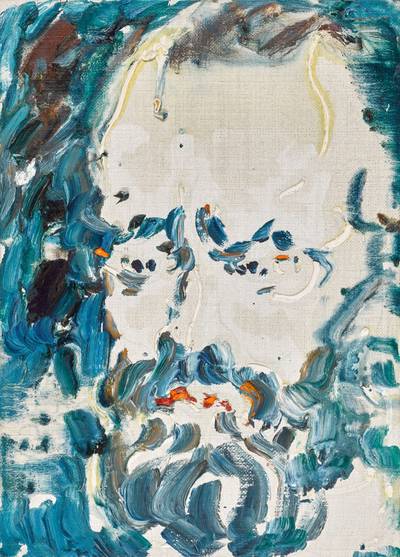
Anatoly Zverev: Soviet Russia's Untameable Visionary
Artist Spotlight · The Collection Editorial
In the winter of 2023, visitors to a quietly celebrated exhibition at a Moscow private gallery stood before a cluster of ink drawings and oil portraits and felt something visceral, something almost confrontational in its honesty. The works belonged to Anatoly Zverev, a painter who spent his entire life operating outside the official Soviet art machine, and yet whose reputation has only grown more luminous with each passing decade. His canvases and works on paper circulate today among serious collectors across Europe and Russia, prized for their raw immediacy and their sense of a life lived entirely on artistic terms. To encounter a Zverev in person is to understand immediately why those who discovered him in his own lifetime could not stop talking about him.
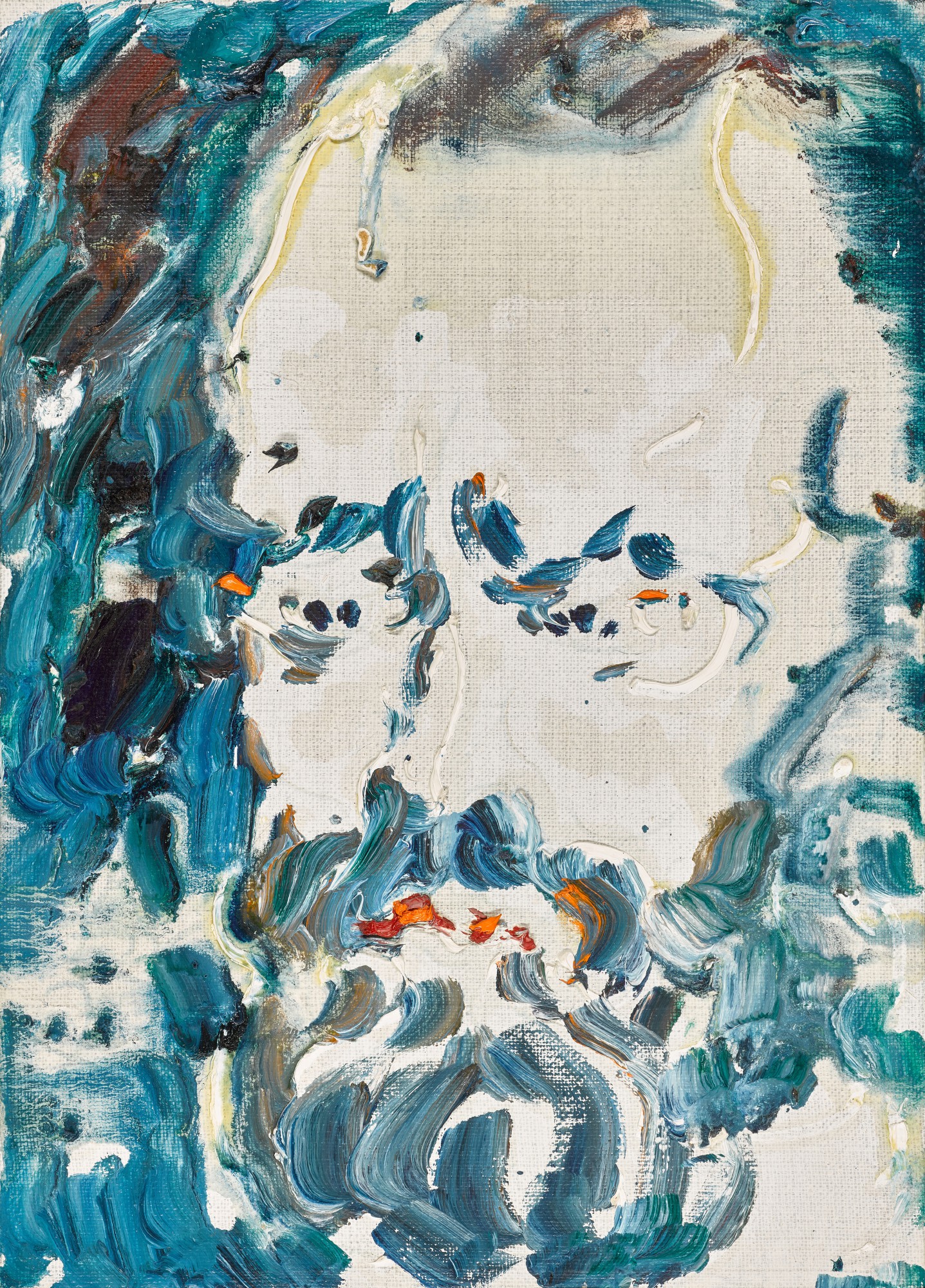
Anatoly Zverev
Portrait of the Writer Vladislav Shumsky
Anatoly Timofeevich Zverev was born in Moscow in 1931, into a working class family that offered him little in the way of material comfort but an enormous city full of human texture and visual richness. He came of age during the most repressive years of Stalinism, a period when Soviet cultural policy demanded conformity and punished deviation with terrifying efficiency. Zverev attended the Moscow Regional Art College briefly but was expelled, a detail that reads less as a failure and more as a declaration of independence. He was constitutionally unsuited to institutional discipline, and the institution, for its part, could not contain what he was becoming.
His artistic formation happened largely on the streets and in the studios and kitchens of Moscow's unofficial intelligentsia. He encountered the collector and patron George Costakis in the late 1950s, a meeting that proved genuinely transformative. Costakis, a Greek national employed at a foreign embassy in Moscow, was already the legendary custodian of the Russian avant garde and had the taste and the courage to recognize Zverev's singular talent immediately. Costakis became a supporter, an advocate, and in practical terms a lifeline, helping Zverev reach a small but influential audience at a time when unofficial art existed in a precarious and sometimes dangerous shadow world.
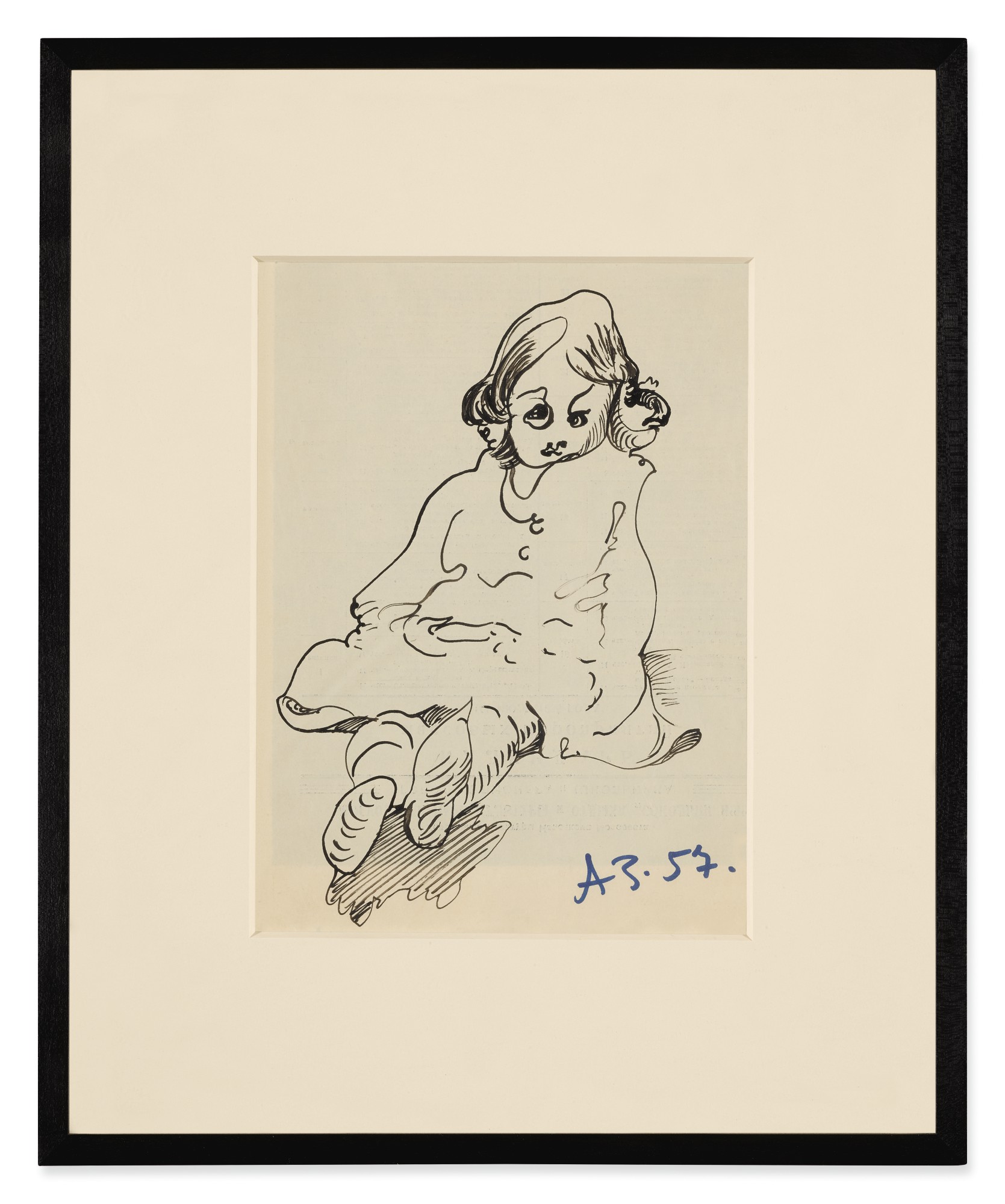
Anatoly Zverev
Seated Girl
It was through Costakis that Zverev's work first reached Western eyes, with examples entering collections in Europe and North America during the 1960s. Zverev's artistic practice was defined by a ferocious and seemingly inexhaustible energy. He could produce multiple works in a single sitting, working with whatever materials were at hand: oil on canvasboard, ink on paper, pastel, watercolour, felt tip pen, combinations of all of these applied in rapid, gestural succession. His technique was instinctive rather than academic, and it produced results that feel simultaneously spontaneous and deeply considered.
He was aligned in spirit with the Neo Expressionist and gestural traditions that were reshaping Western art in the postwar decades, though he arrived at his approach entirely independently, without access to the galleries and art journals that were shaping discourse in New York and Paris. This isolation, paradoxically, gave his work its particular intensity and authenticity. Portraiture was central to his output and represents some of his most celebrated achievements. Works such as the Portrait of the Writer Vladislav Shumsky demonstrate his ability to locate the psychological interior of a subject through seemingly casual mark making, the face emerging from a field of energetic brushwork with startling presence.
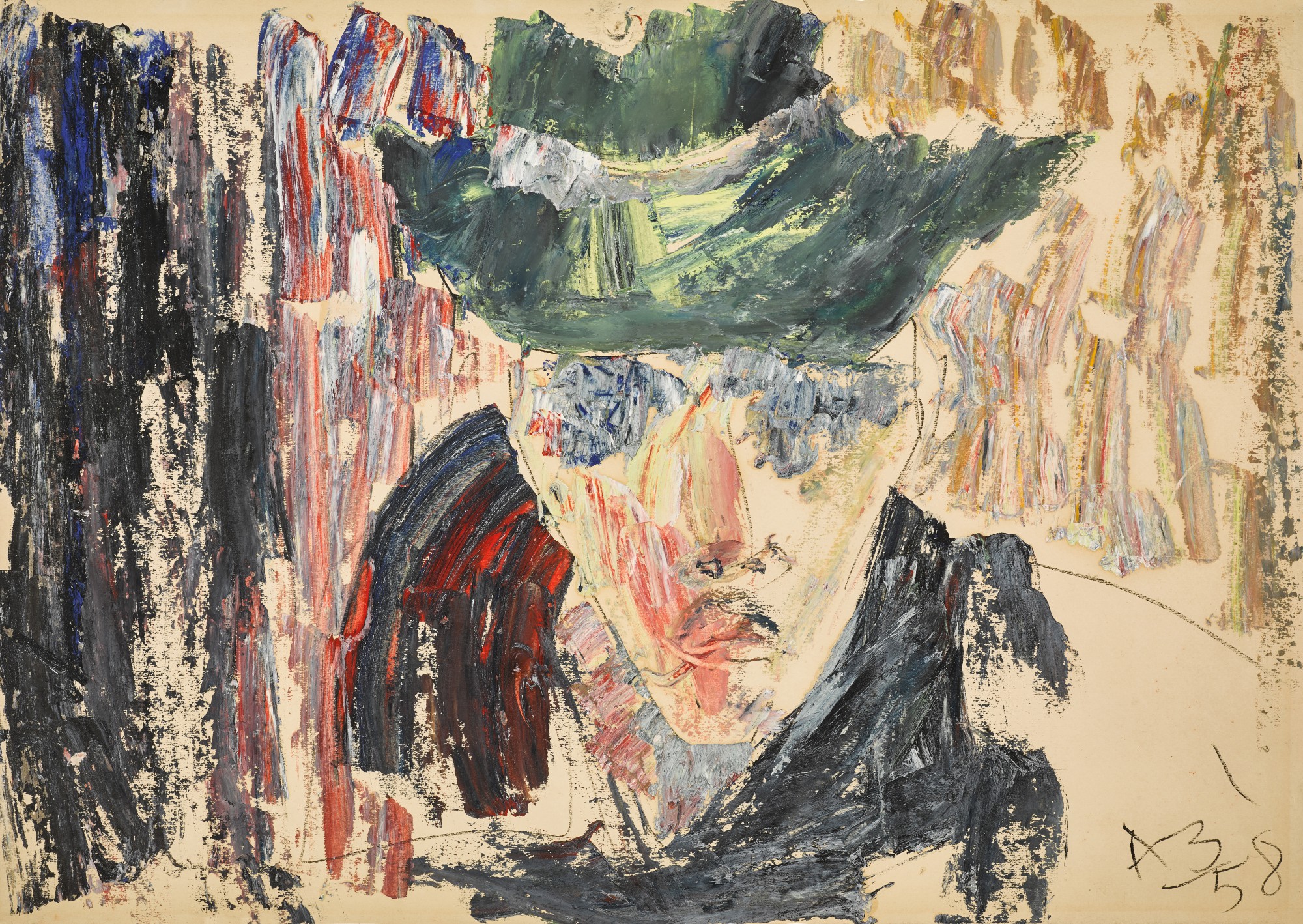
Anatoly Zverev
Man in a Hat
His Portrait of a Girl and Seated Girl, executed in ink on paper, show how he could distil a human likeness to its essential gesture, stripping away anything superfluous to arrive at something that feels more truthful than a conventional likeness. The Reclining Nude in pastel reveals a sensibility attuned to the classical tradition of figure drawing while refusing to be governed by it. Composition with Skull and works like Self Portrait in watercolour demonstrate his range across subjects, his willingness to confront the existential alongside the intimate. For collectors, Zverev represents one of the genuinely compelling propositions in the postwar Russian and Soviet field.
His works appear at auction with some regularity through the major houses, and prices have reflected a growing international appreciation for unofficial Soviet art as a category of serious art historical consequence. Works on paper, particularly the ink drawings and mixed media compositions, offer an accessible entry point while retaining the full expressive power of his practice. The more substantial oil works on canvasboard command premium attention and are prized by collectors who understand their rarity and their place in the broader narrative of twentieth century art. Provenance connected to the Costakis circle or to figures within the Moscow unofficial art community adds both historical significance and collecting appeal.
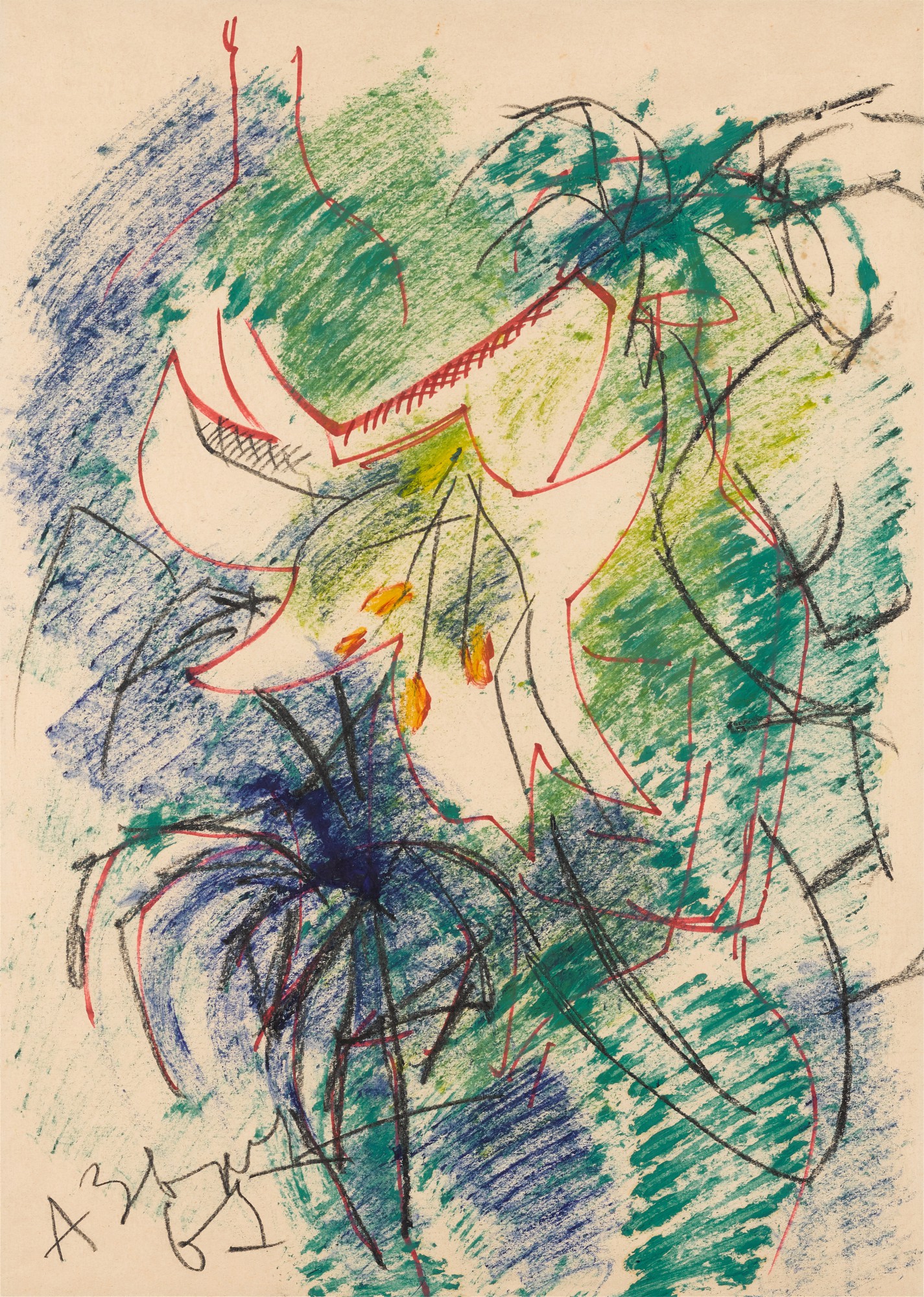
Anatoly Zverev
Still Life with Lily on Green Background
Zverev's natural companions in art historical terms include fellow travellers in the unofficial Soviet art world such as Oscar Rabin and Vladimir Nemukhin, artists who similarly built practices outside the structures of the Artists Union and paid social and professional prices for doing so. In a broader international frame, his gestural figuration invites comparison with the postwar European expressionists, artists such as Jean Dubuffet or the CoBrA group, though Zverev's work has its own unmistakably Russian character, shaped by the icon painting tradition, by the compressed intensity of Moscow life, and by a temperament that was entirely his own. He was not imitating anyone. He was, if anything, running parallel to movements he could barely access.
Zverev died in Moscow in 1986, just as the Soviet world he had always resisted was beginning its long unravelling. He did not live to see the full rehabilitation of unofficial art or the wave of international interest that would follow glasnost and the eventual opening of Russian cultural life to global scrutiny. But his reputation needed no rehabilitation. It had been sustained all along by the quality of the work and by the devotion of those who had seen it and understood it.
Today, as collectors and institutions continue to reassess the full scope of twentieth century art beyond the Western canon, Zverev stands as one of its most vivid and irreplaceable figures. His paintings are not relics of a lost world. They are alive in the way that only truly free art can be.
Explore books about Anatoly Zverev