Alfredo Ramos Martínez
Alfredo Ramos Martínez, Luminous Architect of Mexican Modernism
Artist Spotlight · The Collection Editorial
In the grand reading room of the Los Angeles County Museum of Art, a woman stands draped in deep indigo, cradling prickly pears against her chest. Her gaze is calm, ancient, entirely her own. The painting is by Alfredo Ramos Martínez, and it stops visitors in their tracks. For a growing community of collectors, curators, and scholars, that arrested moment has become increasingly familiar as institutional interest in this visionary Mexican modernist has gathered remarkable momentum in recent years, with works entering major permanent collections and auction results confirming his place among the most important painters of the early twentieth century.
Alfredo Ramos Martínez
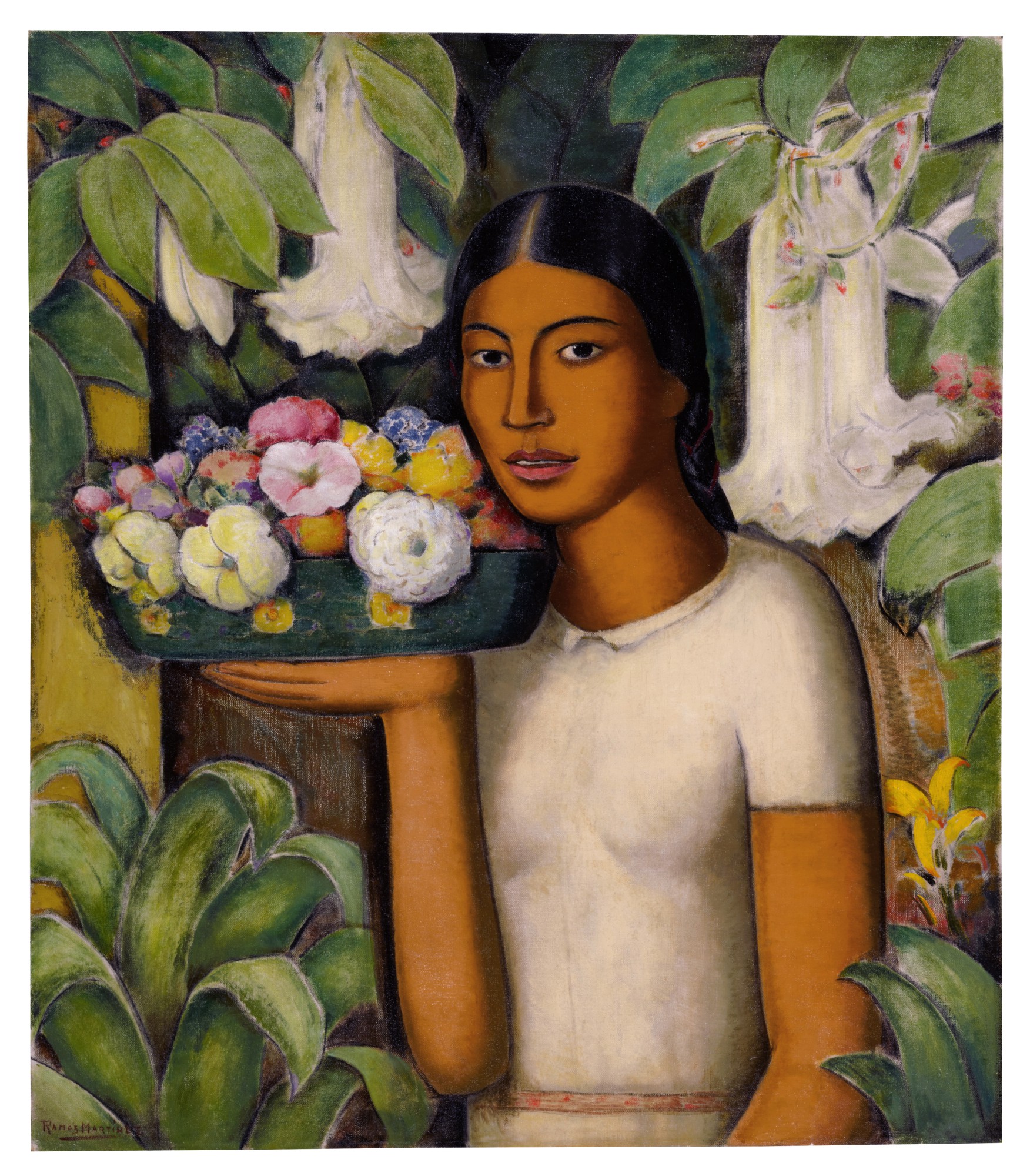
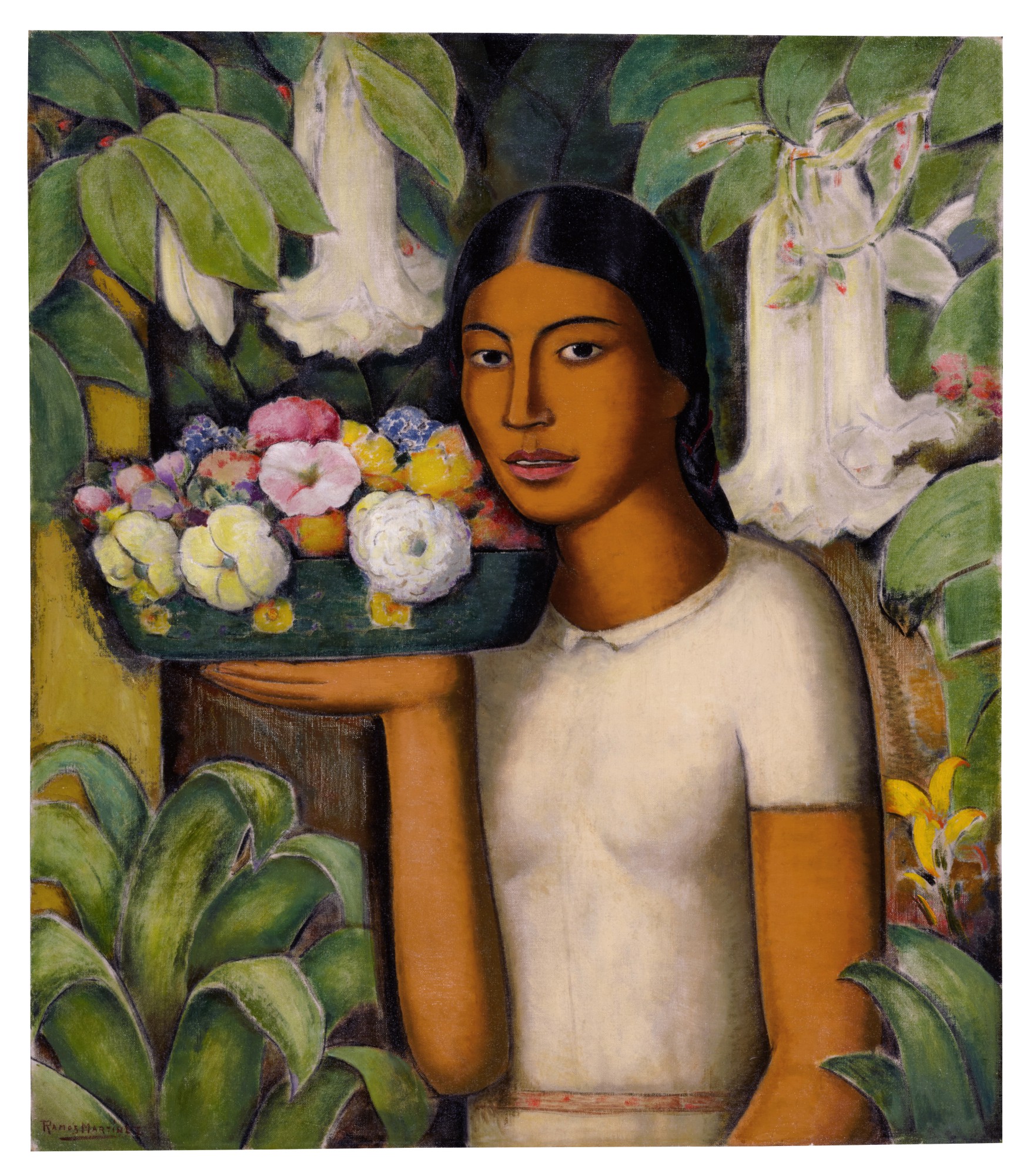
Mujer con flores, 1932
Alfredo Ramos Martínez was born in 1871 in Monterrey, in the northern Mexican state of Nuevo León. From an early age his talent was unmistakable, and his family supported his ambitions with the kind of faith that changes the course of art history. He traveled to Mexico City to study at the prestigious Academy of San Carlos, the oldest art school in the Americas, where he absorbed the rigorous academic traditions of the nineteenth century. Yet even as a young student he seemed restless within those conventions, drawn toward something warmer, more immediate, more deeply rooted in the world around him.
In 1900 Ramos Martínez won the Pensionado Prize, a scholarship funded by the Mexican government that sent him to Europe for nearly a decade of intensive study. He settled primarily in Paris, where the art world was in the midst of its most thrilling transformation. He encountered the work of the Post Impressionists with something close to recognition, finding in the broken light of Paul Gauguin and the structural tenderness of Pierre Puvis de Chavannes a language that felt ready to be translated into a distinctly Mexican voice. He exhibited at the Salon de la Société Nationale des Beaux Arts and earned genuine recognition among Parisian circles, a remarkable achievement for a young painter from Monterrey.
Alfredo Ramos Martínez
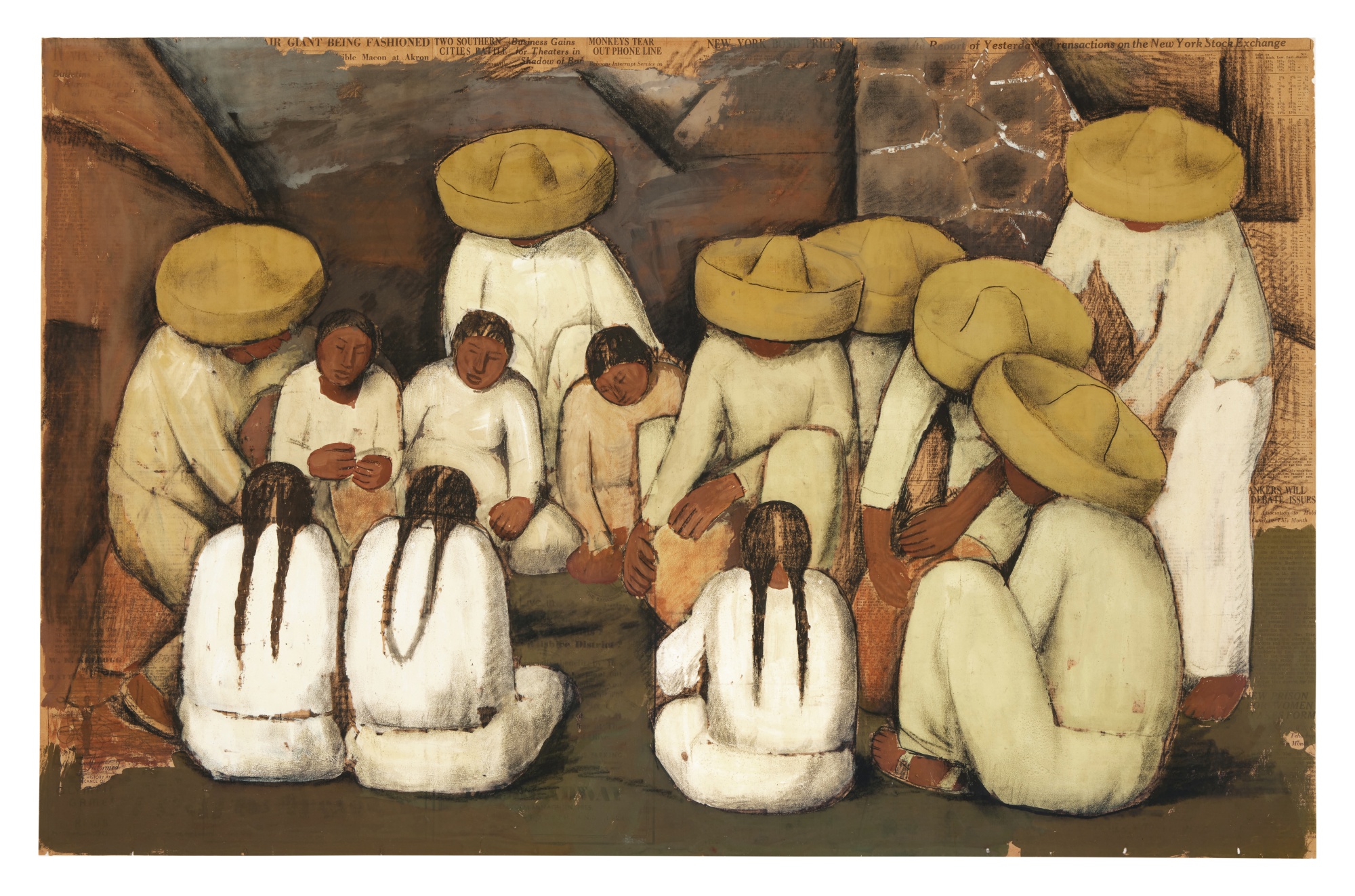
Sin título (A Study for "Los alfareros"), 1932
Returning to Mexico, Ramos Martínez brought that European fluency home and immediately set about transforming Mexican art education. He was appointed director of the Academy of San Carlos and, more consequentially, founded the open air painting schools known as the Escuelas de Pintura al Aire Libre, beginning with the school at Santa Anita in 1913. These schools were nothing short of revolutionary. Rather than confining students to academic interiors, Ramos Martínez sent them outdoors, into markets and fields and plazas, encouraging them to paint indigenous Mexicans, peasant life, and the raw beauty of the landscape with directness and dignity.
The schools became incubators for a generation of artists and planted seeds that would flower into the great Mexican muralist movement. Diego Rivera, José Clemente Orozco, and their contemporaries inherited a world that Ramos Martínez had helped to make possible. In 1929 he relocated to California, settling eventually in Los Angeles, where he would spend the final chapter of his life. The move introduced a new material constraint that proved unexpectedly generative.
Alfredo Ramos Martínez
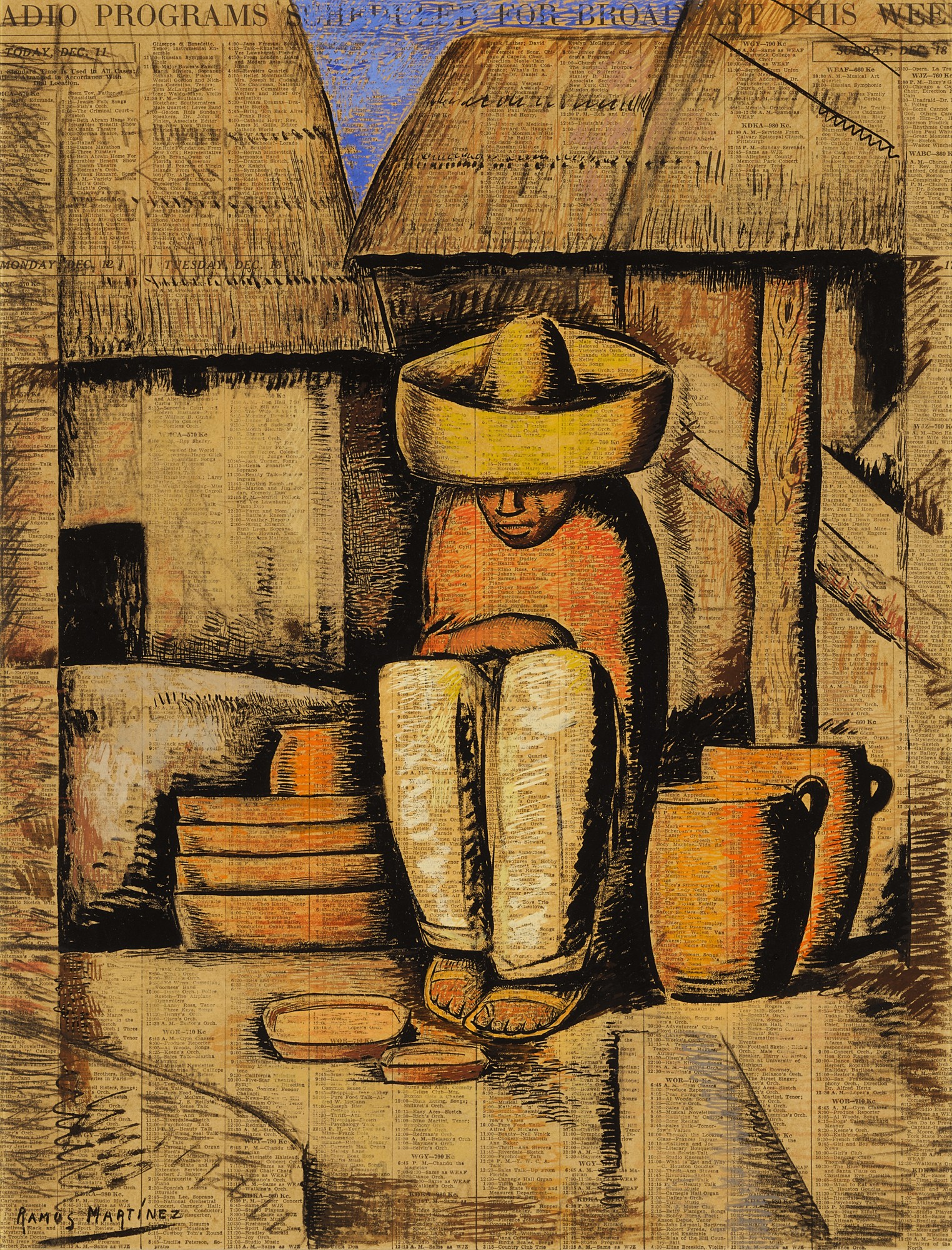
Vendedor sin clientes, 1936
Working often on newsprint, a humble surface born of necessity rather than choice, he developed a technique of extraordinary refinement, layering tempera, gouache, conté crayon, and pastel to produce works of startling luminosity. The newsprint ground lent his figures a quality of warmth and fragility that oil on canvas could not quite replicate. Works such as Vendedor sin clientes from 1936 and Sin título, a preparatory study for Los alfareros from 1932, demonstrate this mastery with complete assurance. The surfaces feel both intimate and monumental, as though the paper itself is breathing.
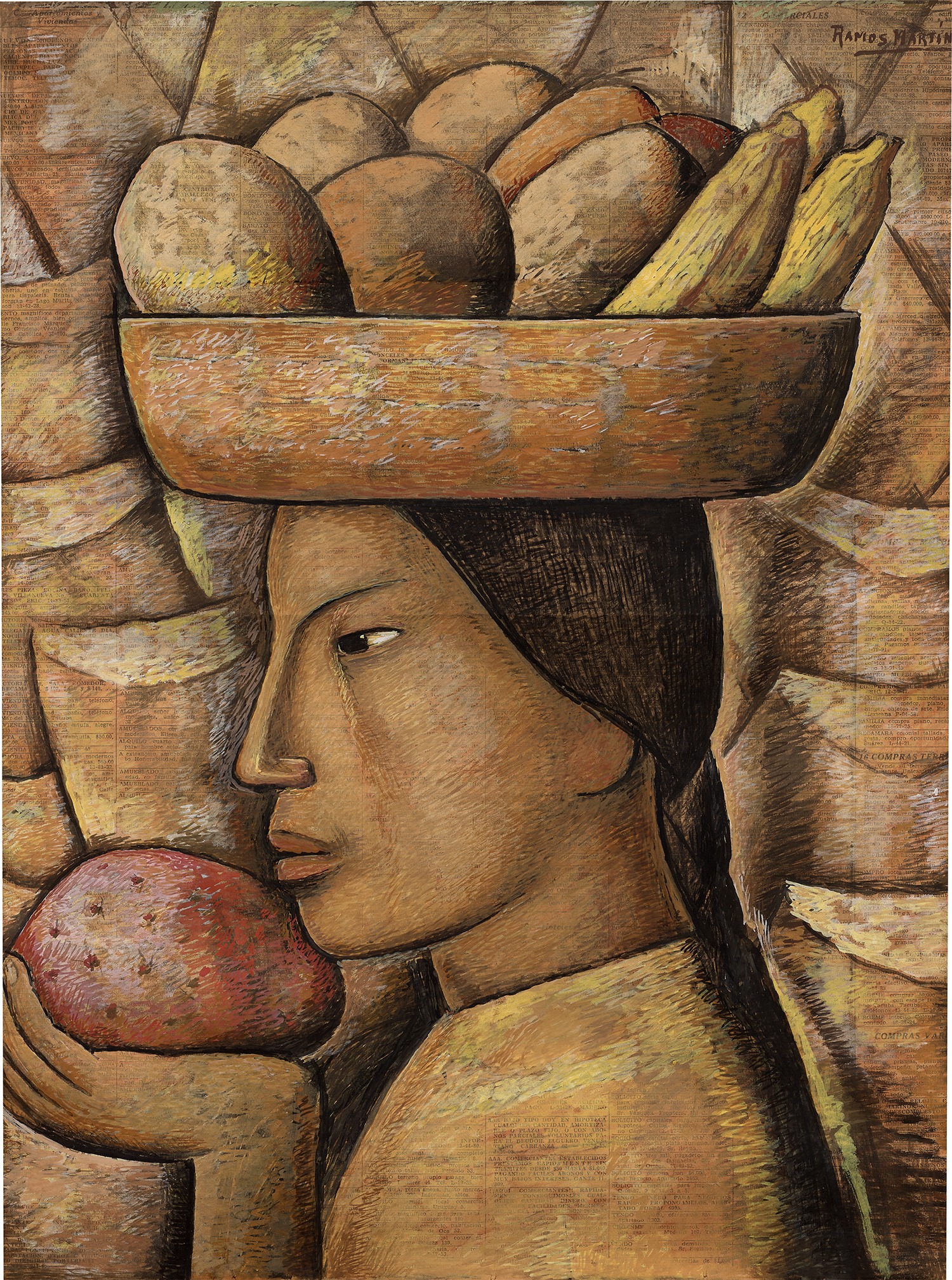
The signature works that collectors prize most deeply are his depictions of indigenous Mexican women, painted with a reverence that transcends the merely picturesque. La India de las tunas, rendered in conté crayon and tempera on newsprint in 1932, exemplifies everything that makes Ramos Martínez irreplaceable. The figure is not a symbol or an abstraction. She is a specific presence, dignified and self possessed, the prickly pears she carries as vivid as jewels.
Alfredo Ramos Martínez
La India de las tunas (Indian Woman with Prickly Pears), 1932
Mujer con flores from the same year, executed in oil on canvas, brings his chromatic gifts to full expression, the flowers cascading in waves of ochre and rose and deep green around a figure of quiet authority. These are not exotic visions produced for an outside gaze. They are acts of love made visible. For collectors approaching the market, Ramos Martínez represents a genuine opportunity within the canon of Latin American modernism.
His works appear at major auction houses including Christie's, Sotheby's, and Swann Galleries, where competition for fine examples has grown steadily. Newsprint works offer an accessible point of entry while remaining artistically significant, and the best examples on that support, particularly those with rich layering and strong figural presence, have achieved prices that reflect growing institutional validation. Oil paintings command a premium and are increasingly rare at auction, making examples that do appear genuinely significant events. Collectors are advised to look for works with clear provenance, strong condition relative to the support, and the confident compositional simplicity that marks his finest production.
Within the broader landscape of Latin American modernism, Ramos Martínez occupies a position of foundational importance that is only now receiving the full attention it deserves. His work resonates with that of contemporaries such as Diego Rivera in its celebration of indigenous identity, and shares a luminous chromatic sensibility with the Peruvian painter José Sabogal and the Cuban modernist Víctor Manuel García. In California he became part of a cross cultural artistic community and influenced a generation of local artists who encountered his open air workshops and his tireless generosity as a teacher. He understood that the work of art and the work of teaching were not separate vocations but a single continuous act of devotion.
Ramos Martínez died in Los Angeles in 1946, leaving behind a body of work that bridges continents, centuries, and cultures with extraordinary grace. His legacy is the story of a painter who took everything European modernism offered and gave it back transformed, rooted in the soil and faces and flowers of Mexico. As museums continue to revisit the full scope of twentieth century modernism beyond its European and North American centers, his place in that conversation grows only more essential. To collect his work is to hold a piece of that larger story, painted with light, tenderness, and an absolute certainty about what beauty is for.
Explore books about Alfredo Ramos Martínez
Alfredo Ramos Martínez: Mexican Muralist of California
Charlene Villaseñor Black
Alfredo Ramos Martínez and the Mexican Arts Movement in Los Angeles
George J. Sánchez
The Art of Alfredo Ramos Martínez
Jacinto Quirarte