Alfredo Jaar
Alfredo Jaar Makes the World See
Artist Spotlight · The Collection Editorial
“I have been trying to create an aesthetic experience that could also be an ethical experience.”
Alfredo Jaar, interview with Hans Ulrich Obrist
In the spring of 2024, the Moderna Museet in Stockholm presented a substantial survey of Alfredo Jaar's work, drawing visitors from across Europe and reigniting critical conversation about an artist whose relevance has only deepened with time. The exhibition reminded audiences that Jaar's decades of practice represent something rare in contemporary art: a body of work that is simultaneously intellectually rigorous, emotionally transformative, and visually ravishing. At a moment when questions of representation, media saturation, and human dignity feel more urgent than ever, Jaar's art arrives not as commentary but as conscience. Jaar was born in Santiago, Chile, in 1956, and his early years were shaped by the particular intensity of growing up in a country navigating political turbulence.
Alfredo Jaar
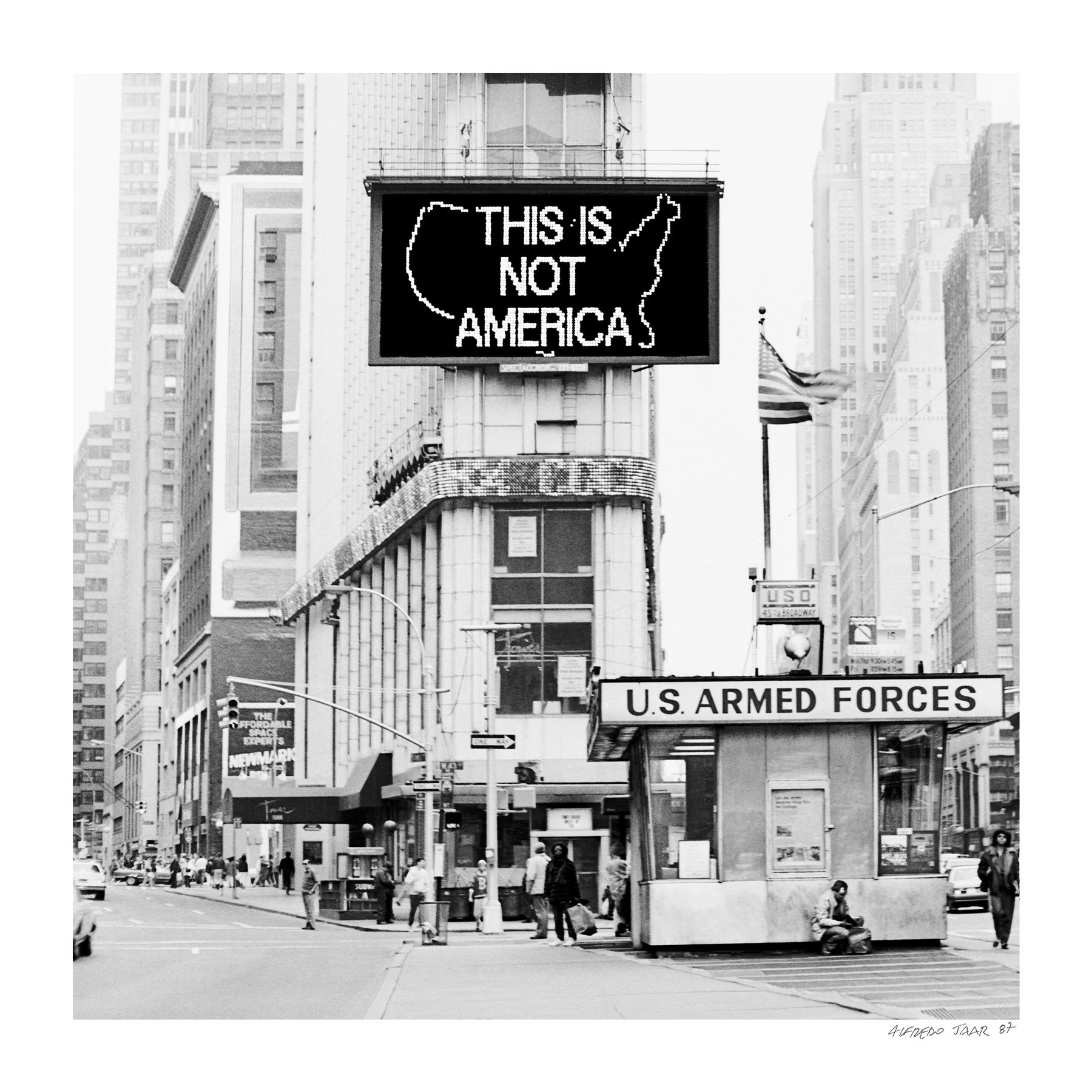
A Logo for America, 1987
The coup of 1973, which brought Augusto Pinochet to power when Jaar was a teenager, left an indelible mark on his understanding of how images and information are controlled, manipulated, and withheld. He studied architecture and film at the Instituto Chileno Norteamericano de Cultura in Santiago before relocating to New York in 1982, a move that placed him at the center of the art world while allowing him to maintain the critical distance of an outsider. That dual perspective, rooted in the Global South but operating within the most scrutinized cultural capitals, became foundational to everything he would make. His early work in New York engaged directly with the politics of geography and economic disparity.
The 1987 project A Logo for America, originally displayed as an animated work on the Spectacolor Board in Times Square, addressed the casual American habit of conflating the United States with the entirety of the Americas. It is a work of startling economy: a few words and a shifting map image, deployed in the very heart of commercial spectacle, asking passersby to reconsider a linguistic assumption so ingrained it had become invisible. The work has since been restaged multiple times and exists in several editions, including the framed pigment print available through The Collection, and it remains one of the most quietly devastating interventions in the history of public art. The development of his practice through the late 1980s and 1990s saw Jaar move toward increasingly complex installations that questioned how photography functions as evidence, testimony, and commodity.
Alfredo Jaar
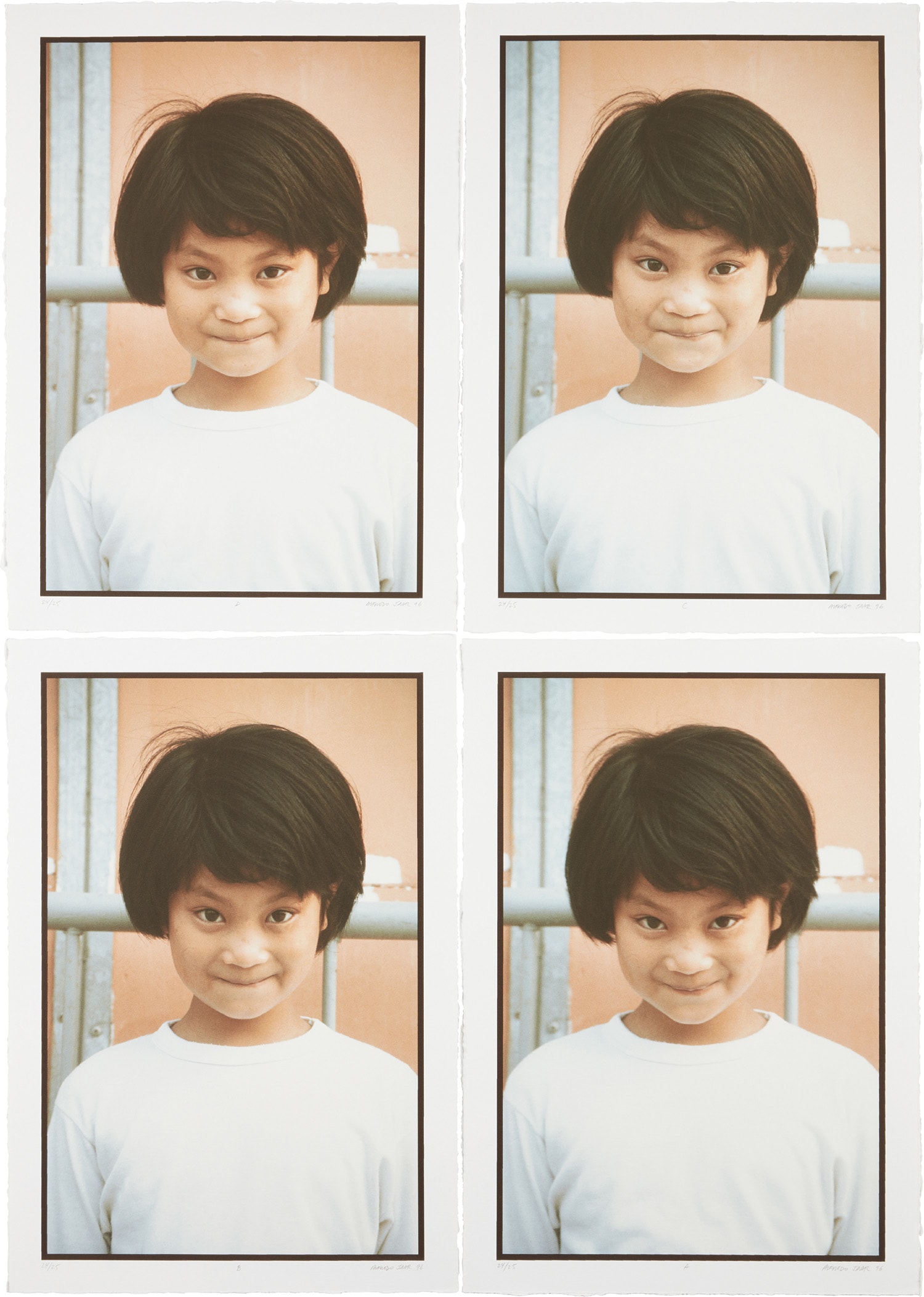
One Hundred Times Nguyen, 1996
His Rwanda Project, developed across several years following the 1994 genocide, represents perhaps the most discussed chapter of his career. Rather than reproduce images of atrocity, Jaar systematically refused to show them, instead housing millions of slides in sealed boxes, projecting names, or flooding gallery floors with light. The series One Hundred Times Nguyen, completed in 1994 and 1996 and presented here as four Iris prints on Arches watercolor paper mounted to board, emerged from a related ethical inquiry into the Vietnamese refugee experience. In it, Jaar repeated a single face one hundred times, asking whether repetition dilutes empathy or, if handled with care, might restore it.
“The real world is much more interesting than any fiction I could invent.”
Alfredo Jaar
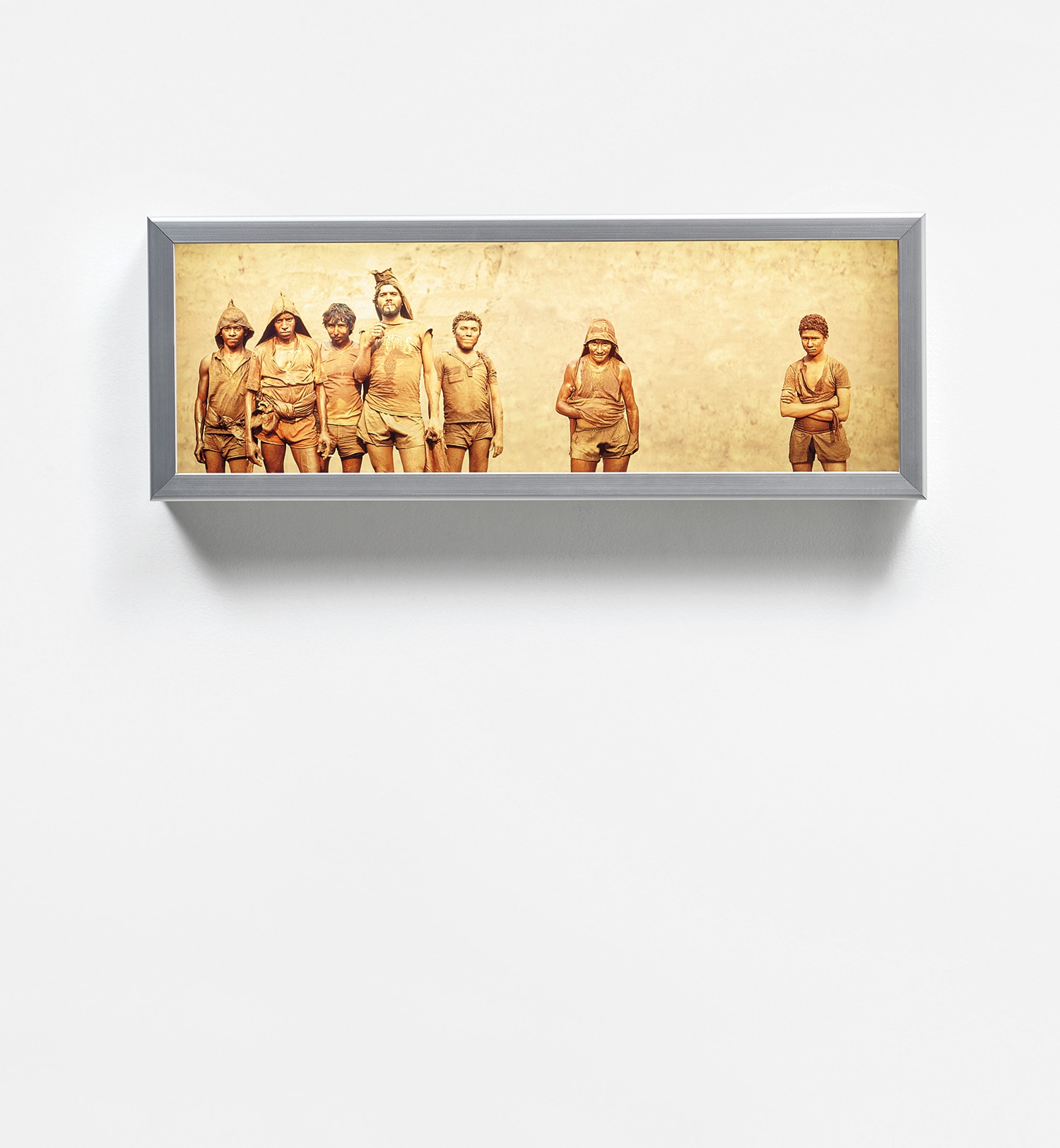
Reflexions, the 1993 silkscreen on projection screen held in The Collection, and works such as Gold in the Morning, a transparency flush mounted to Plexiglas in an aluminium electrical light box, demonstrate Jaar's mastery of materiality as meaning. The light box in particular is a recurring formal choice: by presenting images backlit, he transforms the act of looking into something almost liturgical, giving photographs the luminous weight of stained glass. Guess Who Is Coming to Dinner, from 1988, extends this ethical excavation into questions of hospitality, race, and who is afforded dignity at the table of Western civilization. These works do not shout.
Alfredo Jaar
Gold in the Morning
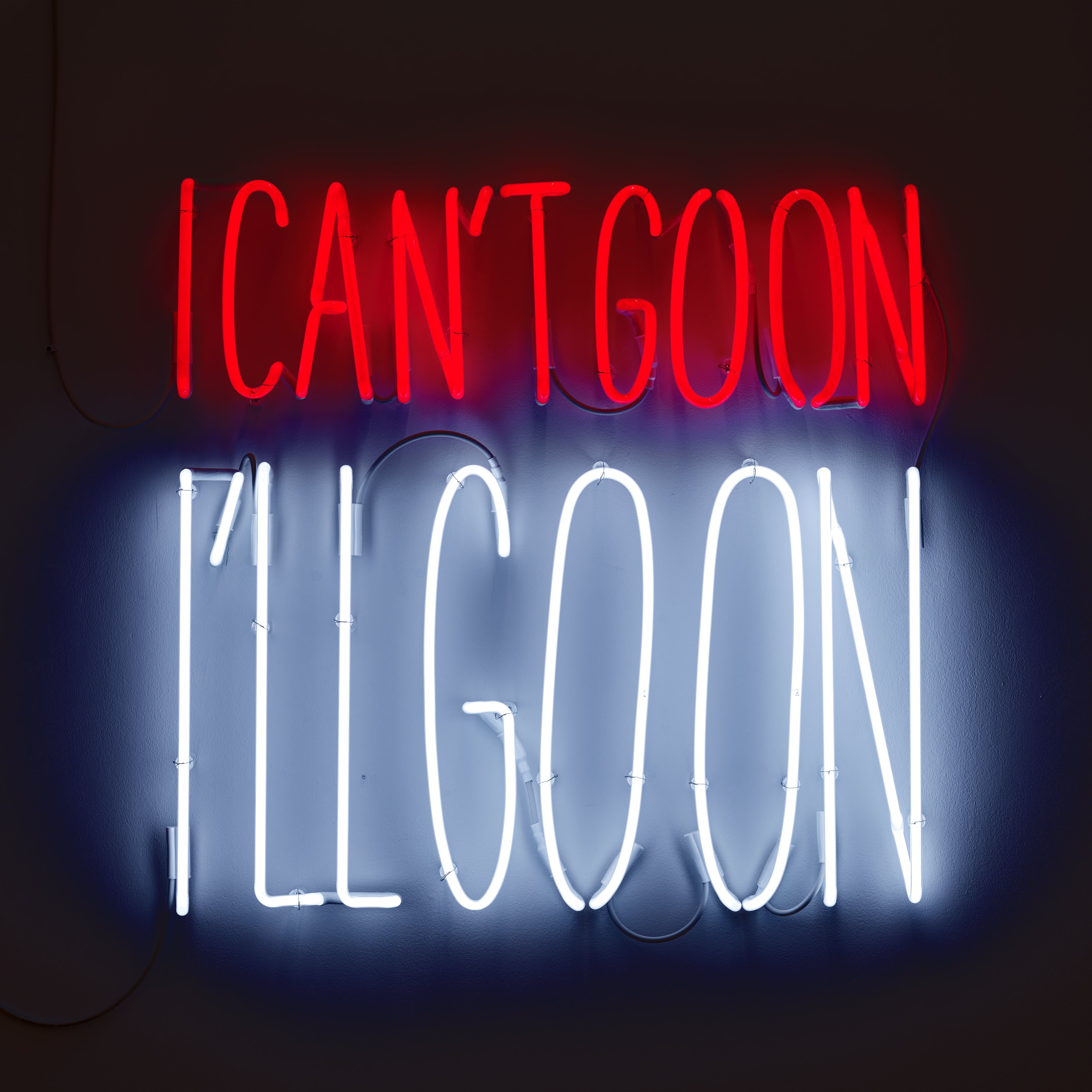
They glow, and in glowing, they insist. Jaar has shown at the Venice Biennale multiple times, represented Chile in 1986 and returning in subsequent editions, and has been a featured artist at Documenta in Kassel, arguably the most rigorous international survey of contemporary art practice. His work has entered the permanent collections of institutions including the Museum of Modern Art in New York, the Art Institute of Chicago, and the Guggenheim. The piece I Can't Go On, I Will Go On, a neon work dated 2026 in its current configuration and taking its title from Samuel Beckett's Unnamable, speaks to Jaar's enduring investment in literature and language as sources of resistance.
The line, one of the most beloved in twentieth century literature, becomes in neon an act of luminous stubbornness. For collectors, Jaar's work offers something that is increasingly difficult to find: aesthetic pleasure that is also morally serious. His editions and prints have appreciated steadily as institutional interest has grown, and works on paper and light box editions represent thoughtful points of entry into a practice that commands significant prices at the primary market level. Collectors drawn to artists such as Krzysztof Wodiczko, whose public projections similarly interrogate political power, or to the research based photography of Allan Sekula and Hito Steyerl, will find in Jaar a practice that shares their commitment to the image as a site of contested meaning.
Alfredo Jaar
I Can't Go On, I'll Go On, 2026
His Chilean heritage also connects him to a broader conversation about Latin American conceptualism, placing him in dialogue with artists such as Cildo Meireles and Doris Salcedo, whose work similarly transforms political grief into formal beauty. What makes Jaar essential, now perhaps more than at any previous moment, is his insistence that looking is not a neutral act and that the artist bears responsibility for how they direct that look. In an era of overwhelming visual noise, his withholdings and his carefully staged illuminations function as a kind of ethical instruction. He does not ask viewers to feel guilty.
He asks them to feel awake. Works such as Embrace and Walking II carry that same quality of attentive care, a sense that every formal decision has been made in full awareness of what is at stake. To collect Alfredo Jaar is to bring into one's home a practice built on the conviction that art can expand what we are capable of understanding about one another, and that this expansion is not merely possible but necessary.
Explore books about Alfredo Jaar
Alfredo Jaar: The Politics of Images
Jean-Hubert Martin
Alfredo Jaar
Peter Weibel
Alfredo Jaar: Venezia
Carolyn Christov-Bakargiev
Alfredo Jaar: Essential Killing
Okwui Enwezor
The Eyes of Gutete Emerita
Alfredo Jaar
Alfredo Jaar: A Logical Fact
Multiple Contributors