Alfred Stieglitz
Alfred Stieglitz: Photography's Most Passionate True Believer
Artist Spotlight · The Collection Editorial
“In photography there is a reality so subtle that it becomes more real than reality.”
Alfred Stieglitz
Few origin stories in American art history carry the weight and romance of a single photograph made in a snowstorm. In February 1893, Alfred Stieglitz stood for three hours on a New York City street corner, waiting for the perfect moment to expose his plate and capture what would become "Winter on Fifth Avenue." The image, raw and unposed, full of slush and horse traffic and ordinary city life, announced something genuinely new: that photography could bear witness to the world with the emotional and aesthetic authority of any painting. That conviction, held with missionary intensity across more than five decades, would reshape American visual culture from the ground up.
Alfred Stieglitz
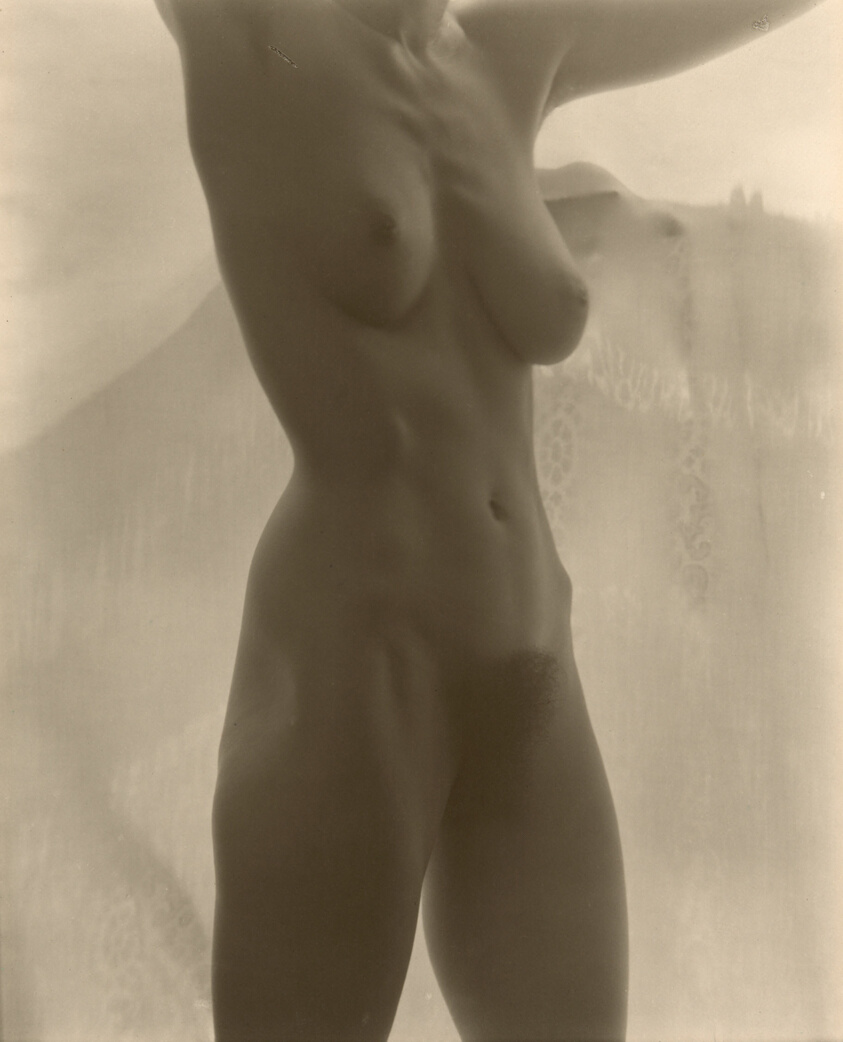
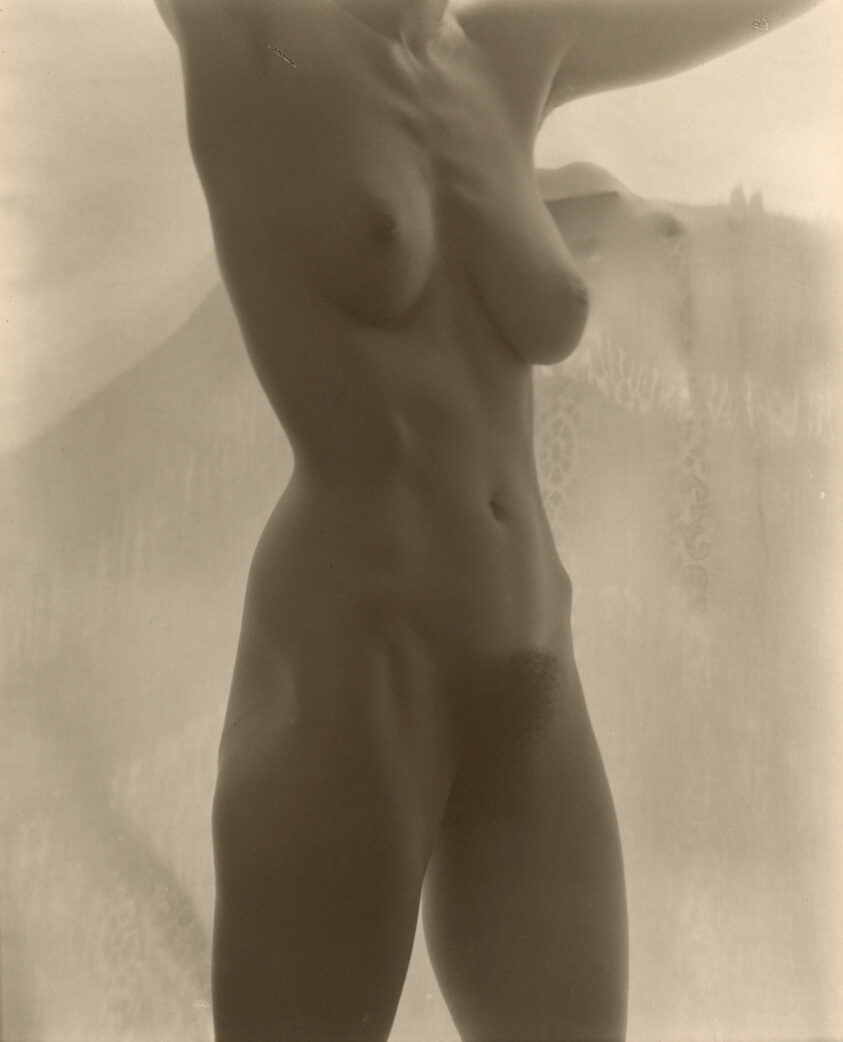
Georgia O'Keeffe—Torso, 1918
Stieglitz was born in Hoboken, New Jersey in 1864 into a prosperous German Jewish family with a deep appetite for culture. His father Edward was a committed amateur painter, and the family moved to Europe when Alfred was seventeen, eventually settling in Berlin where he enrolled at the Technische Hochschule to study mechanical engineering. A chance encounter with a camera and a course in photochemistry under the renowned Hermann Wilhelm Vogel redirected everything. Europe gave Stieglitz not only technical mastery but a sophisticated understanding of aesthetics, and he spent years photographing in Germany, Austria, and Italy, winning prizes and earning recognition from European photographic societies long before he made his mark in America.
Works like "Reflections, Venice" from 1894 and "On the Seine, Near Paris" from the same year demonstrate how fully he had absorbed the pictorialist sensibility then dominant in European art photography, using soft focus, careful tonal gradation, and painterly composition to insist on photography's place among the fine arts. Back in New York by the early 1890s, Stieglitz found an American photographic establishment that was largely commercial and indifferent to artistic ambition. He set about changing that with characteristic force of will. His editorial work at Camera Notes, the journal of the Camera Club of New York, gave him a platform, and in 1902 he founded the Photo Secession, a movement that drew directly on the name and spirit of the European Secessionist movements to declare photography's independence from purely documentary or technical purposes.
Alfred Stieglitz
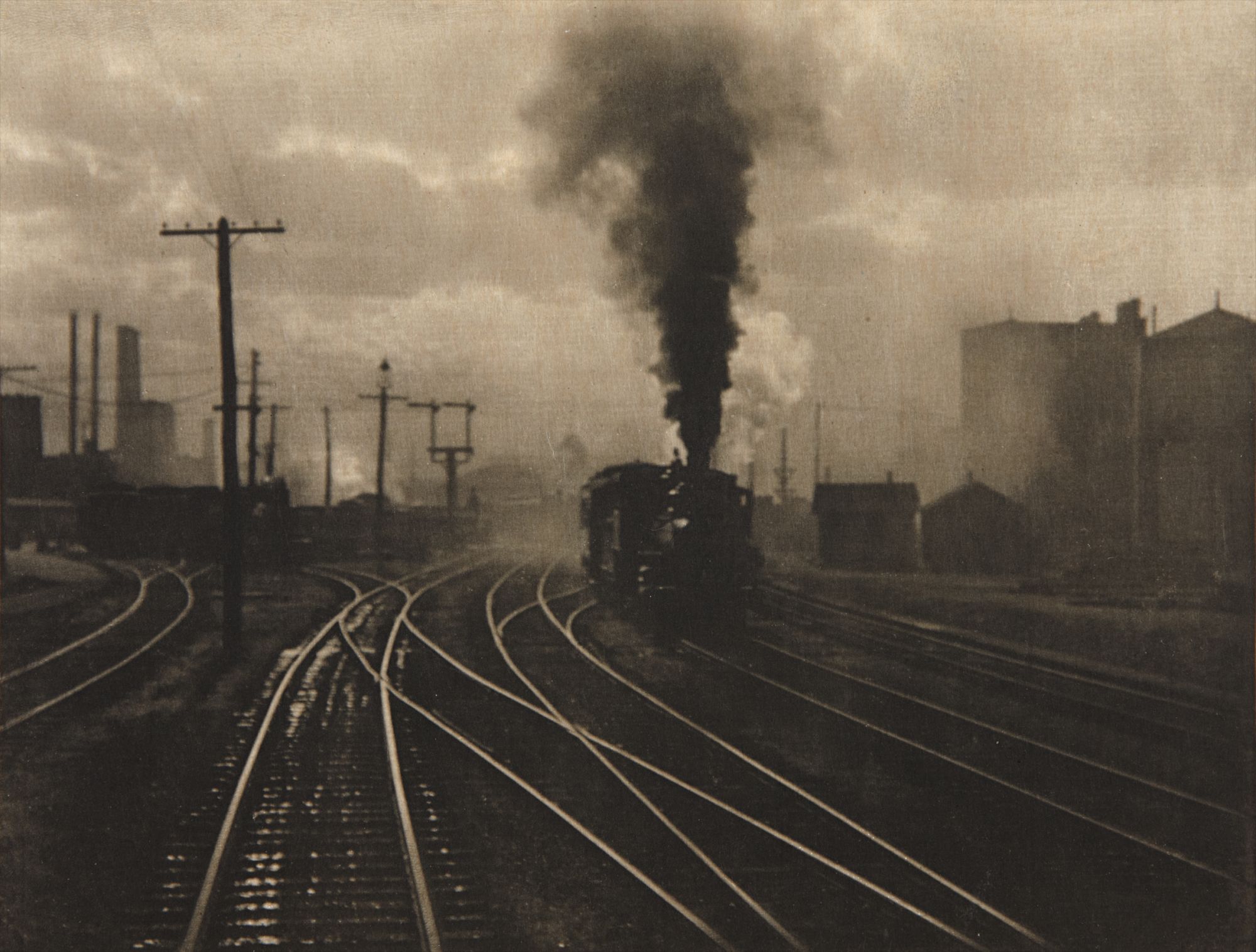
The Hand of Man, 1910
The following year he launched Camera Work, arguably the most beautifully produced arts journal in American history, publishing photogravure reproductions of photographs alongside essays by critics and writers including Gertrude Stein. Camera Work ran until 1917 and remains a benchmark of editorial vision and intellectual seriousness that the art world has rarely matched. The gallery that Stieglitz opened in 1905 at 291 Fifth Avenue, universally known simply as 291, became one of the most consequential small rooms in the history of modern art. It was here that American audiences first encountered work by Rodin, Matisse, Cézanne, Picasso, and Brancusi, years before the 1913 Armory Show brought European modernism to mass attention.
“Wherever there is light, one can photograph.”
Alfred Stieglitz
Stieglitz understood instinctively that photography and modernist painting shared a project: both were wrestling with perception, reality, and what it meant to see. He championed American painters including John Marin, Marsden Hartley, Arthur Dove, and Georgia O'Keeffe with the same evangelical commitment he brought to photography, creating a genuinely transatlantic conversation between media and movements. His later galleries, the Intimate Gallery opened in 1925 and An American Place opened in 1929, continued this work into the 1940s. As Stieglitz's own photographic practice evolved, he moved decisively away from pictorialism toward what he and his peers called straight photography, an approach that embraced the camera's inherent qualities rather than mimicking painting.
Alfred Stieglitz
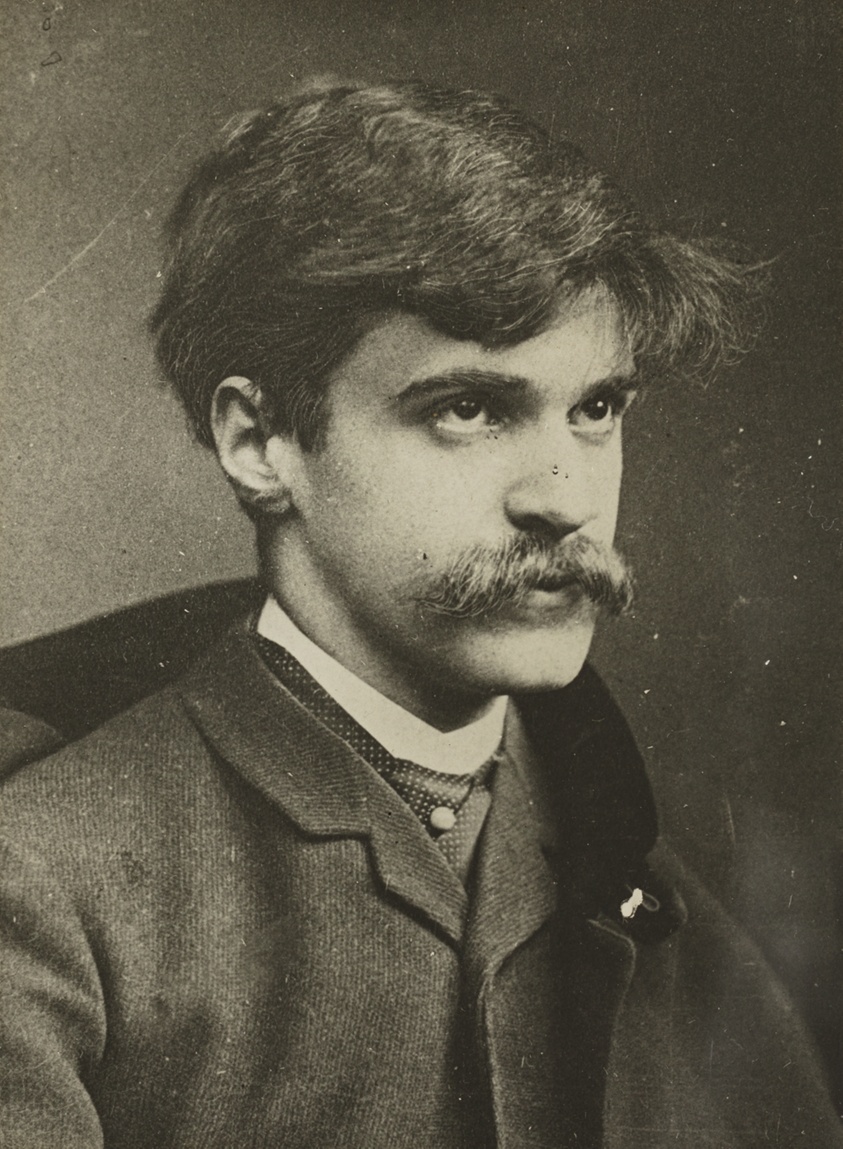
Self-Portrait, 1894
"The Hand of Man" from 1902, a monumental image of a locomotive trailing smoke across industrial New Jersey railroad yards, is perhaps the clearest early statement of this turn: utterly unmanipulated, formally precise, and emotionally charged. His extended portrait project of Georgia O'Keeffe, begun when they met in 1917, produced some of the most intimate and technically accomplished photographs of the twentieth century, images that move between the erotic, the psychological, and the formally abstract with extraordinary fluency. "Georgia O'Keeffe, Torso" from 1918 is among the most celebrated works in this series, a study in light on skin that transcends portraiture entirely. His late cloud photographs, which he called the Equivalents, made between 1925 and 1934, represent perhaps his most radical achievement: abstract images of sky and cloud that he described as visual analogues of inner emotional states, anticipating the concerns of Abstract Expressionism by a full generation.
For collectors, works by Stieglitz carry both historical significance and genuine aesthetic power, a combination that has sustained strong market interest across decades. Gelatin silver prints from his mature period, particularly the O'Keeffe portraits and the Equivalents series, command serious attention at auction and in private sales. Photogravures published in Camera Work are prized both as objects and as documents of a transformative moment in art history, and they offer collectors a point of entry into Stieglitz's world at a range of price points. Condition and provenance are paramount, as with all photography of this era: prints that can be traced to Stieglitz's own hands or to early institutional collections carry particular weight.
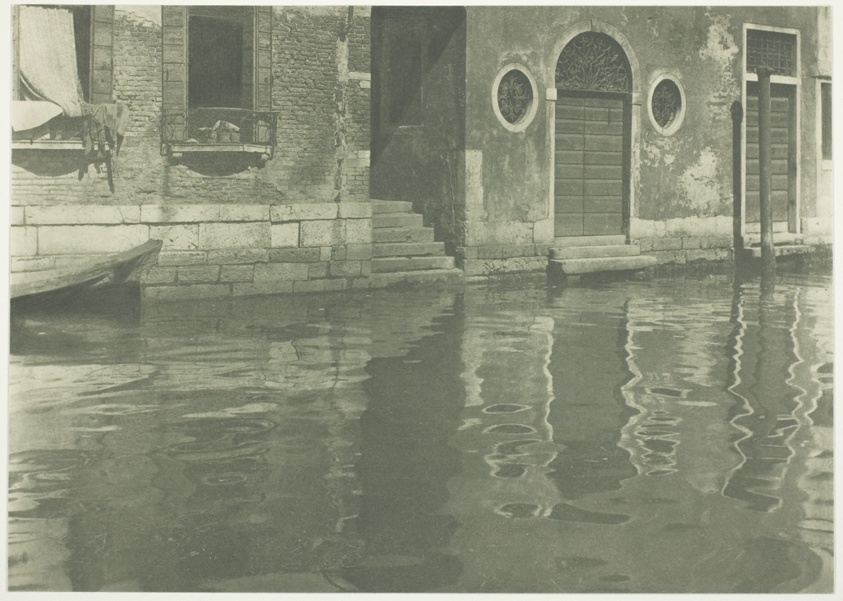
Alfred Stieglitz
Reflections—Venice, 1894
His work sits naturally alongside that of Edward Weston, Paul Strand, and Imogen Cunningham, artists who shared or were shaped by his commitment to straight photography, as well as alongside the paintings of the American modernists he championed, making Stieglitz holdings a natural anchor for any serious collection at the intersection of photography and twentieth century art. Stieglitz died in New York in July 1946, having spent more than half a century insisting that Americans look harder, feel more deeply, and take seriously the arts that were being made in their own time and in their own country. His legacy is visible everywhere: in the institutional legitimacy that photography now enjoys in museums and auction houses, in the careers of the artists he supported, and in the simple fact that a small gallery on Fifth Avenue once made New York the center of the modern art world. To spend time with his photographs today is to understand that his passion was never merely for the medium.
It was for the possibility of genuine seeing, and for the belief that images, made with care and intelligence, could carry the full weight of human experience.
Explore books about Alfred Stieglitz
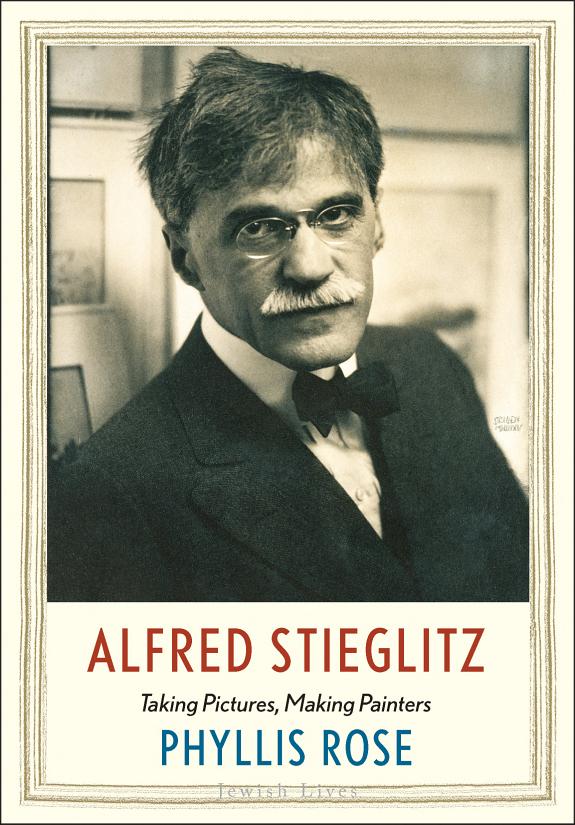
Alfred Stieglitz: A Life
Jennifer Greenhill
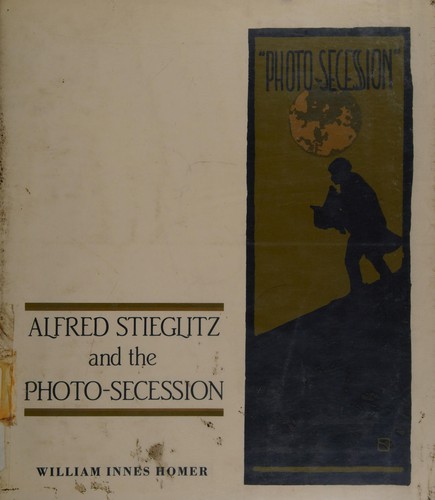
Stieglitz and the Photo-Secession
William Innes Homer
Alfred Stieglitz: Photographs and Writings
Sarah Greenough
Alfred Stieglitz: An American Seer
Dorothy Norman
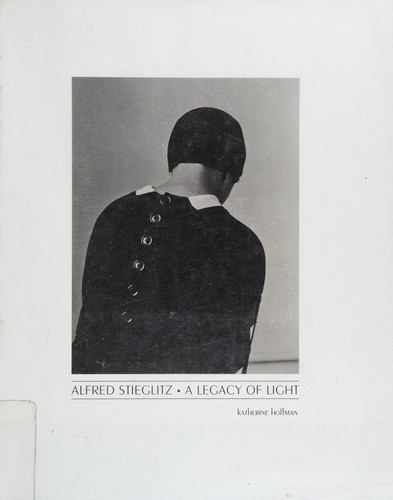
Stieglitz: A Beginning Light
Katherine Hoffman
Alfred Stieglitz: The Key Set
Sarah Greenough and Juan Hamilton
Georgia O'Keeffe and Alfred Stieglitz: Writings
Alexandra Arrowsmith and Thomas West

Stieglitz: Modernism and Photography
Joel Eisinger