Albert Oehlen
Albert Oehlen: Painting Gloriously Beyond the Rules
Artist Spotlight · The Collection Editorial
“What I see are unbearably ugly tatters, which are then transformed at the last moment, as if by magic, into something beautiful.”
Albert Oehlen im Gespräch mit Wilfried Dickhoff und Martin Prinzhorn, 1990
Few living painters command the kind of sustained critical and institutional attention that Albert Oehlen does, and 2024 has done nothing to quiet that momentum. His work continues to appear in major survey exhibitions across Europe and North America, reaffirming what collectors and curators have known for decades: Oehlen is one of the most important and genuinely adventurous painters of his generation. His presence in permanent collections at the Museum of Modern Art in New York, Tate Modern in London, and museums across Germany speaks to a career built not on trend chasing but on a relentless, deeply personal interrogation of what painting can be and do. Oehlen was born in Krefeld, Germany, in 1954, and came of age at a moment when the postwar German art world was crackling with energy and ideological tension.
Albert Oehlen
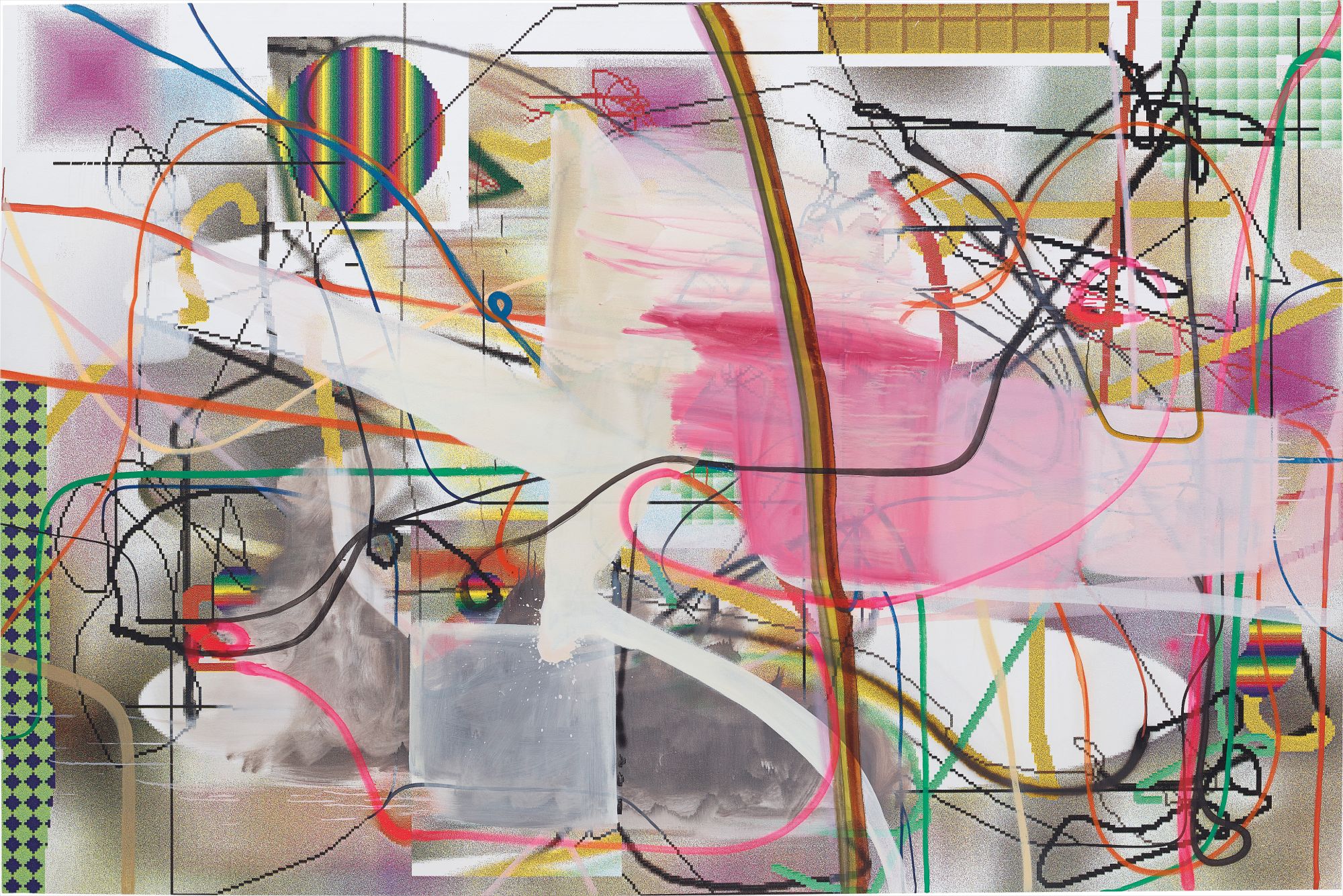
Abyss, 1997
He studied at the Hochschule für Bildende Künste in Hamburg under the legendary Sigmar Polke, a formative encounter that would leave a permanent imprint on his sensibility. Polke's irreverence toward high culture, his willingness to deploy low and unexpected materials, and his fundamental skepticism about artistic authority all found a receptive student in Oehlen. The Hamburg scene of the late 1970s and early 1980s was charged with confrontational energy, and Oehlen absorbed it fully, developing friendships and working relationships with Martin Kippenberger and Werner Büttner that would define an entire chapter of German art history. That circle of artists became central to the Neue Wilde movement, a loose but potent coalition committed to the rehabilitation of painting at a moment when conceptual and minimal art had largely declared it irrelevant.
Oehlen, along with Kippenberger and others, approached painting as a site of productive argument rather than aesthetic comfort. The work was deliberately provocative, often awkward in its color choices and compositional logic, and deeply suspicious of beauty as a received and unexamined value. This was not nihilism but something more nuanced: a rigorous testing of the limits and possibilities of the medium itself. The critical establishment in Germany and then internationally began to take serious notice by the mid 1980s, and exhibitions in Cologne, New York, and Zurich established Oehlen as a figure of genuine and disruptive importance.
Albert Oehlen
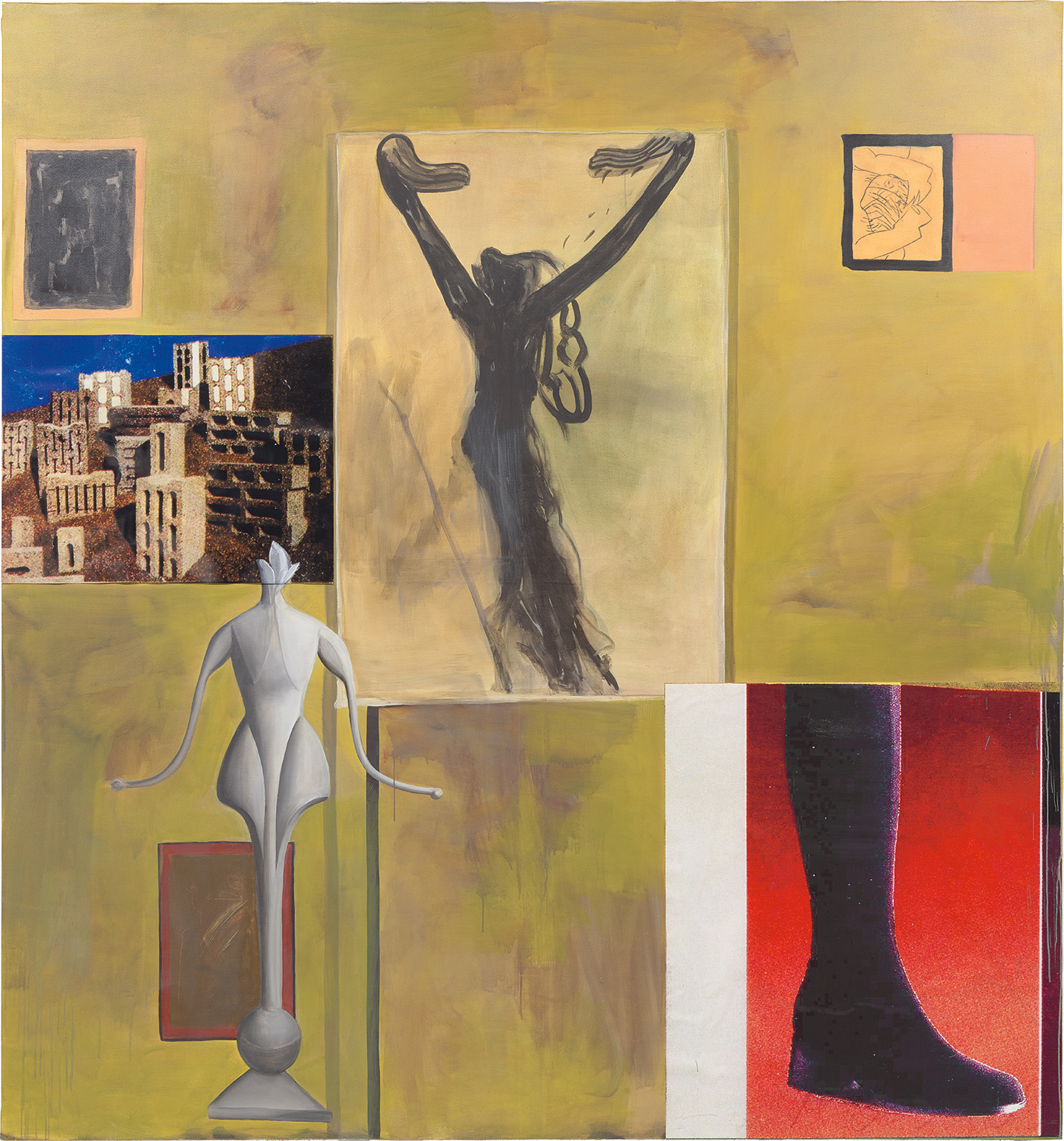
Die Veränderungen, 2005
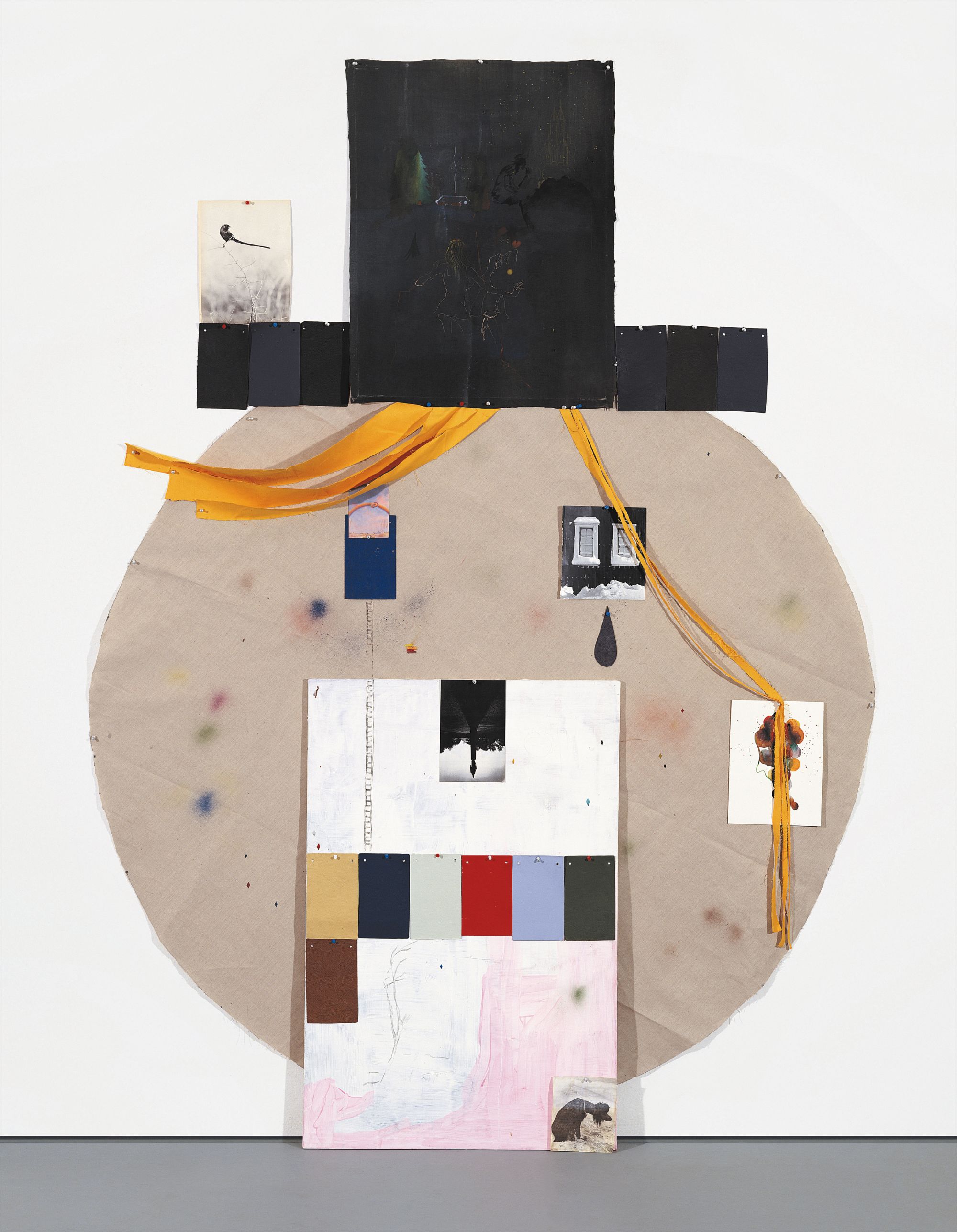
What makes Oehlen's practice so endlessly generative is its refusal to settle. Over the decades he has moved fluidly between figuration and abstraction, sometimes collapsing the two within a single canvas in ways that feel simultaneously logical and deeply strange. His incorporation of digital printing, inkjet imagery, spray enamel, and collaged paper into otherwise painterly surfaces was genuinely ahead of its time, anticipating conversations about technology and image making that only grew more urgent in the internet age. Works like Abyss from 1997, which combines inkjet, oil, acrylic, and spray enamel on canvas, exemplify this layered approach: the surface becomes a kind of archaeological site where different modes of image production coexist and compete.
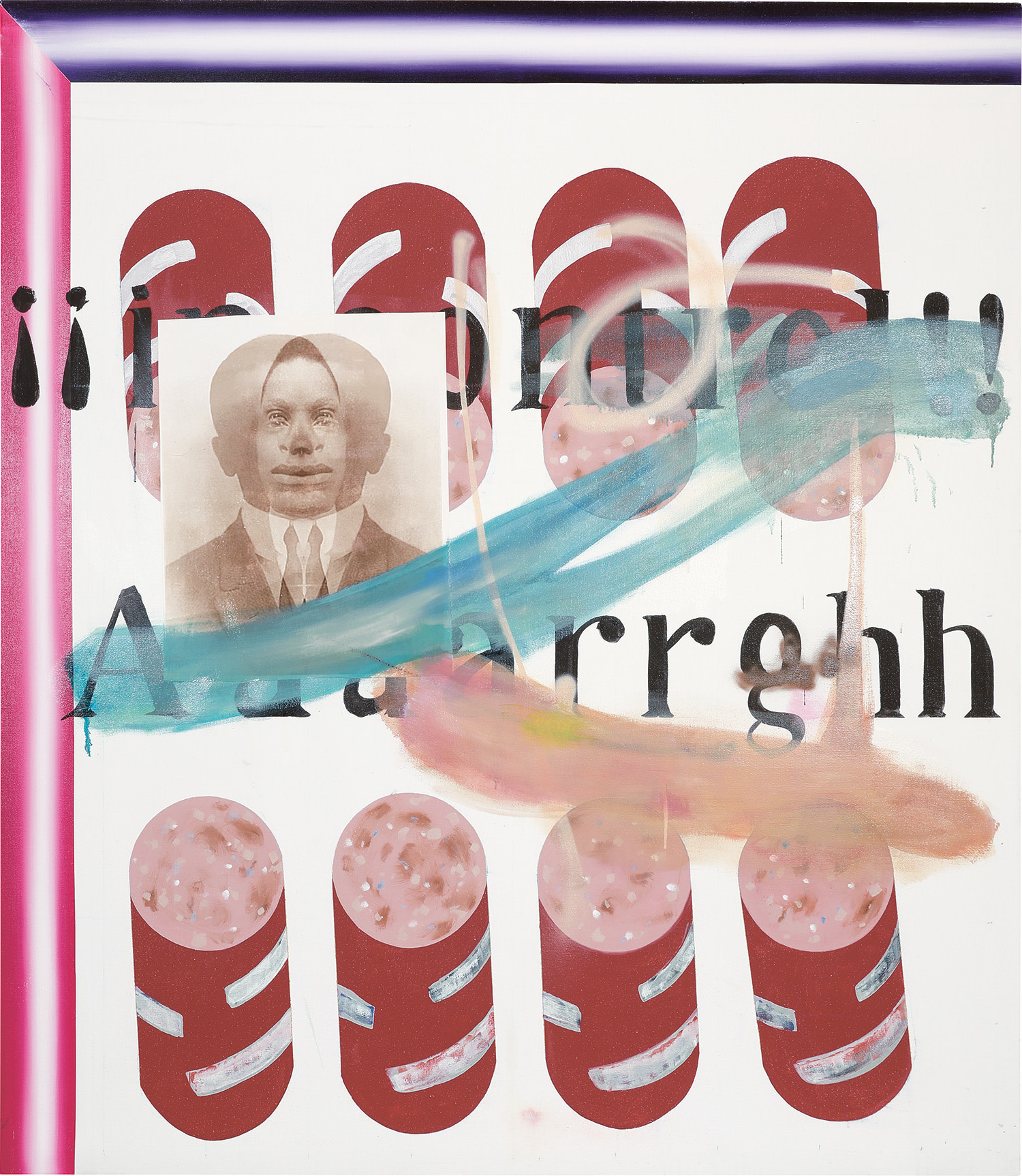
Similarly, Control from 2007, which incorporates acrylic, printed paper collage, and oil, demonstrates how Oehlen uses the collision of materials as a formal and conceptual strategy rather than mere aesthetic novelty. Among the most beloved threads in his oeuvre is the tree motif, which recurs across decades and media. These are not romantic or decorative trees. They are bold, almost diagrammatic forms: thick trunks and tangled branches rendered with expressive, deliberate brushwork against open, unpopulated picture planes.
Albert Oehlen
Abstrakte Malerier Skal Dø Nu
The trees float free of landscape context, becoming something closer to symbols or structural arguments about representation itself. Oehlen has described his own process in terms that illuminate this tension beautifully, speaking of seeing unbearably ugly tatters that transform at the last moment, as if by magic, into something beautiful. That phrase captures something essential about his relationship to his own work: the embrace of difficulty and even ugliness as the necessary path toward genuine aesthetic experience. The Untitled (Baum 90) screenprint on dibond from 2018 demonstrates how this motif retains its vitality across different periods and formats.
From a collecting perspective, Oehlen represents a compelling proposition that has only grown stronger over time. His market is deep and international, with major works appearing regularly at auction houses including Christie's, Sotheby's, and Phillips, where they consistently attract serious bidding from European, American, and Asian collectors. The breadth of his practice means there are genuine entry points across a range of price levels, from works on paper and prints to the large scale canvases that command the most significant prices. Collectors who have built relationships with his work early, acquiring pieces from the 1990s and 2000s in particular, have been rewarded not only financially but in terms of the cultural prestige that comes with holding significant examples of a body of work now recognized as foundational.
Albert Oehlen
Control, 2007
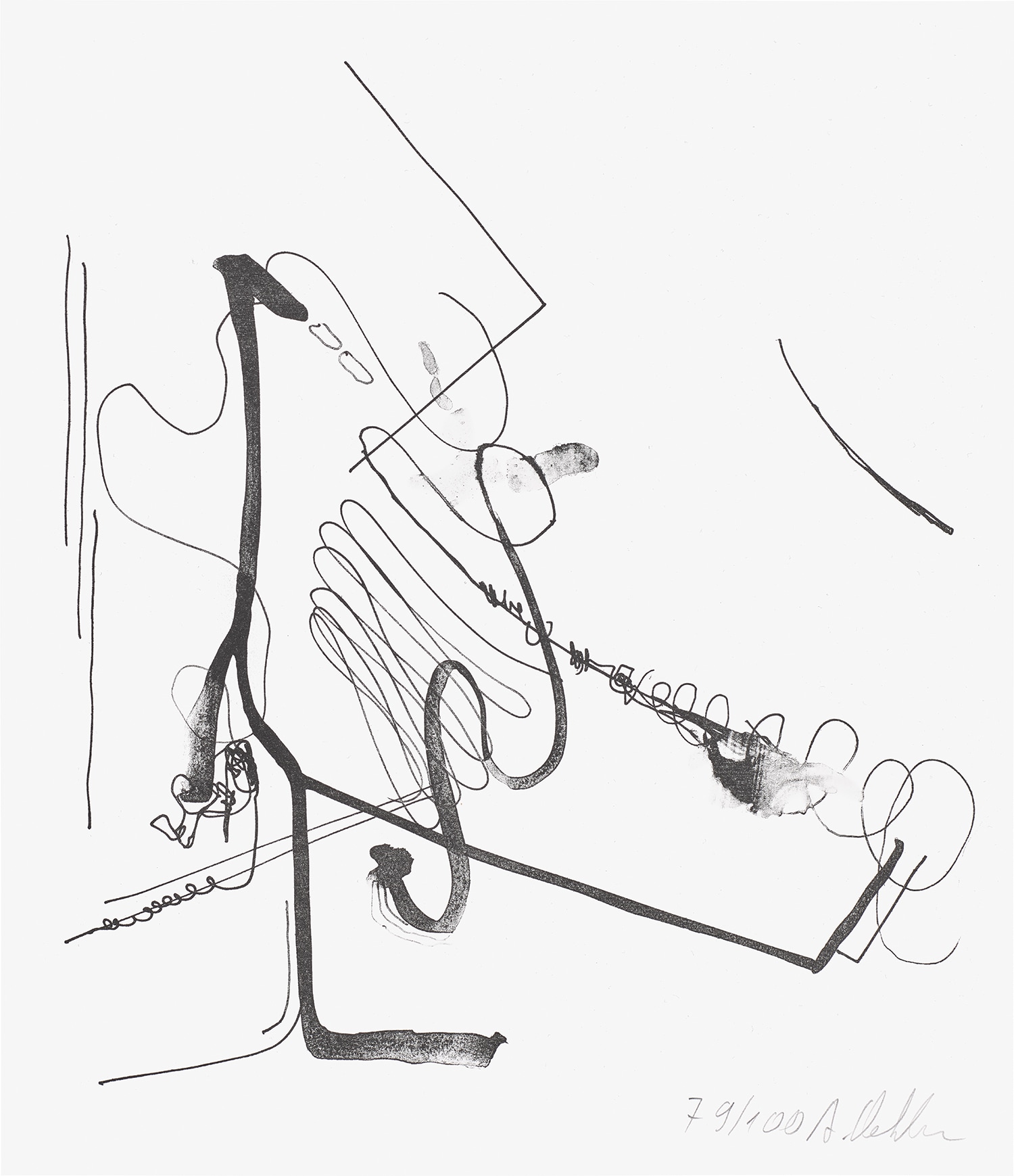
His works on paper, including the quietly remarkable blue ink drawing from 1990, offer intimacy with his process at a scale and price point that remains accessible. Contextually, Oehlen belongs to a generation that also includes Georg Baselitz, Gerhard Richter, and Sigmar Polke among its touchstones, though his relationship to each of those figures is one of creative argument rather than simple lineage. Among his peers, the comparisons to Christopher Wool and Günther Förg are illuminating: all three share an investment in the materiality of painting and a productive skepticism about what images mean and how they function. Oehlen's willingness to incorporate digital and mechanical processes into his practice also places him in productive dialogue with younger painters working today, cementing his role not just as a historical figure but as an active influence on contemporary practice.
What Oehlen's career ultimately demonstrates is that genuine ambition in painting requires a willingness to look foolish, to be wrong, to make work that resists immediate legibility and easy satisfaction. He has built a body of work of extraordinary range and sustained quality by following those instincts without compromise. Institutions like the New Museum and MoMA have honored that commitment with significant exhibitions, and the secondary market continues to reflect the depth of collector conviction in his importance. For those encountering his work for the first time, the experience can be disorienting in the best possible way: here is a painter who takes nothing for granted and invites you to do the same.
Explore books about Albert Oehlen