Albert André
Albert André: Intimate Witness to Impressionism's Warmth
Artist Spotlight · The Collection Editorial
There is a particular kind of tenderness that settles over certain paintings, a quality that has nothing to do with technical bravura and everything to do with trust. Albert André possessed this quality in abundance. When the Musée de Bagnols sur Cèze, the municipal museum in the southern French town where André spent much of his later life, displays his canvases alongside the remarkable collection he helped assemble there, visitors consistently report the same sensation: the feeling of having been invited into something private, something genuine. That museum, now recognized as one of the finest small collections in France, stands as a monument to André's eye and his friendships, and it is precisely why his work continues to draw serious attention from collectors and curators alike.
Albert André
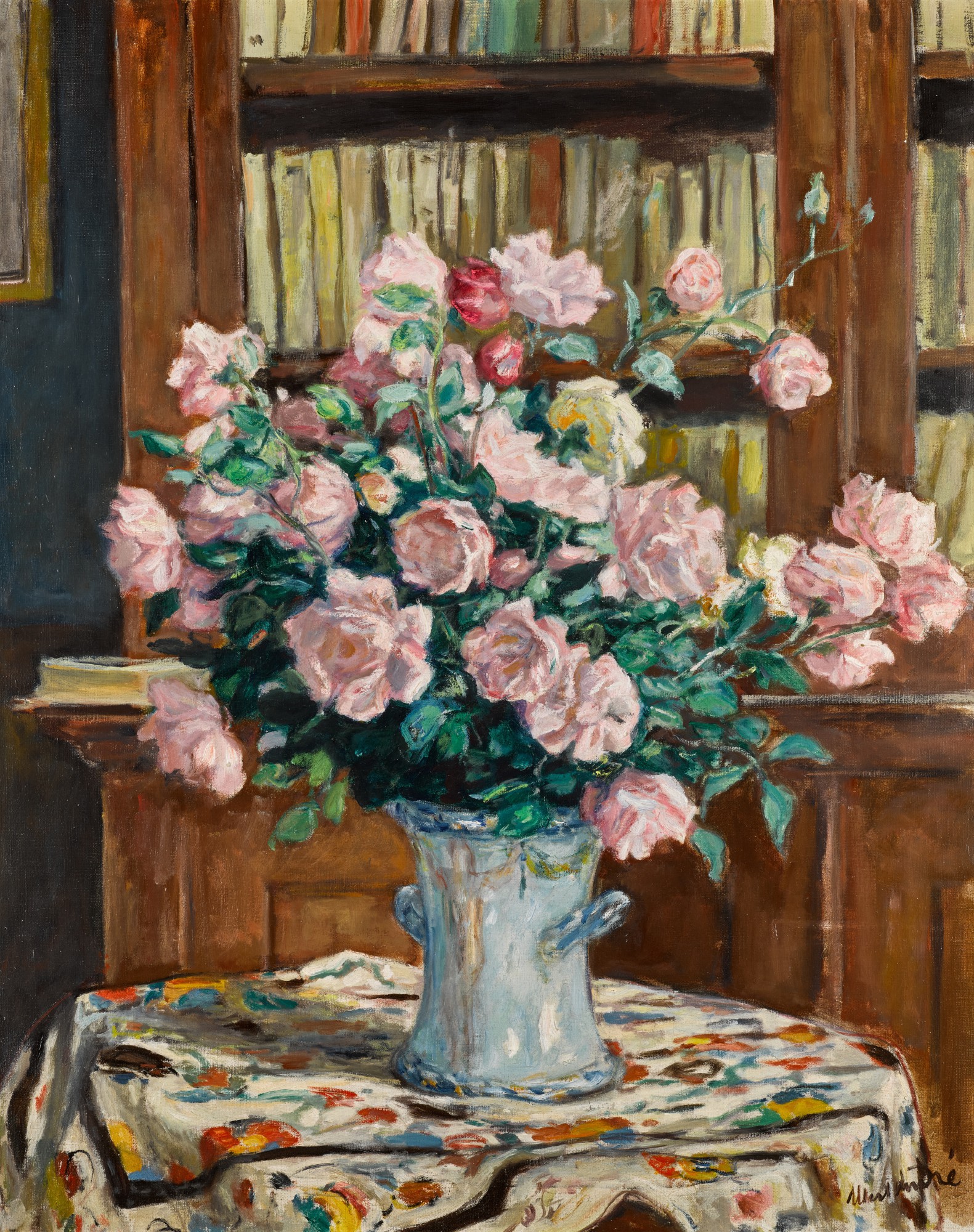
Bouquet de Roses devant une Bibliothèque, 1925
Albert André was born in Lyon in 1869, entering the world at a moment when French painting was on the cusp of its most celebrated revolution. He came of age in an era defined by radical seeing, by artists who turned away from the academy and toward the garden, the kitchen, the riverbank, and the faces of people they loved. André studied in Paris, where he fell into the orbit of the painters who would define the late Impressionist and Post Impressionist generations. His formation was not that of a prodigy seeking to shock, but of a deeply observant young man who understood that painting's highest calling was to record what it felt like to be alive in a specific moment, in a specific room, with specific people nearby.
It was his friendship with Pierre Auguste Renoir that would define André's place in art history, though to reduce him to that friendship alone would be a serious misreading of his achievement. The two men became extraordinarily close, and André became one of the most important witnesses to Renoir's final decades. He visited Renoir regularly at Les Collettes, the estate in Cagnes sur Mer where the older painter worked despite crippling arthritis, brushes tied to his hands. André's portrait of Renoir, executed with unflinching affection and without sentimentality, remains one of the most searching likenesses of the great Impressionist.
Albert André
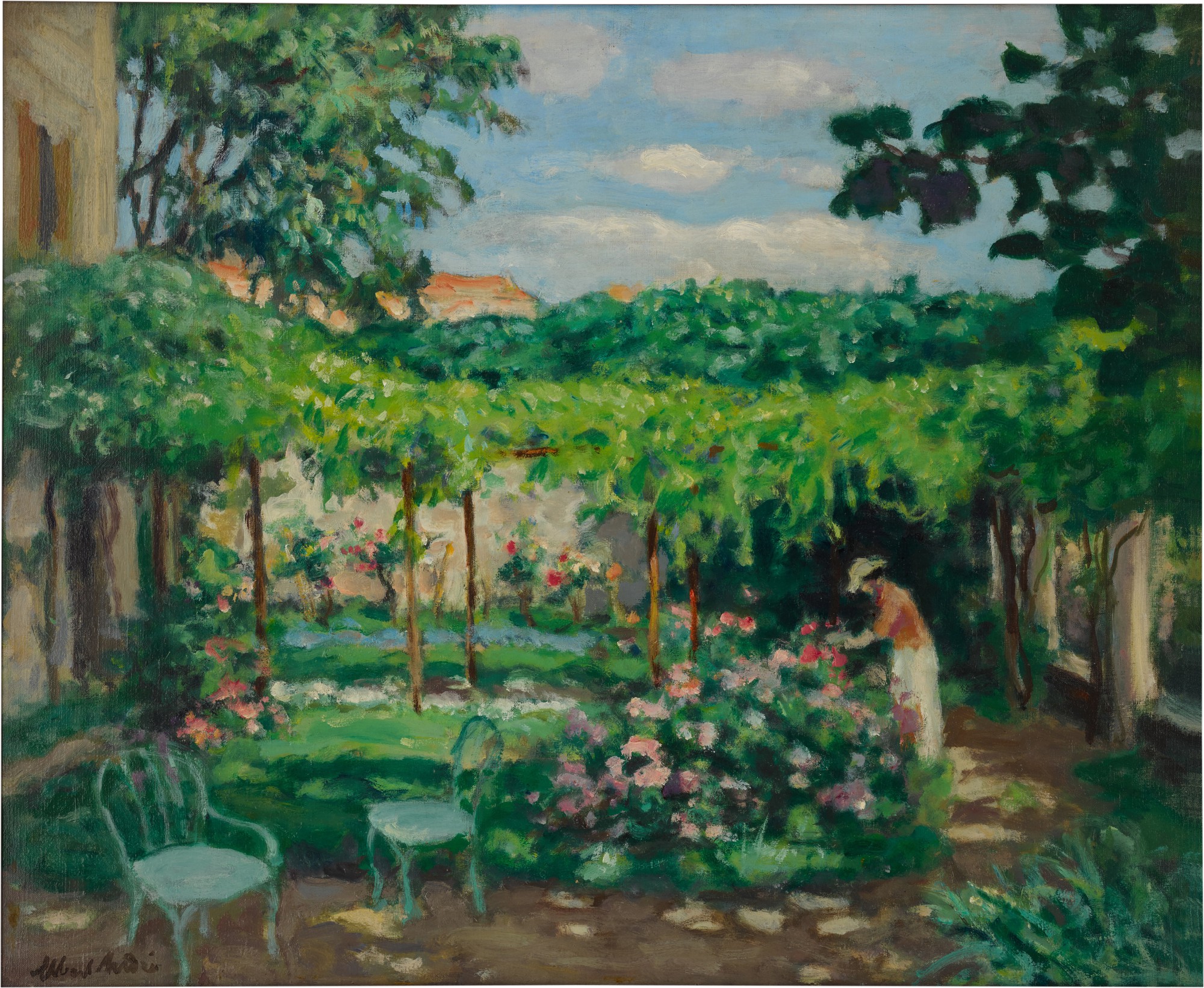
Le Jardin au printemps, 1948
André also produced a significant portrait of Claude Monet in 1922, a work now held on The Collection and one that carries the particular authority of close personal acquaintance. These were not commissioned portraits in the formal sense. They were acts of friendship rendered in oil. André's artistic development followed a course that was deeply personal rather than fashionably progressive.
He was not interested in the fragmentation that Cubism proposed, nor in the psychological extremities of Expressionism. His commitment was to the figure in its environment, to flowers on a table, to a garden in its seasonal transformation, to the domestic interior as a theater of quiet meaning. Works such as "Bouquet de Roses devant une Bibliothèque," painted in 1925, demonstrate his mastery of the kind of subject that lesser artists reduce to mere decoration. In André's hands, the roses glow with an almost interior light, and the books behind them suggest a whole life of reading and contemplation without a single word being spoken.
Albert André
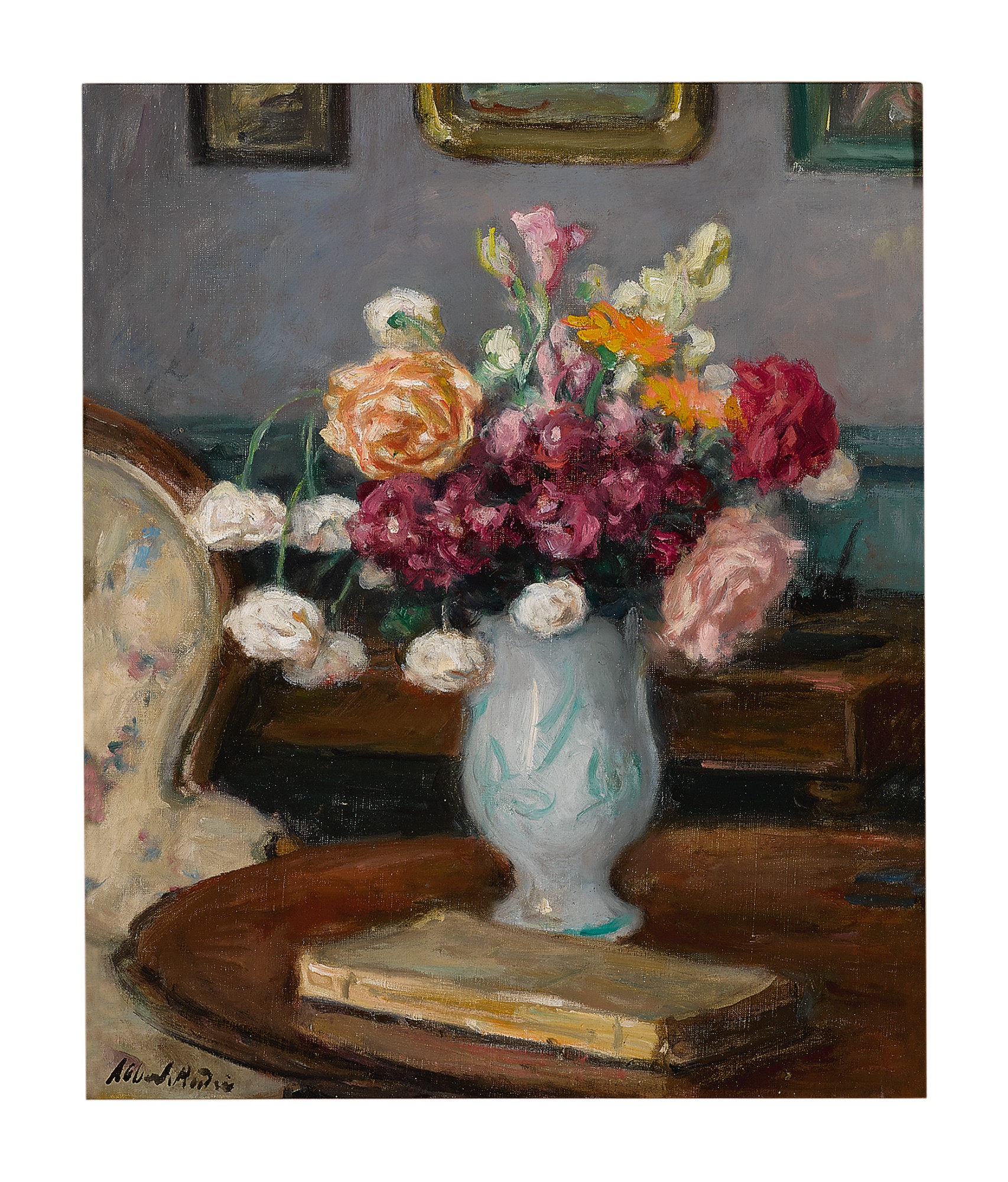
Vase De Fleurs
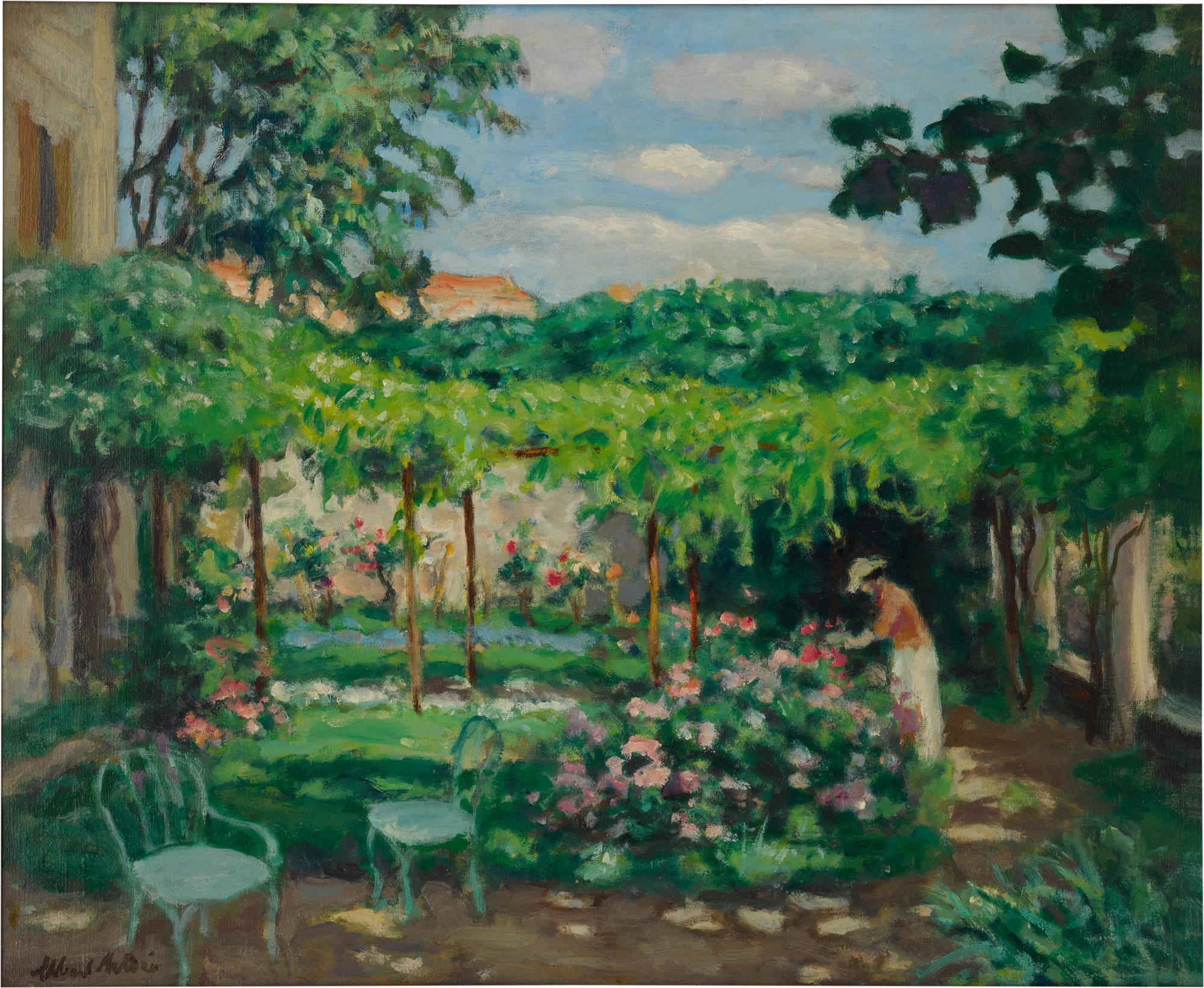
The painting rewards prolonged looking in the way that only genuinely considered work can. "Le Jardin au printemps," painted in 1948 when André was nearly eighty years old, is remarkable evidence of an artist whose sensibility never calcified. The garden, rendered with the loose confidence of a painter who has spent decades looking at growing things, feels immediate and alive. There is no nostalgic softness here, no retreat into prettiness.
The work has the directness of someone still genuinely interested in what light does to green leaves in the morning. "La Musique," executed in distemper on paper laid down on canvas, reveals another dimension of André's practice, his willingness to experiment with materials and his understanding of the decorative tradition that runs from the great French ensembles of the eighteenth century through to the intimist paintings of Édouard Vuillard and Pierre Bonnard. André occupies a natural place in that lineage of painters for whom domesticity is not a limitation but a universe. For collectors, Albert André presents a genuinely compelling case.
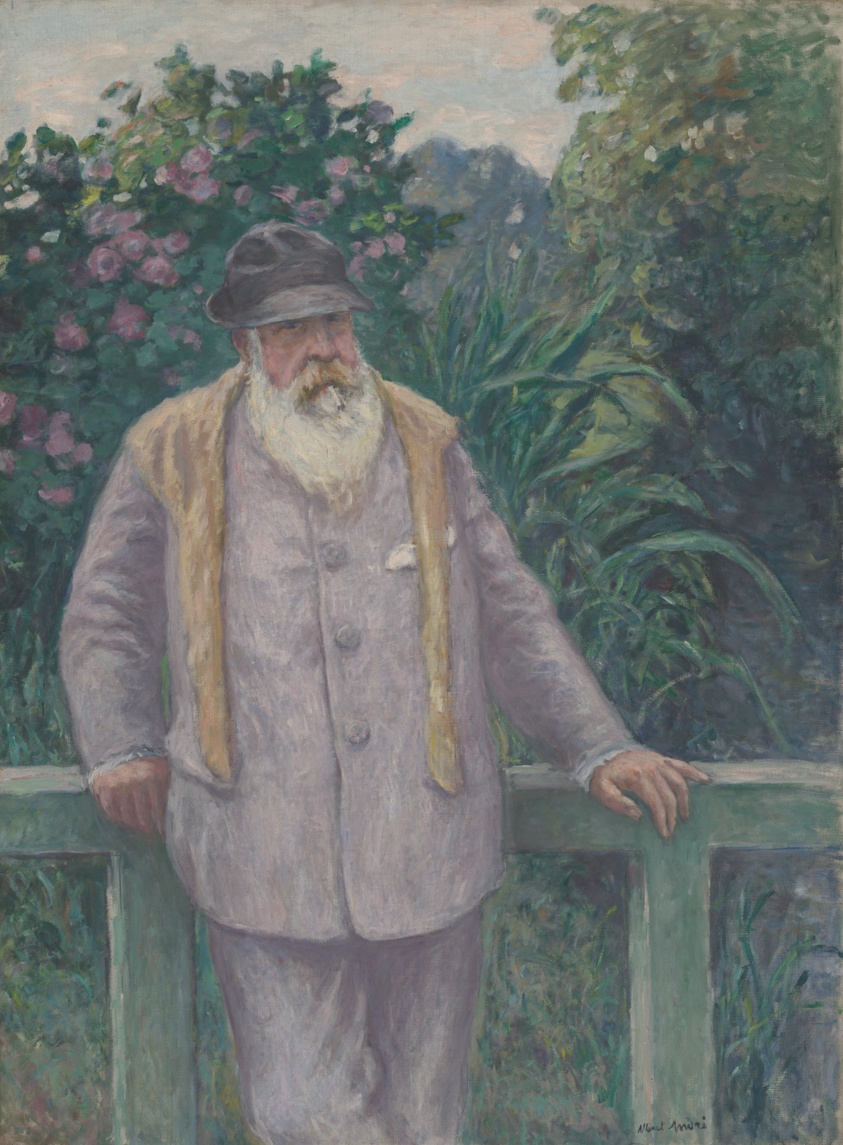
Albert André
Claude Monet, 1922
His work has historically been undervalued relative to the company he kept and the quality he consistently achieved. The connection to Renoir and Monet is not merely biographical color. It means that André was working in direct dialogue with two of the most important painters in the Western tradition, absorbing their lessons and translating them into a voice that was distinctly his own. Works from his mature period, particularly the still lifes and garden paintings, have shown steady appreciation among collectors who specialize in the Post Impressionist school.
The relative scarcity of his work on the primary market makes each appearance significant. Collectors drawn to Bonnard, to Vuillard, to the domestic intimism of the Nabis, will find in André a painter who shares their concerns while retaining an independence of vision that makes him genuinely distinct. To place André in his broader art historical context is to understand how rich the late Impressionist and Post Impressionist moment truly was. His contemporaries included not only the masters he befriended but a whole generation of painters, among them Félix Vallotton, Maurice Denis, and Henri Lebasque, who were collectively reimagining what painting could say about private life.
André was part of this conversation without being derivative of any single voice within it. His contribution was a kind of emotional fidelity, a refusal to aestheticize experience at the expense of feeling. The garden paintings and flower pieces are beautiful, but they are beautiful in the way that actual gardens and actual flowers are beautiful, contingently and impermanently, as though the light might change at any moment. Albert André died in 1954 at the age of eighty five, having outlived almost all of his great contemporaries and having witnessed the entire arc of modern art from Impressionism through to Abstract Expressionism.
He remained committed to his own vision throughout, neither nostalgic nor defensive, simply continuing to paint what he saw and felt. His legacy is housed most fully in Bagnols sur Cèze, where his curatorial vision created something that has endured. But his legacy also lives in every canvas where a rose catches the light or a garden holds the particular stillness of a spring morning, and in the knowledge that someone stood in front of these things with genuine love and rendered them for the rest of us to share.
Explore books about Albert André