Alan Shields
Alan Shields: Where Everything Joyfully Comes Undone
Artist Spotlight · The Collection Editorial
There is a moment, standing before one of Alan Shields's works, when the eye simply does not know where to settle. Thread loops through canvas strips. Beads catch the light. Stitching follows no conventional logic.
Alan Shields
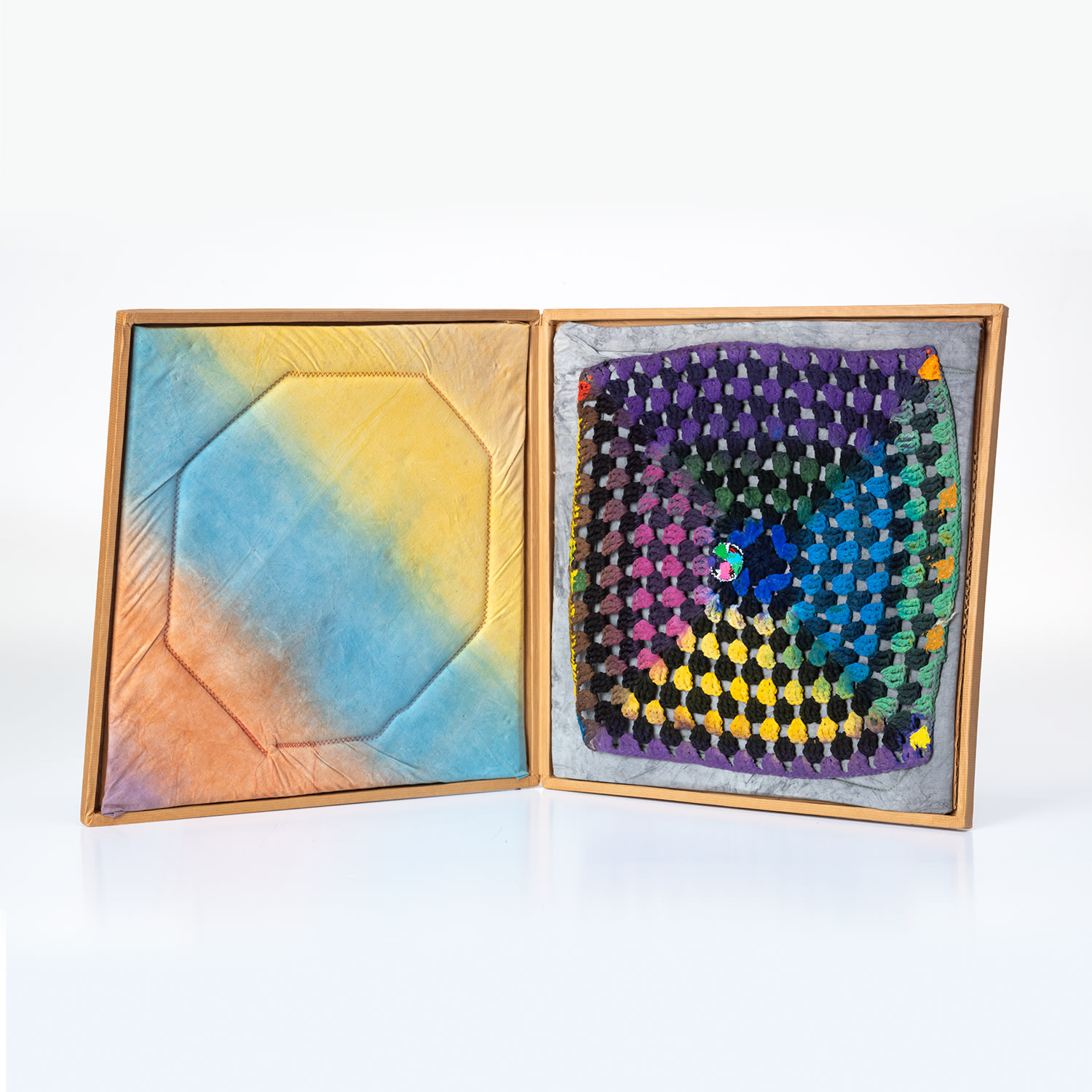
Sign of the Devil (diptych)
Color arrives in waves, unannounced and exuberant. For collectors and curators who encountered his work during his lifetime, and for those discovering it now through sales and institutional holdings, Shields represents one of the most genuinely original voices to emerge from the ferment of late 1960s and early 1970s New York, a figure who dissolved the boundaries between painting, sculpture, and textile art long before such boundary crossing became fashionable. Alan Shields was born in Herington, Kansas in 1944, and his origins in the American heartland were not incidental to his sensibility. He studied at Kansas State University before eventually making his way to New York, arriving at a moment when the art world was cracking open.
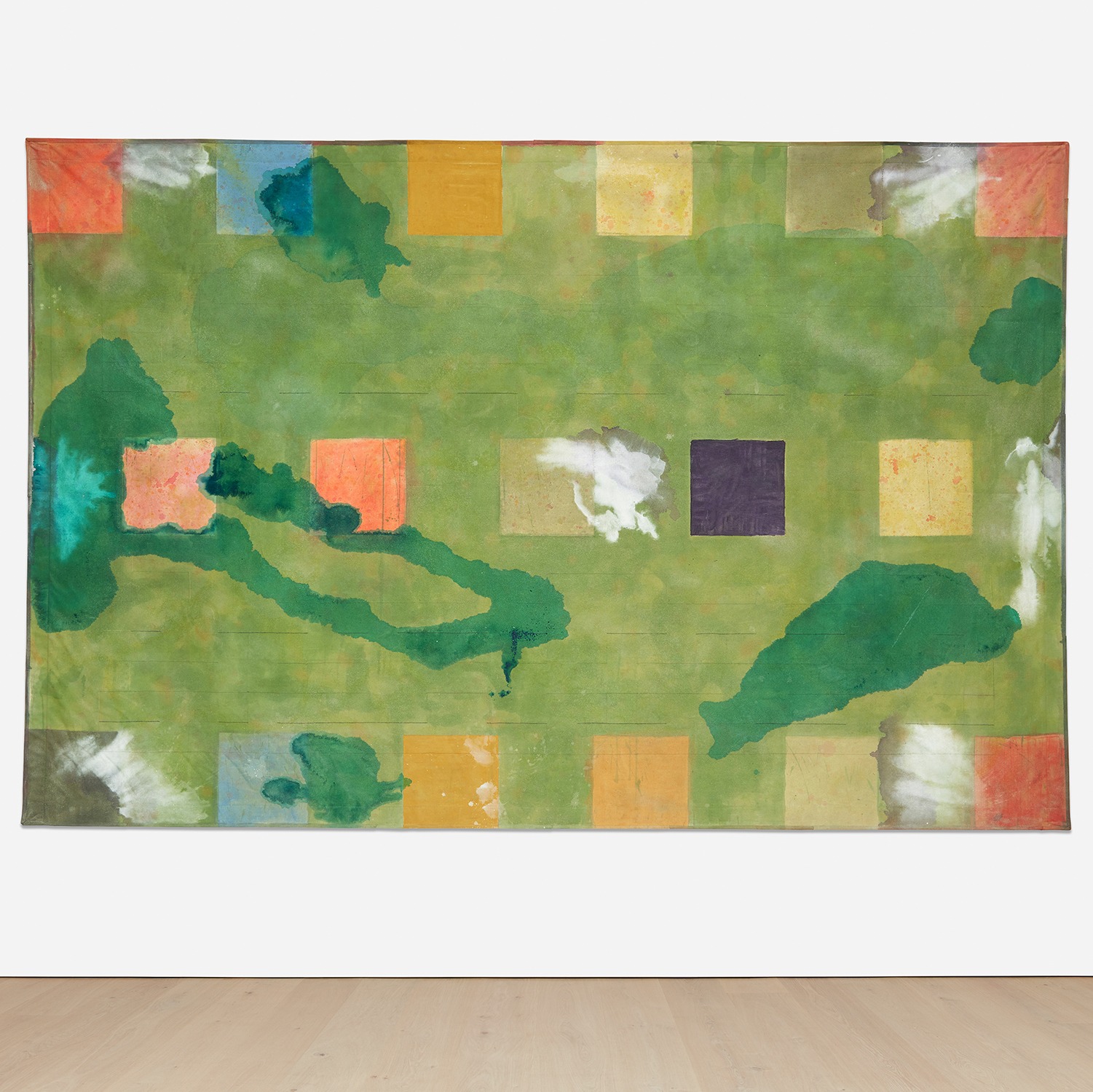
Minimalism had imposed its austere grammar on the decade, and a younger generation was beginning to push back, not with figuration or nostalgia, but with process, materiality, and a willingness to let the work breathe. Shields absorbed these energies and transformed them into something entirely his own, rooted in the hand, in craft traditions, and in a democratic love of color that felt almost folk in its warmth. His breakthrough came in the late 1960s and early 1970s, when he began abandoning the stretched canvas entirely. Works like "3, 4, 5, 6 Preponderus Chool" from 1969, rendered in acrylic on stitched and unstretched canvas, announced a practice that would define the next three decades.
Alan Shields
Detroit
Shields treated canvas not as a ground but as a material in its own right, cutting it into strips, sewing sections together, and allowing the resulting work to hang freely or extend into three dimensional space. This was a radical gesture at the time, aligning him with peers such as Frank Stella in his shaped canvas explorations, Robert Ryman in his investigation of painting's physical conditions, and the broader circle of artists associated with the Pattern and Decoration movement, including Miriam Schapiro and Joyce Kozloff, who were reclaiming craft and ornament as legitimate artistic languages. What distinguished Shields within that context was his restless material invention. He incorporated beads, thread, hand stitching, handmade paper, and screenprinting into a practice that refused to privilege any single medium.
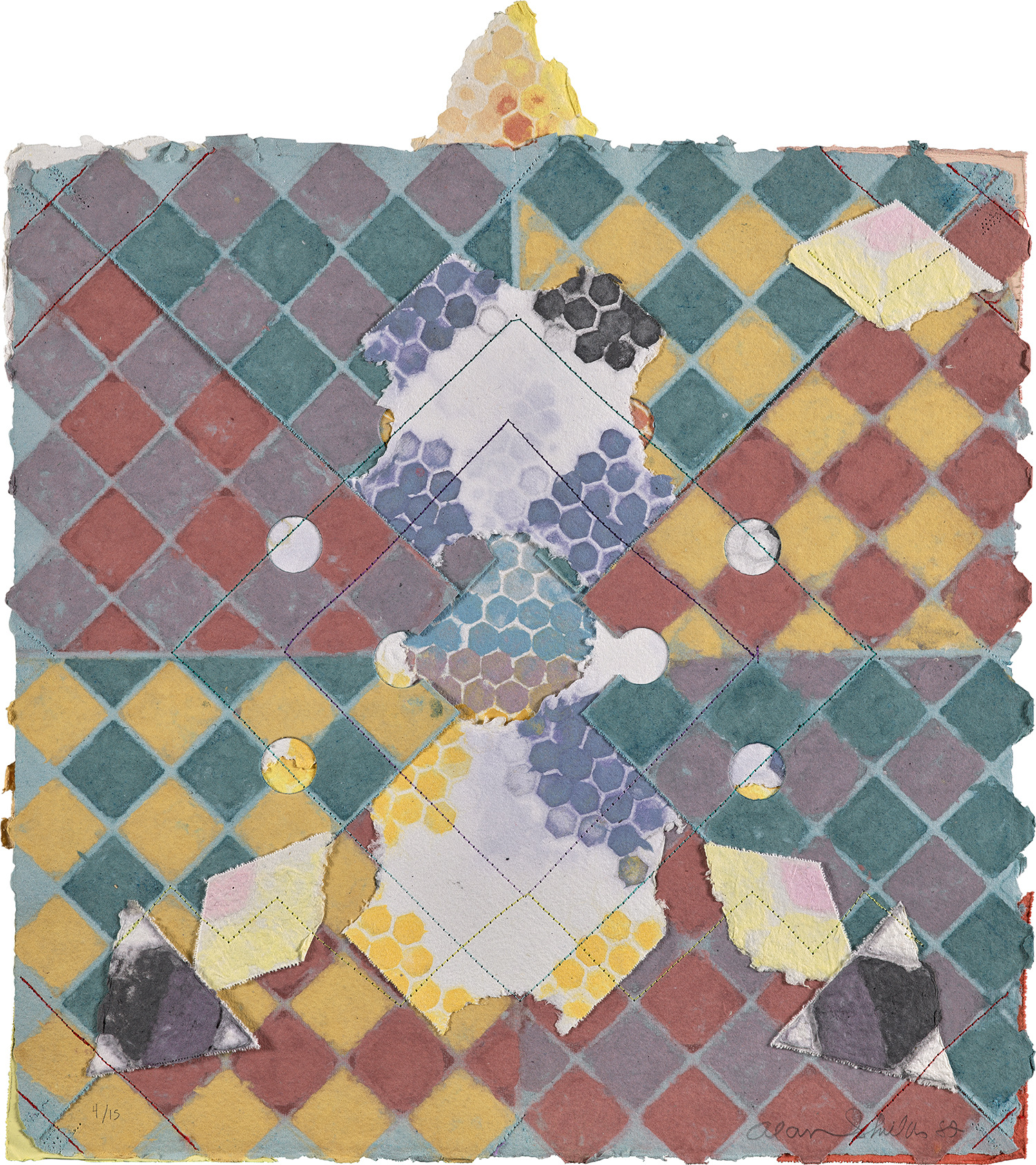
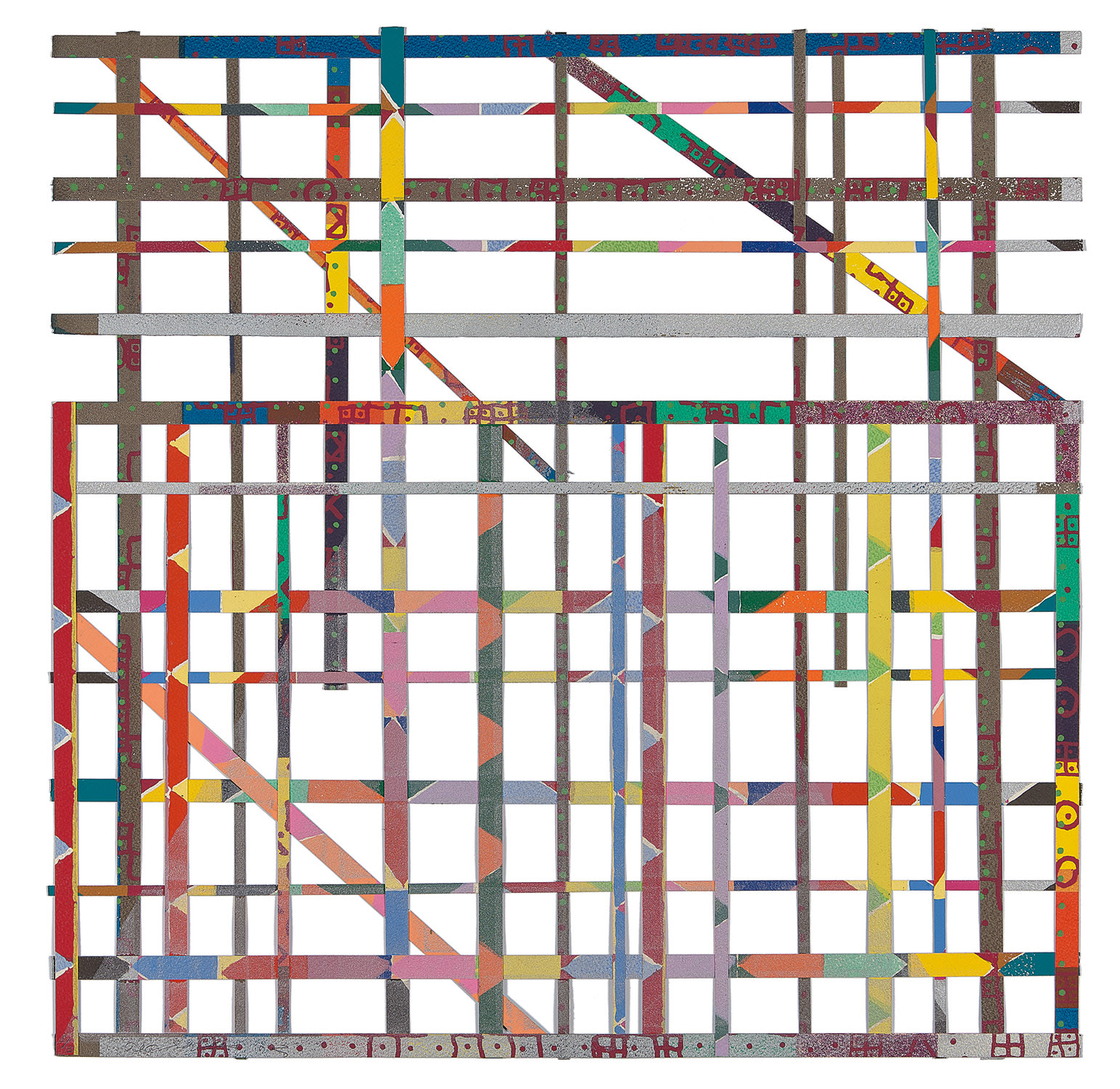
His print works, produced in collaboration with publishers including Tandem Press in Madison, Wisconsin, are among the most formally inventive multiples of their era. "Detroit," a double sided screenprint with interlacing strips of Morilla AP etching paper stitched and glued together in a network of grids, demonstrates how seriously Shields engaged with the print medium as a vehicle for his spatial concerns rather than a secondary output. "Synchromesh, from Soft and Fluffy Gears," published by Tandem Press and signed and dated in pencil, similarly reveals the depth of craft and intention that went into each editioned work. These are not reproductions of paintings.
Alan Shields
3, 4, 5, 6 Preponderus Chool, 1969
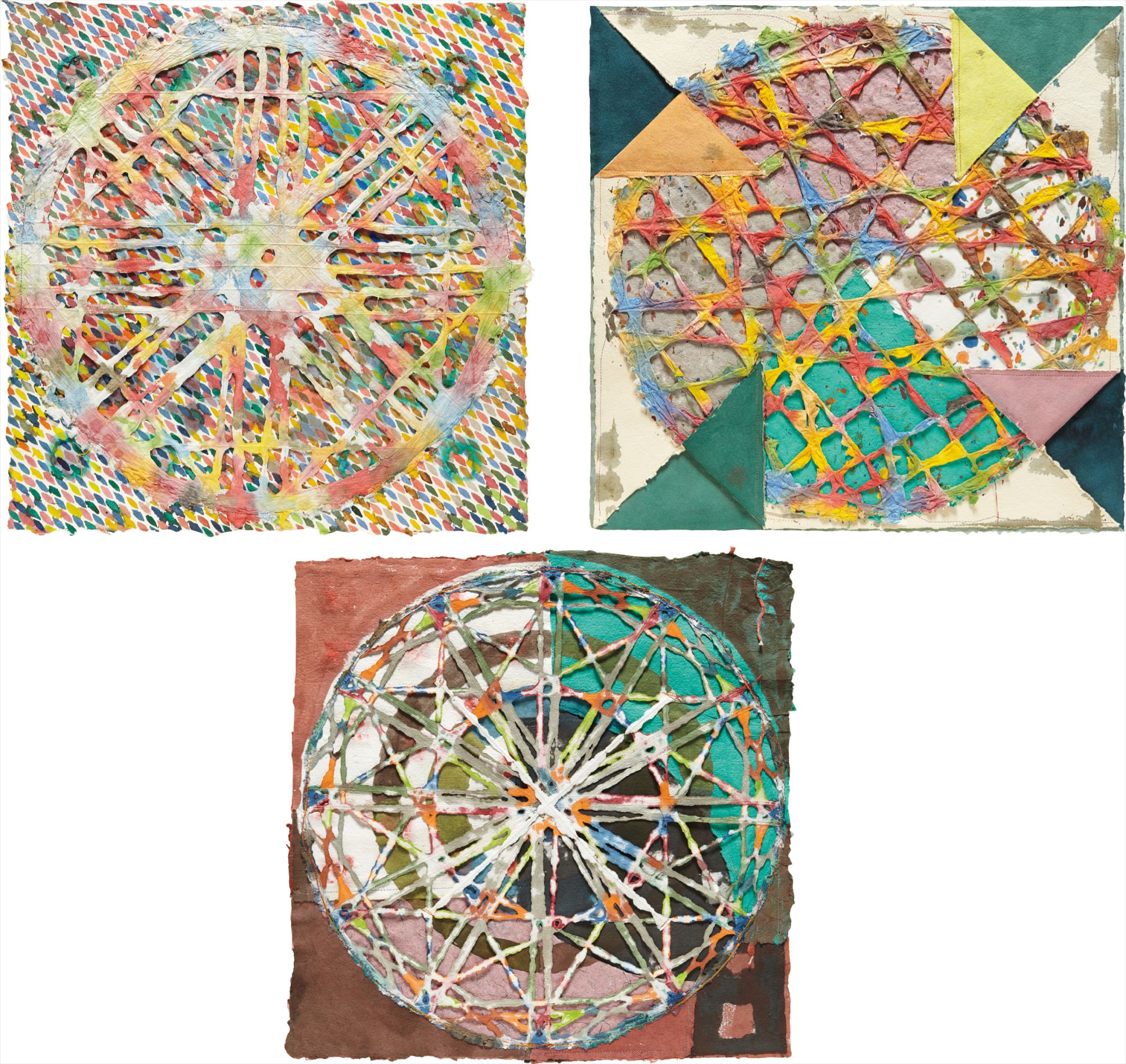
They are fully realized works in their own right, and collecting them offers access to a considered, intimate dimension of his practice. The works on handmade paper are equally compelling. The 1986 trio comprising "Flock Pool," "Eggs are Ready," and "My Sweet Daddy Back" brings together watercolor and stitching on handmade paper in a way that feels at once ancient and utterly contemporary. Shields treated handmade paper with the same physical curiosity he brought to canvas, puncturing it, sewing into it, allowing thread to become as much a mark making tool as the brush.
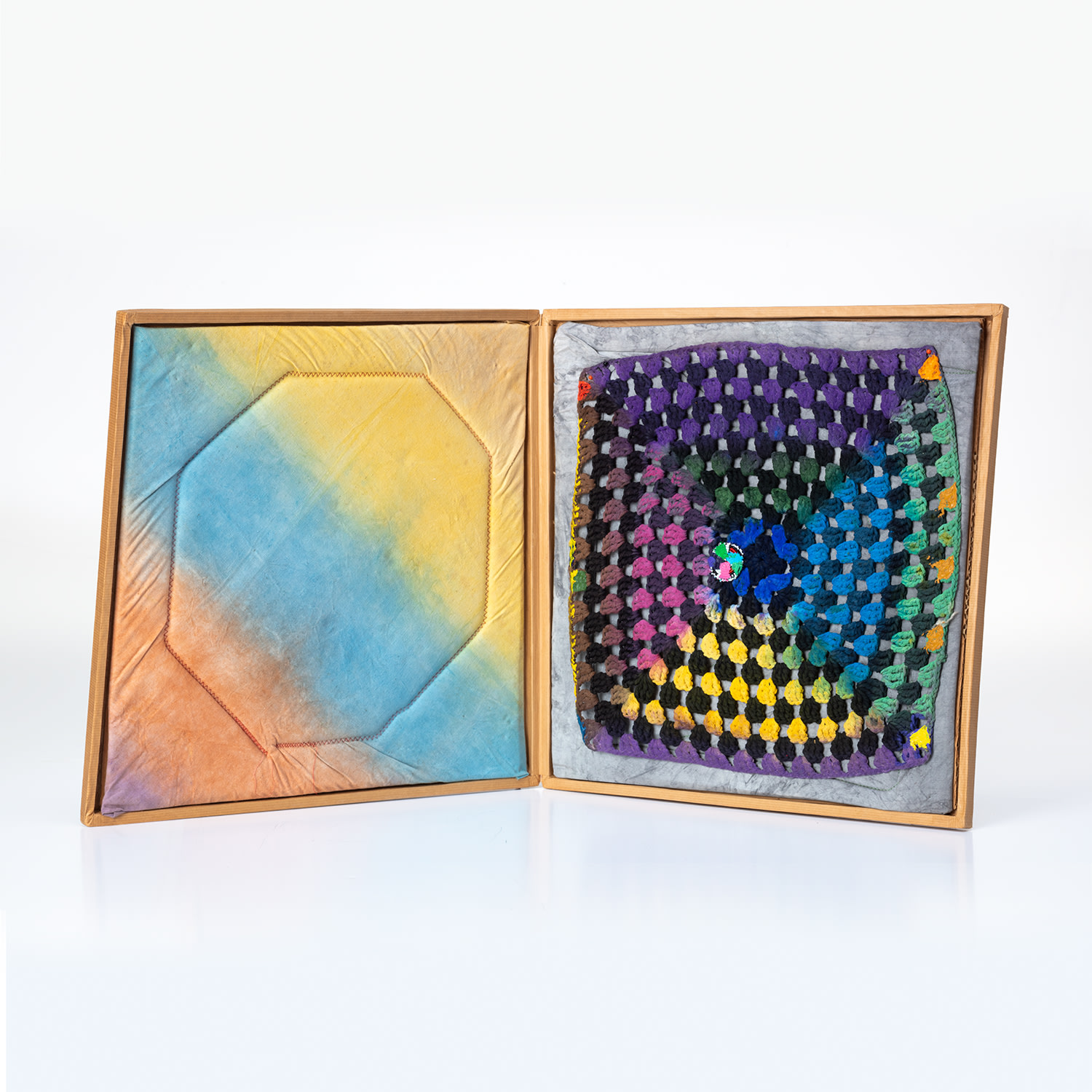
"Eight Prints" from 1981, a suite of mixed media prints on handmade wove paper, stands as a sustained meditation on how much visual and material information a single sheet can hold. For collectors assembling a thoughtful body of work on paper, these pieces offer both rarity and genuine art historical significance. Perhaps the most extraordinary object in any consideration of Shields's output is "Sign of the Devil," a unique crochet square with hand painting and beads, presented in the original quilted hand painted fabric lined cardboard box that the artist designed himself. The work is an object in the fullest sense, as much container as content, as much sculpture as painting.
Alan Shields
Three works: (i) Flock Pool, 1986; (ii) Eggs are Ready, 1986; (iii) My Sweet Daddy Back, 1986
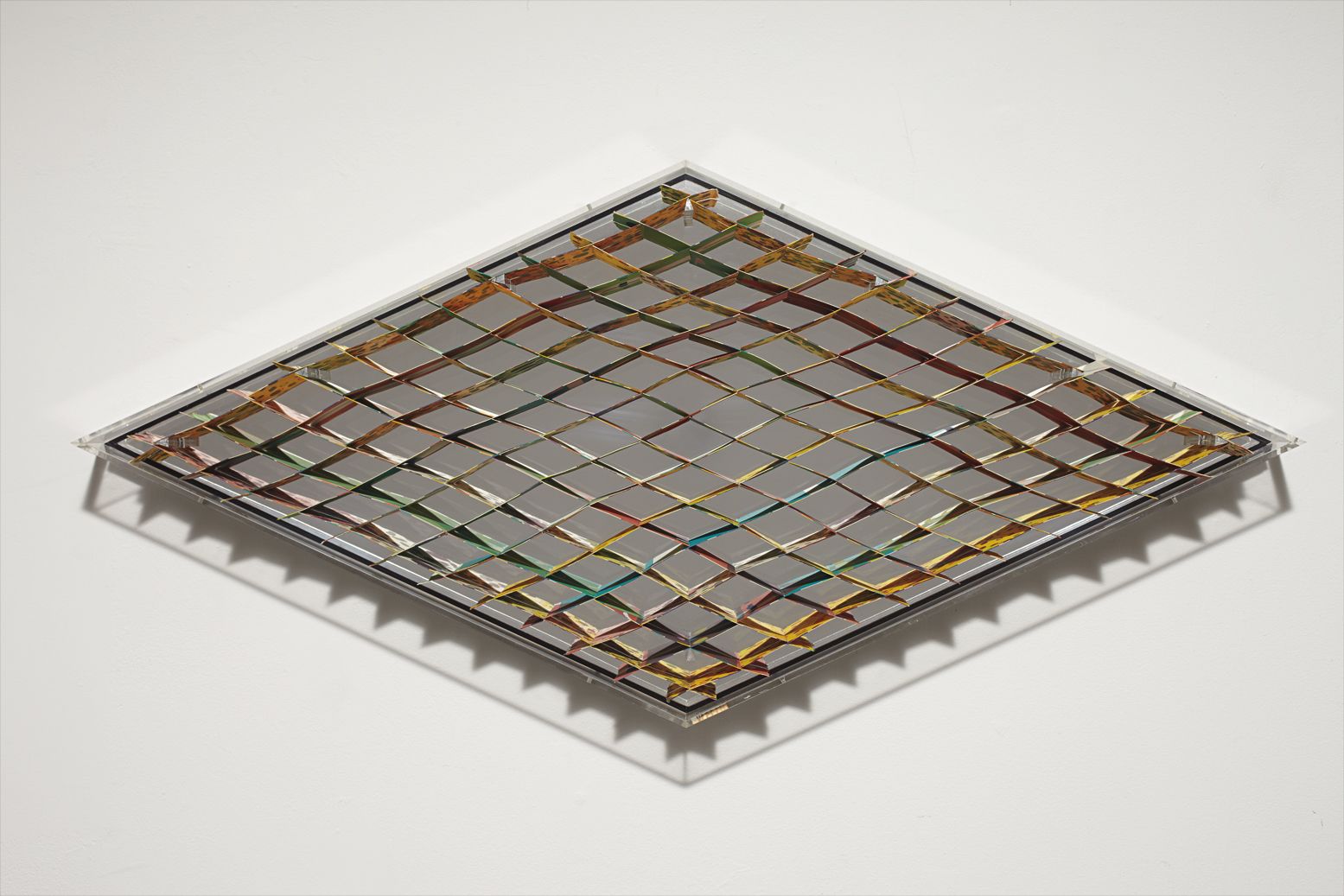
It encapsulates everything that made Shields so difficult to categorize and so endlessly rewarding to collect. The box is not packaging. It is part of the work. The same logic applies to "Moose Set, from Box Sweet Jane's Egg Triumvirate," a three dimensional construction of lithograph, screenprint, and stamping on both sides of gray HMP Duplex paper, cut into strips and configured, housed in an artist designed diamond shaped Plexiglas and mirror box.
These are works that insist on being experienced as total objects, and they reward repeated, close looking in a way that flat works often cannot. From a collecting perspective, Shields remains significantly undervalued relative to his art historical importance. His work appears regularly at auction and through specialist dealers, and prices have shown steady appreciation among collectors who understand the field. The print works and multiples, particularly those published by Tandem Press and produced in limited editions, represent an accessible entry point into the practice.
The unique works on fabric and handmade paper, and especially the artist designed box constructions, are rarer and command greater attention when they do surface. Institutions including the Museum of Modern Art in New York and the Art Institute of Chicago hold works by Shields, lending institutional weight to his market position. Collectors drawn to the Pattern and Decoration movement, to process based abstraction, or to the intersection of fine art and craft traditions will find in Shields a figure whose work amplifies and enriches those interests in unexpected ways. Shields lived and worked for much of his later career in Shelter Island, New York, where he continued to develop his practice until his death in 2005.
His relative remove from the Manhattan gallery machinery may have contributed to his lower public profile compared to some contemporaries, but it also preserved a quality of independence and material focus in the work that remains deeply appealing. He was never simply making objects for the market. He was following a genuinely idiosyncratic logic of making, one that drew as readily on traditional American craft as on the sophisticated formal conversations happening in New York galleries. Today, with renewed critical and institutional interest in the Pattern and Decoration movement, in craft based practices, and in the expanded field of painting, Shields has never felt more relevant.
His work anticipates concerns that younger artists are only now articulating: the politics of the decorative, the dignity of textile traditions, the liberation of the object from the wall. To collect Shields is to hold something that was ahead of its time and has quietly, without fanfare, been proven right.
Featured Works