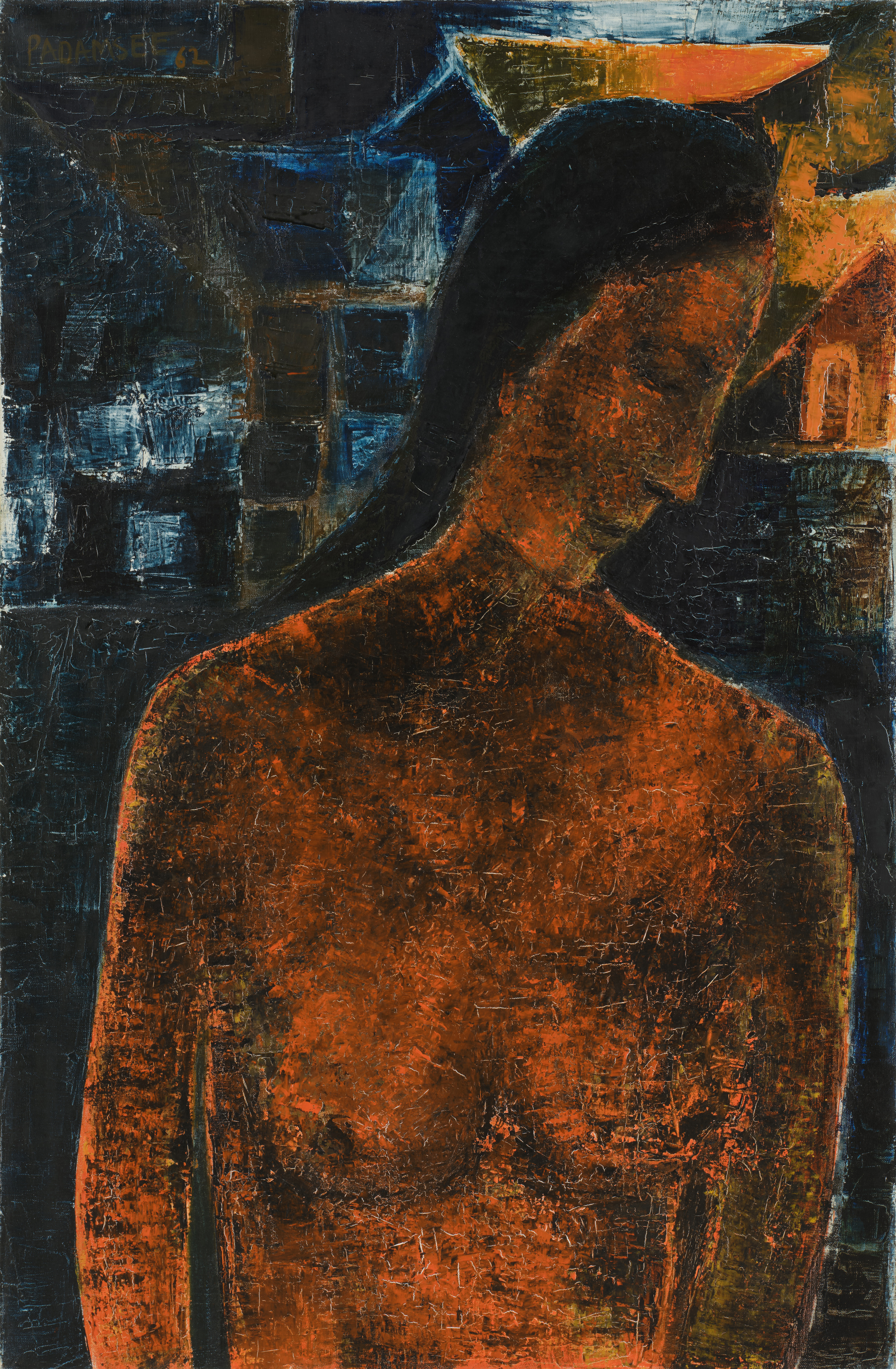
Akbar Padamsee
1
Works
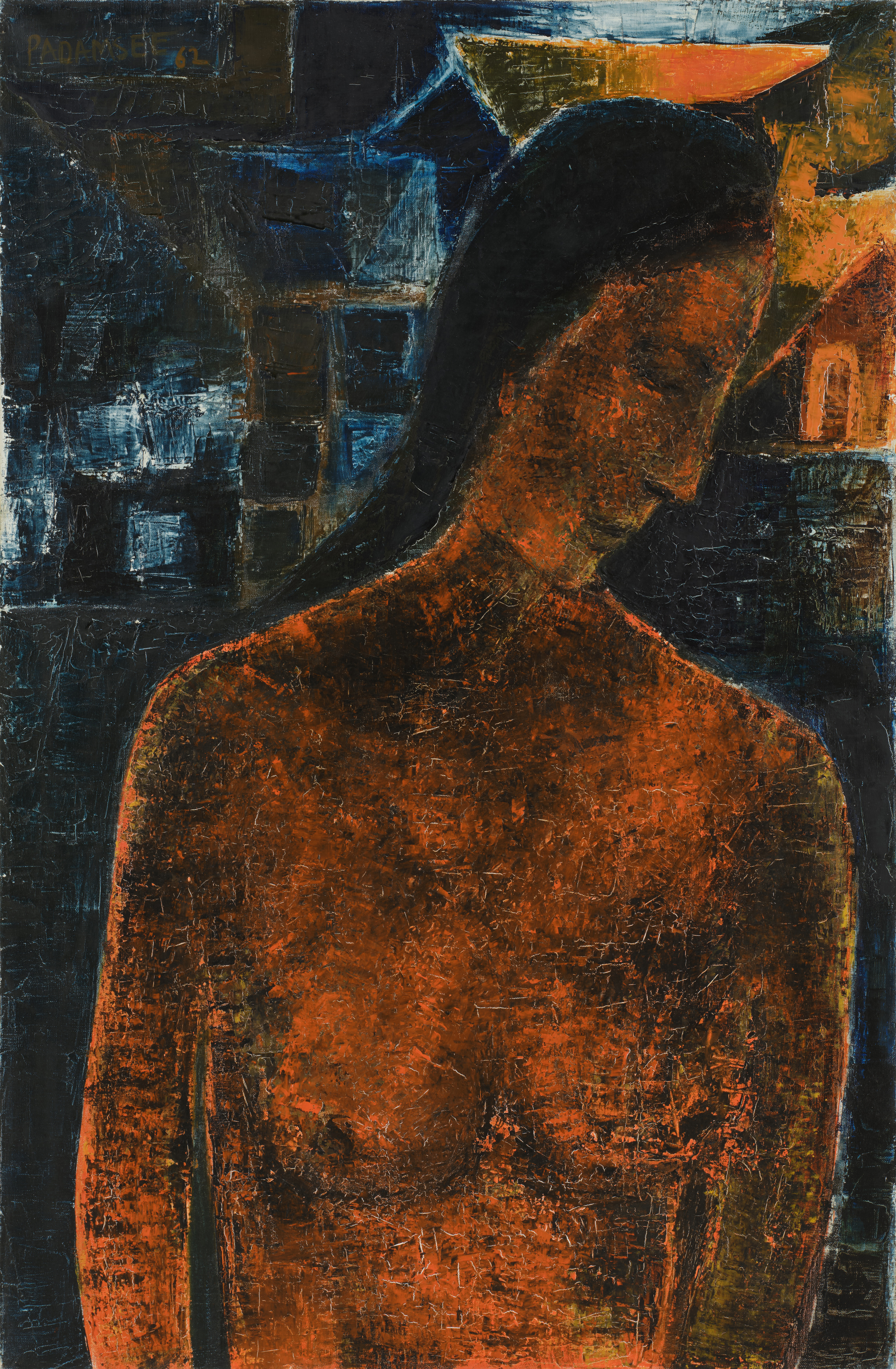
Akbar Padamsee was one of India's most significant modern artists and a pioneering figure in the Indian Progressive Artists' Group circle. Born in Mumbai, he studied at the Sir J.J. School of Art before moving to Paris in 1951, where he spent several years absorbing European modernism and developing his distinctive artistic voice. His work spans multiple mediums including painting, sculpture, photography, and computer graphics, and he is renowned for his contemplative approach to form, light, and philosophical inquiry. Padamsee's oeuvre is characterized by recurring motifs, metascapes (abstract landscapes), the mirror image series, prophets, and Greek lovers, which he explored with remarkable consistency and depth over decades. Padamsee's artistic style evolved from early figurative works influenced by European modernism to increasingly abstract explorations of form and space. His metascapes, begun in the 1970s, are meditative compositions that suggest landscapes through subtle gradations of grey tones, embodying a philosophical investigation into perception and reality. His mirror image paintings explore duality and reflection, while his nude studies and figurative works demonstrate a masterful understanding of human form and psychological depth. Working primarily in oil and often employing a limited palette dominated by greys, blacks, and earth tones, Padamsee created works of austere beauty that reflect his interest in both Eastern and Western philosophical traditions. Throughout his career, Padamsee exhibited widely in India and internationally, with works held in major collections including the National Gallery of Modern Art in New Delhi and Mumbai, and numerous private collections. He was also an influential teacher and thinker, contributing significantly to artistic discourse in India. His experimental approach extended to computer graphics in later years, demonstrating his continuous engagement with new technologies and ideas. Padamsee received numerous accolades including the Padma Bhushan in 2010, and his work commands significant attention in the South Asian art market. His death in January 2020 marked the end of an era for Indian modernism, but his contemplative, rigorously intellectual approach to art-making continues to influence subsequent generations of artists.
Artists in conversation