Agustín Cárdenas
Agustín Cárdenas: Form Alive With Ancient Grace
Artist Spotlight · The Collection Editorial
In the spring of 2023, the Museo Nacional Centro de Arte Reina Sofía in Madrid included works by Agustín Cárdenas in a major survey of Latin American modernism, reaffirming what a generation of European collectors and Surrealist devotees had understood since the late 1950s: that this Cuban sculptor belonged in the very highest company. His sinuous carved forms, whether rendered in tropical hardwood, Carrara marble, or burnished bronze, seem to breathe. They curve and lean into one another with a tenderness that feels almost animate, as though the material itself has decided to become a body. More than two decades after his death in 2001, Cárdenas is enjoying a sustained and well deserved reappraisal, with institutions and private collectors alike recognizing the full depth of his contribution to twentieth century sculpture.
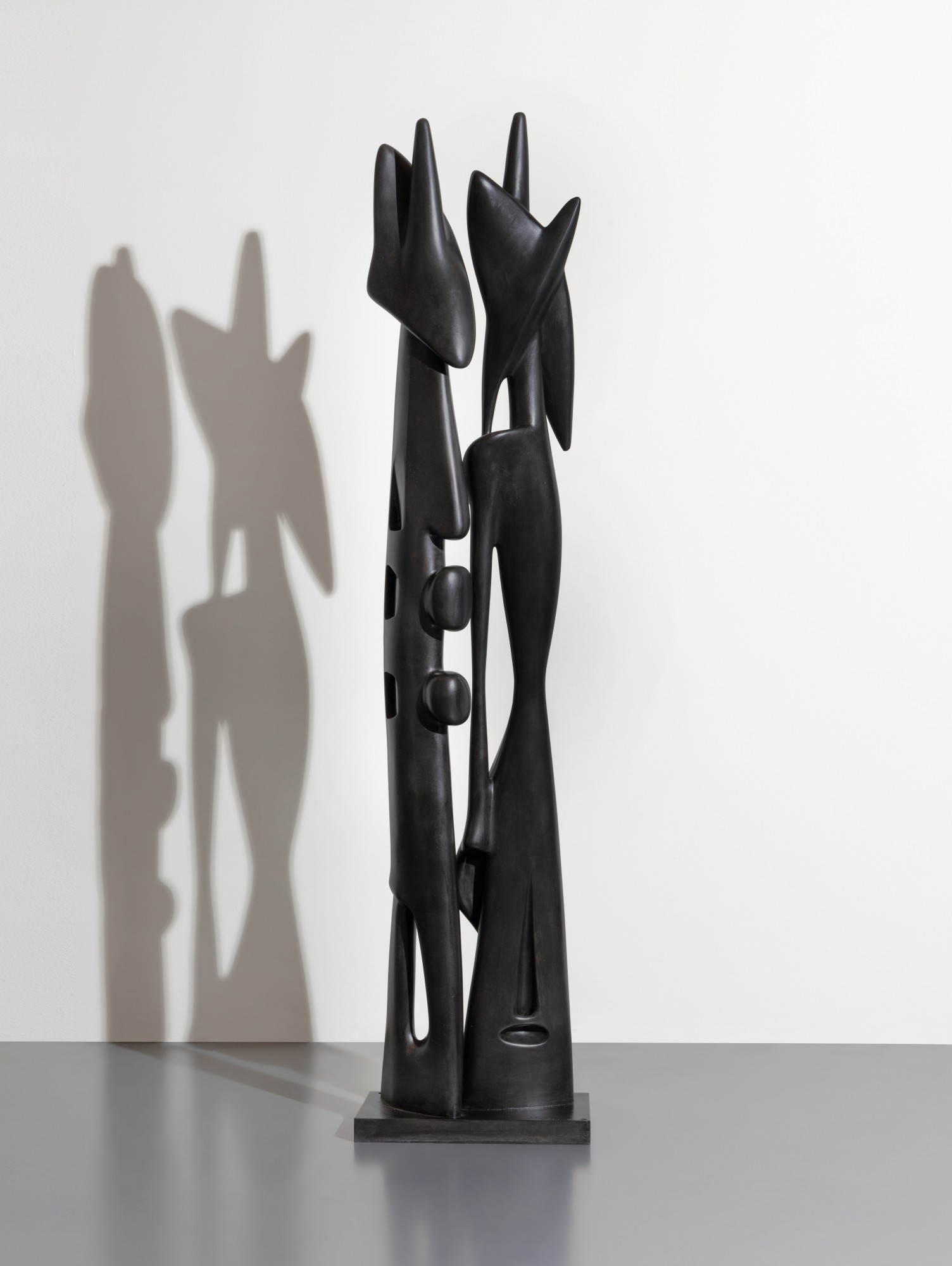
Agustín Cárdenas
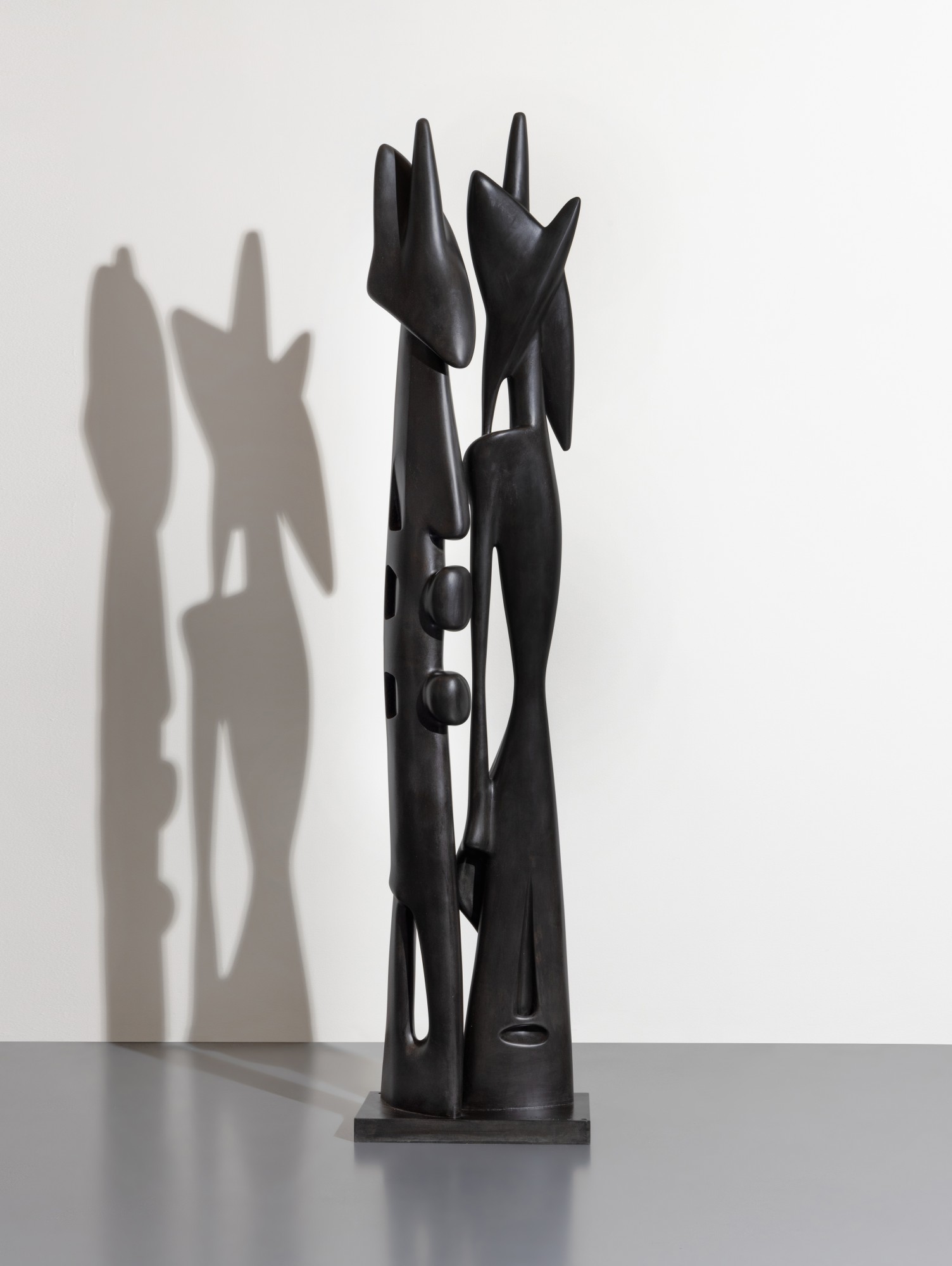
Couple antillais, 1957
Agustín Cárdenas was born in 1927 in Matanzas, Cuba, a port city long regarded as one of the spiritual and cultural heartlands of Afro Cuban tradition. The rhythms, ceremonies, and visual language of the Yoruba influenced religions that flourished in Matanzas would leave an indelible mark on his imagination. He went on to study at the Escuela Nacional de Bellas Artes San Alejandro in Havana, where he came under the influence of the sculptor Juan José Sicre, absorbing a rigorous classical foundation even as his instincts pulled him toward something more elemental and interior. By the early 1950s he was exhibiting in Cuba and attracting serious attention, but the island, however rich in culture, offered limited access to the international conversations transforming modern art.
In 1955, Cárdenas made the decisive move to Paris. Arriving in Paris in the mid 1950s was, for a young sculptor of his sensibility, something like stepping into the center of a live current. The city was still electric with Surrealism, and it was not long before Cárdenas came into the orbit of André Breton, the movement's presiding intelligence. Breton recognized in Cárdenas's work something that aligned perfectly with Surrealism's deepest ambitions: an art rooted in the unconscious, in myth, in the body as a site of mystery rather than mere anatomy.
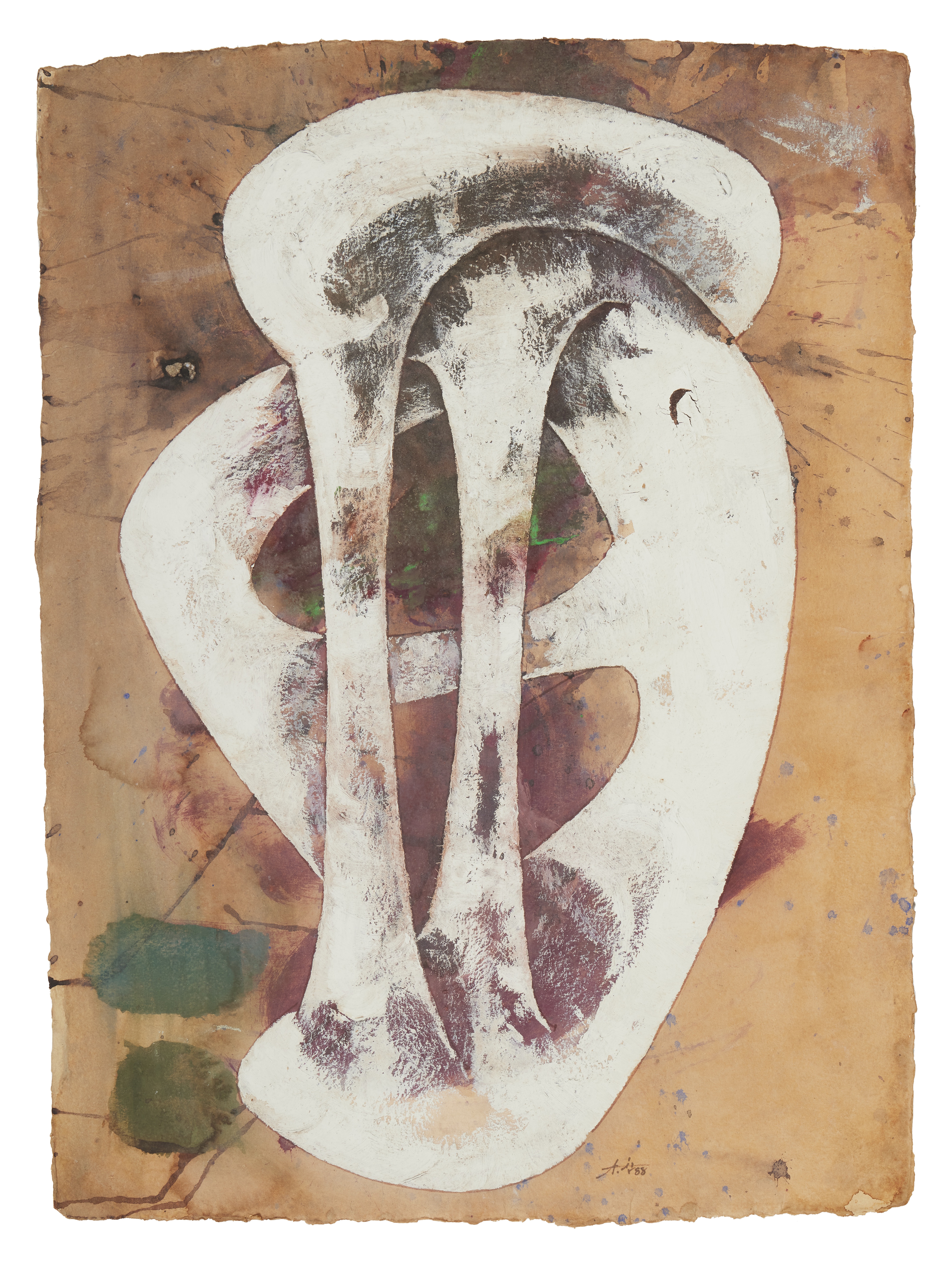
Agustín Cárdenas
Sans titre, 1988
Cárdenas was welcomed into Breton's circle and exhibited alongside major Surrealist figures, a validation that opened doors across Europe and established him as a figure of genuine international standing. This was not assimilation but dialogue. Cárdenas brought to Surrealism something it needed and could not manufacture from within: the lived spiritual vocabulary of the African diaspora. The work that emerged from this extraordinary convergence is like nothing else in postwar sculpture.
Cárdenas carved with an intimacy that seems impossible given the resistance of his chosen materials. His wooden sculptures of the late 1950s and early 1960s are perhaps the most immediately seductive, their surfaces warm and tactile, their forms suggesting embracing figures, fertility objects, and ritual totems all at once. The 1957 bronze "Couple antillais" is a landmark piece that distills the essential Cárdenas gesture: two forms leaning together, distinct yet inseparable, erotic and spiritual in equal measure. It is a work that could only have been made by someone who understood both the Surrealist fascination with desire and the Afro Cuban understanding of the body as a vessel for forces larger than the individual self.
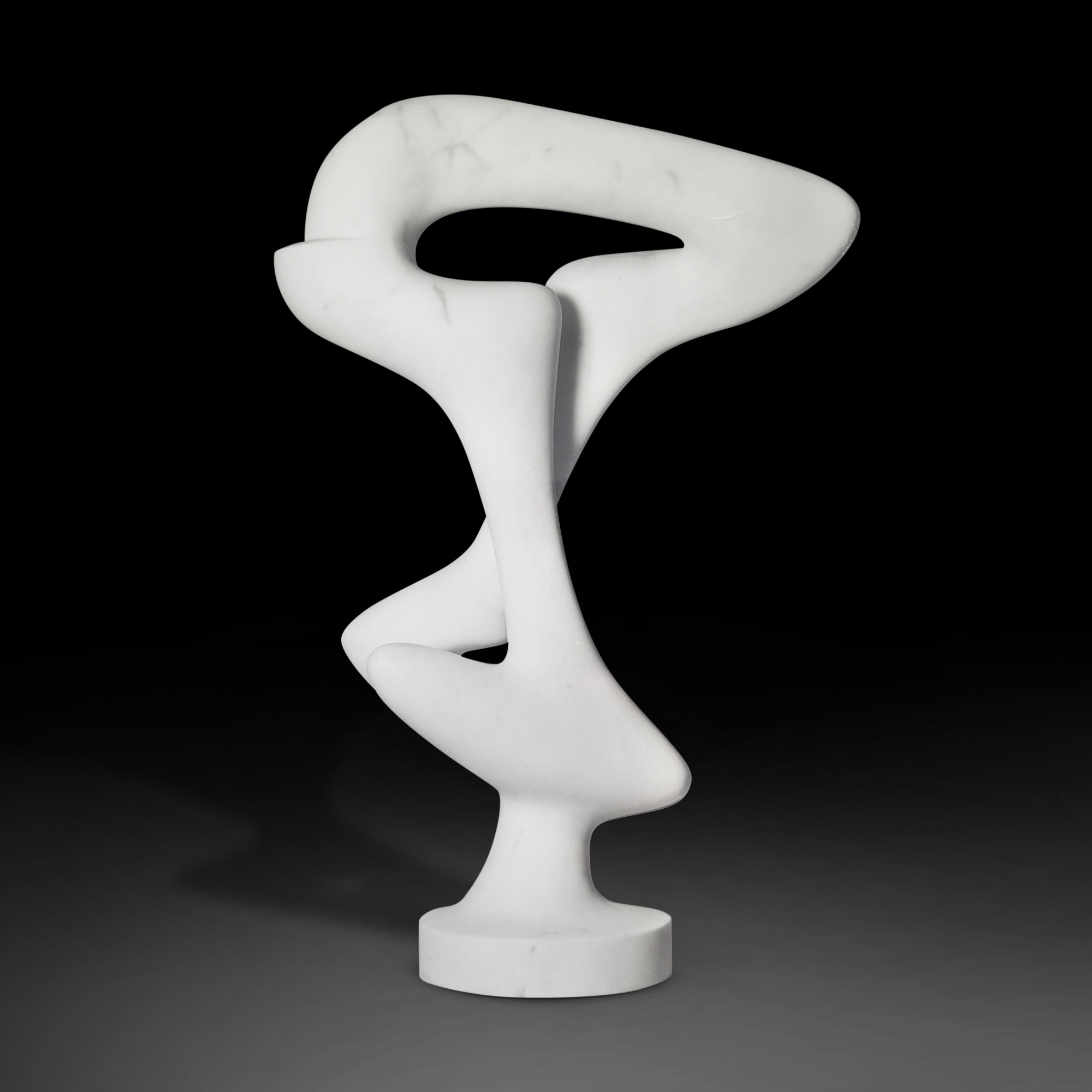
Agustín Cárdenas
Sculpture, 1988
The title itself is a quiet declaration of origin, a refusal to dissolve into the European context that surrounded him. As the decades passed, Cárdenas expanded his materials and deepened his formal language without ever abandoning its essential character. His works in Carrara marble from the 1980s and 1990s, including "Sculpture" from 1988 and "La famille" from 1990, demonstrate a mastery that is both technically astonishing and emotionally direct. Marble, with its associations of European classical tradition, becomes in his hands something genuinely new, softened into organic curves that seem to retain the warmth of living flesh.
His bronzes of the same period, among them "Tótem" from 1989 and "Persistence intime" from the same year, carry a ceremonial gravity that rewards sustained looking. Even his works on paper, such as the 1988 oil, gouache, and watercolor composition titled "Sans titre," reveal an artist for whom drawing and painting were not secondary pursuits but genuine extensions of sculptural thinking, exploring the same formal obsessions in a different register. For collectors, Cárdenas represents a particularly compelling opportunity. His work sits at the intersection of several histories that the market and institutions are actively reassessing: Latin American modernism, the African diaspora in European art, and the legacy of Surrealism as it extended beyond its French origins.
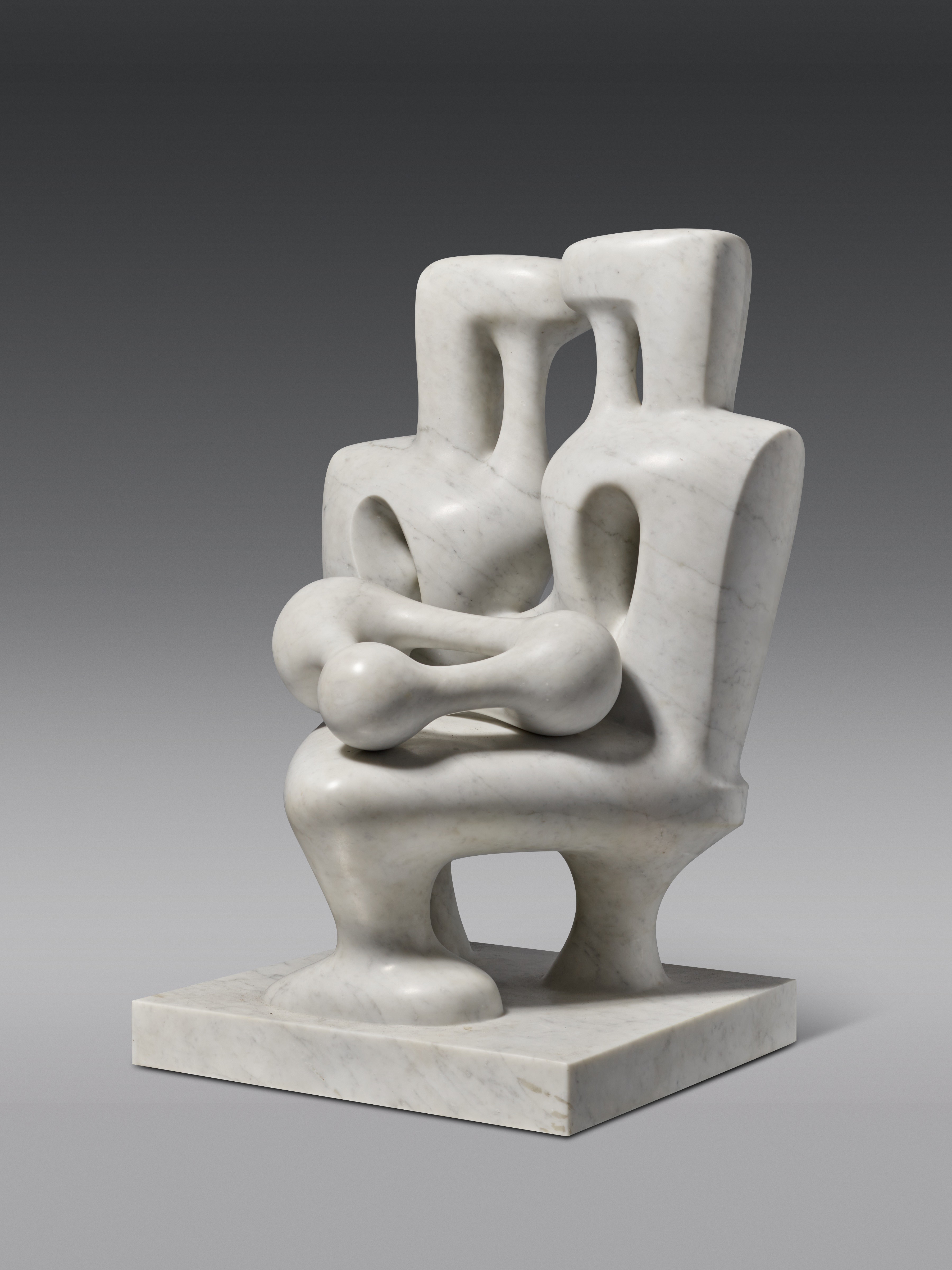
Agustín Cárdenas
La famille, 1990
Works by Cárdenas have appeared at major auction houses in Paris and New York, and his bronzes and marbles command serious prices that nonetheless remain accessible compared to his European Surrealist contemporaries of equivalent stature. The intimate scale of many of his sculptures makes them extraordinarily livable, works that reward daily proximity rather than demanding the distanced reverence of monumental public art. Collectors who have lived with a Cárdenas piece consistently describe the experience in terms of companionship, as though the sculpture has a presence that shifts subtly depending on the light, the hour, and the mood of the room. Within the broader landscape of postwar sculpture, Cárdenas belongs to a lineage of artists who understood organic abstraction as a language capable of carrying genuine cultural and spiritual content.
His work invites comparison with that of Jean Arp, whose biomorphic forms share a similar delight in curves that resolve into surprising completeness, and with the Cuban painter Wifredo Lam, who navigated a comparable passage between Afro Caribbean tradition and European modernism with comparable sophistication. One might also place Cárdenas in conversation with Constantin Brâncuși, whose reduction of the figure to essential form clearly informed an entire generation of sculptors working in Paris. What distinguishes Cárdenas within this company is the particular warmth of his work, a quality that feels less like formal resolution than like genuine affection for the human body and for the traditions that have sought to honor it. The legacy of Agustín Cárdenas is still being fully written.
For too long his work was encountered primarily in the context of Surrealism or Latin American art rather than being understood on its own comprehensive terms, as a singular body of work that belongs to no single tradition because it belongs to all of them at once. The current moment of critical and institutional attention feels not like a rediscovery but like a long overdue recognition. His sculptures have the quality of great poetry: they say something precise that cannot be said any other way, and they continue to mean more the longer you stay with them. To own a work by Cárdenas is to bring into your home something made with extraordinary skill, deep cultural memory, and an unmistakable love for the world as it might be, sensuous, connected, and fully alive.
Explore books about Agustín Cárdenas
Agustín Cárdenas: Escultor
Gerardo Mosquera
Agustín Cárdenas: 1927-2001
Various Authors
Cuban Art Now
Marilyn A. Brown
Modernism and Negritude
Reinaldo Arenas (editor)
La Escultura Cubana del Siglo XX
Juan A. Martínez