Adam Silverman
Adam Silverman: Earth, Fire, and Pure Vision
Artist Spotlight · The Collection Editorial
There is a particular kind of attention that gathers around Adam Silverman's ceramics when they appear in a room. At his exhibitions at Frank Lloyd Gallery in Los Angeles, where his work has been presented to devoted audiences over many years, visitors tend to slow down, lean in, and go quiet in a way that feels almost involuntary. Something in the surfaces pulls at the eye and refuses to release it. The vessels seem to hold geological time inside them, as though each piece were a cross section of some deep and ancient stratum finally brought into the light.
Adam Silverman
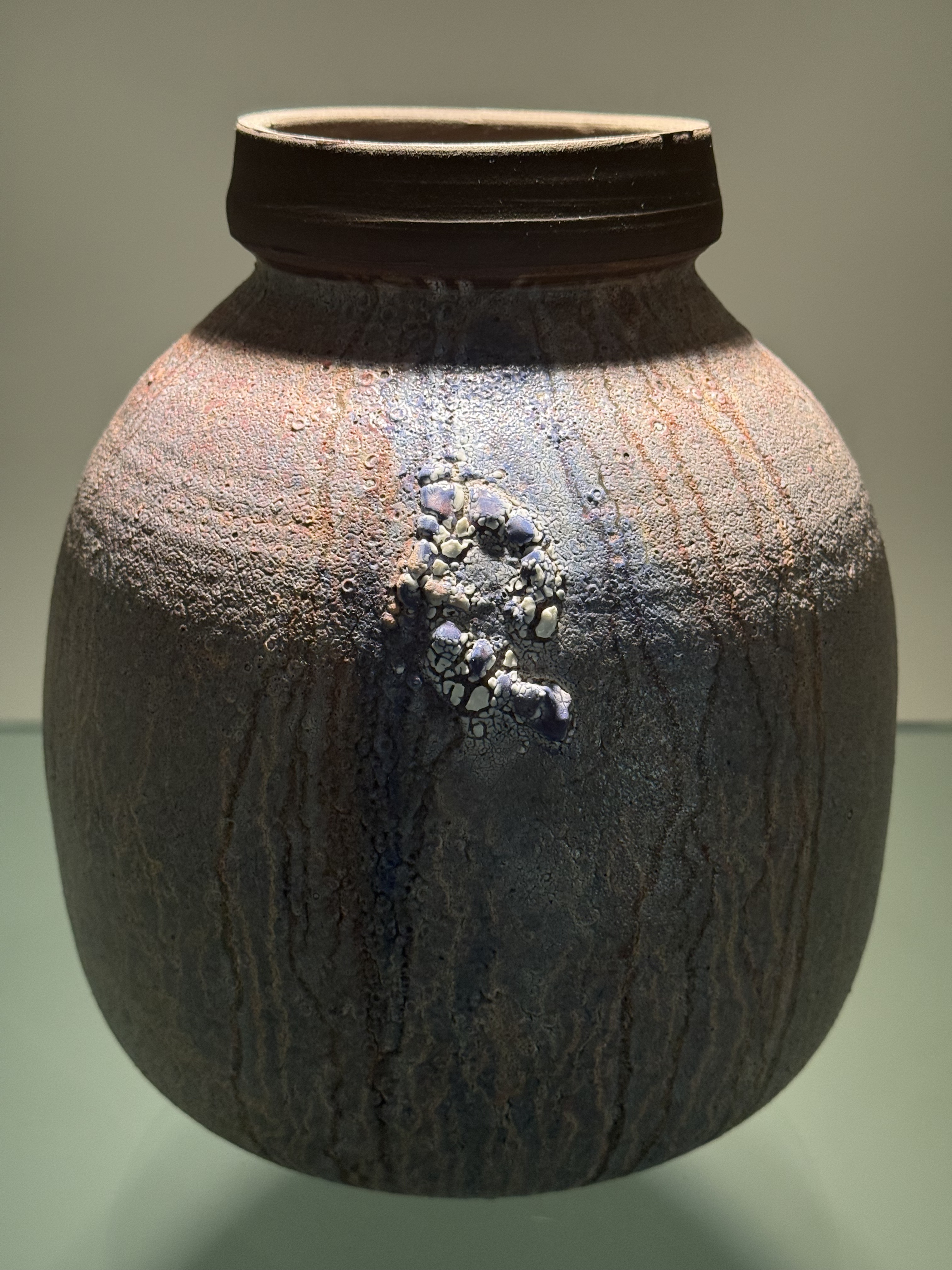
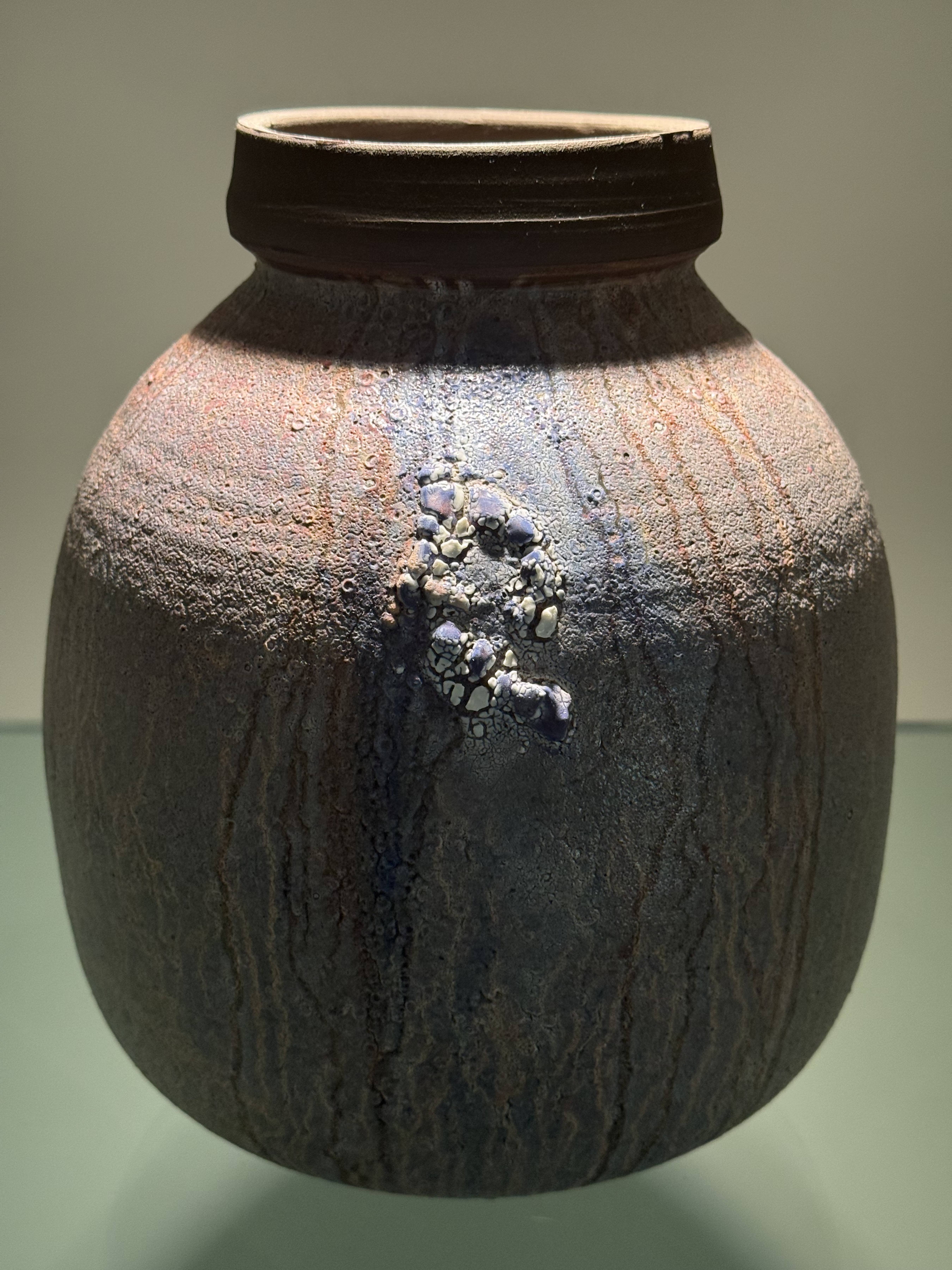
Untitled (AS34), 2014
For a generation of collectors who came to ceramics through Silverman's work, that first encounter tends to feel less like looking at an object and more like recognizing something they had not known they were searching for. Silverman was born in 1963 and grew up shaped by the particular cultural richness of the American West, a region whose landscapes carry an overwhelming physical weight that seems to have lodged itself permanently in his artistic sensibility. Before he became known as a ceramicist, Silverman built a significant career as a furniture designer and architect, founding the footwear and lifestyle brand Thorocraft and working in design contexts that demanded both rigorous structural thinking and sensitivity to material. That early formation in three dimensional design and its relationship to human use has never entirely left his practice as a ceramicist.
It gives his vessels an underlying intelligence about form, about how an object occupies space and how a hand might want to receive it, that sets his work apart from artists who came to clay by more conventional routes. Silverman came to ceramics with the concentrated intensity of someone discovering a medium that had been waiting for them. He established his studio in Los Angeles and threw himself into the technical and philosophical challenges of the wheel and the kiln with a discipline that recalled traditional apprenticeship even as his aesthetic instincts pushed consistently toward the contemporary. He became deeply interested in the Japanese concept of wabi sabi, that philosophy of finding beauty in imperfection, impermanence, and the incomplete, and he engaged seriously with the long lineage of East Asian ceramic traditions without ever allowing those influences to calcify into pastiche.
Adam Silverman
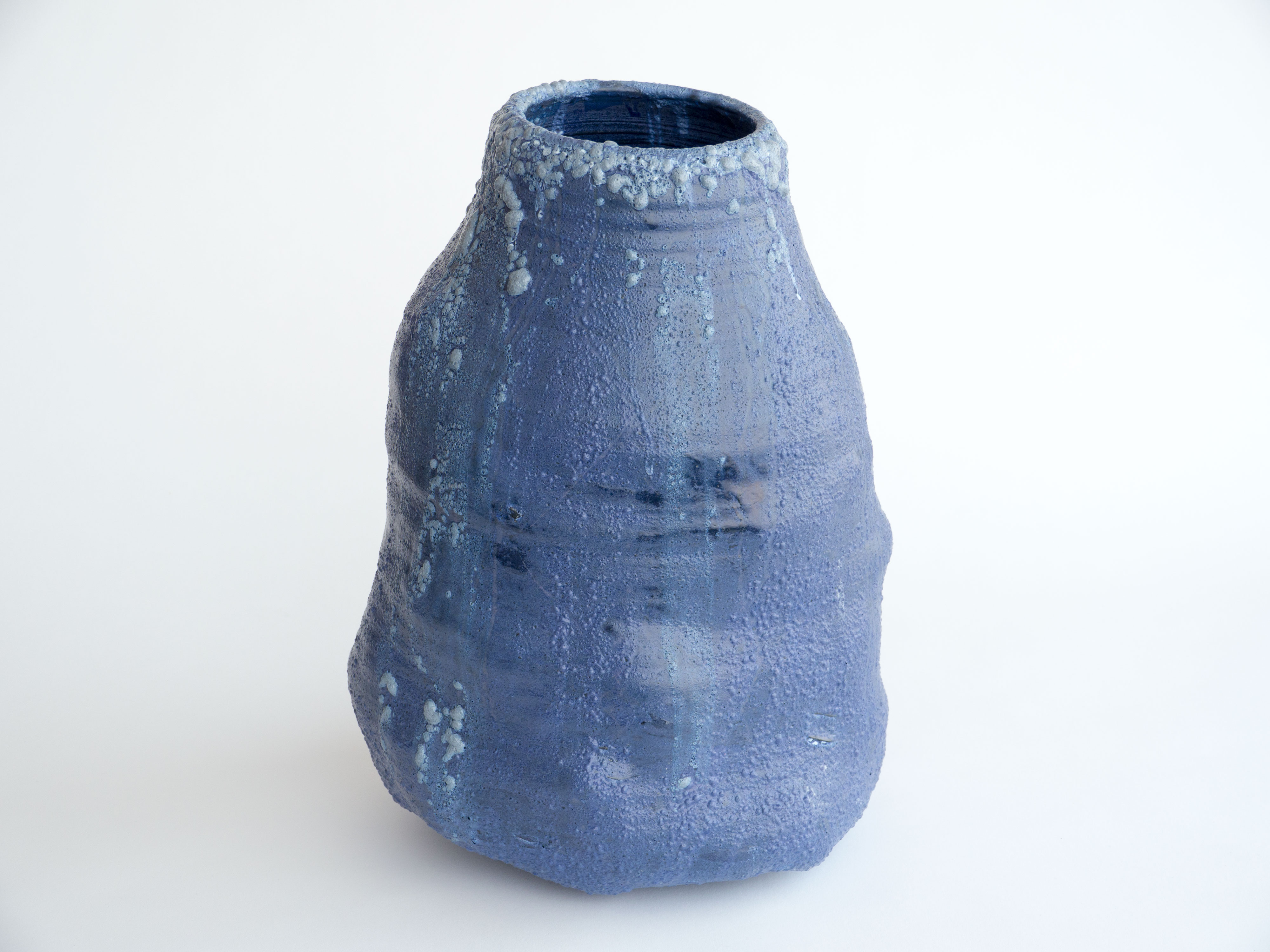
Untitled , 2016
His relationship to those traditions is one of genuine conversation rather than imitation, a dialogue conducted through his own hands and his own materials. The most immediately striking quality of Silverman's mature work is his approach to glaze. He has developed a body of experimental glaze formulas that produce surfaces of extraordinary complexity, surfaces that crawl, pool, blister, crystallize, and stratify in ways that seem to document the firing process as a kind of natural event. Looking at an Untitled vessel from 2014, one of his signature stoneware works, the glaze reads almost like aerial photography of a landscape seen from altitude, with ridges and valleys and accumulations of mineral color that feel less manufactured than discovered.
The forms themselves tend toward the organic and slightly asymmetrical, bearing the honest evidence of the hand that shaped them on the wheel. There is nothing polished or smoothed away in Silverman's work. Every gesture is preserved. The 2014 stoneware and glaze work known as Untitled (AS34) has become one of the touchstone pieces for understanding what Silverman is doing at the center of his practice.
The vessel form is confident and grounded, sitting with a kind of quiet authority, while the surface is almost turbulent in its complexity. The piece holds a productive tension between stillness and movement that is characteristic of Silverman at his best. His 2016 works continued this investigation, pushing the formal and surface vocabularies further while retaining the essential honesty of approach that makes his ceramics so compelling to live with over time. Collectors who acquire his work consistently report that the pieces reveal themselves slowly, that details and relationships within the surface continue to emerge over months and years of close looking.
The market for Silverman's ceramics has grown steadily as serious collectors have come to understand his place within a broader reappraisal of craft and its relationship to contemporary art. His work sits comfortably in collections alongside artists such as Ken Price, the Los Angeles ceramicist whose sculptural investigations of the vessel form helped establish a rigorous intellectual framework for American studio ceramics, and Edmund de Waal, the British artist and writer whose porcelain works brought renewed critical attention to the possibilities of ceramic practice within contemporary art discourse. Silverman's particular contribution to this conversation is his insistence on the fired surface as a site of genuine pictorial and geological drama, a quality that makes his work distinctive within any collection context. Auction appearances of his work have drawn competitive attention from collectors who recognize the relative scarcity of significant examples and the long term seriousness of his practice.
Within the broader arc of American studio ceramics, Silverman stands as an artist who has successfully negotiated one of the most demanding balancing acts the field presents: how to honor the deep traditions of functional pottery while making work that is unambiguously and fully art. He has achieved this not by abandoning function but by elevating the vessel form into a carrier of meaning and feeling that transcends its origins. His work belongs to a lineage that includes the pioneering generation of American studio potters who emerged in the mid twentieth century, artists who insisted on the seriousness of clay as a fine art medium, and it extends that lineage into genuinely contemporary territory. What makes Silverman essential today is precisely his commitment to the slow, resistant, unpredictable nature of his medium.
In a cultural moment that prizes speed, replication, and digital reproducibility, his practice is a sustained argument for the irreplaceable value of the singular handmade object. Each piece comes from one person's hands, one firing, one set of conditions that cannot be precisely reproduced. That irreducible specificity is not a limitation for Silverman but his deepest subject. Collectors who bring his work into their homes and lives are participating in something that connects them to the oldest human impulse there is: the desire to shape the earth into something beautiful and then to hold it.