Adam Pendleton
Adam Pendleton Makes Language Sing and Burn
Artist Spotlight · The Collection Editorial
“Black Dada is a way of thinking about the present through an incomplete past and an impossible future.”
Adam Pendleton, MoMA interview, 2021
In the spring of 2021, Adam Pendleton became the first Black artist to receive a solo exhibition in MoMA's vast, newly renovated galleries, a moment that felt less like an institutional gesture and more like a long overdue reckoning with what painting can hold. The show, titled "Who Is Queen?" filled the museum's sixth floor with his signature cascading fields of fragmented text, spray painted abstraction, and silkscreened marks that seemed to breathe and contradict each other all at once. Critical response was rapturous, and the art world took note of something collectors had already been quietly understanding for years: Pendleton is among the most intellectually rigorous and visually arresting painters working anywhere in the world today.
Adam Pendleton
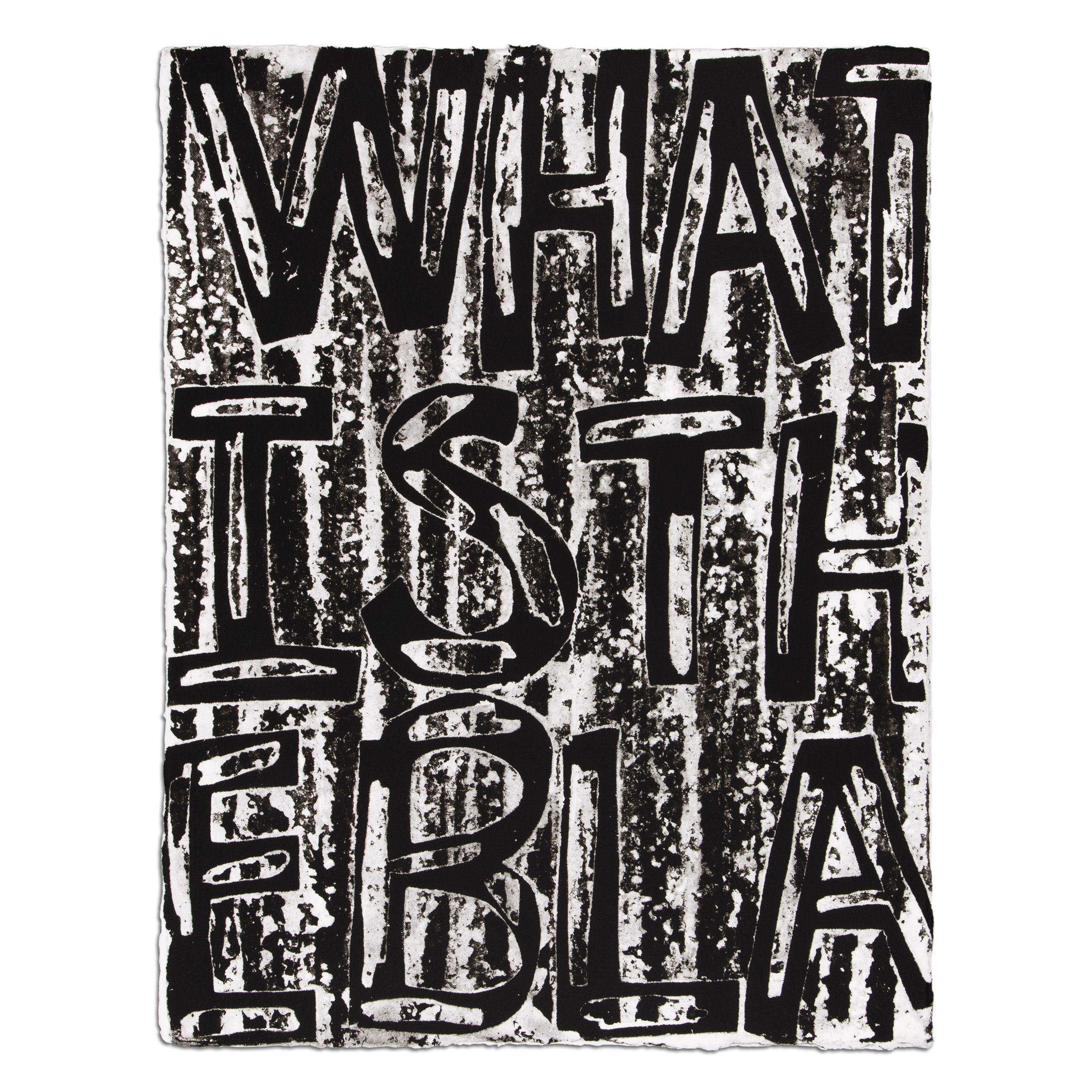
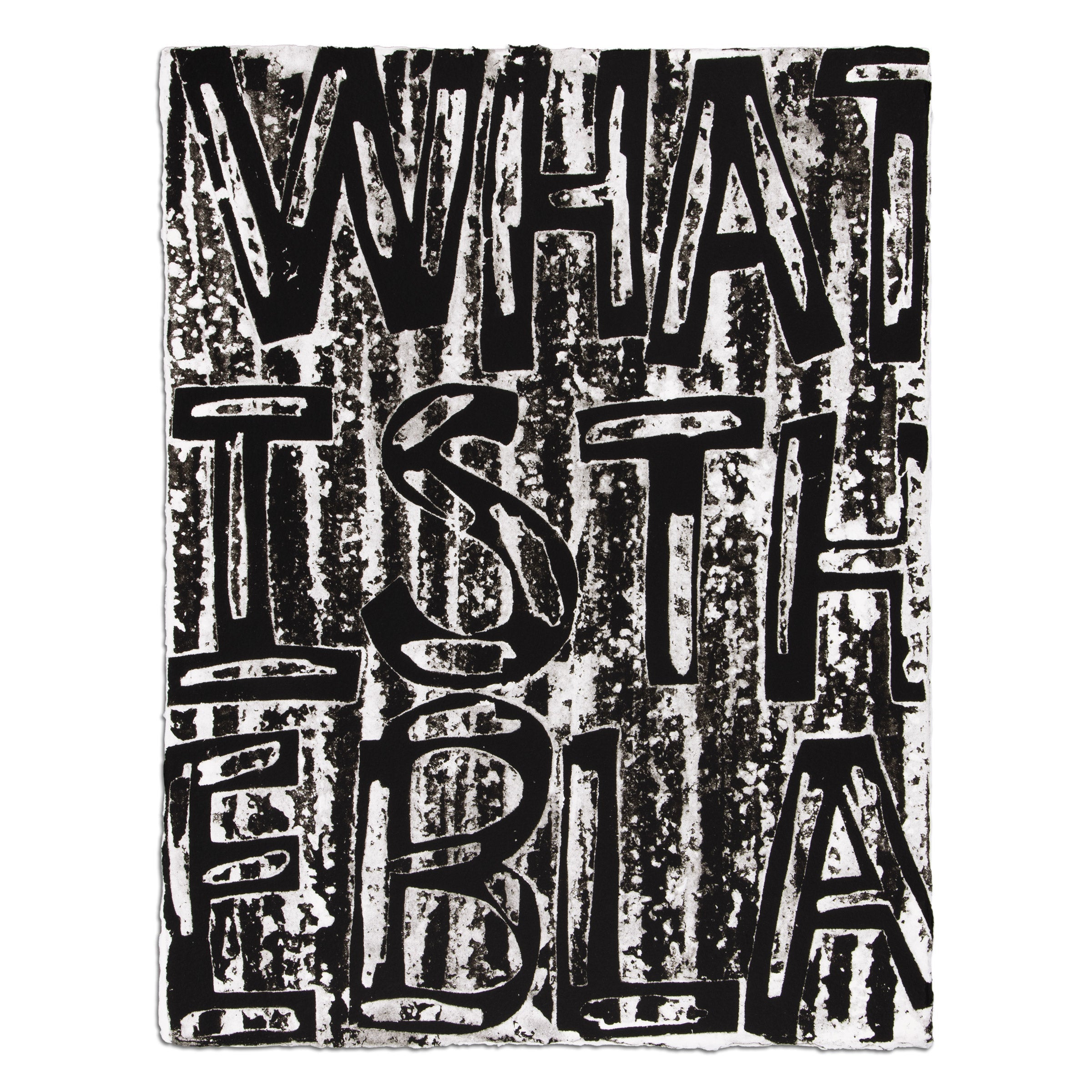
What is the Black Dada
Born in Richmond, Virginia in 1984, Pendleton showed an early and restless appetite for ideas that crossed disciplines and refused easy categorization. He moved to New York as a teenager, immersing himself in the city's overlapping worlds of visual art, poetry, and political thought. He studied at the LaGuardia High School of Music and Art and Performing Arts, and rather than following a conventional university path, he threw himself into the artistic life of downtown Manhattan with uncommon focus and seriousness. By his early twenties he had already founded a publishing imprint, Folder, producing limited edition books and prints that signaled his abiding interest in the relationship between the written word and the image.
His artistic formation drew from an unusually wide constellation of influences: the Black Arts Movement of the 1960s and 1970s, the Dada provocations of the early twentieth century, the structural linguistics of figures like Roland Barthes, and the radical political writings of Stokely Carmichael and the Black Power era. What made Pendleton distinctive from the outset was not simply that he was synthesizing these strands but that he was doing so through the physical act of painting, insisting that abstraction was not a neutral or post racial zone but a charged, contested space where the politics of visibility and erasure play out with great force. This was not conceptual art that happened to look good. It was painting that argued, that insisted, that refused to be decorative.
Adam Pendleton
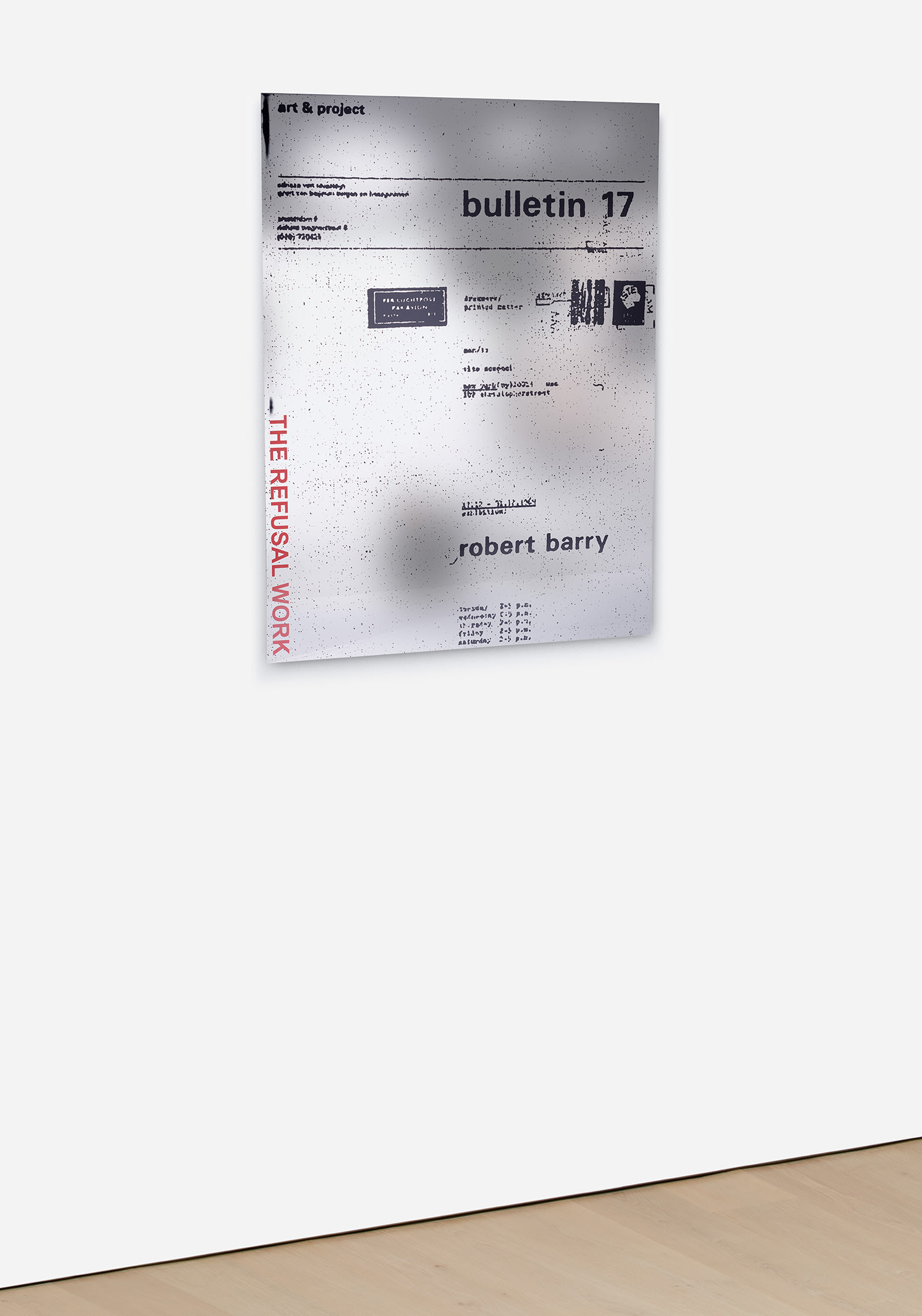
The Refusal Work
The engine of his practice is the ongoing project he calls "Black Dada," a term he began developing in the mid 2000s that fuses the anti art nihilism of European Dada with the urgent cultural politics of Black radicalism. The phrase itself, borrowed in part from a poem by Amiri Baraka, becomes in Pendleton's hands a kind of open system, a framework for producing work that is simultaneously about language, blackness, abstraction, and the limits of each. Works like "Ok Dada Ok Black Dada Ok" from 2018, rendered in silkscreen ink and spray paint on canvas, layer repeated phrases until meaning begins to dissolve and reconstitute itself, the text functioning less as communication and more as visual rhythm. "Untitled (WE ARE NOT)" from 2019 is equally commanding, its stenciled declaration occupying the canvas with a presence that is at once declarative and incomplete, demanding that the viewer complete the sentence while understanding that the refusal to complete it is itself the point.
“I am interested in what abstraction can do, what it can hold, and what it refuses to hold.”
Adam Pendleton, Artforum
Among his most celebrated works are those in which language is treated as pure material. "if the function of writing is to express the world" transforms a philosophical provocation into a screenprint of almost architectural gravity, the raised letters pressing slightly off the museum board surface as though the words themselves are straining toward the viewer. "The Refusal Work," screenprinted onto mirrored steel plate, adds another layer of complexity: the collector who stands before it becomes part of the image, their reflection caught within the field of text, making the act of looking both personal and implicated. These are not passive objects.
Adam Pendleton
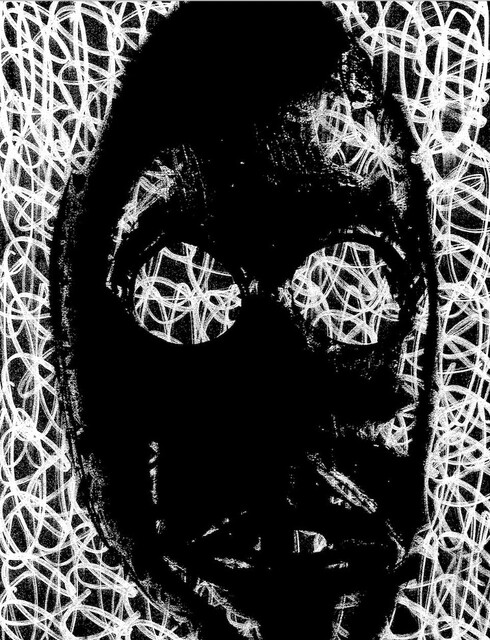
Untitled (Masks), 2020
They make demands. From a collecting standpoint, Pendleton represents one of the most compelling propositions in the contemporary Blue Chip market. His works are held by MoMA, the Whitney Museum of American Art, and the Solomon R. Guggenheim Museum, a triumvirate of institutional endorsement that signals both critical legitimacy and long term historical placement.
His prints and works on paper, including the silkscreen series and limited edition publications, offer a more accessible point of entry for collectors building a serious contemporary collection, while his large scale canvas works command attention in any serious survey of the period. The range of mediums he employs, from silkscreen ink and spray paint on canvas to HD video works like "Band," a twelve minute digital piece, also means that a collection of his work can reflect the full intellectual breadth of his practice rather than a single register. Within art historical context, Pendleton occupies a lineage that runs from the text based provocations of Lawrence Weiner and Christopher Wool through to the politically charged abstraction of Glenn Ligon, whose own interrogations of language and racial identity provide the closest point of comparison. Like Ligon, Pendleton uses repeated and degraded text to explore how words accumulate and shed meaning, though Pendleton's gestural spray paint marks and his embrace of Dada's disruptive spirit give his work a more physically volatile quality.
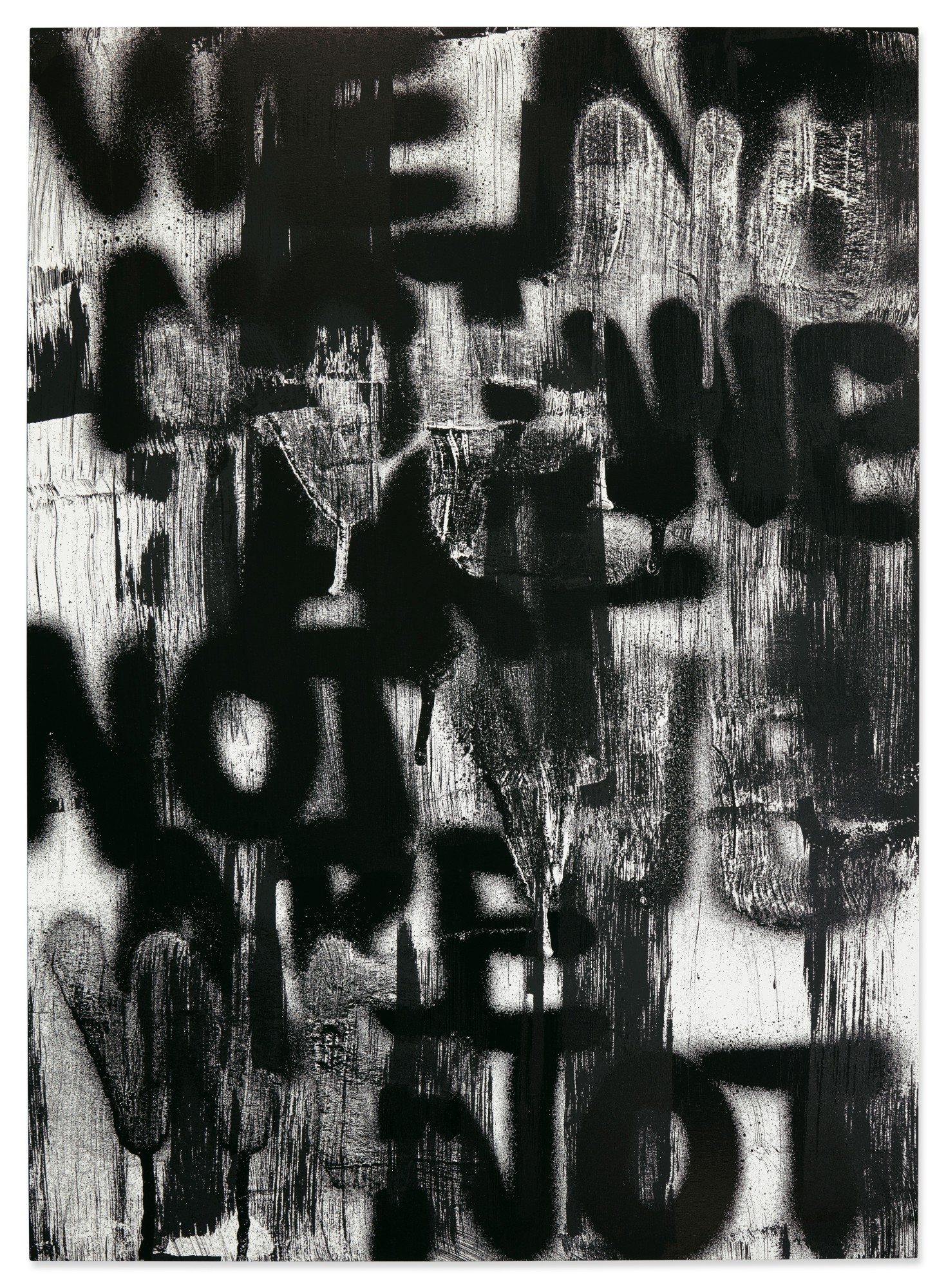
Adam Pendleton
Untitled (WE ARE NOT) , 2019
He is also in conversation with the legacy of Cy Twombly's scrawled inscriptions and Jean Michel Basquiat's coded street knowledge, though he draws these references into a more explicitly theoretical frame. What Pendleton has achieved, and what makes his practice so genuinely important in the present moment, is a demonstration that abstraction is not an escape from politics but a site of political production. At a time when questions of representation, visibility, and whose culture gets enshrined in which institutions remain urgently contested, his work refuses the false comfort of resolution. It holds contradiction open, makes it beautiful, and asks that beauty to do real intellectual work.
For collectors, institutions, and viewers who want art that meets the complexity of this moment with equivalent seriousness and formal mastery, Adam Pendleton is simply essential.