Abraham Cruzvillegas
Abraham Cruzvillegas Builds Beauty From Everything
Artist Spotlight · The Collection Editorial
In the autumn of 2015, visitors descending into the Tate Modern's vast Turbine Hall encountered something unlike any previous commission in that storied space. Abraham Cruzvillegas had filled the cavernous floor with a grid of raised triangular planters, each packed with soil gathered from parks across every London borough, and then left them to grow whatever happened to be sleeping in that earth. The result, titled Empty Lot, was an act of radical patience and democratic wonder: some beds erupted in unexpected green, others remained bare, and the entire work became a meditation on potential, on what lives unseen beneath our feet. It was one of the most quietly profound Hyundai commissions the Turbine Hall has ever hosted, and it announced to a global audience what those already paying attention had known for years.
Abraham Cruzvillegas
Totem & Taboo
Cruzvillegas was born in Mexico City in 1968, and the neighborhood where he grew up would become the philosophical engine of everything he would later make. He was raised in Portales, a working class district where residents built and extended their own homes using whatever materials were available: scavenged timber, corrugated metal, repurposed concrete blocks, wire, rope, and salvaged glass. This practice of self built architecture, driven by necessity and ingenuity rather than formal planning, became the conceptual foundation for what Cruzvillegas would eventually name autoconstrucción. He studied at the Escuela Nacional de Artes Plásticas in Mexico City and came of age artistically during a period of intense creative ferment in the Mexican capital, forming close friendships with artists including Gabriel Orozco, who would prove a significant early influence on his thinking about the found object and the poetics of everyday life.
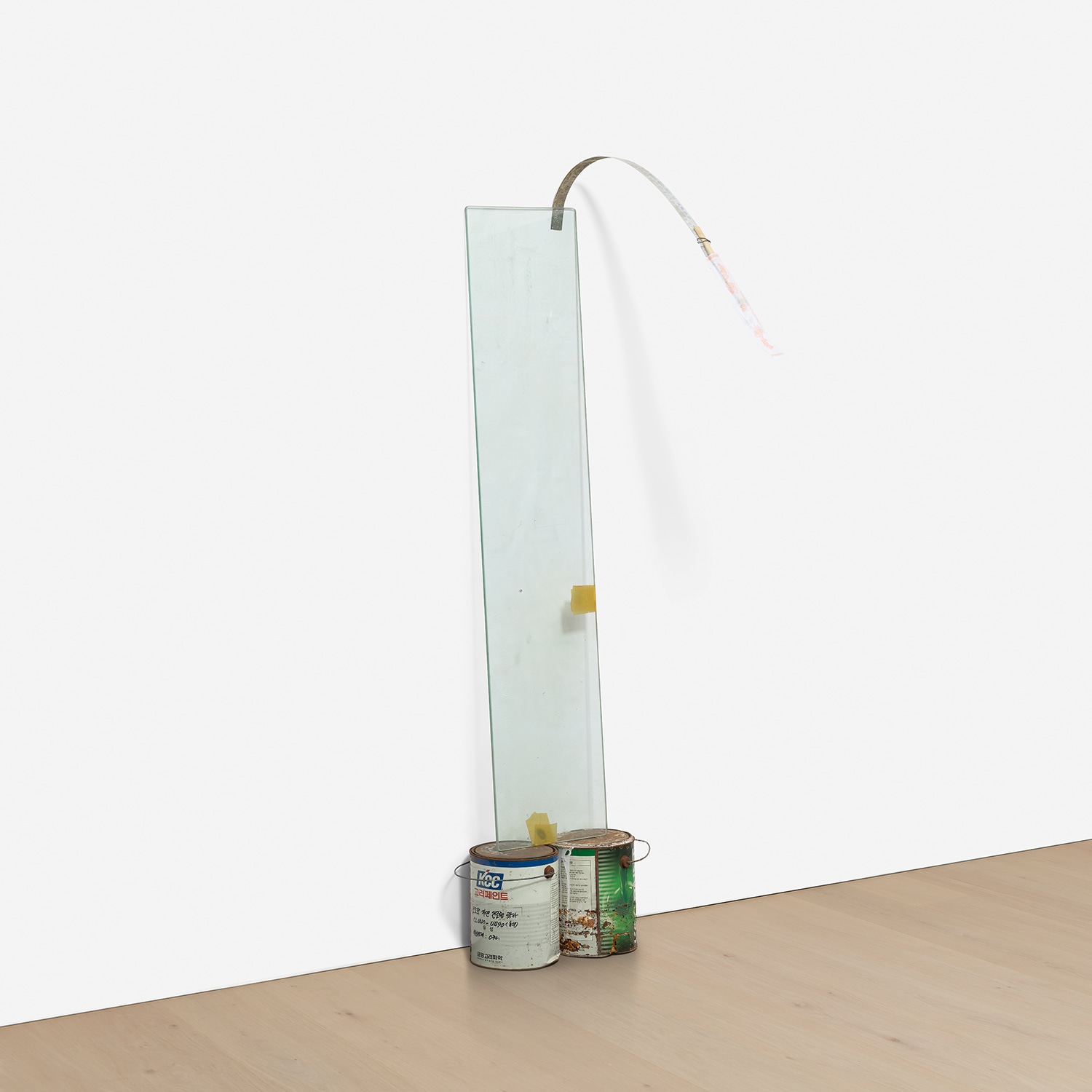
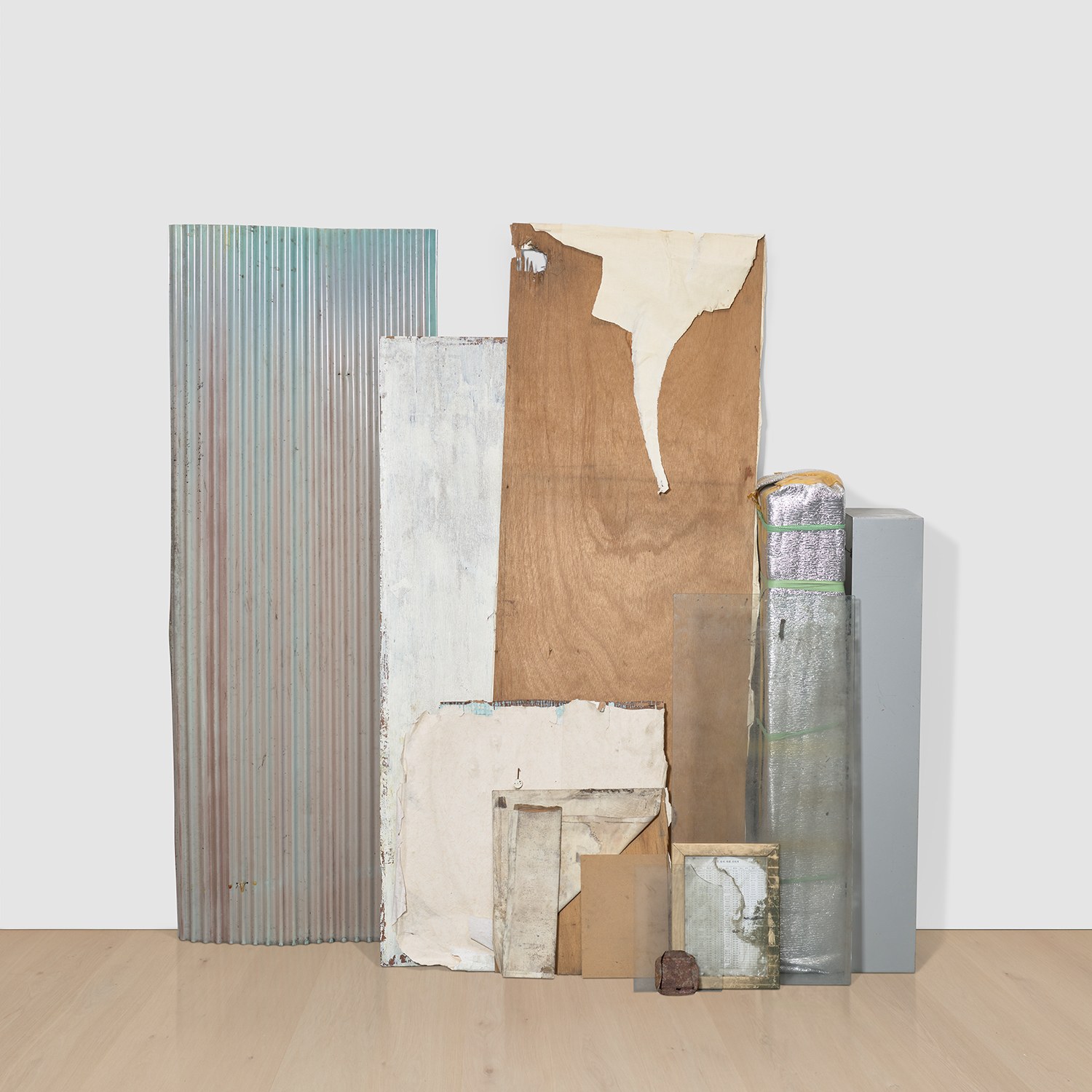
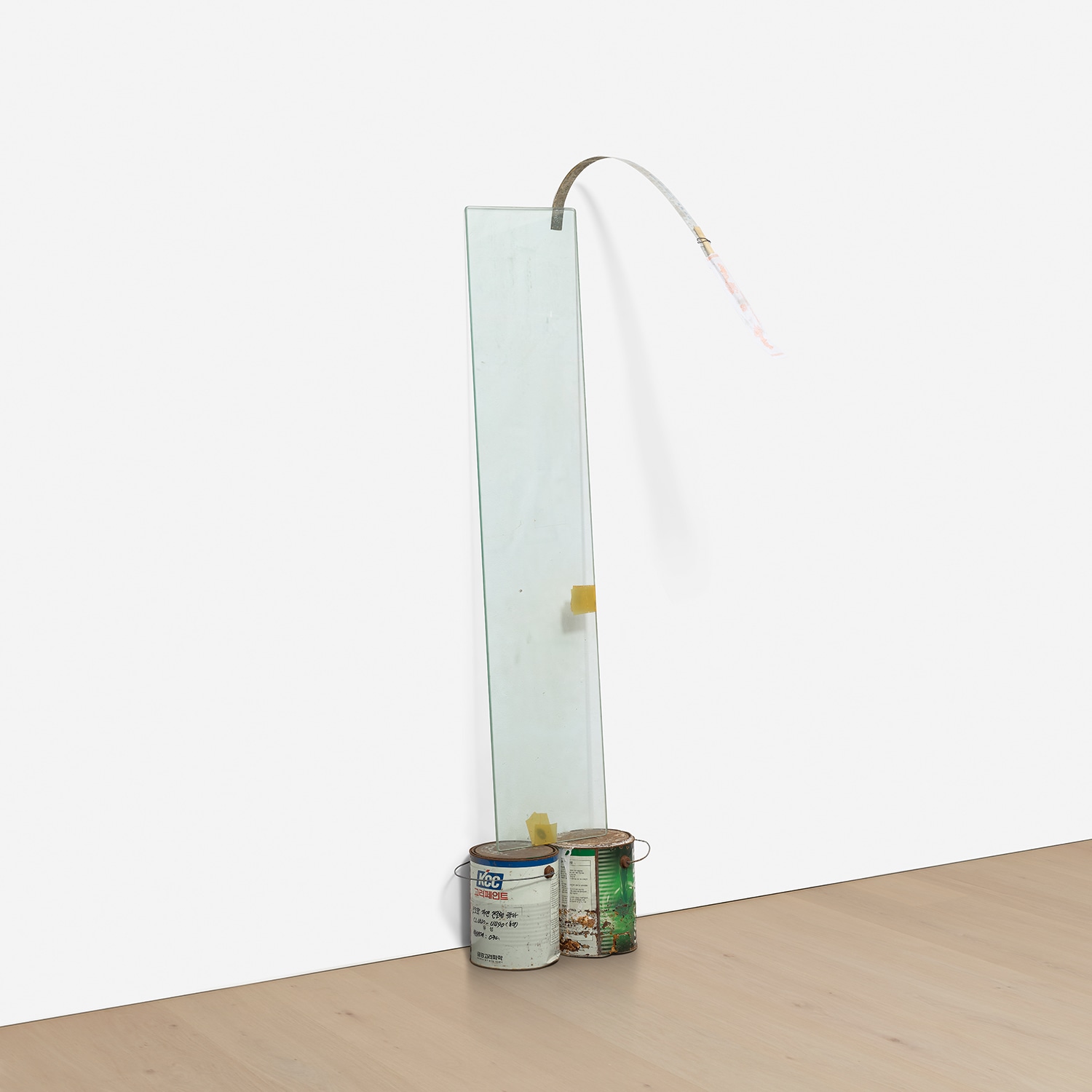
The concept of autoconstrucción is far more than a stylistic preference or a formal strategy. For Cruzvillegas it is a full philosophy of making, one that insists on the dignity of improvised solutions and the beauty embedded in materials that have already lived a life. His sculptures are assembled from objects that carry traces of prior use: packaging, tools, textiles, domestic debris, fragments gathered from the specific place and moment in which each work is made. This situational responsiveness means that no two bodies of work are quite alike, and that the works are always in conversation with their context.
Abraham Cruzvillegas
Definitely Unfinished and Coherent with the Landscape
The practice resists the commodity logic of the art market even as it operates brilliantly within it, which is part of what makes Cruzvillegas such an intellectually compelling figure. Among the works available through The Collection, few demonstrate his range and ambition as vividly as the 2024 piece whose title runs to a full paragraph of thought: a blue acrylic painting on newspaper clippings, cardboard, photographs, postcards, envelopes, tickets, recipes, napkins and steel pins mounted directly to the wall. The title itself, referencing Lumumba, Rico Rodriguez's trombone, the novelist Álvaro Enrigue, mushroom soup, and geopolitical anxiety, functions as a kind of diary entry made physical, a record of a specific mind on a specific day trying to hold the world together. It is exhilarating in its honesty and its refusal of distance.
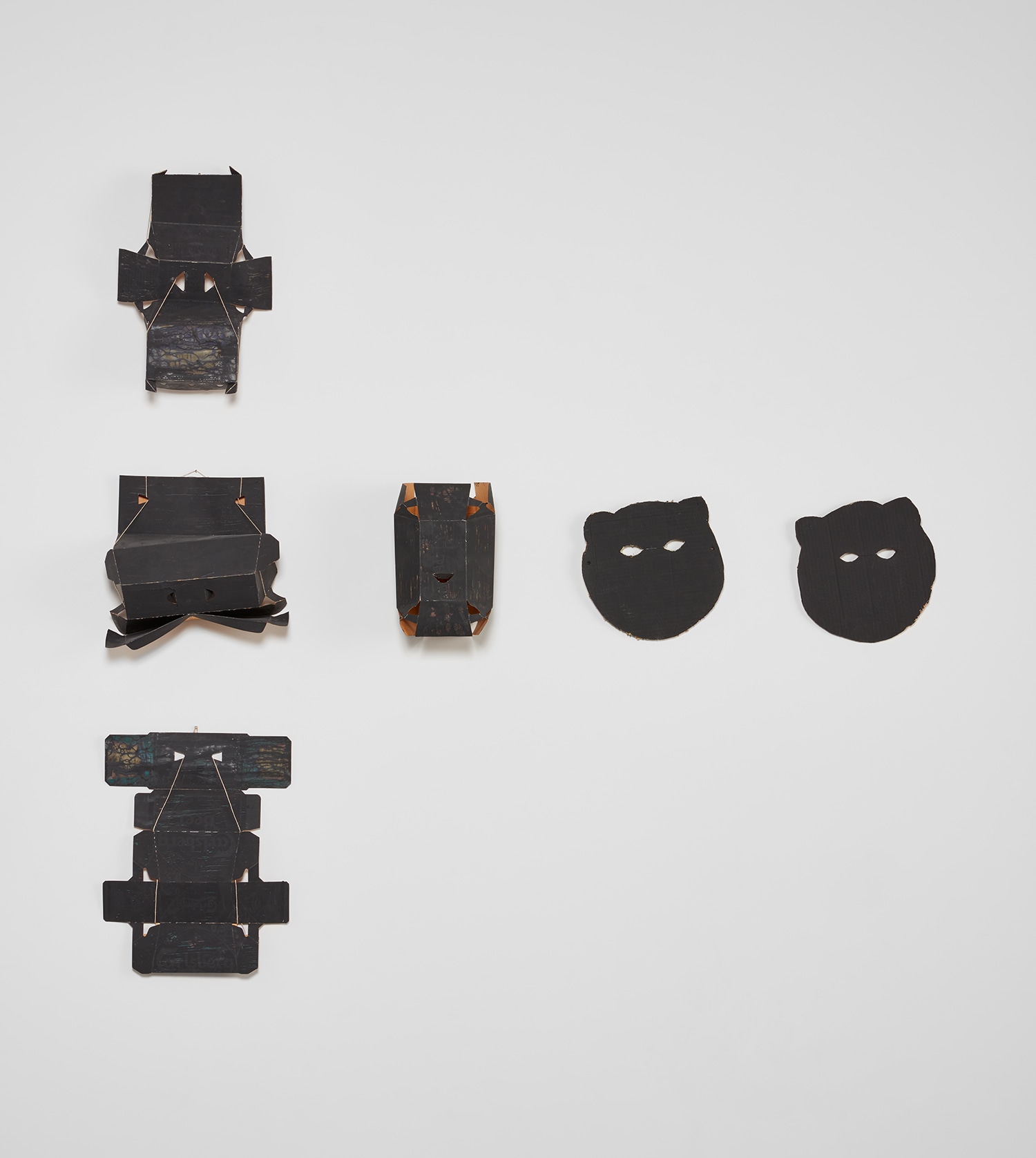
Earlier works such as Apropiacion Microtonal Equivocada IV from 2005 and Observatorio oriente from 2003 show the longer arc of his development, the way he has always treated the act of making as a form of thinking out loud. Totem and Taboo, assembled from acrylic, hemp cord, nylon and cardboard packing for beer across six parts, has the structural wit and material poetry that defines his best sculpture: humble components elevated into something ceremonial. Cruzvillegas has exhibited at documenta in Kassel, at major museums across Europe and the Americas, and his work is held in significant institutional and private collections worldwide. His participation in documenta 13 in 2012 further cemented his reputation as one of the essential voices in contemporary sculpture, an artist thinking seriously about labor, migration, ecology, and the relationship between the global south and the international art world.
Abraham Cruzvillegas
A Weak Blind Date
He has shown extensively with Kurimanzutto, the Mexico City gallery that has long been home to the most important generation of Mexican artists working today, and his work has been presented at prominent institutions including the Museo Tamayo in Mexico City and the Museum of Contemporary Art Chicago. These institutional relationships speak to the broad consensus around his importance, a consensus that has only deepened as questions of sustainability, informality, and decolonial thinking have moved from the margins to the center of curatorial discourse. For collectors, the appeal of Cruzvillegas rests on several converging qualities that are rare to find in a single practice. His works are formally inventive and materially surprising, rewarding close looking in ways that purely concept driven art sometimes does not.
They carry genuine intellectual weight without requiring academic translation to be felt. And they belong to a specific and irreplaceable moment in the history of contemporary art, one in which artists from Latin America fundamentally reshaped the terms of the international conversation. Works on paper and mixed media assemblages from across his career offer accessible entry points into the practice, while his larger sculptural installations represent significant collecting opportunities. As institutional interest in his generation continues to grow, and as the art market increasingly recognizes the historical importance of the Kurimanzutto circle, early and mid career works by Cruzvillegas represent both cultural and long term value.
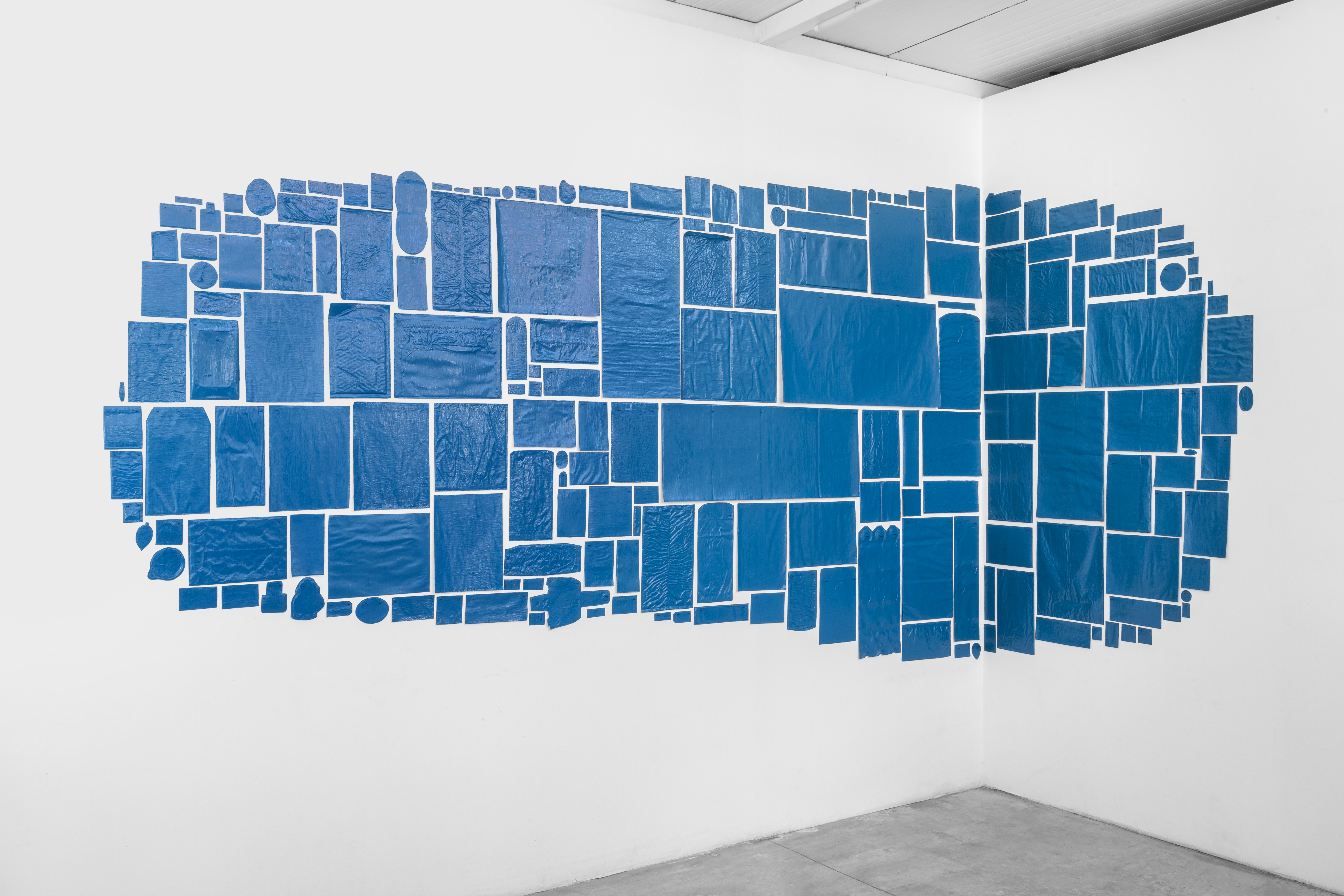
Abraham Cruzvillegas
Blind self-portrait listening to ‘Lumumba’ with the sweet trombone of Rico Rodriguez, while reading ‘Muerte súbita’ by Álvaro Enrigue, a beautiful chronicle of a tennis match in 16th century, between a revolutionary painter and a humorous writer, after devouring a pulpy enoki and shimeji mushrooms soup, trying to understand the so many upcoming fears as related to big changes in geopolitics, that seem again as enormous challenges not necessarily in a negative way, 2024
To place Cruzvillegas within art history is to understand him in relation to a lineage that runs from Arte Povera through the Fluxus tradition and into the specifically Mexican context of Gabriel Orozco's expanded object practice and the political commitments of artists like Melanie Smith and Francis Alÿs, with whom he shares both geography and a certain wry seriousness about what art can do in the world. But autoconstrucción ultimately belongs to no movement other than itself. It is a philosophy rooted in a specific place, a specific childhood, a specific experience of what it means to build a life from what is available. That particularity is precisely what gives it universal resonance.
In a cultural moment saturated with images and spectacle, Cruzvillegas asks us to look more carefully at the things we already have, and to find in them not lack but abundance.