Aboudia
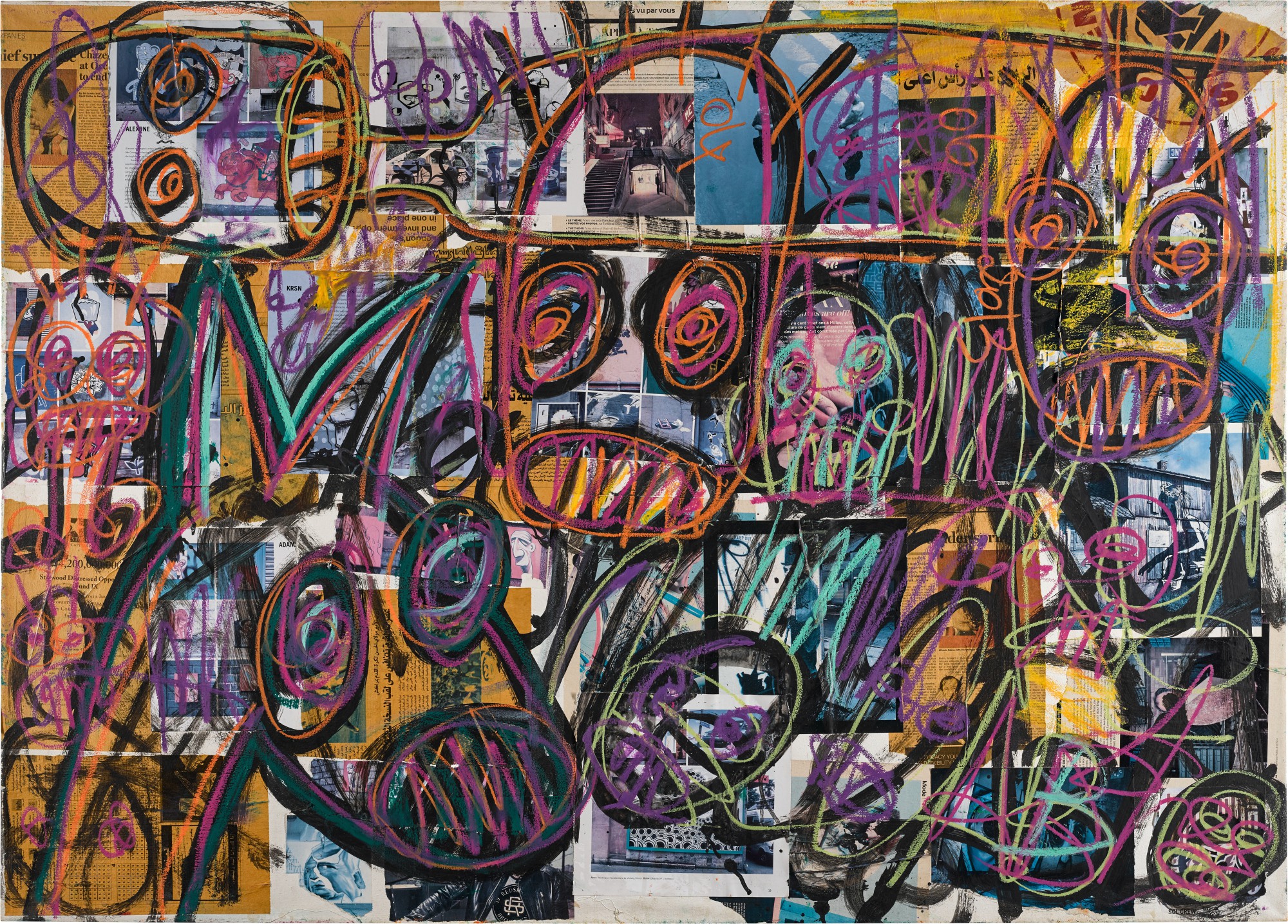
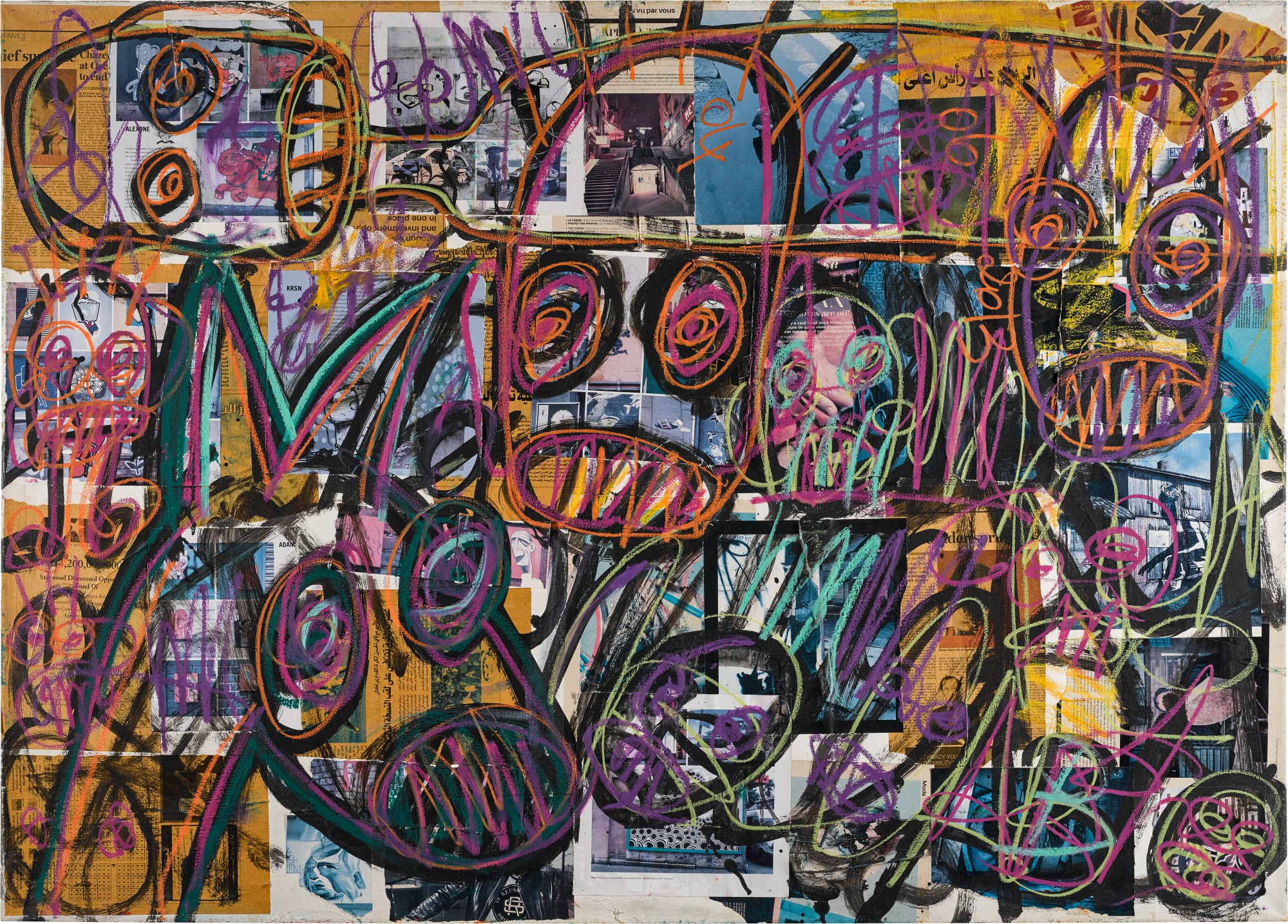
Aboudia's Vivid World Demands to Be Seen
Artist Spotlight · The Collection Editorial
In the spring of 2023, a canvas by Abdoulaye Diarrassouba, known universally as Aboudia, sold at auction for a price that would have seemed improbable just a decade earlier, confirming what a devoted circle of collectors and curators had long understood: this Ivorian painter is among the most compelling voices in contemporary African art. His work has passed through the hands of major international galleries, been shown at art fairs from Art Basel Miami Beach to Frieze London, and entered serious private collections across Europe, the United States, and Asia. The trajectory is remarkable, but it also feels entirely earned. When you stand before one of his canvases, the energy is undeniable, immediate, and deeply human.
Aboudia
Le chat et les enfants, 2013
Aboudia was born in 1983 in Côte d'Ivoire, and his formation as an artist was shaped by the visual abundance and intensity of Abidjan, one of West Africa's great cities. The streets of Abidjan are layered with hand painted signage, political imagery, religious iconography, and the improvisational graphics of a culture that communicates visually with tremendous force. For a young person with an instinct for image making, this urban environment functioned as both classroom and canvas. Aboudia absorbed the visual language of the city without academic mediation, which gave his early work a directness and urgency that formal training often smooths away.
He arrived at painting through observation and necessity rather than through institutional channels, and that origin story remains legible in every mark he makes. The pivotal moment in Aboudia's artistic life came during the political and civil unrest that gripped Côte d'Ivoire following the disputed 2010 presidential election. The violence that erupted across Abidjan in 2010 and 2011 left a profound mark on the city and on the artist. Rather than flee, Aboudia stayed and painted, producing an extraordinary body of work that documented the chaos, fear, and resilience of ordinary people caught in extraordinary circumstances.
Aboudia
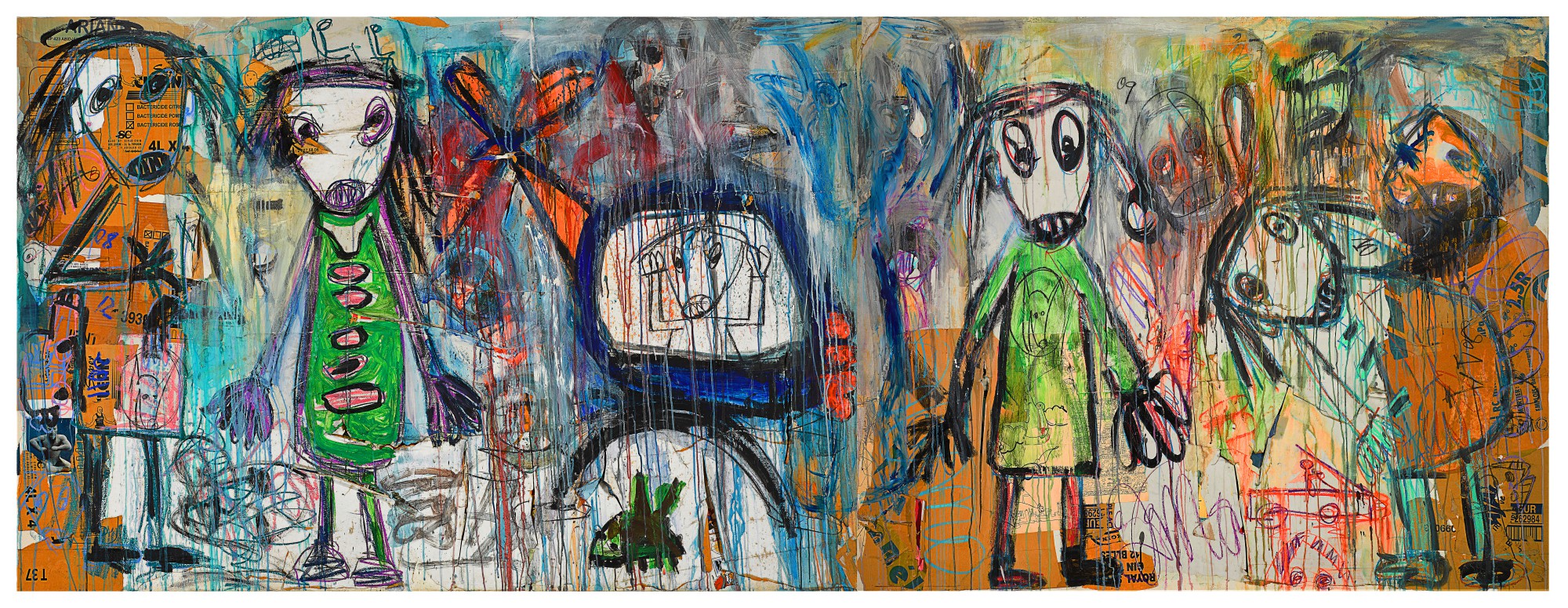
Jeux d'Enfant, 2012
Those paintings, raw and relentless, brought him to the attention of Jack Bell Gallery in London, which became a key partner in bringing his work to international audiences. The response was immediate and enthusiastic. Critics recognized in his canvases something that transcended reportage, a formal language capable of holding both grief and vitality in the same frame. What makes Aboudia's practice so distinctive is the way he synthesizes seemingly incompatible visual traditions into something entirely his own.
His compositions draw on the gestural freedom of expressionism, the democratic energy of graffiti and street art, and the flattened figuration associated with outsider art and children's drawings. His figures, often rendered with simple lines and wide expressive eyes, populate densely worked surfaces where acrylic paint, oil stick, collage, chalk, and found text accumulate into layered visual arguments. Works like "Girl in Green" from 2011 and "Jeux d'Enfant" from 2012 show this sensibility at full intensity: the canvases feel like walls in the city, accreted over time, alive with competing voices and marks. There is nothing decorative about them.
Aboudia
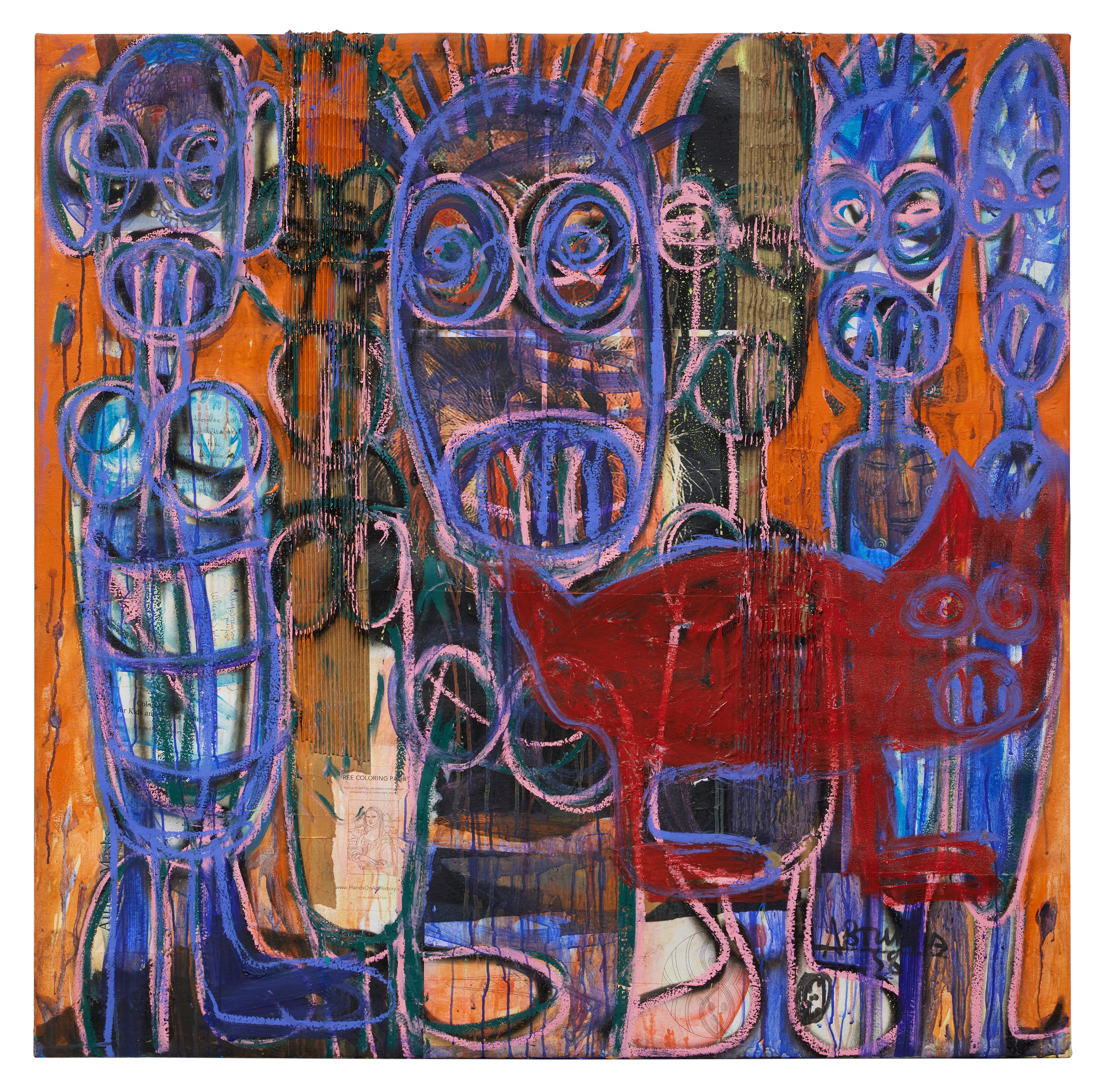
The Red Dog, 2020
They insist on attention. The Nouchi figure is central to understanding Aboudia's iconography. Nouchi refers to the street youth of Abidjan, young people who have developed their own slang, style, and code of survival in the margins of formal society. Aboudia returns to these figures repeatedly, as in the 2019 work "Portraits des Nouchis," rendered in acrylic, oil stick, and collage on paper.
He treats them not as subjects of sociological inquiry but as protagonists, individuals with interiority and dignity. This is a political act as much as an aesthetic one. By centering figures that dominant culture tends to ignore or criminalize, Aboudia insists on a different set of values, one rooted in solidarity, visibility, and celebration of the overlooked. Works like "Nouchi Child in Blue" from 2021 continue this sustained commitment with the confidence of an artist who knows exactly what he is doing.
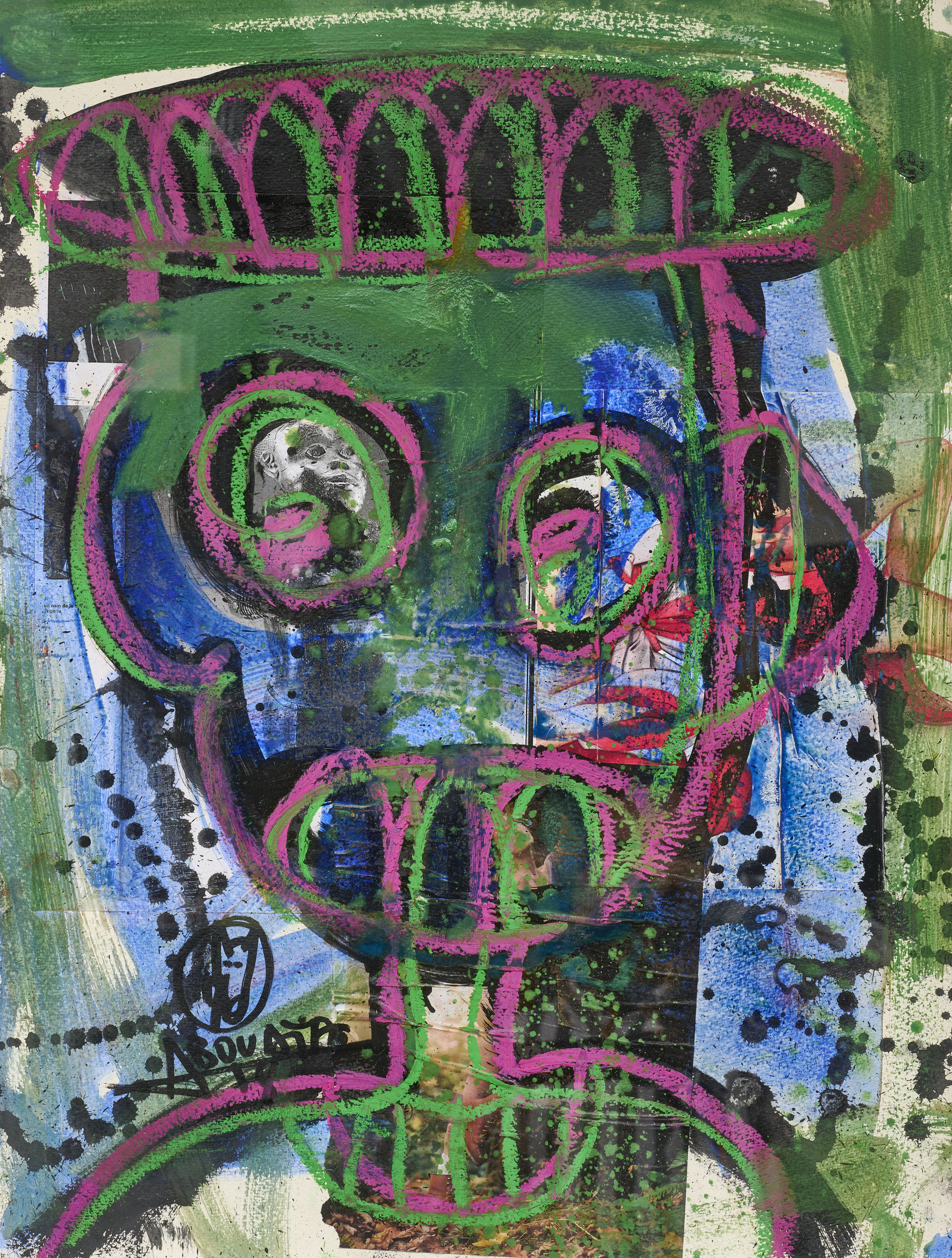
Aboudia
Portraits des Nouchis, 2019
The evolution of Aboudia's practice over the past decade reveals an artist who has not stood still. His more recent canvases, including "The Red Dog" from 2020 and the series of works incorporating characters and text in multiple languages, including works that carry titles in Japanese script such as "家人" from 2019, suggest an expanding visual vocabulary and an appetite for dialogue with global visual culture. This internationalism feels organic rather than calculated. Aboudia has spent time in New York, which clearly fed his understanding of street culture as a connective tissue across very different cities and communities.
The formal qualities of his work have also matured: his color has grown more complex, his compositional confidence more pronounced, and his use of collaged materials more purposeful without losing any of the raw energy that first brought him attention. For collectors, Aboudia's work presents a genuinely exciting opportunity. Works on paper, such as the "Portraits des Nouchis" series, offer a compelling entry point, showcasing the full range of his mark making in an intimate format. Major canvas works, particularly those from the 2011 to 2014 period when his response to the Ivorian crisis was at its most urgent, carry strong art historical weight and have shown meaningful appreciation at auction.
Collectors drawn to the lineages of Jean Michel Basquiat, Cy Twombly, and Ouattara Watts will find in Aboudia an artist who shares certain formal affinities with those figures while charting a course that is rooted in an entirely specific West African experience. His work is simultaneously local and universal, a combination that has lasting resonance in any serious collection. Aboudia's importance to contemporary art history is still being fully written, but the outline is already clear. He arrived at a moment when the international art world was beginning to reckon seriously with the breadth and depth of African modernism and contemporary practice, and he offered something that could not be easily categorized or co opted.
His canvases carry the weight of lived experience without becoming documents. They are joyful and grieving, chaotic and controlled, deeply political and formally beautiful. In an art world that sometimes rewards legibility and tidiness, Aboudia has insisted on complexity, and the best collectors and institutions have risen to meet him on those terms.