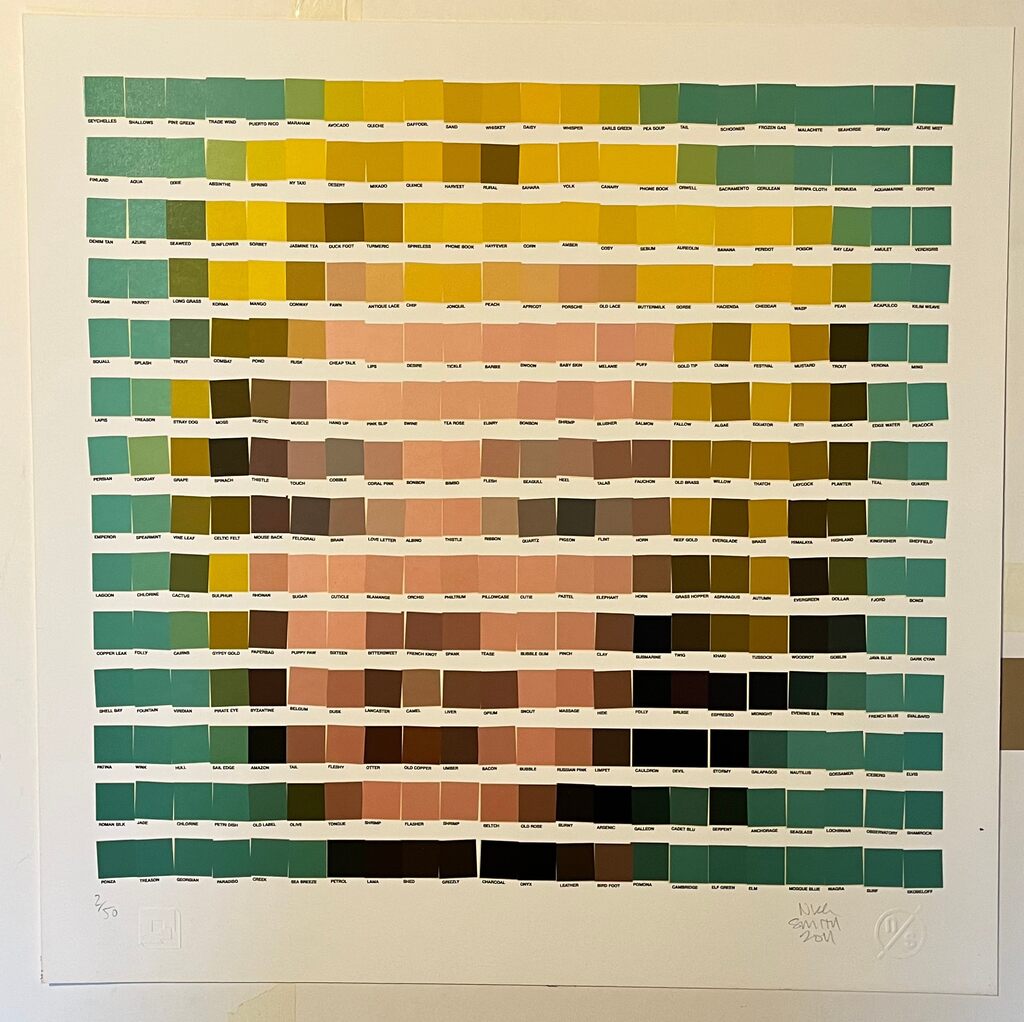
Marilyn
2011
Nick Smith's *Marilyn* (2011) occupies a singular place in the artist's body of work as the very first Pantone chip composition he produced, making it the origin point of a practice that would go on to define his reputation internationally. Rendered in screenprint on paper and measuring 57 by 55 centimetres, the work reconstructs the iconic visage of Marilyn Monroe entirely from Pantone colour swatches, each chip contributing its precise, named hue to a mosaic that rewards both distance and close inspection. From afar, the composition resolves into a recognisable portrait; up close, it dissolves into a grid of coded colour samples, prompting a considered reflection on how identity, image, and commercial language converge. The work sits at the intersection of Pop Art's fascination with celebrity and a rigorous, almost conceptual engagement with systems of colour standardisation. By choosing Monroe as his inaugural subject, Smith draws a knowing line between two of the twentieth century's most reproduced icons, one a human face endlessly multiplied through print media, the other a corporate colour system that quietly underpins the visual world. The Pantone palette, ordinarily a utilitarian tool of designers and manufacturers, is recast here as a painterly medium, each swatch functioning simultaneously as pigment, pixel, and readymade object. Produced in a limited edition of fifty and hand-signed by the artist, *Marilyn* carries the additional weight of being a genuine first, a document of invention rather than iteration. For collectors drawn to works that sit at the crossroads of cultural history and formal ingenuity, this piece offers both rarity and resonance, an early statement from an artist who found, in this very print, a visual language entirely his own.
- Medium
- Screenprint on Paper
- Sheet
- Signed
- Yes
- Location
- Prescription Art, Brighton, East Sussex
- Spotted At
- Gallery · Prescription ArtView on map
For Sale — £2500
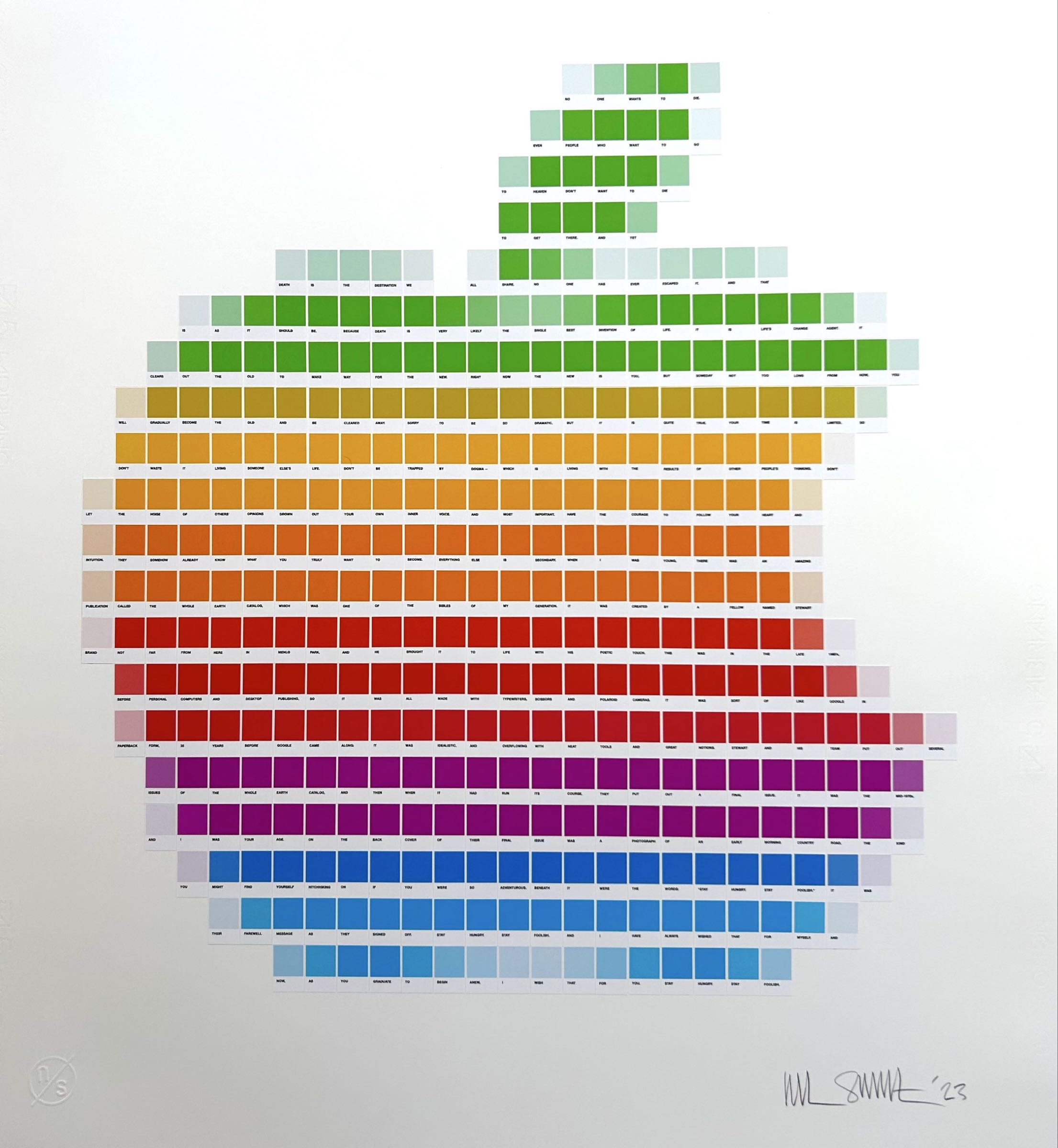
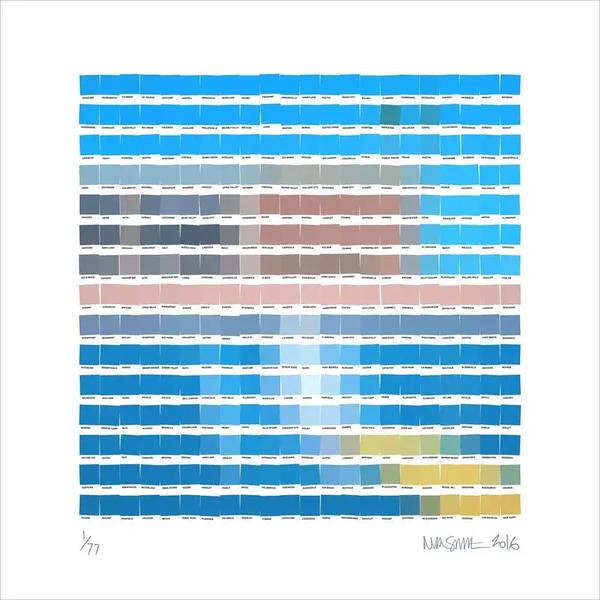
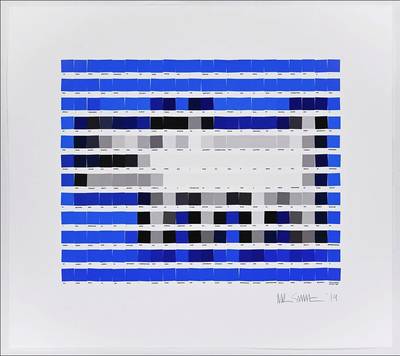
Collectors of Nick Smith

Also spotted by

Start the Discussion
Request access to join the discussion