Join The Collection to save, track, and explore works like this.

Robert Delaunay — Portrait de Madame Jacques Heim
Robert Delaunay

Portrait de Madame Jacques Heim

1928

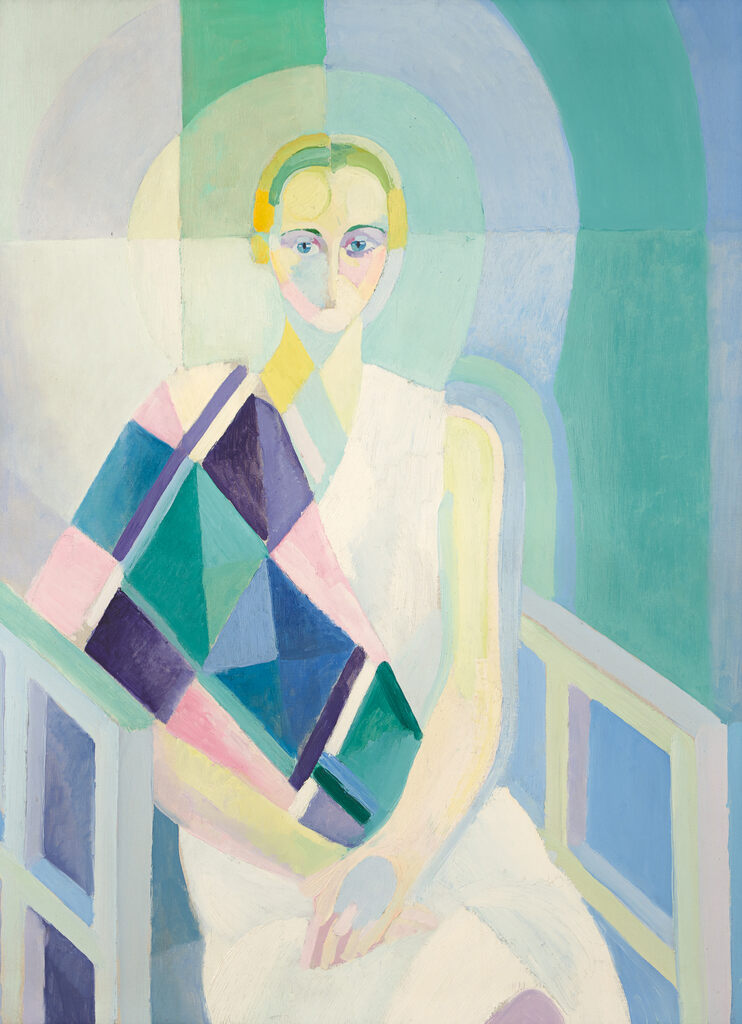
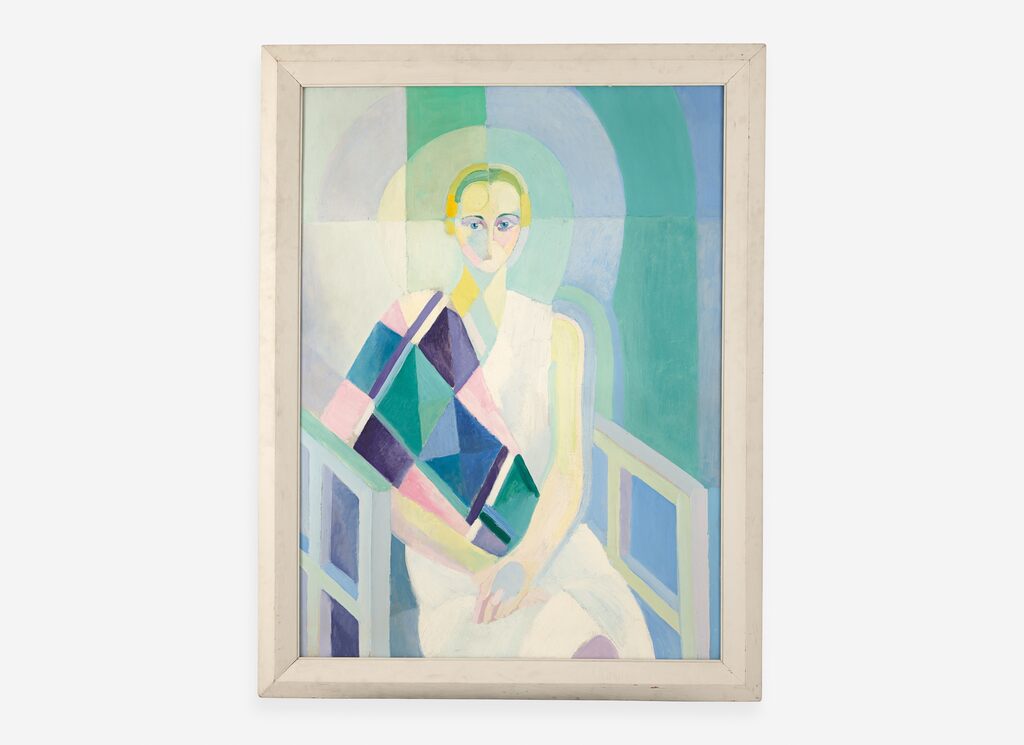
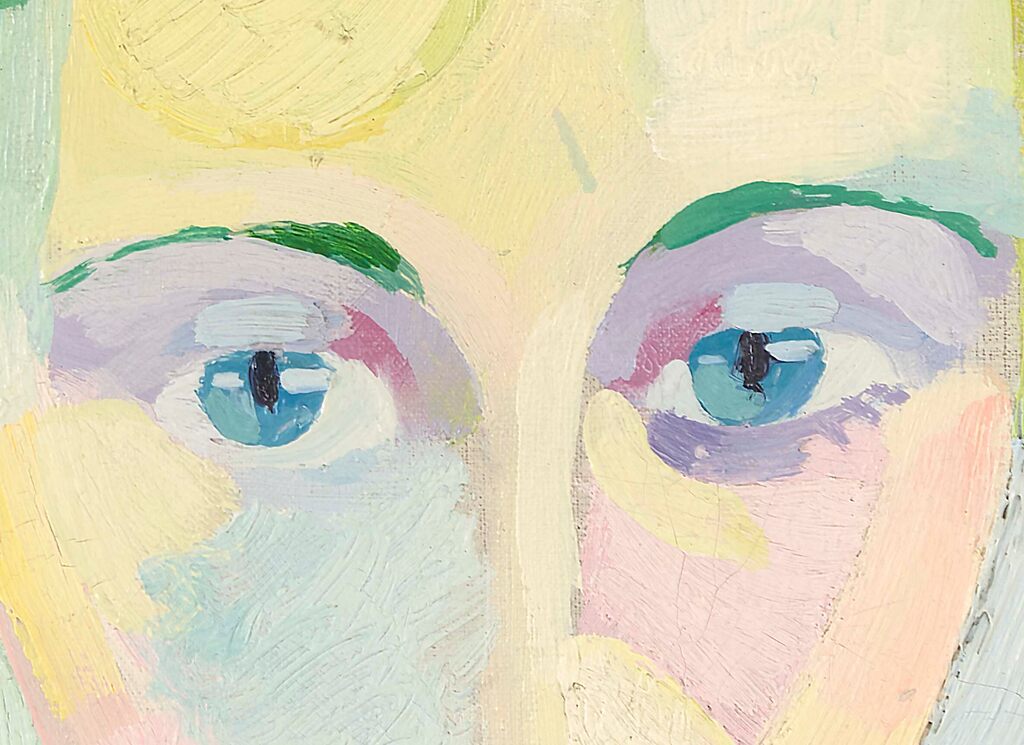
Painted in 1928, Portrait de Madame Jacques Heim presents the wife of French fashion designer Jacques Heim in a large-scale, three-quarter-length composition that ranks among Robert Delaunay's most refined figurative achievements. The sitter's connection to the Delaunay circle was intimate: Sonia Delaunay, Robert's wife and artistic collaborator, worked directly with Jacques Heim, making this portrait as much a record of creative kinship as it is a formal commission. Across its nearly 130-centimeter height, Delaunay dissolves the conventional portrait into a mosaic of flat, translucent color planes, light and dark tones held in careful equilibrium and drawn from multiple vantage points at once. The effect is neither purely descriptive nor purely abstract, but something suspended between the two, a pictorial space charged with chromatic rhythm and a quietly transcendent presence. This quality places the work at the heart of Orphism, the movement Guillaume Apollinaire named after the mythological poet Orpheus in recognition of its inherently musical sensibility. Where Cubism fragmented form in the service of analytical investigation, Orphism redirected that fragmentation toward emotional and metaphysical ends, using color and rhythm to evoke simultaneity of perception and sensation. Delaunay refined this into his own practice of Simultanism, rooted in the color theory of Michel Eugène Chevreul and the process philosophy of Henri Bergson, and summarized in his own words: "Simultaneity in light is harmony, the rhythm of colors which creates the Vision of Man." In Madame Heim's portrait, that philosophy is not a theoretical exercise but a lived visual reality, the figure emerging through interlocking planes of hue that pulse with quiet energy. The work's provenance and authenticity have been confirmed by Richard Riss, and the painting will be accompanied by a Certificate of Authenticity bearing his signature alongside that of a Delaunay family representative, providing collectors with a secure scholarly foundation. At approximately 129 by 96 centimeters, the canvas commands a room with the authority of a major commission while retaining the intimacy of Delaunay's most personal investigations into color and form. For collectors seeking a work that bridges the figurative and the avant-garde at the precise moment modernism was consolidating its most ambitious ideas, this portrait represents a rare and historically grounded opportunity.

Medium
Oil on canvas
Overall

Start the Discussion

Request access to join the discussion

About this work

Robert Delaunay, Portrait de Madame Jacques Heim, 1928

Painted in 1928, Portrait de Madame Jacques Heim presents the wife of French fashion designer Jacques Heim in a large-scale, three-quarter-length composition that ranks among Robert Delaunay's most refined figurative achievements. The sitter's connection to the Delaunay circle was intimate: Sonia Delaunay, Robert's wife and artistic collaborator, worked directly with Jacques Heim, making this portrait as much a record of creative kinship as it is a formal commission. Across its nearly 130-centimeter height, Delaunay dissolves the conventional portrait into a mosaic of flat, translucent color planes, light and dark tones held in careful equilibrium and drawn from multiple vantage points at once. The effect is neither purely descriptive nor purely abstract, but something suspended between the two, a pictorial space charged with chromatic rhythm and a quietly transcendent presence. This quality places the work at the heart of Orphism, the movement Guillaume Apollinaire named after the mythological poet Orpheus in recognition of its inherently musical sensibility. Where Cubism fragmented form in the service of analytical investigation, Orphism redirected that fragmentation toward emotional and metaphysical ends, using color and rhythm to evoke simultaneity of perception and sensation. Delaunay refined this into his own practice of Simultanism, rooted in the color theory of Michel Eugène Chevreul and the process philosophy of Henri Bergson, and summarized in his own words: "Simultaneity in light is harmony, the rhythm of colors which creates the Vision of Man." In Madame Heim's portrait, that philosophy is not a theoretical exercise but a lived visual reality, the figure emerging through interlocking planes of hue that pulse with quiet energy. The work's provenance and authenticity have been confirmed by Richard Riss, and the painting will be accompanied by a Certificate of Authenticity bearing his signature alongside that of a Delaunay family representative, providing collectors with a secure scholarly foundation. At approximately 129 by 96 centimeters, the canvas commands a room with the authority of a major commission while retaining the intimacy of Delaunay's most personal investigations into color and form. For collectors seeking a work that bridges the figurative and the avant-garde at the precise moment modernism was consolidating its most ambitious ideas, this portrait represents a rare and historically grounded opportunity.

Medium
Oil on canvas
Dimensions
overall: 128.9 x 95.9 cm
Year
1928
Seen at
Freeman's | Hindman

More works by Robert Delaunay

Collected by

Musée d'Art Moderne de Paris, Cleveland Museum of Art