Join The Collection to save, track, and explore works like this.

William N. Copley — Flag of the political prisoner, from Gran Pavese – The Flag Project
William N. Copley

Flag of the political prisoner, from Gran Pavese – The Flag Project

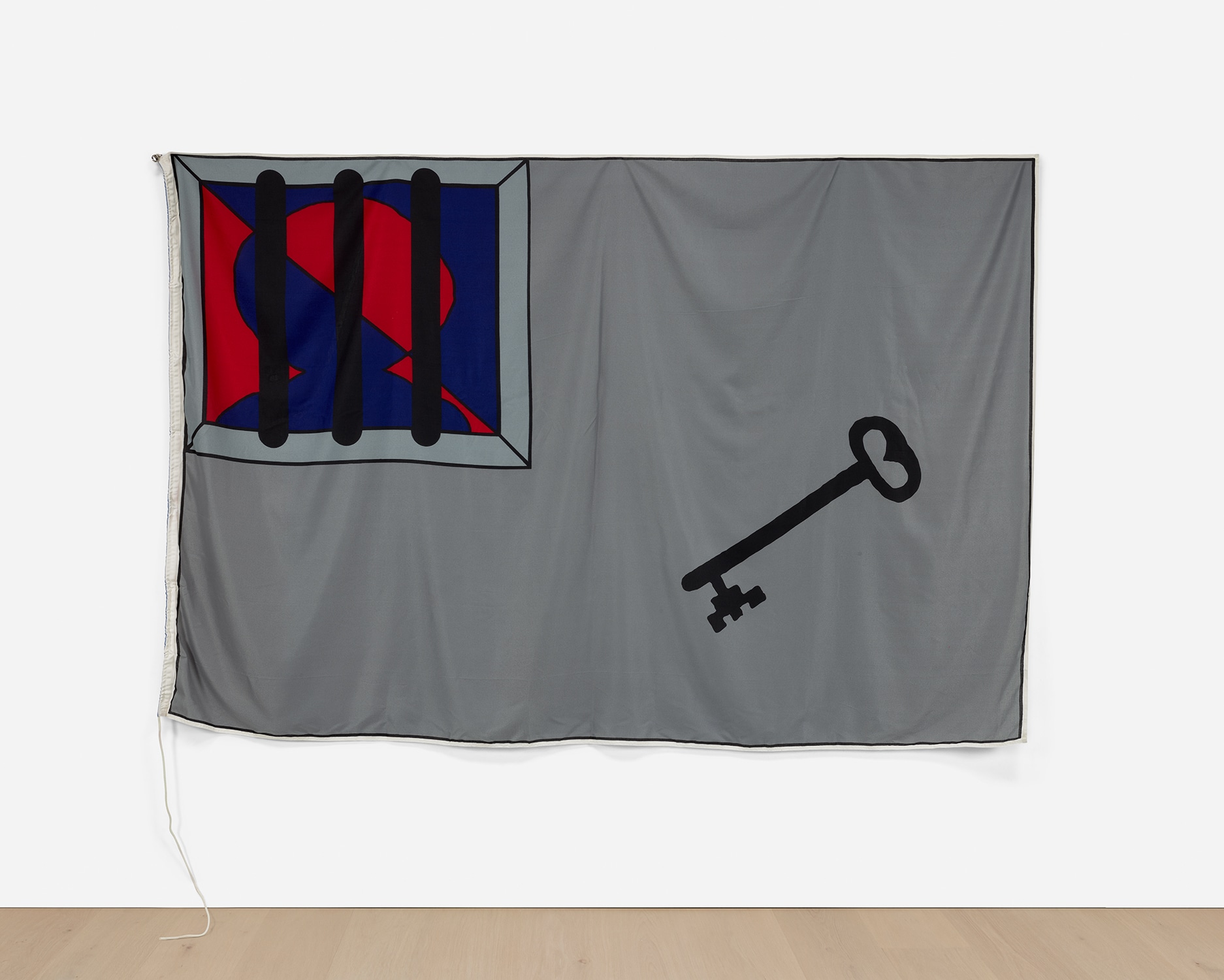
William N. Copley's "Flag of the Political Prisoner" from The Flag Project presents a provocative intervention into the symbolic language of national identity by appropriating the flag format as a vehicle for political commentary. The monumental screenprint on polyester transforms the traditionally nationalist object into a statement about human rights and state oppression, using Copley's characteristic blend of pop sensibility and conceptual critique. Through this work, Copley challenges viewers to reconsider the flag as both a symbol of collective values and a potential instrument of state control.

Medium
Monumental screenprint in colors, on polyester flag.

🔨 Auction Lot

Editions & Works on Paper

February 12, 2025

Lot 13

Start the Discussion

Request access to join the discussion

About this work

William N. Copley, Flag of the political prisoner, from Gran Pavese – The Flag Project

William N. Copley's "Flag of the Political Prisoner" from The Flag Project presents a provocative intervention into the symbolic language of national identity by appropriating the flag format as a vehicle for political commentary. The monumental screenprint on polyester transforms the traditionally nationalist object into a statement about human rights and state oppression, using Copley's characteristic blend of pop sensibility and conceptual critique. Through this work, Copley challenges viewers to reconsider the flag as both a symbol of collective values and a potential instrument of state control.

Medium
Monumental screenprint in colors, on polyester flag.
Seen at
Phillips, New York, London, Hong Kong

Related themes

20th Century, Political Activism, Mixed Media, Conceptual Art, Provocative Aesthetic, Protest Art, American Artist, Pop Art, Flag painting, Symbolic Imagery

More works by William N. Copley