Join The Collection to save, track, and explore works like this.

Claude Cahun — Untitled
Claude Cahun

Untitled

1929

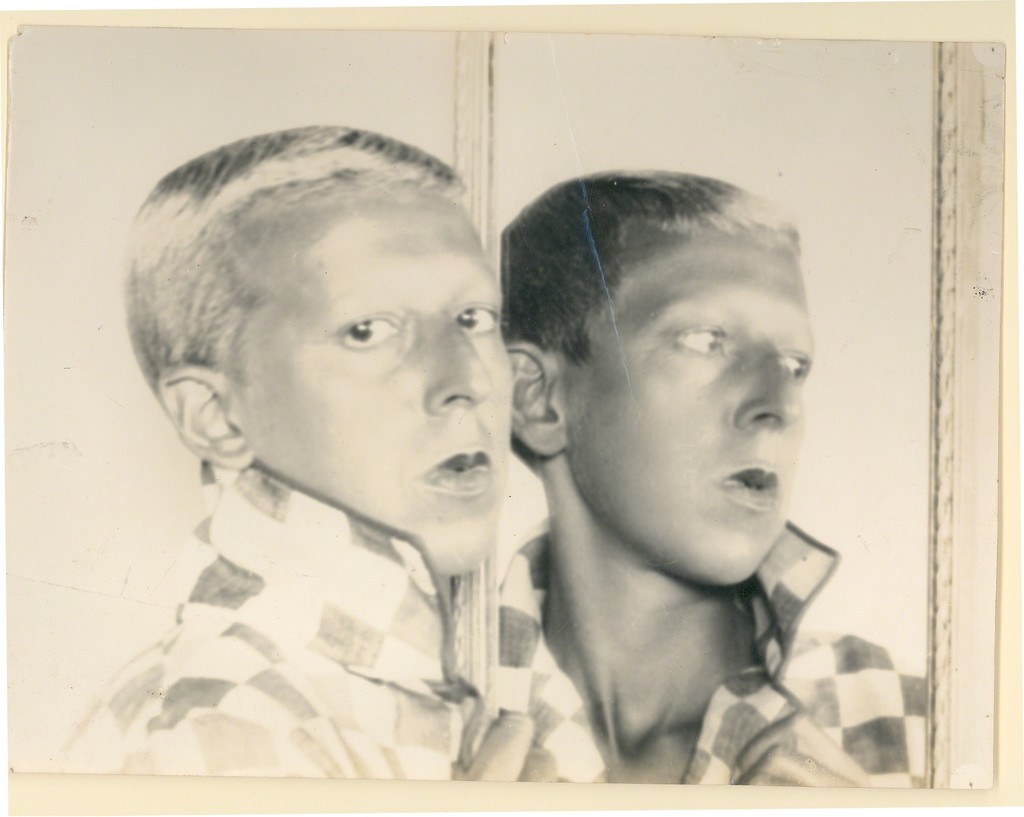
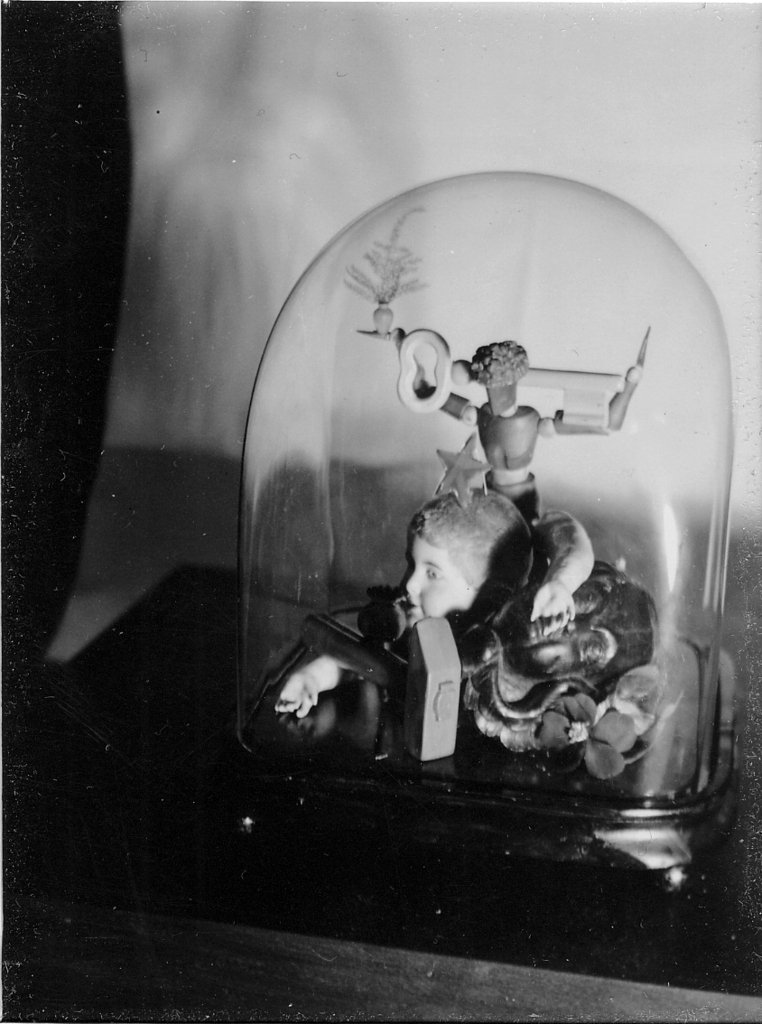
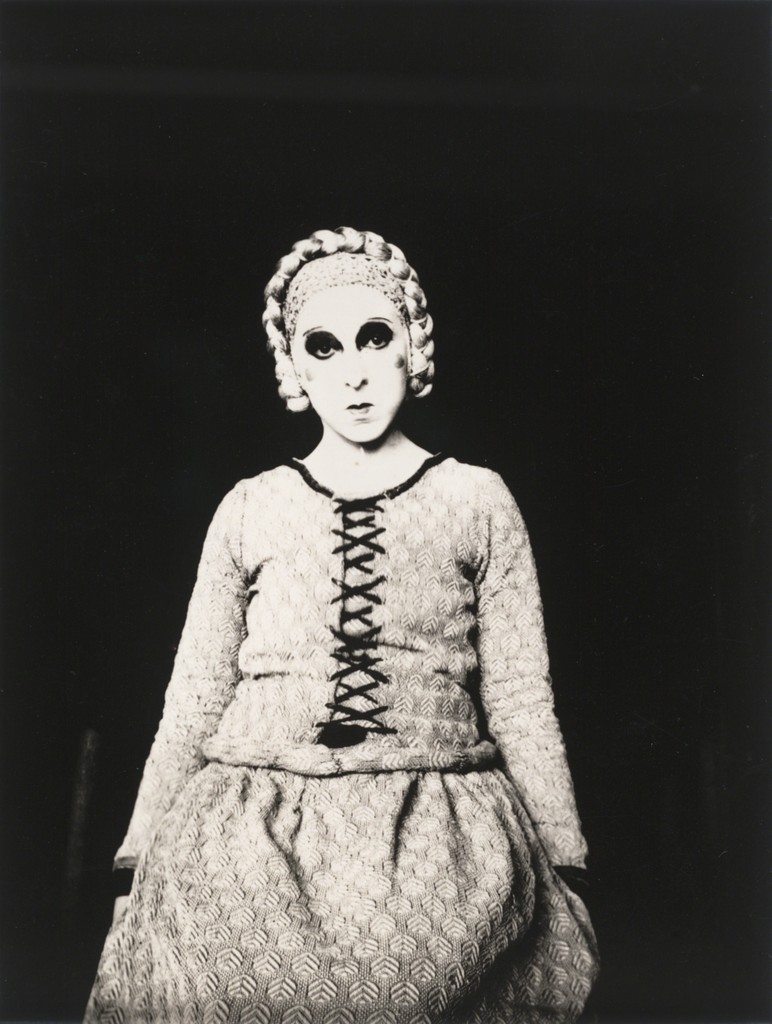
A small, arresting gelatin silver print from 1929, this work places Claude Cahun in close-up confrontation with the camera, the face cropped and angled in a way that refuses easy categorization of gender, persona, or psychological state. The composition is intimate yet unsettling, with Cahun's shaved head and direct gaze constructing a self that feels simultaneously theatrical and brutally candid. At just 11.4 by 8.3 centimeters, the physical scale intensifies rather than diminishes its impact, demanding close looking and rewarding it with layers of ambiguity that resist resolution. Cahun worked in Surrealist circles in interwar Paris alongside figures such as André Breton, yet the photographs she produced with her partner Marcel Moore operated on a logic distinctly her own. Rather than deploying the female body as object or symbol for another's vision, Cahun used self-portraiture as a sustained philosophical and political act, interrogating identity at a moment when its very fixity was being contested across art, psychoanalysis, and politics. This image belongs to a body of work that scholars and institutions have increasingly recognized as foundational to conversations about gender fluidity, the constructed self, and the performative possibilities of photography. Signed and preserved in fine condition, this print carries the weight of a practice cut short by World War II, during which Cahun and Moore were arrested by Nazi occupiers in Jersey for their resistance activities. Held in the collection of the San Francisco Museum of Modern Art, the work represents a rare opportunity to acquire a signed, period example from one of the most rigorously original artists working in the photographic medium during the twentieth century.

Medium
Gelatin silver print
Overall
Signed
Yes

Start the Discussion

Request access to join the discussion

About this work

Claude Cahun, Untitled, 1929

A small, arresting gelatin silver print from 1929, this work places Claude Cahun in close-up confrontation with the camera, the face cropped and angled in a way that refuses easy categorization of gender, persona, or psychological state. The composition is intimate yet unsettling, with Cahun's shaved head and direct gaze constructing a self that feels simultaneously theatrical and brutally candid. At just 11.4 by 8.3 centimeters, the physical scale intensifies rather than diminishes its impact, demanding close looking and rewarding it with layers of ambiguity that resist resolution. Cahun worked in Surrealist circles in interwar Paris alongside figures such as André Breton, yet the photographs she produced with her partner Marcel Moore operated on a logic distinctly her own. Rather than deploying the female body as object or symbol for another's vision, Cahun used self-portraiture as a sustained philosophical and political act, interrogating identity at a moment when its very fixity was being contested across art, psychoanalysis, and politics. This image belongs to a body of work that scholars and institutions have increasingly recognized as foundational to conversations about gender fluidity, the constructed self, and the performative possibilities of photography. Signed and preserved in fine condition, this print carries the weight of a practice cut short by World War II, during which Cahun and Moore were arrested by Nazi occupiers in Jersey for their resistance activities. Held in the collection of the San Francisco Museum of Modern Art, the work represents a rare opportunity to acquire a signed, period example from one of the most rigorously original artists working in the photographic medium during the twentieth century.

Medium
Gelatin silver print
Dimensions
overall: 11.4 x 8.3 cm
Year
1929
Signed
Hand-signed by the artist
Seen at
San Francisco Museum of Modern Art (SFMOMA)

More works by Claude Cahun

Collected by

Musée d'Art Moderne de Paris, Art Institute of Chicago