Join The Collection to save, track, and explore works like this.

Amedeo Modigliani — Nu
Amedeo Modigliani

Nu

1917

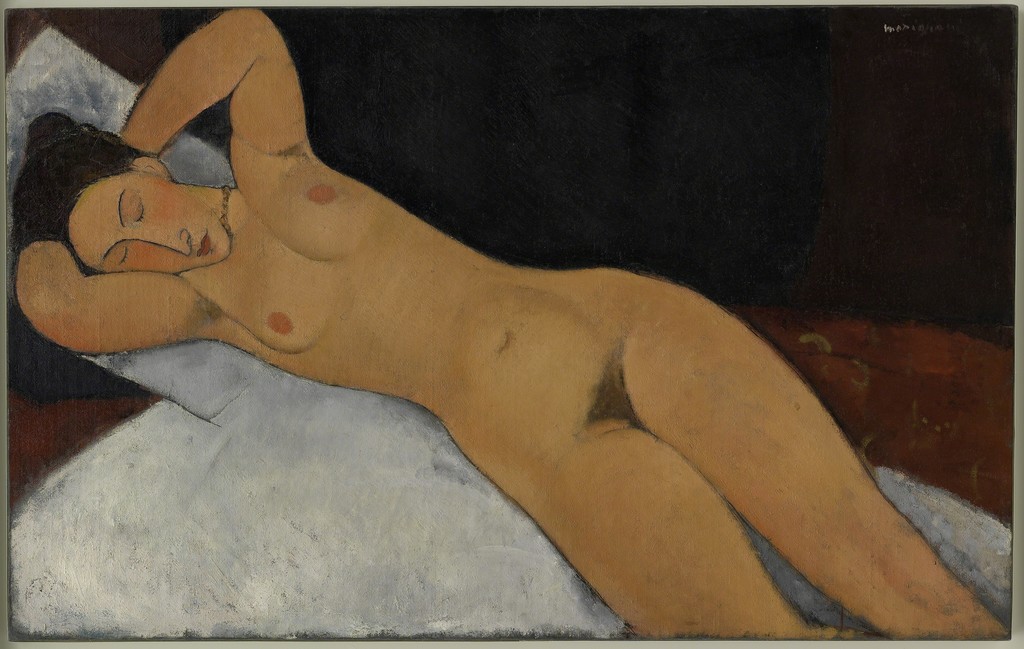
Painted in 1917 at the height of Modigliani's brief and brilliant maturity, Nu belongs to the celebrated series of reclining nudes that caused a scandal when first exhibited in Paris and have since become among the most recognizable images in modern art. The figure is rendered with the artist's signature economy of line, her elongated form disposed across a neutral ground with an ease that reads simultaneously as classical repose and radical intimacy. Warm ochres and amber flesh tones are set against deeper, shadowed passages, producing a sensuous chromatic harmony that rewards sustained looking. The face, turned gently toward the viewer, carries that characteristic absence of pupils that Modigliani deployed to profound effect, suggesting psychological interiority even as the body is offered so frankly to the gaze. The work sits at a productive tension between tradition and modernity. Modigliani drew consciously on the long European lineage of the reclining female nude, from Titian and Giorgione through Ingres and Manet, yet his personal synthesis of Cézannesque structure, African sculptural influence, and the lyrical distortions of his Sienese heritage produced something entirely his own. The contours feel carved rather than painted, and there is a monumental stillness to the composition that distinguishes these nudes from any preceding them. For collectors, a Modigliani nude of this period represents one of the most sought-after categories in the entire canon of early twentieth-century painting. Works from this concentrated body of production are held in the permanent collections of the world's foremost institutions, and the present example, currently on view at the Guggenheim Museum Bilbao, offers a rare opportunity to assess its quality and condition firsthand. Its combination of historical importance, formal refinement, and enduring emotional power ensures its place among the defining achievements of European modernism.

Medium
Oil on canvas
Overall

Start the Discussion

Request access to join the discussion

About this work

Amedeo Modigliani, Nu, 1917

Painted in 1917 at the height of Modigliani's brief and brilliant maturity, Nu belongs to the celebrated series of reclining nudes that caused a scandal when first exhibited in Paris and have since become among the most recognizable images in modern art. The figure is rendered with the artist's signature economy of line, her elongated form disposed across a neutral ground with an ease that reads simultaneously as classical repose and radical intimacy. Warm ochres and amber flesh tones are set against deeper, shadowed passages, producing a sensuous chromatic harmony that rewards sustained looking. The face, turned gently toward the viewer, carries that characteristic absence of pupils that Modigliani deployed to profound effect, suggesting psychological interiority even as the body is offered so frankly to the gaze. The work sits at a productive tension between tradition and modernity. Modigliani drew consciously on the long European lineage of the reclining female nude, from Titian and Giorgione through Ingres and Manet, yet his personal synthesis of Cézannesque structure, African sculptural influence, and the lyrical distortions of his Sienese heritage produced something entirely his own. The contours feel carved rather than painted, and there is a monumental stillness to the composition that distinguishes these nudes from any preceding them. For collectors, a Modigliani nude of this period represents one of the most sought-after categories in the entire canon of early twentieth-century painting. Works from this concentrated body of production are held in the permanent collections of the world's foremost institutions, and the present example, currently on view at the Guggenheim Museum Bilbao, offers a rare opportunity to assess its quality and condition firsthand. Its combination of historical importance, formal refinement, and enduring emotional power ensures its place among the defining achievements of European modernism.

Medium
Oil on canvas
Dimensions
overall: 73 x 116.7 cm
Year
1917
Seen at
Guggenheim Museum Bilbao

More works by Amedeo Modigliani

Collected by

Musée d'Art Moderne de Paris, Cleveland Museum of Art, Sebastián Naranjo