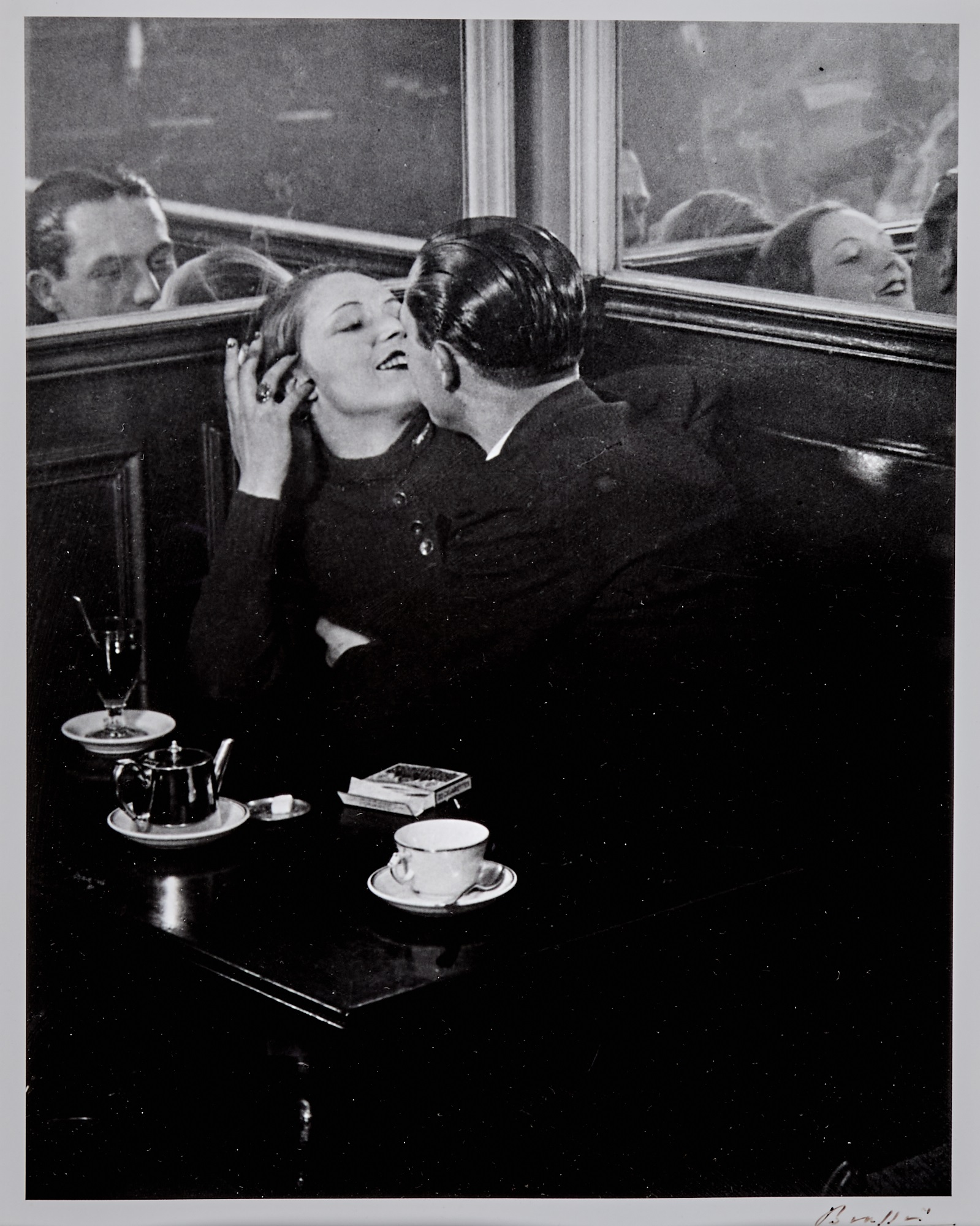
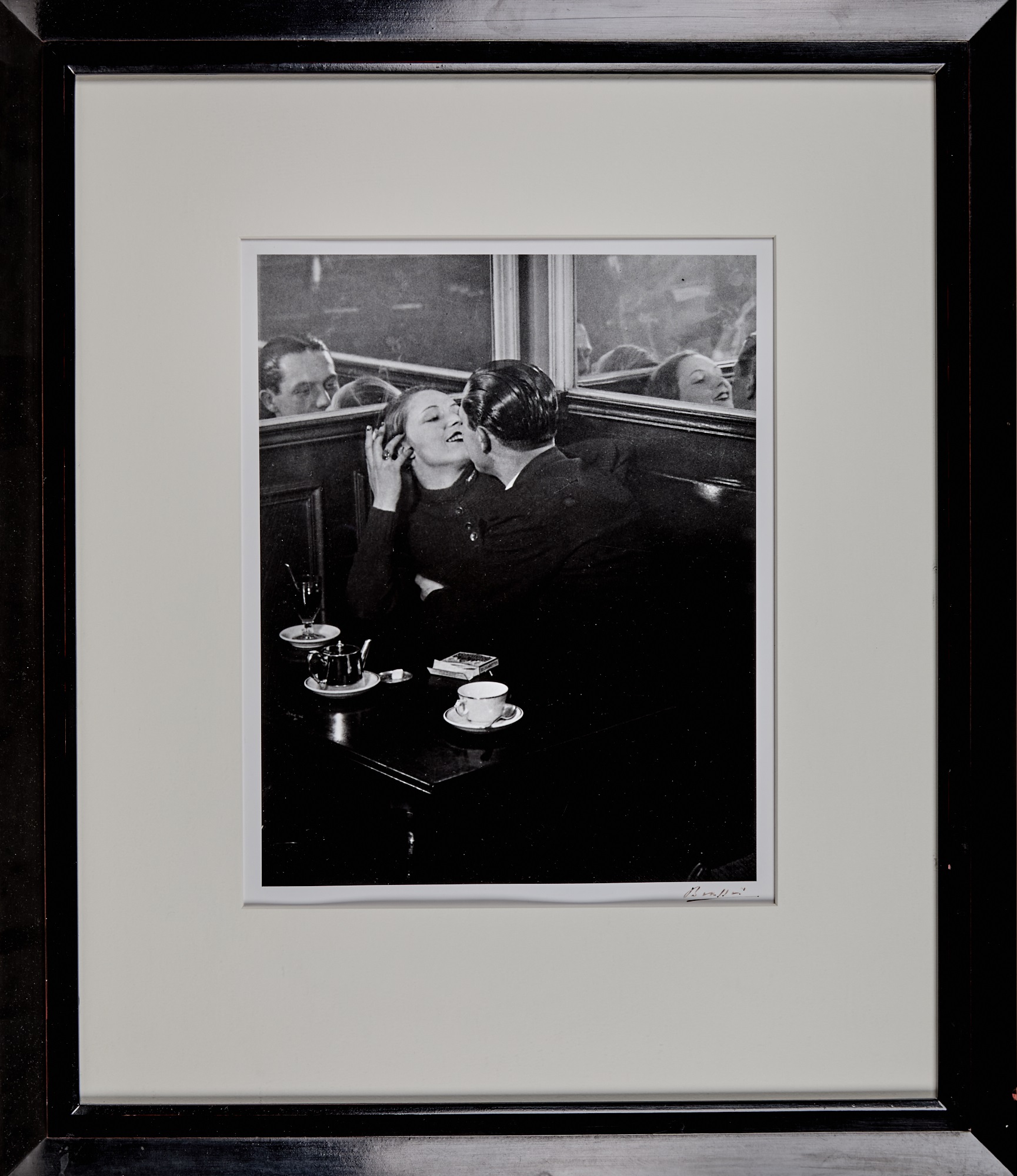
Couple d'amoureux dans un petit café, quartier Italie
1932
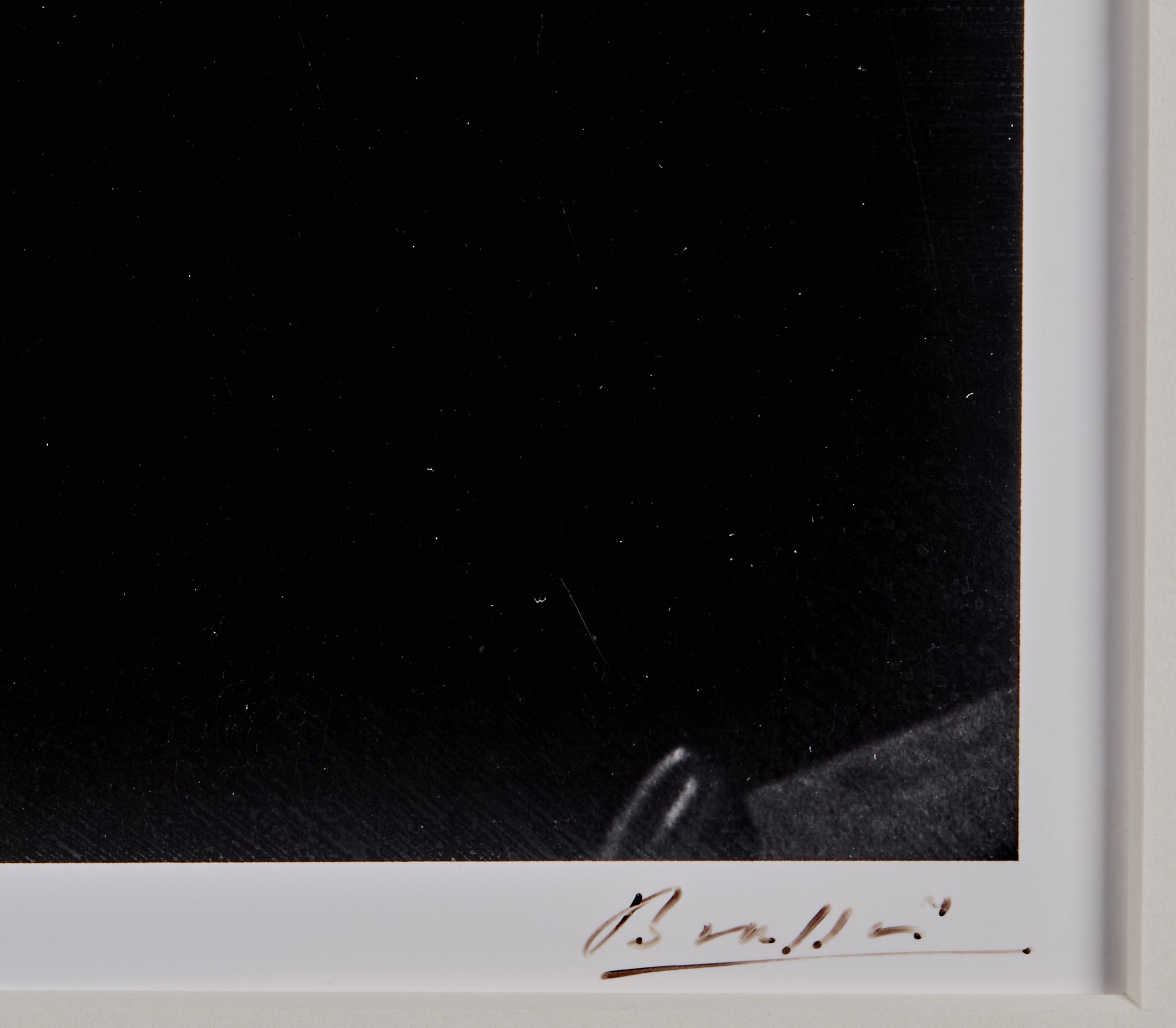
Taken in 1932, Brassaï's "Couple d'amoureux dans un petit café, quartier Italie" stands among the most quietly affecting images in the photographer's celebrated nocturnal survey of Parisian life. Born Gyula Halász in Transylvania in 1899, Brassaï arrived in Paris in the 1920s and immersed himself in the city's after-hours world, producing a body of work that transformed documentary photography into something approaching lyric poetry. This image belongs to that essential period of sustained observation, when Brassaï moved through the cafés, dance halls, and side streets of the French capital with a large-format camera and a patient, deeply humanist eye. The quartier Italie, a working-class district on the Left Bank's southern edge, provided a subject matter removed from the glamour more commonly associated with interwar Paris, and Brassaï's instinct was always to find beauty precisely there. The photograph presents a couple absorbed in each other, the surrounding café atmosphere rendered in the rich tonal gradations characteristic of Brassaï's gelatin silver printing. The composition communicates intimacy without intrusion, a quality that distinguishes his work from contemporaries who favored the decisive or the dramatic. Measuring 12½ by 9½ inches, the later print carries the artist's signature recto and is presented framed, a finished presentation befitting its status as a collectible object. The work comes from the Martin and Lynn Halbfinger Collection, a thoughtfully assembled private holding that situates this piece within a broader commitment to photography of lasting historical and aesthetic consequence. For collectors of twentieth-century photography, this print occupies meaningful ground. It dates to the year of "Paris de Nuit," Brassaï's landmark 1932 publication, placing it at the very heart of the photographer's most generative and influential period. The subject, two lovers in an unremarkable neighborhood café, anticipates the romantic mythology of Paris that would become a dominant cultural export across the following decades, yet Brassaï captures it without sentimentality, grounding tenderness in observable fact. Signed and with distinguished provenance, this is a strong example of the work that established his enduring reputation.
🔨 Auction Lot
Photographs
June 10, 2026
Estimate: $8,000 to $12,000
Lot 15
Start the Discussion
Request access to join the discussion