Join The Collection to save, track, and explore works like this.

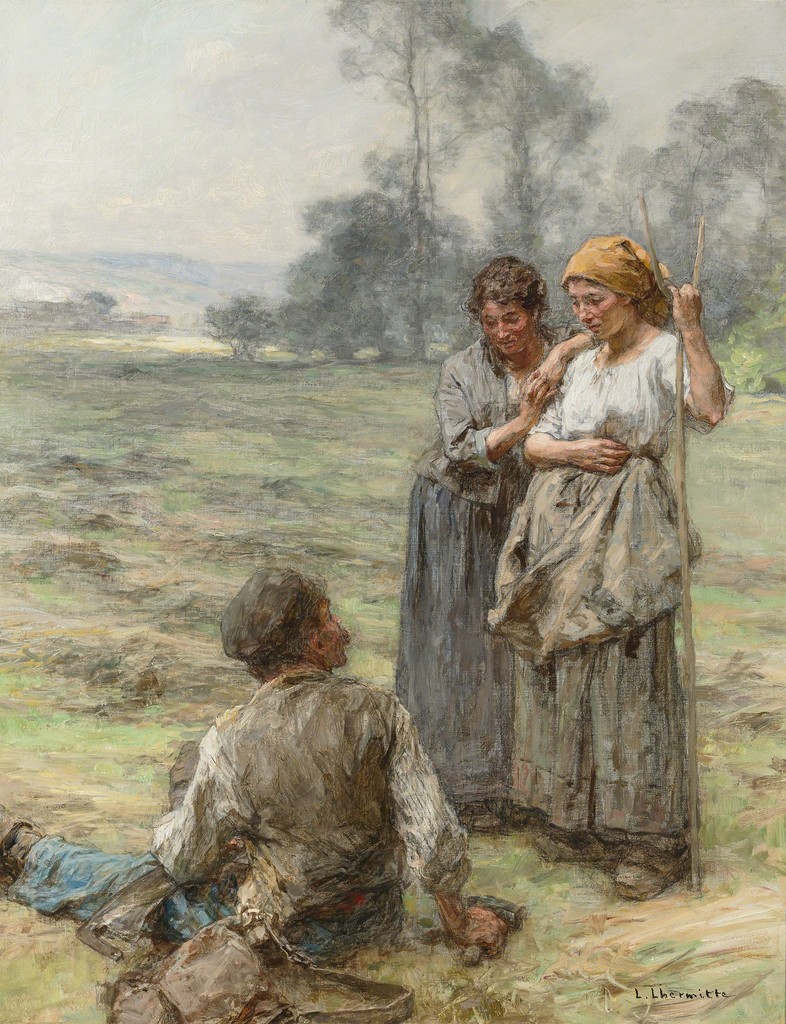
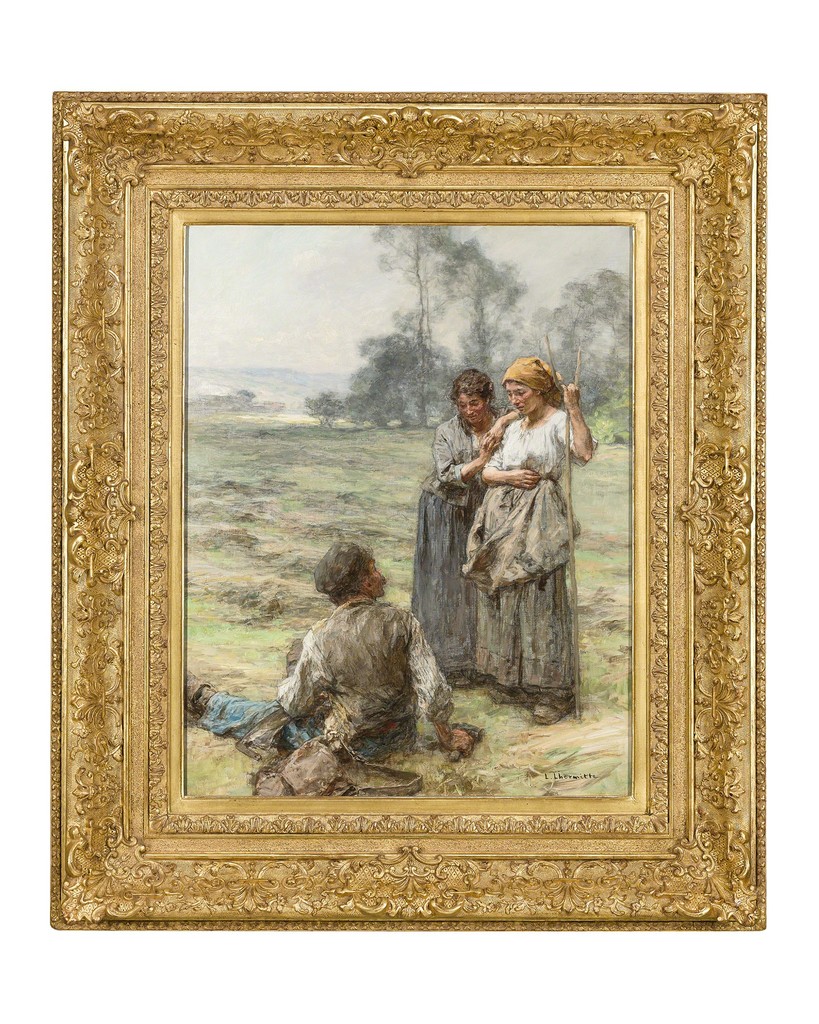
Léon Augustin Lhermitte — Foins, Faucheur et Deux Femmes le Matin (Hay, Reaper and Two Women in the Morning)
Léon Augustin Lhermitte

Foins, Faucheur et Deux Femmes le Matin (Hay, Reaper and Two Women in the Morning)

1919

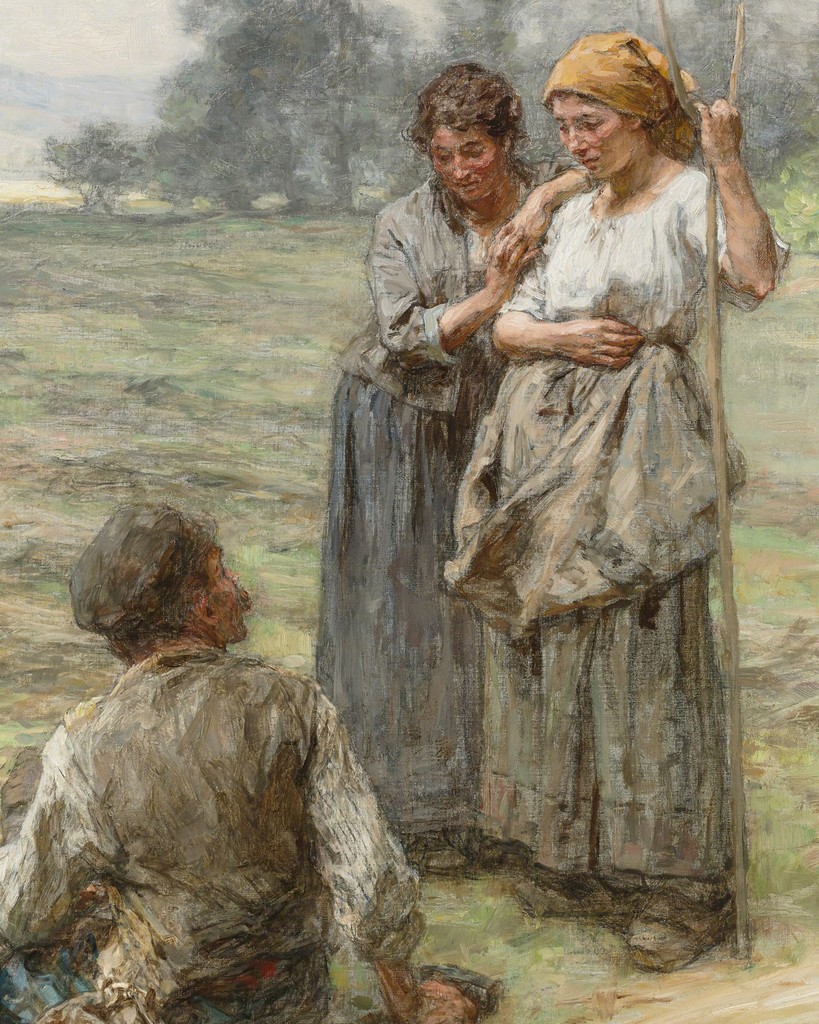
Painted in 1919, Foins, Faucheur et Deux Femmes le Matin presents a luminous harvest morning rendered with the quiet authority of Léon Augustin Lhermitte at the height of his powers. A lone reaper and two women occupy the foreground of a wide, golden-green field, their postures and worn clothing conveying the physical weight of agricultural labor without a trace of sentimentality. Lhermitte's brushwork here is notably free, the landscape loosely described in a pastel palette that reflects the sustained influence of Impressionism on even those painters who remained committed to the Realist tradition. The result is a composition that feels at once documentary and lyrical, grounded in observed rural life yet elevated by a genuine feeling for light and atmosphere. The work is catalogued as number 247 in the 1991 catalogue raisonné by M. Le Pelley Fonteny and also appears in the 1926 publication Barbizon House: An Illustrated Record, confirming its standing within the scholarly literature on the artist. A closely related work in both subject and composition is held in the permanent collection of the Mildred Lane Kemper Art Museum at Washington University in St. Louis. Lhermitte occupies a singular position in the history of French Realism, one shaped equally by deep roots in rural life and a rigorous academic formation. Born in Mont Saint-Père in the Aisne region, he showed exceptional ability from childhood and earned a government education grant that brought him to Paris in 1863 to study at the Petite École under Horace Lecoq de Boisbaudran. There he formed lasting friendships with Jean-Charles Cazin, Alphonse Legros, Henri Fantin-Latour, and Auguste Rodin, a circle that would define the progressive edge of French art in the decades to follow. His consistent presence at the Salon and his receipt of the Legion d'Honneur in 1884 confirmed his standing within the official institutions of French art, while his sustained focus on peasant labor and the agricultural landscape drew inevitable comparisons to Jean-François Millet. Vincent van Gogh, an ardent admirer, famously called him "Millet the Second," a tribute that acknowledged both the debt and the distinction. For collectors seeking a mature, museum-documented example of Lhermitte's work, this canvas represents a rare opportunity.

Medium
Oil on canvas
Overall
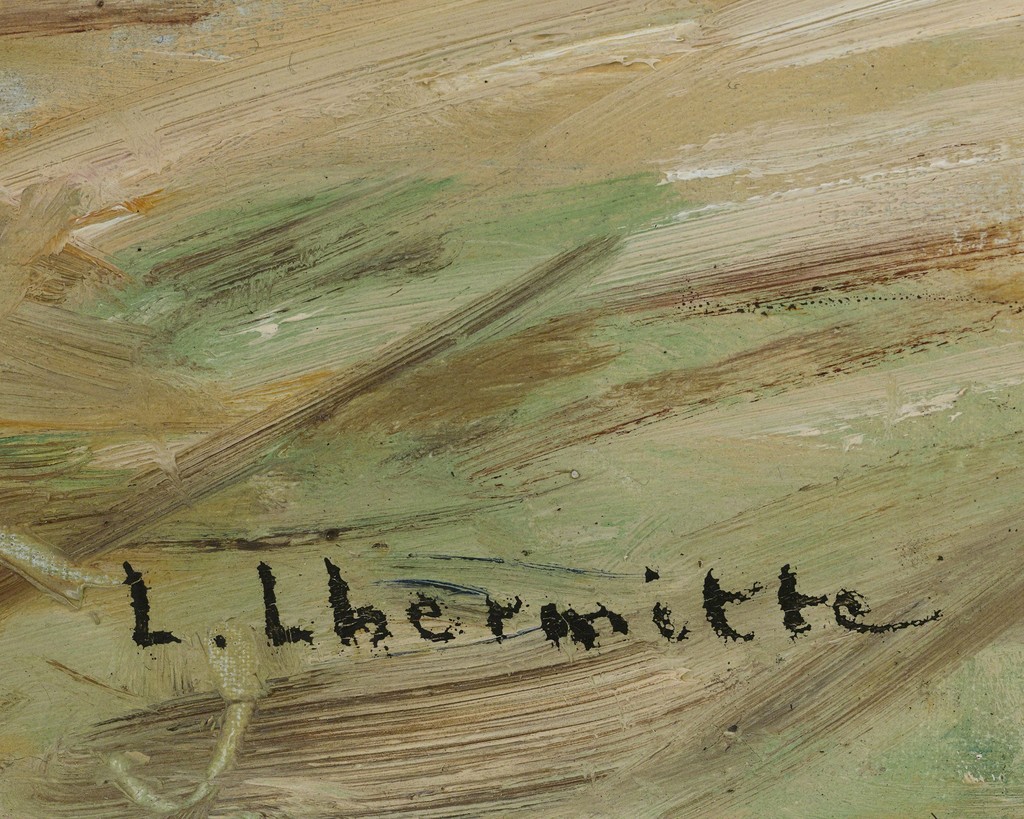
Signed
Yes
Location
M.S. Rau, New Orleans, LA

Start the Discussion

Request access to join the discussion

Spotted works by Léon Augustin Lhermitte
About this work

Léon Augustin Lhermitte, Foins, Faucheur et Deux Femmes le Matin (Hay, Reaper and Two Women in the Morning), 1919

Painted in 1919, Foins, Faucheur et Deux Femmes le Matin presents a luminous harvest morning rendered with the quiet authority of Léon Augustin Lhermitte at the height of his powers. A lone reaper and two women occupy the foreground of a wide, golden-green field, their postures and worn clothing conveying the physical weight of agricultural labor without a trace of sentimentality. Lhermitte's brushwork here is notably free, the landscape loosely described in a pastel palette that reflects the sustained influence of Impressionism on even those painters who remained committed to the Realist tradition. The result is a composition that feels at once documentary and lyrical, grounded in observed rural life yet elevated by a genuine feeling for light and atmosphere. The work is catalogued as number 247 in the 1991 catalogue raisonné by M. Le Pelley Fonteny and also appears in the 1926 publication Barbizon House: An Illustrated Record, confirming its standing within the scholarly literature on the artist. A closely related work in both subject and composition is held in the permanent collection of the Mildred Lane Kemper Art Museum at Washington University in St. Louis. Lhermitte occupies a singular position in the history of French Realism, one shaped equally by deep roots in rural life and a rigorous academic formation. Born in Mont Saint-Père in the Aisne region, he showed exceptional ability from childhood and earned a government education grant that brought him to Paris in 1863 to study at the Petite École under Horace Lecoq de Boisbaudran. There he formed lasting friendships with Jean-Charles Cazin, Alphonse Legros, Henri Fantin-Latour, and Auguste Rodin, a circle that would define the progressive edge of French art in the decades to follow. His consistent presence at the Salon and his receipt of the Legion d'Honneur in 1884 confirmed his standing within the official institutions of French art, while his sustained focus on peasant labor and the agricultural landscape drew inevitable comparisons to Jean-François Millet. Vincent van Gogh, an ardent admirer, famously called him "Millet the Second," a tribute that acknowledged both the debt and the distinction. For collectors seeking a mature, museum-documented example of Lhermitte's work, this canvas represents a rare opportunity.

Medium
Oil on canvas
Dimensions
overall: 94 x 80.3 cm
Year
1919
Signed
Hand-signed by the artist
Seen at
M.S. Rau, New Orleans, LA

More works by Léon Augustin Lhermitte

Collected by

Cleveland Museum of Art