Zoe Leonard
Zoe Leonard Sees the World Whole
Artist Spotlight · The Collection Editorial
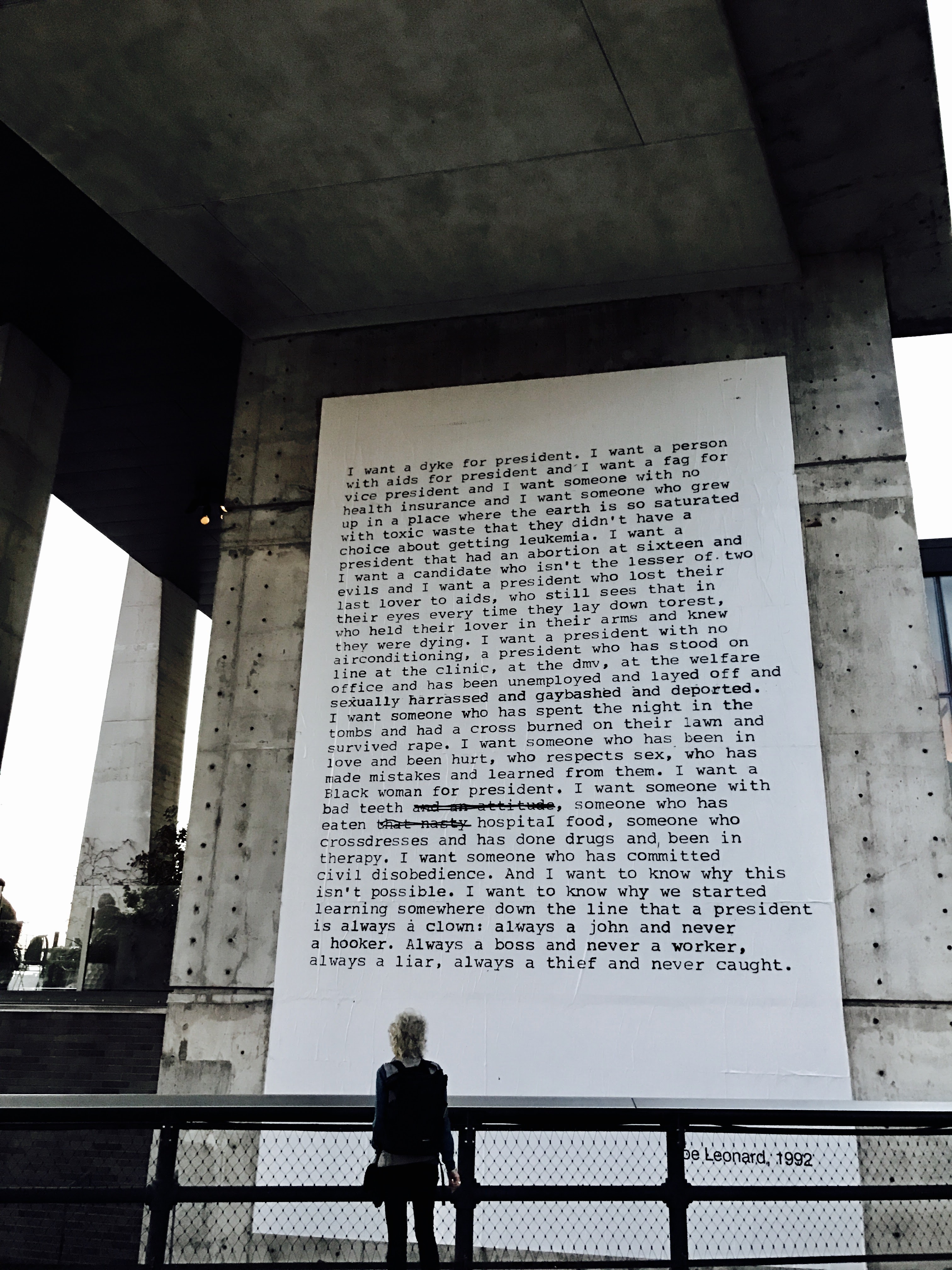
“I want a president who has felt the pain of losing someone, who knows what it means to be without.”
I want a president, 1992
In the spring of 2018, the Museum of Modern Art in New York presented a landmark survey of Zoe Leonard's work, gathering decades of photographs, sculptures, and text pieces into a sweeping retrospective that confirmed what her admirers had long understood: Leonard is among the most consequential artists working in America today. The exhibition drew extraordinary critical attention, with reviewers reaching for language large enough to hold the range and depth of her practice. Standing in those galleries, surrounded by images of storefronts and trees and the accumulated textures of everyday life, visitors found themselves slowing down, looking harder, and feeling more acutely the fragile beauty of the world she documents with such care. Leonard was born in 1961 and grew up in Liberty, New York, a small town in the Catskill Mountains that carried its own particular mix of the ordinary and the overlooked.
Zoe Leonard
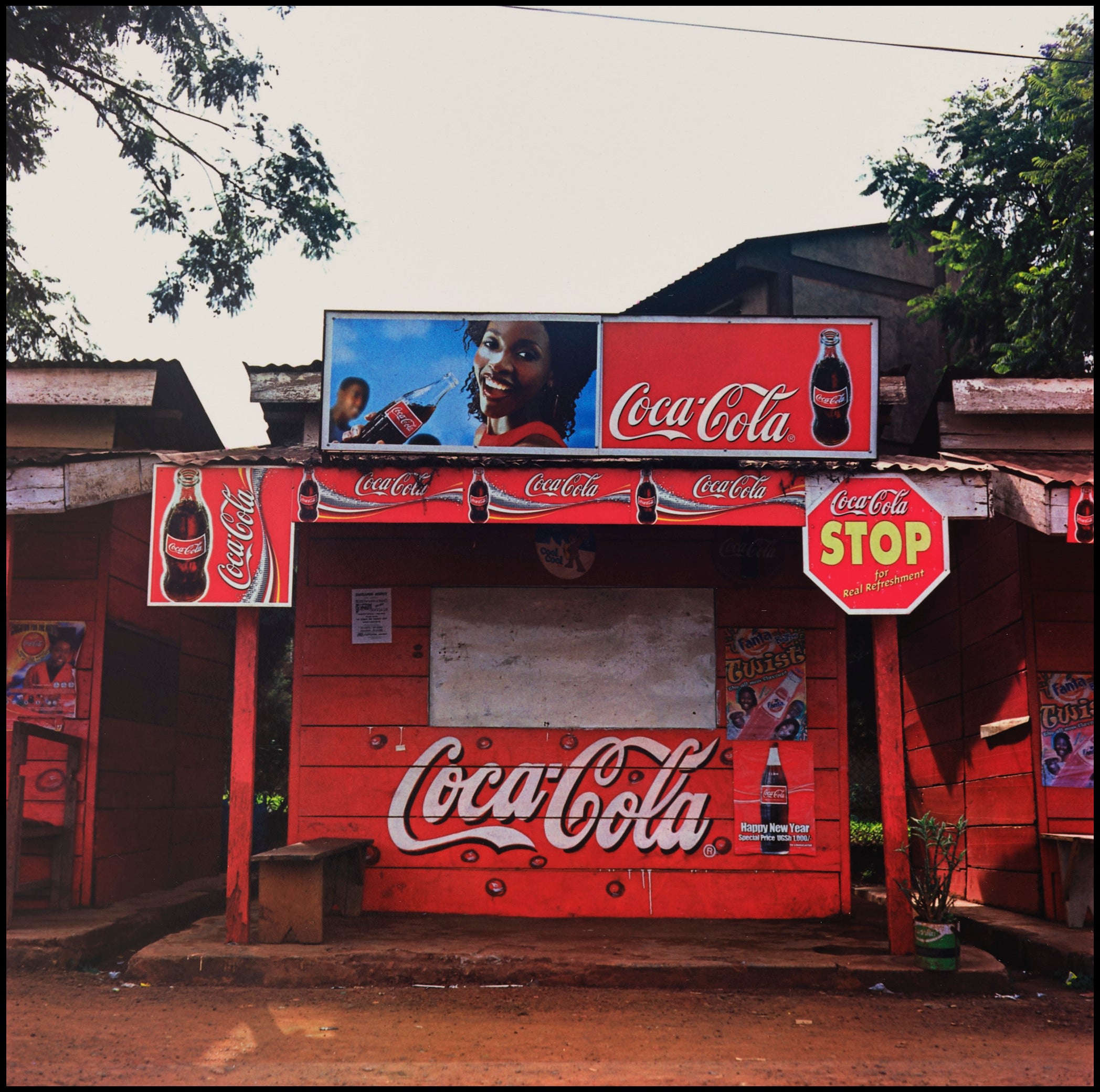
Coca Cola Shack, Kampala, Uganda from Analogue
She came of age during a period of enormous social upheaval and political transformation, and the urgency of that moment shaped the activist sensibility that runs through everything she has made. She did not follow a conventional art school path, and something of that self directed formation persists in the independence of her vision. She arrived in New York City in the early 1980s and became part of the vital, combative downtown scene that was producing some of the most charged art and performance of the decade. Her early involvement with ACT UP and her close engagement with feminist and queer politics were not incidental to her art but foundational to it.
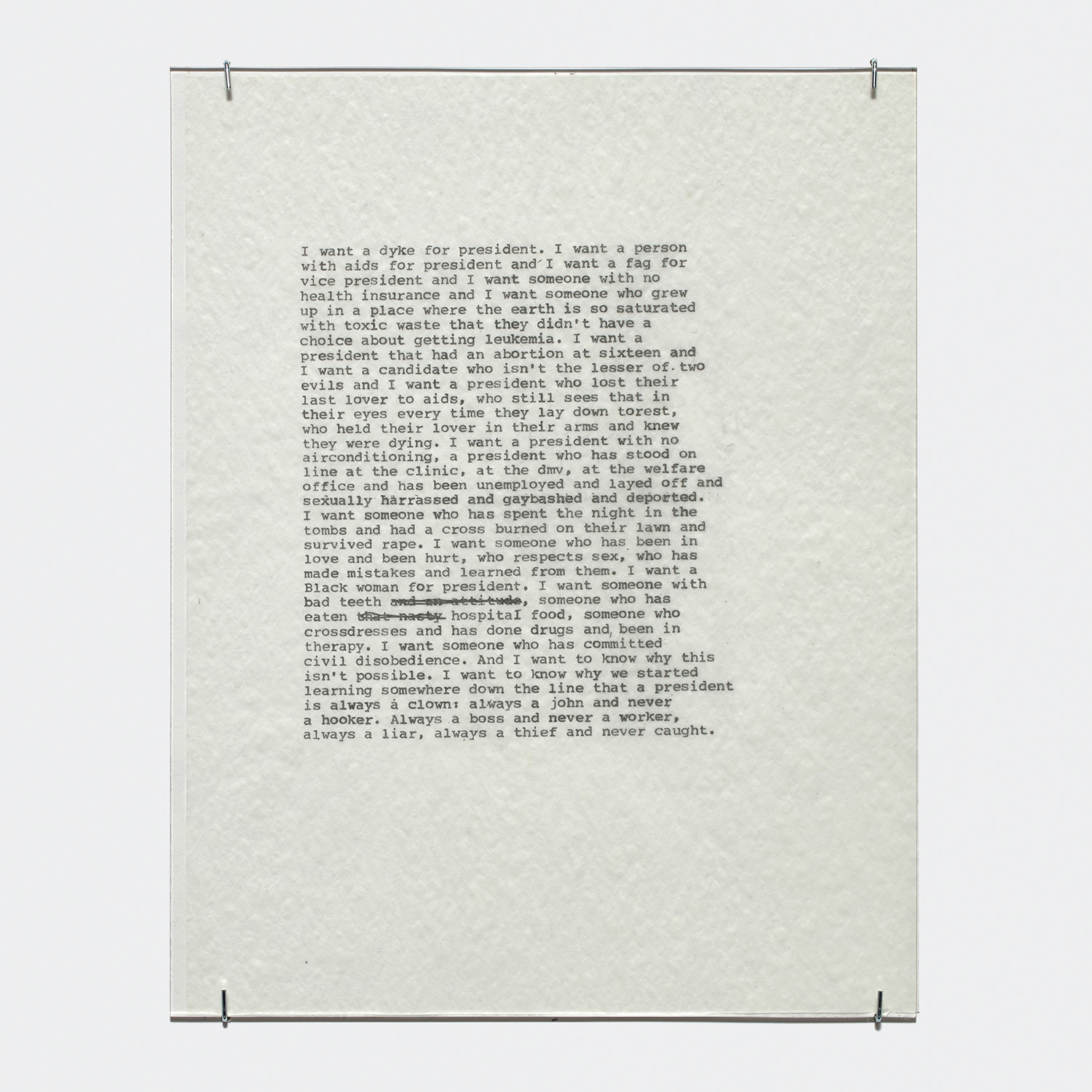
The text work "I want a president," created in 1992 and written on translucent onion skin paper in Leonard's own hand, is one of the defining political artworks of its era. The piece enumerates the qualities a truly representative leader might possess: someone who has lost a job, someone who has had an abortion, someone who understands grief and precarity from personal experience. It was written in the immediate aftermath of the AIDS crisis and in the shadow of a political culture that rendered vast swaths of American life invisible. The work has been reprinted and circulated widely in the decades since, resurfacing with particular force during moments of electoral reckoning, and it remains as piercing and necessary as the day it was composed.
Zoe Leonard
I want a president
Leonard's photographic practice developed through sustained attention to what most cameras and most eyes tend to pass over. In the late 1990s and through the 2000s, she undertook the epic project that became "Analogue," a body of work made across more than a decade of travel through cities in the United States, Europe, Africa, and Latin America. The project focused on small independent shops, street vendors, and informal markets, the kinds of commercial spaces that were disappearing under the pressure of globalization and the spread of chain retail. Works such as "Coca Cola Shack, Kampala, Uganda" and the multiple prints gathered under "Selected Images from Analogue" document these spaces with a tenderness that never tips into sentimentality.
“Photography is a way of being present. It is about paying attention to what is actually there.”
Zoe Leonard
Leonard used analog photographic processes throughout, and the material choice is deeply intentional: the dye transfer prints glow with a warmth and density that digital reproduction cannot replicate, and they honor the handmade, the local, and the particular against the homogenizing forces her images implicitly critique. Her gelatin silver prints from this period and earlier reveal a parallel preoccupation with the natural world and with time. Works like "Two Trees" and the intimate "I Love You" from 1994 show Leonard attending to organic form with the same patient precision she brings to architecture and street life. She has spoken about photography as a practice of witnessing, of being present to something rather than transforming or aestheticizing it.
Zoe Leonard
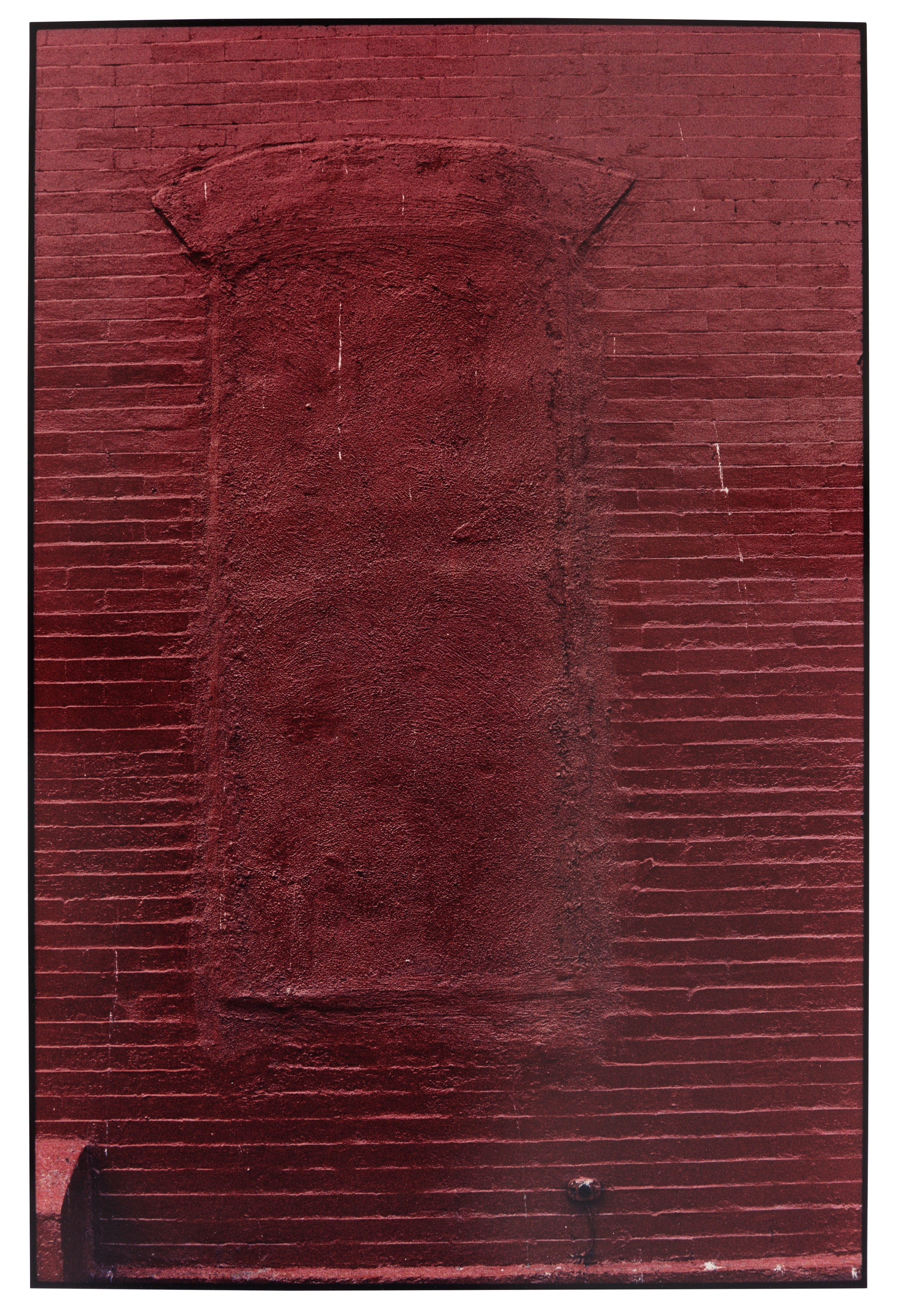
Red Wall
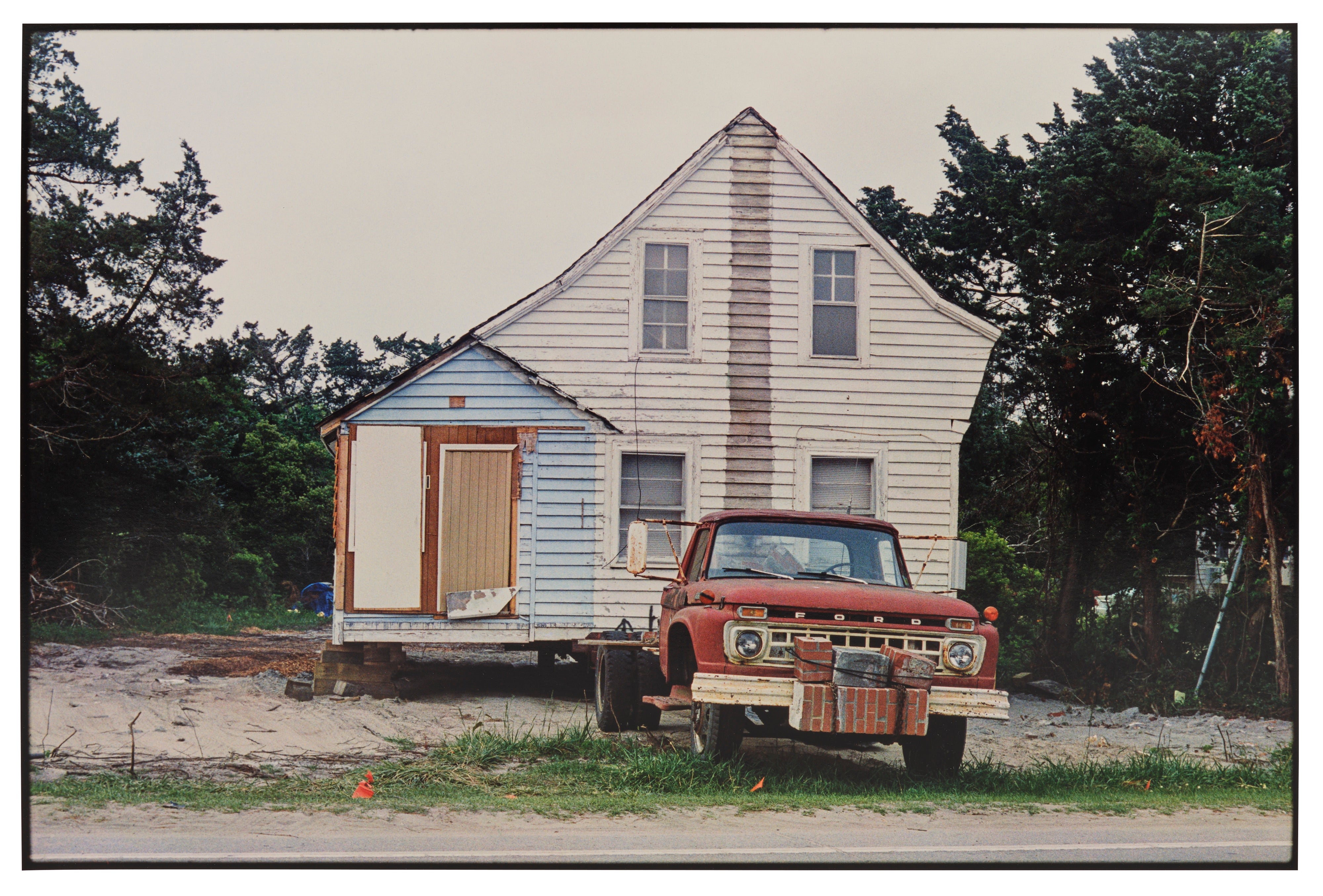
The prints carry that quality unmistakably. "Red Wall," "Green Door," and "House" from the early 2000s belong to a sustained meditation on built surfaces, on the way paint and wood and brick record the passage of years and weather and human use. These are not documentary images in any narrow sense; they are closer to portraits, full of character and time. For collectors, Leonard's work represents one of the most compelling propositions in contemporary photography.
Her prints are made in limited editions and with exacting care, and the dye transfer process she favors is labor intensive enough that the editions remain genuinely scarce. Institutions including the Museum of Modern Art, the Whitney Museum of American Art, and the Art Institute of Chicago hold her work, and that institutional depth provides both a context and a validation that serious collectors find meaningful. The market for Leonard has grown steadily as her critical reputation has solidified, and works that entered collections in the early 2000s have appreciated significantly. Collectors drawn to the intersection of political clarity and aesthetic precision, to work that holds both activism and beauty without sacrificing either, find in Leonard a rare and reliable touchstone.
Zoe Leonard
House
In the context of American photography, Leonard's practice sits in productive conversation with a lineage that includes Diane Arbus, Lee Friedlander, and Walker Evans, artists who trained their lenses on the vernacular and the overlooked and found there something essential about how Americans inhabit their world. Her work also resonates with that of her contemporaries, artists such as Nan Goldin, with whom she shares a commitment to visibility and witness, and Wolfgang Tillmans, whose similarly expansive photographic project encompasses the intimate and the political in comparable measure. Leonard occupies her own distinct position within this constellation, defined by the long arc of her commitments and the particular quality of her attention. What makes Leonard matter now, as much as at any point in her career, is the combination of moral seriousness and sensory richness that her work embodies.
She asks us to look at what is disappearing, to honor what is ordinary, and to imagine a world more fully alive to the needs and experiences of those it tends to ignore. Her photographs and text works do not shout; they insist, quietly and persistently, that the world is full of things worth seeing and people worth representing. In a cultural moment saturated with images and increasingly impatient with slowness, Leonard's practice offers something genuinely counter and genuinely sustaining. To collect her work is to invest in a vision of the world made more attentive, more generous, and more honest.