Zhu Yizun 1629-1709
Zhu Yizun: Poetry, Ink, and Enduring Grace
Artist Spotlight · The Collection Editorial
Imagine the scholar's studio in late seventeenth century Jiaxing, where the scent of fresh ink mingles with the crisp autumn air and a brush moves across paper with the deliberate authority of a man who has memorized ten thousand poems. This is the world of Zhu Yizun, one of the Qing Dynasty's most luminous literary and artistic minds, a figure whose calligraphy and verse continue to command reverence among scholars, collectors, and connoisseurs of Chinese art three centuries after his brush first touched paper. That his work continues to circulate among serious collectors today speaks not merely to historical curiosity but to an enduring aesthetic power that feels remarkably alive. Zhu Yizun was born in 1629 in Xiushui, Zhejiang Province, into a family with deep roots in classical learning.
Zhu Yizun 1629-1709
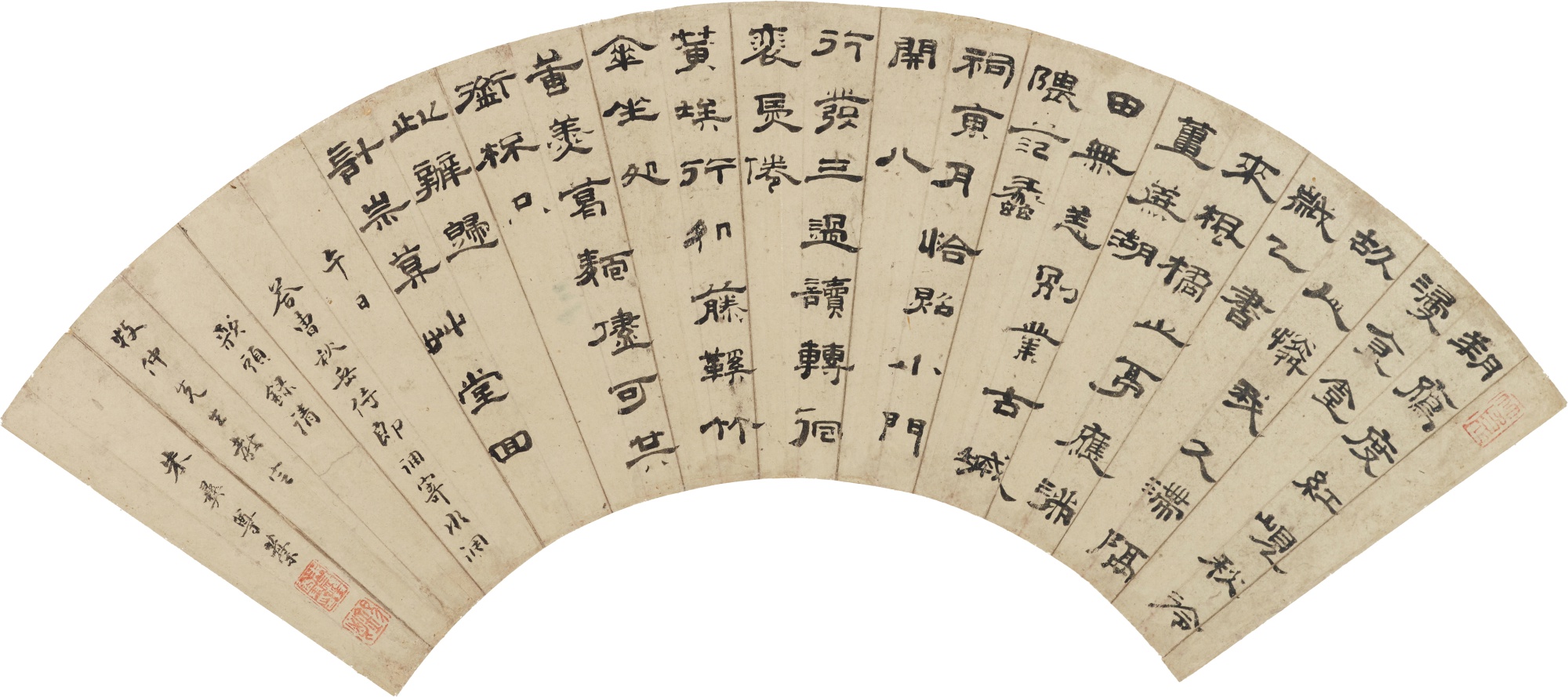
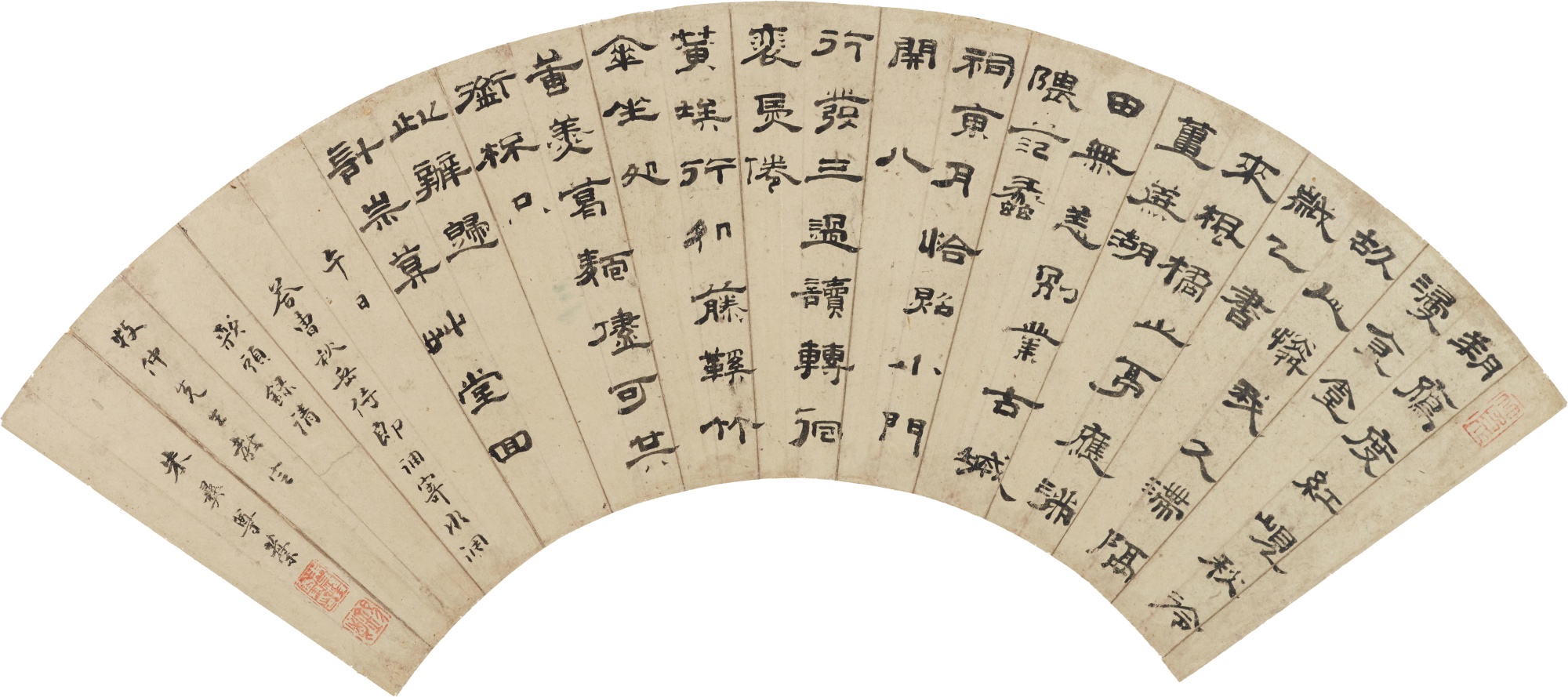
朱彝尊 八分書《水調歌頭得曹秋岳侍郎札卻寄》| Zhu Yizun, Calligraphy in Clerical Script
He came of age during one of the most turbulent passages in Chinese history, the collapse of the Ming Dynasty and the consolidation of Qing rule, a seismic cultural rupture that forced the scholar class to reckon with questions of loyalty, identity, and continuity. Like many of the finest minds of his generation, Zhu chose the path of scholarly devotion rather than political accommodation, channeling his energies into literature, philology, and the arts. His formative years were shaped by an almost voracious appetite for classical texts, and this encyclopedic grounding would define everything he created. His literary reputation was established early and decisively.
Zhu Yizun became one of the foremost practitioners of the ci poetry form, that lyric mode with roots in the Tang and Song dynasties that prizes musicality, emotional restraint, and exquisite compression of feeling. He founded what historians of Chinese literature identify as the Zhexi school of ci poetry, a movement that championed a return to the refined, contemplative sensibility of the Song masters over the more populist tendencies of some contemporaries. His anthology Ci Zong, a monumental compilation of ci poetry from across the centuries, remains a foundational reference in the field and stands as one of the great acts of scholarly preservation in Chinese literary history. As a calligrapher, Zhu Yizun found another dimension through which his classical sensibility could express itself with extraordinary precision.
Zhu Yizun 1629-1709
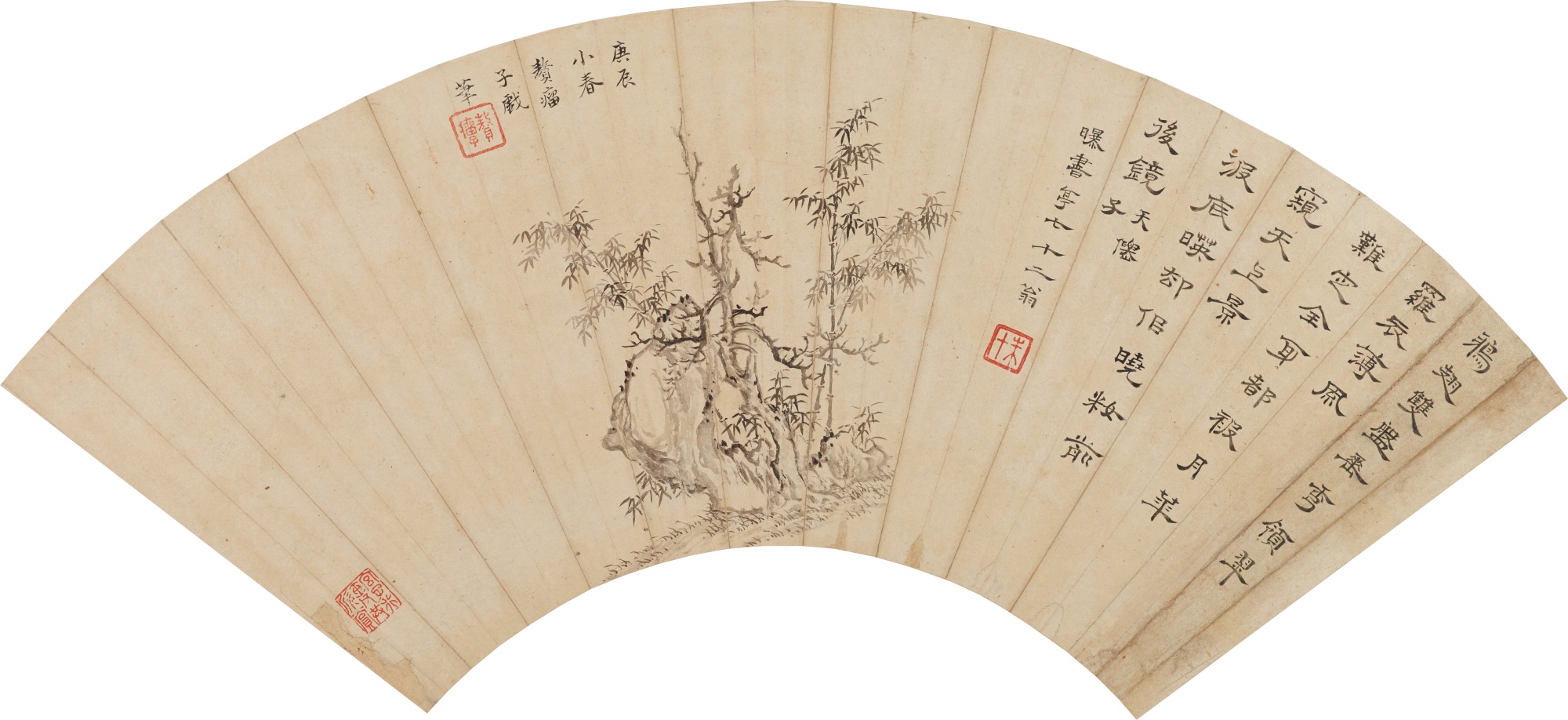
Zhu Yizun, Trees and Rocks
He was particularly celebrated for his command of lishu, or clerical script, one of the oldest formal script styles in the Chinese tradition, a form with origins in the Han Dynasty that prizes rhythmic horizontal strokes and a sense of ceremonial weight. His calligraphy in this mode is not merely technically accomplished; it carries a quality of meditative authority, as though each character has been arrived at through long internal deliberation. The fan leaf now represented on The Collection, a work in clerical script bearing the text of his poem addressed to the official Cao Qiuyue, exemplifies this quality beautifully. The fan format itself is significant: intimate, portable, and deeply personal, the folding fan was a favored vehicle for scholarly exchange in this period, a gift between men of letters that carried cultural meaning far beyond its modest dimensions.
The second work on The Collection, a fan leaf depicting trees and rocks in ink on paper, places Zhu within another beloved tradition of the Chinese literati, the painting of natural forms as an expression of inner cultivation rather than outward description. Trees and rocks were among the most charged subjects in the scholar painting tradition precisely because they demanded economy of means: a few brushstrokes had to carry the weight of an entire philosophical disposition. Zhu's engagement with this subject connects him to a lineage stretching back through the great Song and Yuan masters, and positions him alongside contemporaries such as the individualist painters who were similarly navigating questions of artistic inheritance in the early Qing period. For collectors approaching Zhu Yizun's work today, several considerations are worth holding in mind.
Works on paper from the seventeenth century require careful attention to provenance and condition, and the fan leaf format, while charming, presents particular conservation challenges given its age and the structural complexity of the medium. That said, works of this kind carry a layered value that purely visual objects do not always possess: Zhu's calligraphy is simultaneously a visual object, a literary text, and a historical document, making it extraordinarily rich for the collector who brings both aesthetic and scholarly sensibility to the table. Comparable works by Qing Dynasty scholar calligraphers have appeared at major auction houses including Christie's and Sotheby's, where demand from institutional collections and private collectors with deep interest in Chinese literati culture remains consistent and, over time, has grown. Zhu Yizun belongs to a constellation of scholar artists whose reputations have sometimes been overshadowed in Western markets by the more dramatically innovative individualists of his era, painters such as Bada Shanren and Shitao, whose radical departures from convention made them easier to narrativize for modern audiences.
Yet Zhu represents something equally important: the tradition of the complete scholar, for whom poetry, calligraphy, painting, and philological learning were not separate disciplines but a single integrated practice of self cultivation and cultural stewardship. Understanding him in this way, alongside figures such as Wang Shizhen, with whom he shared both friendship and literary rivalry, enriches any engagement with the broader landscape of Qing culture. His legacy today is felt most directly in the study of classical Chinese poetry, where his contributions to the ci tradition remain canonical, and in the collecting community, where his calligraphy is prized for precisely the qualities that defined his life: depth of learning worn lightly, technical mastery placed at the service of feeling, and a relationship to the past that is reverent without being merely imitative. To own a work by Zhu Yizun is to hold in one's hands something that bridges the private and the historical, the lyric and the monumental.
Three centuries on, the brush still speaks.