Zhao Zhao
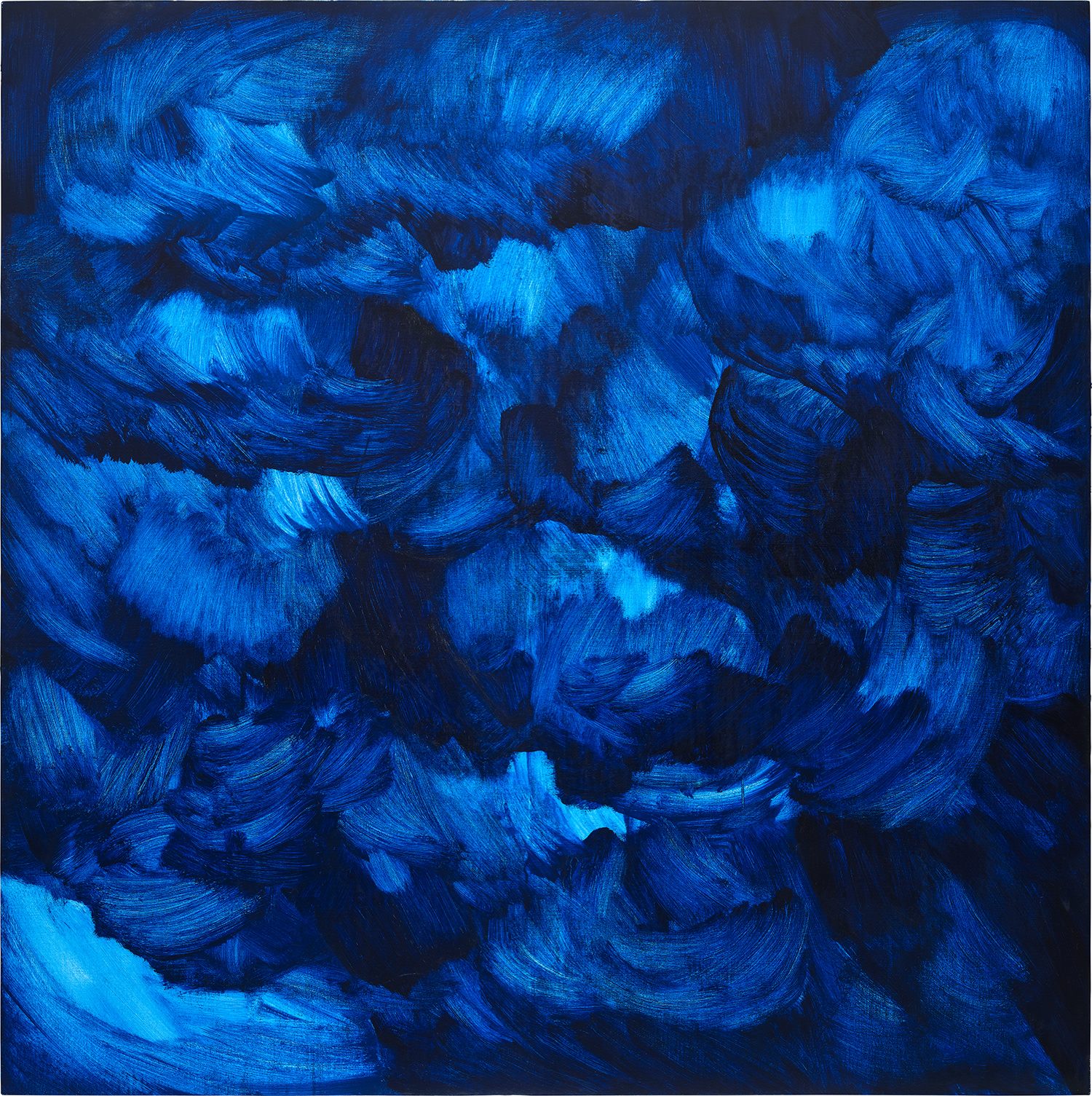
Zhao Zhao Finds Freedom in Stone and Sky
Artist Spotlight · The Collection Editorial
When Zhao Zhao presented his monumental installation at the Ullens Center for Contemporary Art in Beijing, the room fell into a particular kind of silence. It was not the silence of confusion or indifference but the silence of recognition, the feeling that something true and carefully considered had been placed before you. That quality, a combination of formal precision and quietly radical intent, has come to define one of the most compelling careers in contemporary Chinese art. Now, with his work entering major European institutions and finding devoted collectors across Asia and the West, the moment to look closely at Zhao Zhao has arrived.
Zhao Zhao
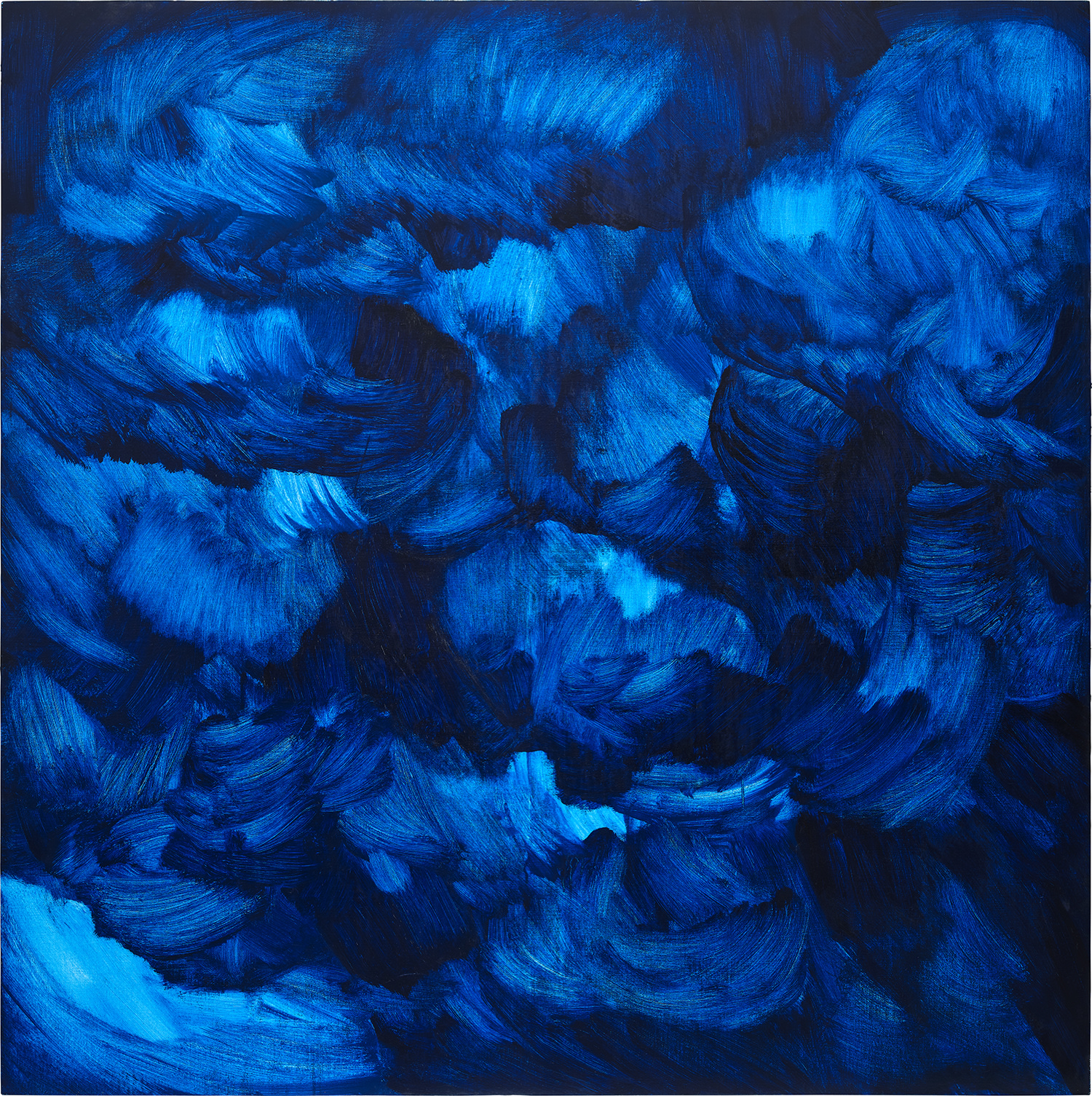
Sky No. 6, 2014
Zhao Zhao was born in 1982 in Xinjiang, a region whose complex position within Chinese political and cultural life would leave a lasting imprint on his sensibility. He came of age in Beijing, where he studied at the Central Academy of Fine Arts, the institution that has trained generations of Chinese artists navigating the tension between inherited tradition and the demands of a rapidly transforming society. Before establishing his own practice, he worked closely with Ai Weiwei, an experience that proved formative in ways both practical and philosophical. Working in proximity to one of the most politically charged artistic voices of his generation sharpened Zhao Zhao's understanding of how objects carry meaning, how materials speak, and how the act of making can itself become a form of testimony.
What distinguishes Zhao Zhao from many of his contemporaries is his refusal to be pinned to a single medium or a single register of feeling. His practice moves fluidly between sculpture, installation, and photography, and more recently into painting, with each body of work arriving with its own internal logic. His sculptures and installations frequently employ marble and architectural fragments, materials weighted with the language of officialdom and permanence, and subject them to interventions that expose their fragility. A cracked column, a shattered surface, a fragment displaced from its original context: these gestures are never merely destructive.
Zhao Zhao
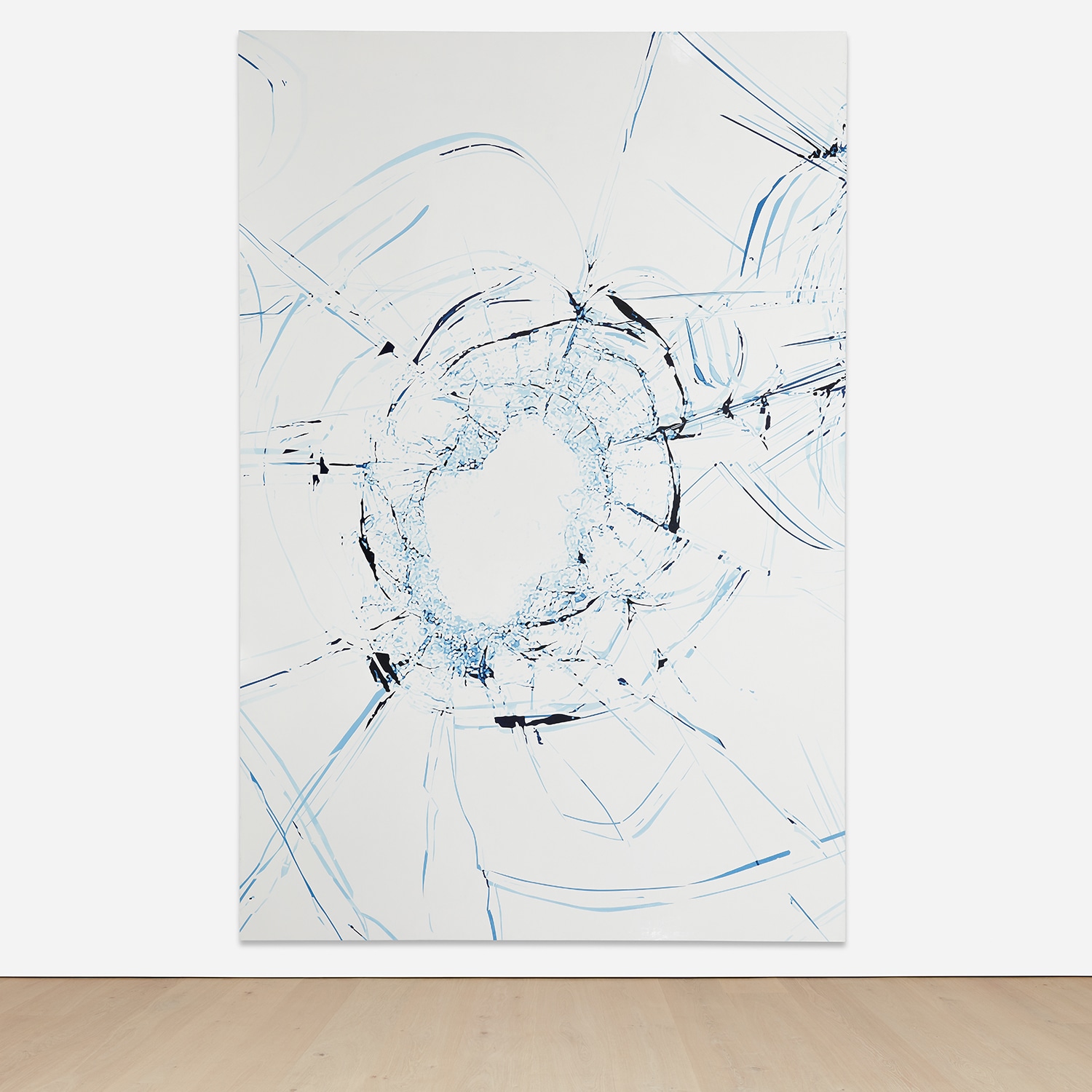
Constellations, 2017
They are, rather, a form of close reading, an insistence on looking at power structures not as monolithic and eternal but as contingent and mortal. The Sky series, which Zhao Zhao began around 2013, represents one of the most sustained and luminous achievements of his career. Rendered in oil on linen and canvas, these large format paintings depict the sky above Beijing with a stillness that borders on the meditative. Works such as Sky No.
17 from 2013 and Sky No. 6 from 2014 are not documentary images of particular moments but distillations of an ongoing act of looking upward, of seeking openness in a city where openness is not always guaranteed. The linen support gives these paintings a warmth and a slight roughness that prevents them from becoming merely beautiful. They insist on their own material presence even as they open onto something vast and atmospheric.
Zhao Zhao
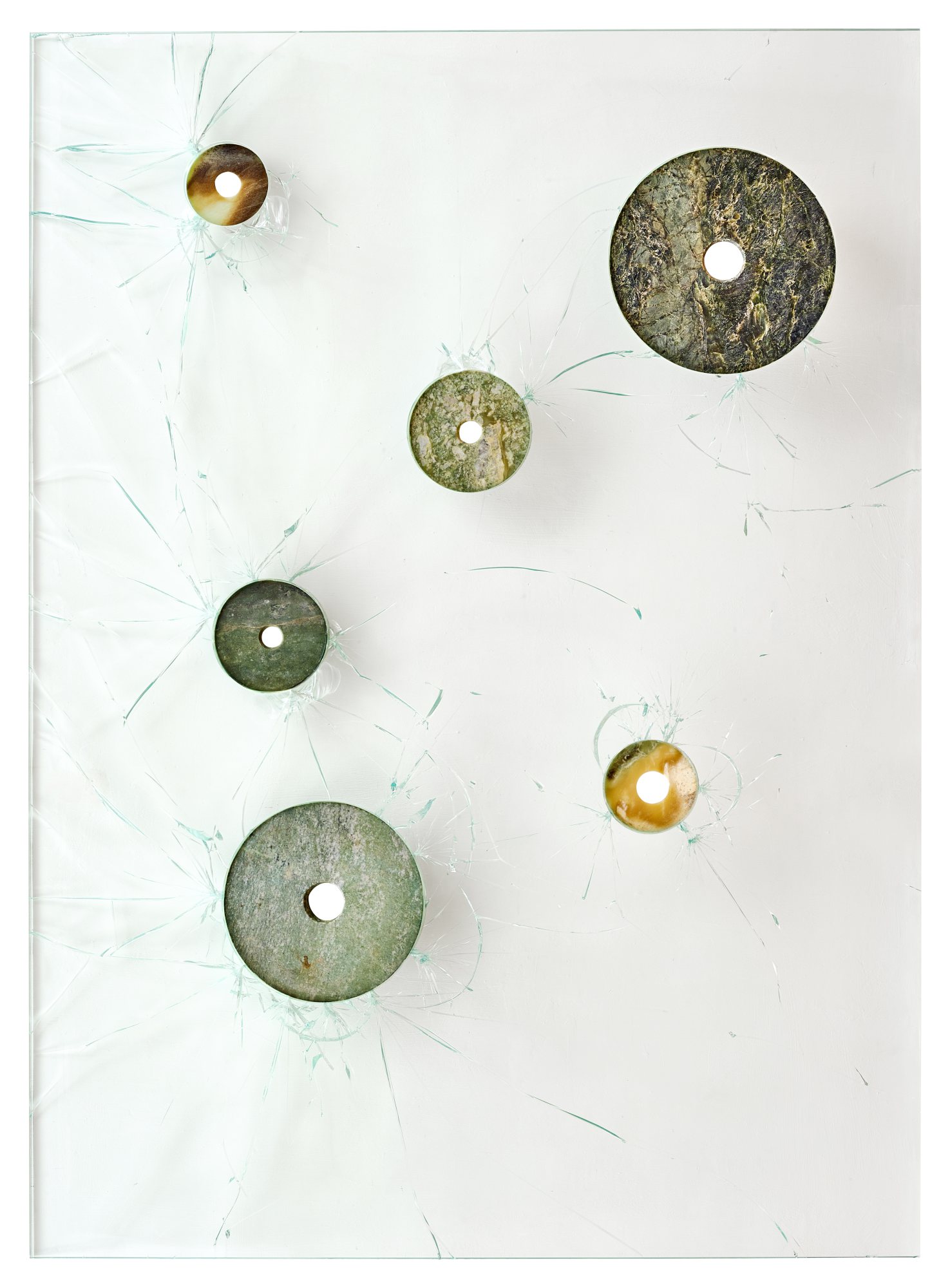
Jade Constellation 玉璧星空, 2018
Sky No. 22 and Sky No. 11, also from this period, demonstrate the remarkable consistency of his vision across the series, with each canvas feeling simultaneously familiar and freshly observed. The Constellations series, which emerged around 2016 and 2017, extends this celestial preoccupation into deeper philosophical territory.
Works including Constellation from 2016, Constellations from 2017, and the extraordinary Jade Constellation completed in 2018 map points of light against fields of darkness or richly worked surfaces, drawing a connection between ancient Chinese jade culture and the timeless human impulse to find pattern and meaning in the night sky. The jade disc, or bi, is one of the oldest ritual objects in Chinese civilization, associated with heaven, cosmological order, and the passage between worlds. By placing this ancient form in dialogue with astronomical imagery, Zhao Zhao creates a visual language that is rooted in Chinese cultural memory while remaining entirely available to a global audience. These are works that reward sustained attention, each detail opening onto another layer of reference and feeling.
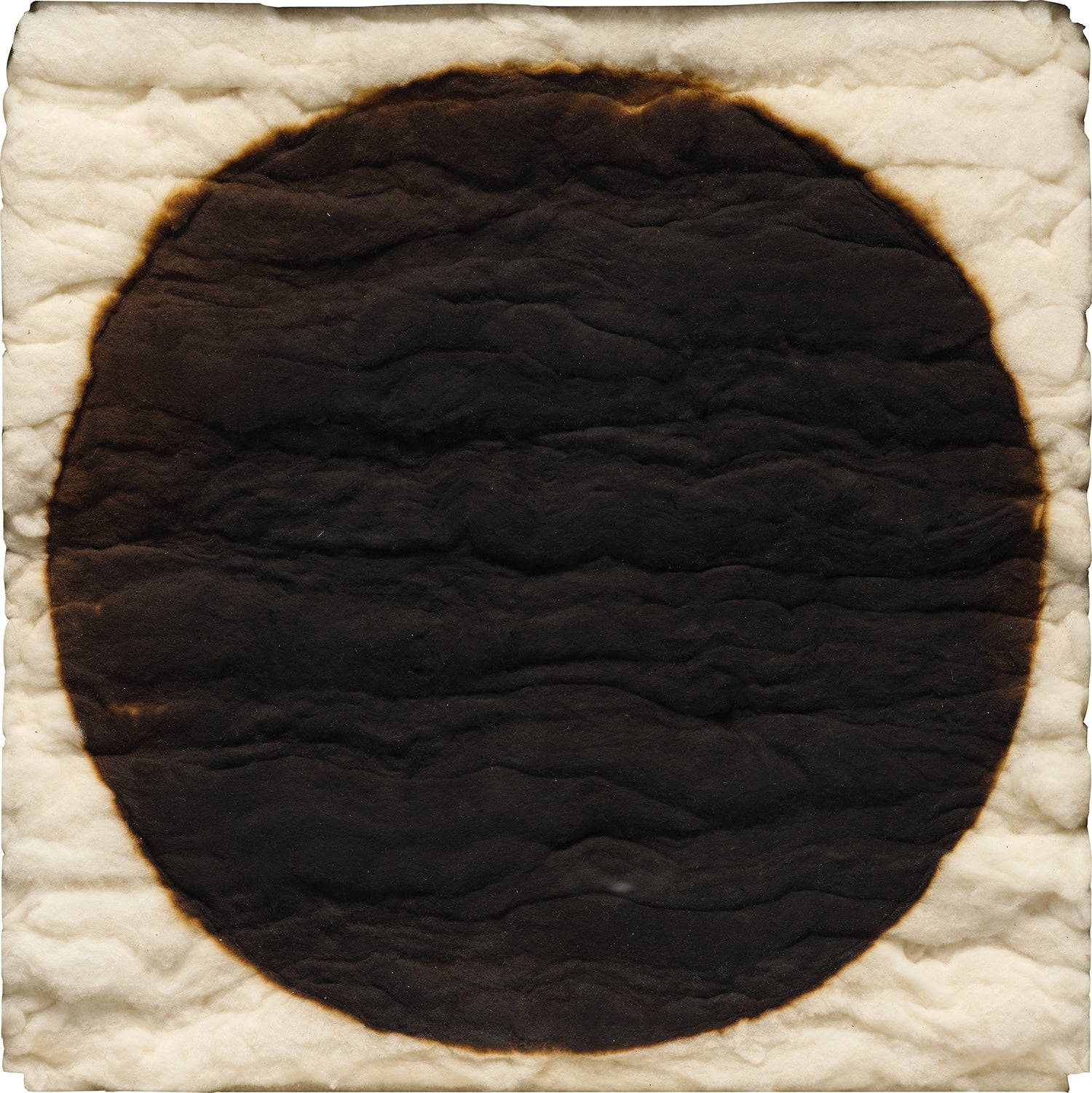
Zhao Zhao
Spread, 2021
More recently, Spread from 2021, a mixed media work incorporating cotton, demonstrates Zhao Zhao's continued willingness to introduce unexpected material into his vocabulary. Cotton carries associations with labor, with the body, with the everyday textures of domestic life, and its presence in a mixed media context creates a productive tension with the cooler registers of his earlier stone and sky work. This expansion of material range reflects a practice that is genuinely in motion, never content to consolidate a signature style and mine it indefinitely. From a collecting perspective, Zhao Zhao represents a genuinely compelling proposition at this stage of his career.
His work is held in serious private and institutional collections across Asia and Europe, and the Long Museum in Shanghai has been among the institutional voices affirming his importance within the broader landscape of Chinese contemporary art. The Sky and Constellations paintings are particularly sought after by collectors who have come to understand that Zhao Zhao's apparent simplicity conceals considerable depth. These are not decorative works. They are paintings that change the character of the room they inhabit and reward years of living alongside them.
Collectors with an eye for artists whose market reflects genuine critical consensus rather than speculative momentum have been quietly building holdings in his work, and that patient attention is beginning to be validated. In the context of Chinese contemporary art, Zhao Zhao occupies a position that is both clearly situated and genuinely distinct. He shares with artists such as Ai Weiwei and Cai Guo Qiang an awareness of how historical weight accumulates in objects, and he shares with painters of his generation an interest in the phenomenology of perception, in what it means to look at something with full attention. Yet his voice is unmistakably his own, characterized by a lyrical restraint that sets it apart from more declamatory modes of political art.
He is less interested in confrontation than in revelation, in creating the conditions under which a viewer might arrive at their own understanding of what has been placed before them. The legacy Zhao Zhao is building is one of extraordinary coherence. From the shattered marble of his early installations to the luminous vaults of his Sky paintings to the ancient resonances of his jade constellations, every body of work returns to the same essential question: what does it mean to exist as a free human consciousness within structures of authority and tradition that long predate and will long outlast any individual life. That question does not yield easy answers, and Zhao Zhao does not pretend that it does.
What he offers instead is something more valuable: a body of work that holds the question open with beauty, rigor, and an abiding faith in the capacity of materials and images to tell the truth.