Zhang Daqian (Chang Dai-Chien, 1899-1983)
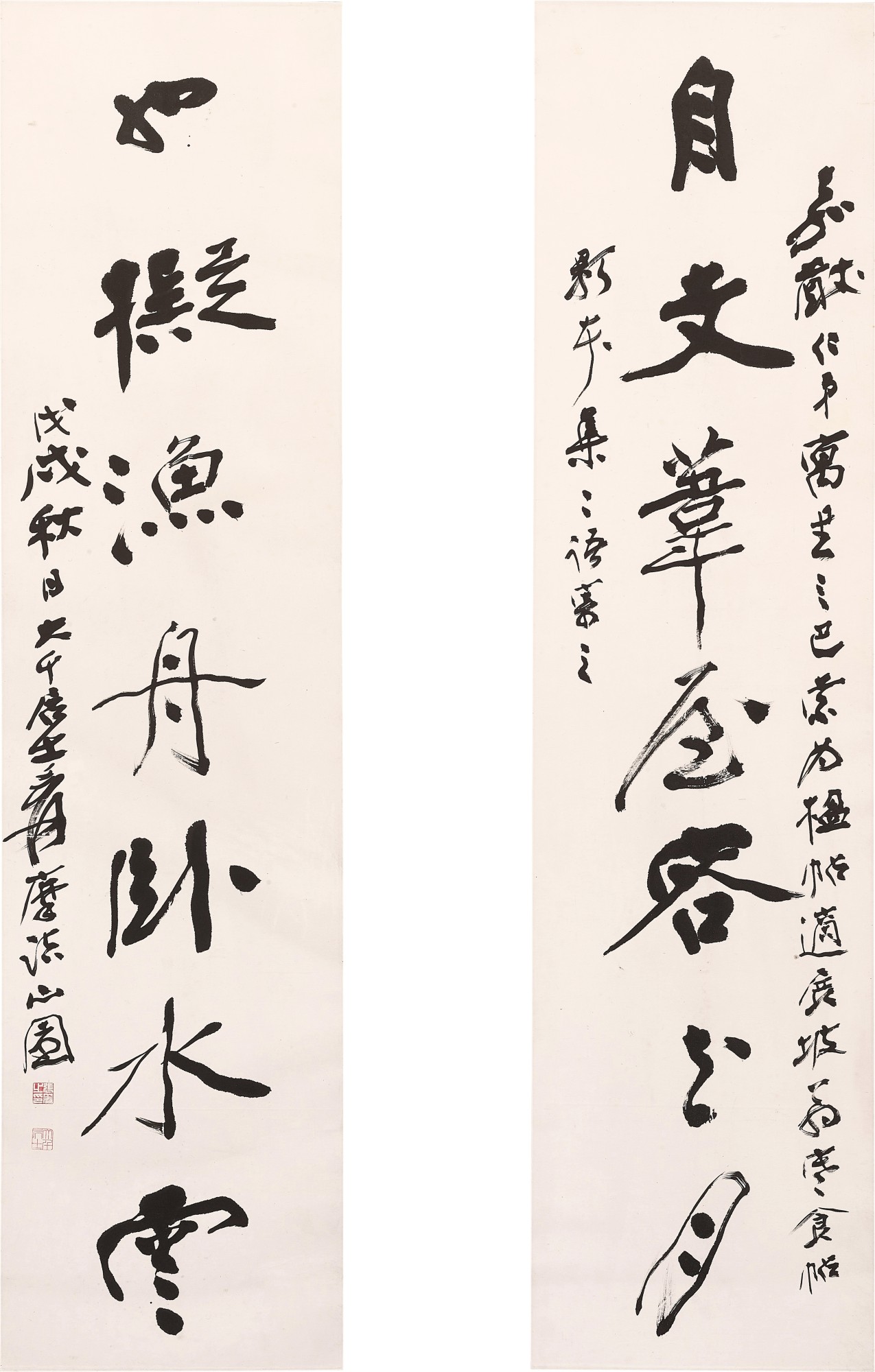
Zhang Daqian, The Boundless Master of Ink
Artist Spotlight · The Collection Editorial
“To learn from nature is better than to learn from a teacher. Nature is the greatest teacher of all.”
Zhang Daqian
In the spring of 2017, a monumental retrospective at the National Palace Museum in Taipei brought together more than two hundred works spanning six decades of Zhang Daqian's extraordinary career, drawing visitors from across Asia, Europe, and the Americas. The exhibition confirmed what scholars and collectors had long known: that Zhang Daqian was not merely a celebrated painter of his time but one of the most technically versatile and intellectually daring artists the twentieth century produced. His canvases and scrolls felt alive, charged with a sensibility that moved freely between dynasties, between continents, and between the ancient and the radically new. Standing before his splashed ink landscapes, visitors encountered something that defied easy categorisation, a vision simultaneously rooted in a thousand years of Chinese painting tradition and utterly singular in its expressive ambition.
Zhang Daqian (Chang Dai-Chien, 1899-1983)
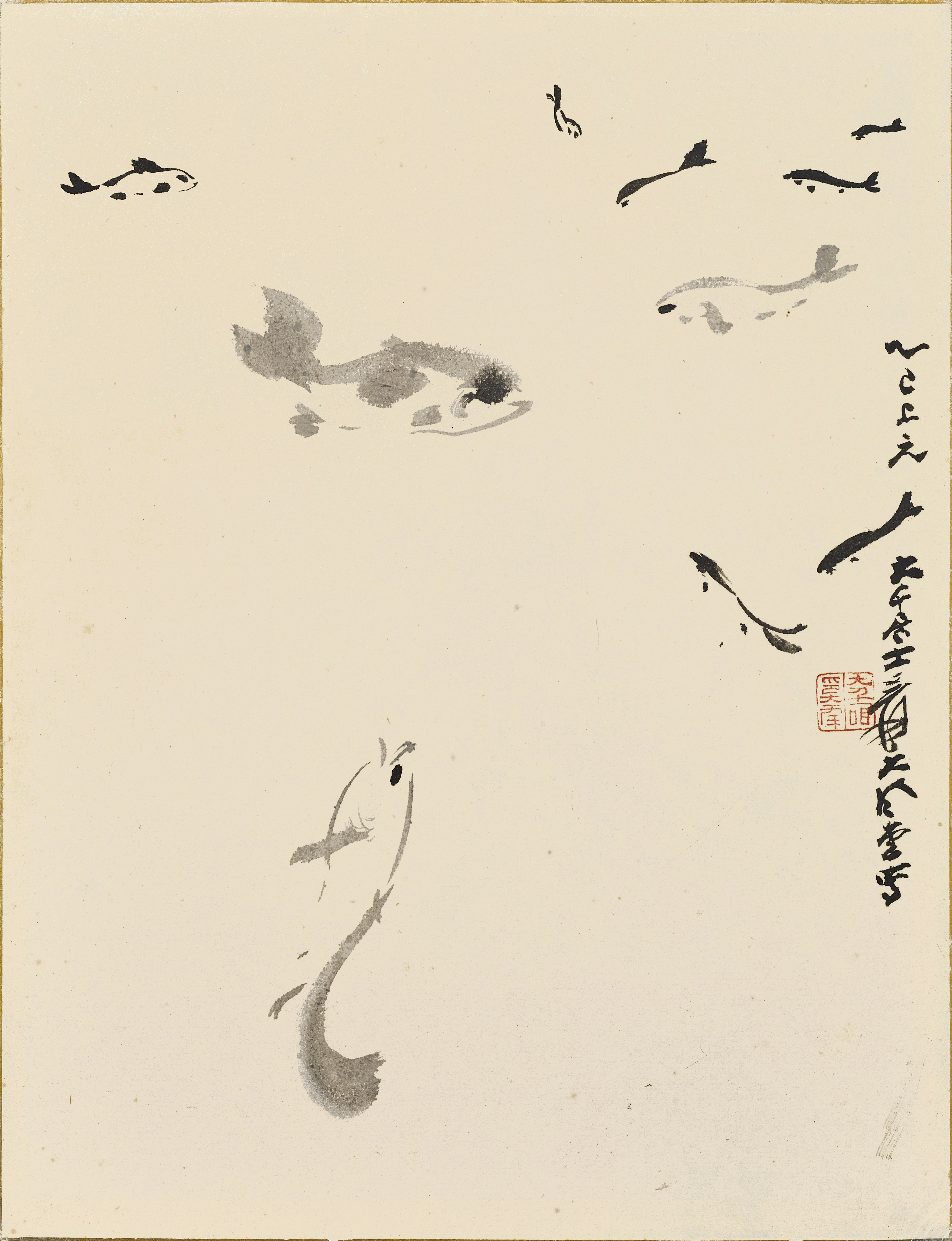
Zhang Daqian (Chang Dai-chien), Frolicking Fishes
Zhang Daqian was born in 1899 in Neijiang, Sichuan Province, the tenth of twelve children in a family where artistic practice was a shared language. His mother and elder siblings painted, and the household atmosphere nurtured an early sensibility for line and form. As a young man he trained under renowned calligraphers and painters in Shanghai and Kyoto, absorbing classical techniques with a focus and speed that astonished his teachers. He adopted the name Daqian, meaning something close to the vast and the limitless, a choice that would prove prophetic.
From his earliest years, there was a restlessness to his learning, a hunger not simply to master what existed but to understand it at its deepest roots. The most transformative episode of Zhang's formation came in the late 1930s and early 1940s, when he led an expedition to the Dunhuang cave complexes in the Gobi Desert. Spending nearly three years copying and studying the Buddhist murals at Mogao, murals that dated back to the fourth century, he emerged with a profound understanding of pre Tang colour, line, and spatial composition that few living artists could claim. This encounter reshaped his entire approach to figure painting, landscape, and decorative motif.
Zhang Daqian (Chang Dai-Chien, 1899-1983)
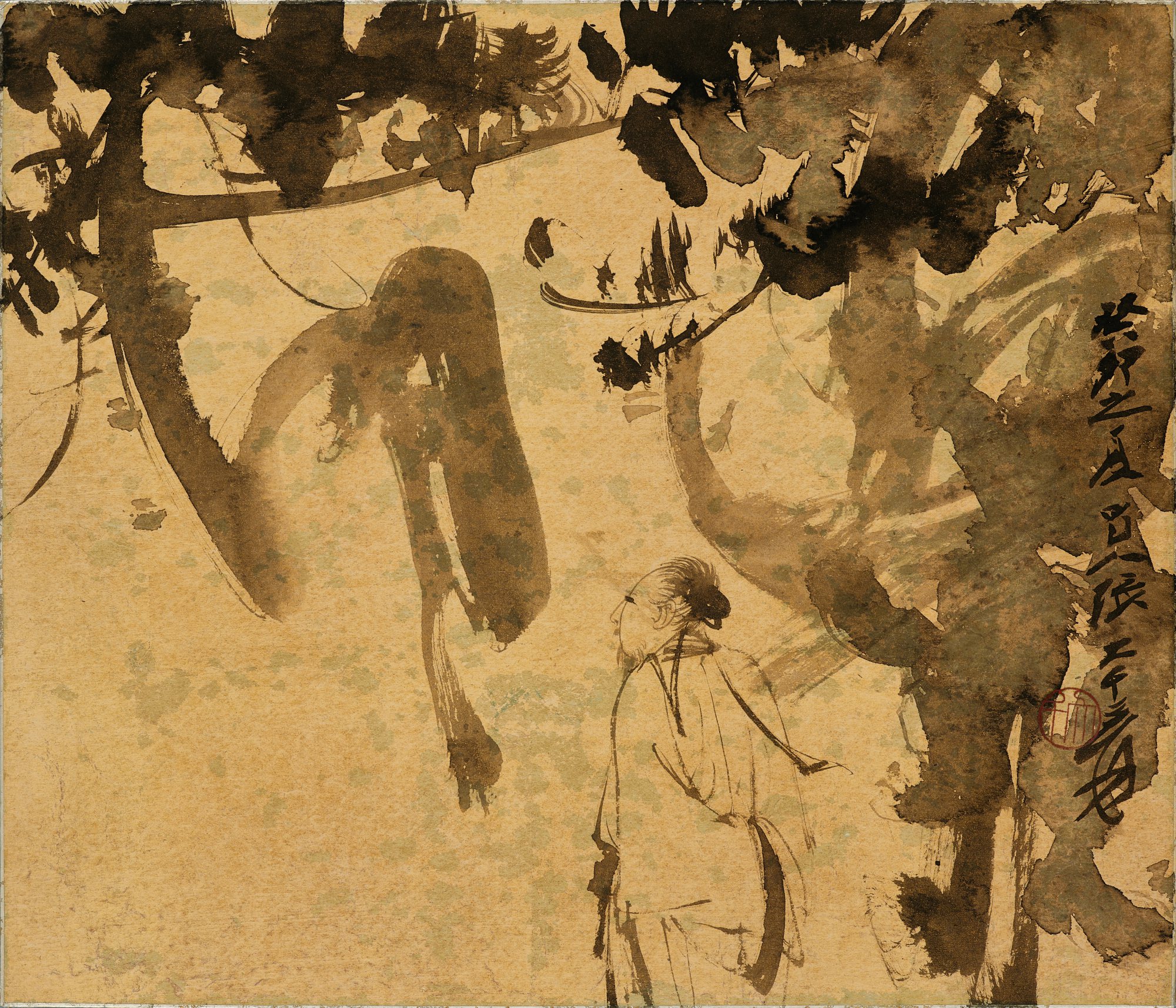
張大千 松蔭逭暑 │ Zhang Daqian (Chang Dai-Chien), Scholar under the Pines
Where many of his contemporaries engaged with Western modernism as the primary source of renewal, Zhang looked further back, finding in Dunhuang's ancient pigments and elegant forms a vitality that felt astonishingly present. By the 1950s, following years of movement through India, Argentina, Brazil, and eventually Europe, Zhang Daqian entered a new and decisive chapter in his practice. His encounters with Pablo Picasso in 1956, a now legendary meeting in the South of France, brought two titanic figures of twentieth century art face to face. Picasso is said to have expressed admiration for Chinese ink painting, while Zhang returned to his studio with a renewed conviction that his own tradition held creative possibilities equal to anything in the Western canon.
“I have spent my whole life learning from the ancients, but I have always tried to go beyond them.”
Zhang Daqian
It was also during these years abroad that he began developing what would become his most celebrated contribution to the history of painting: the splashed ink and colour technique known in Chinese as pomo and pocai. Drawing on classical precedents associated with the Tang dynasty master Wang Mo yet pushing them into entirely new territory, Zhang created landscapes of sweeping atmospheric abstraction, compositions in which ink pooled and bled and surged across paper with the force of weather itself. The works available through The Collection offer a beautifully varied window into the full range of Zhang's achievement. Scholar under the Pines, rendered in ink and light colour on gold cardboard, exemplifies his mastery of the literati tradition, where a solitary figure beneath ancient trees becomes a meditation on scholarly retreat and the natural world's consoling grandeur.
Zhang Daqian (Chang Dai-Chien, 1899-1983)
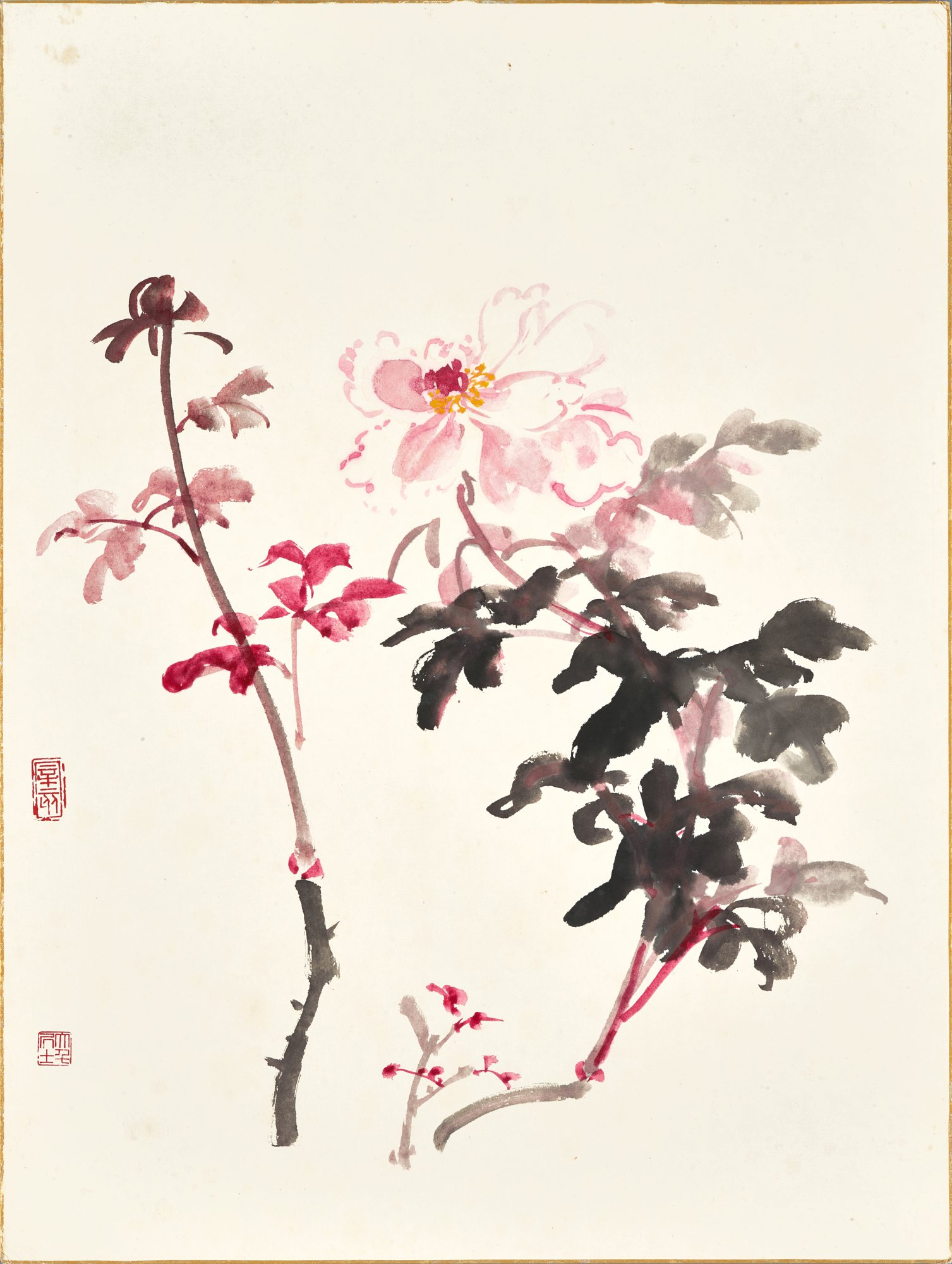
張大千 芍藥 │Zhang Daqian (Chang Dai-Chien), Peony
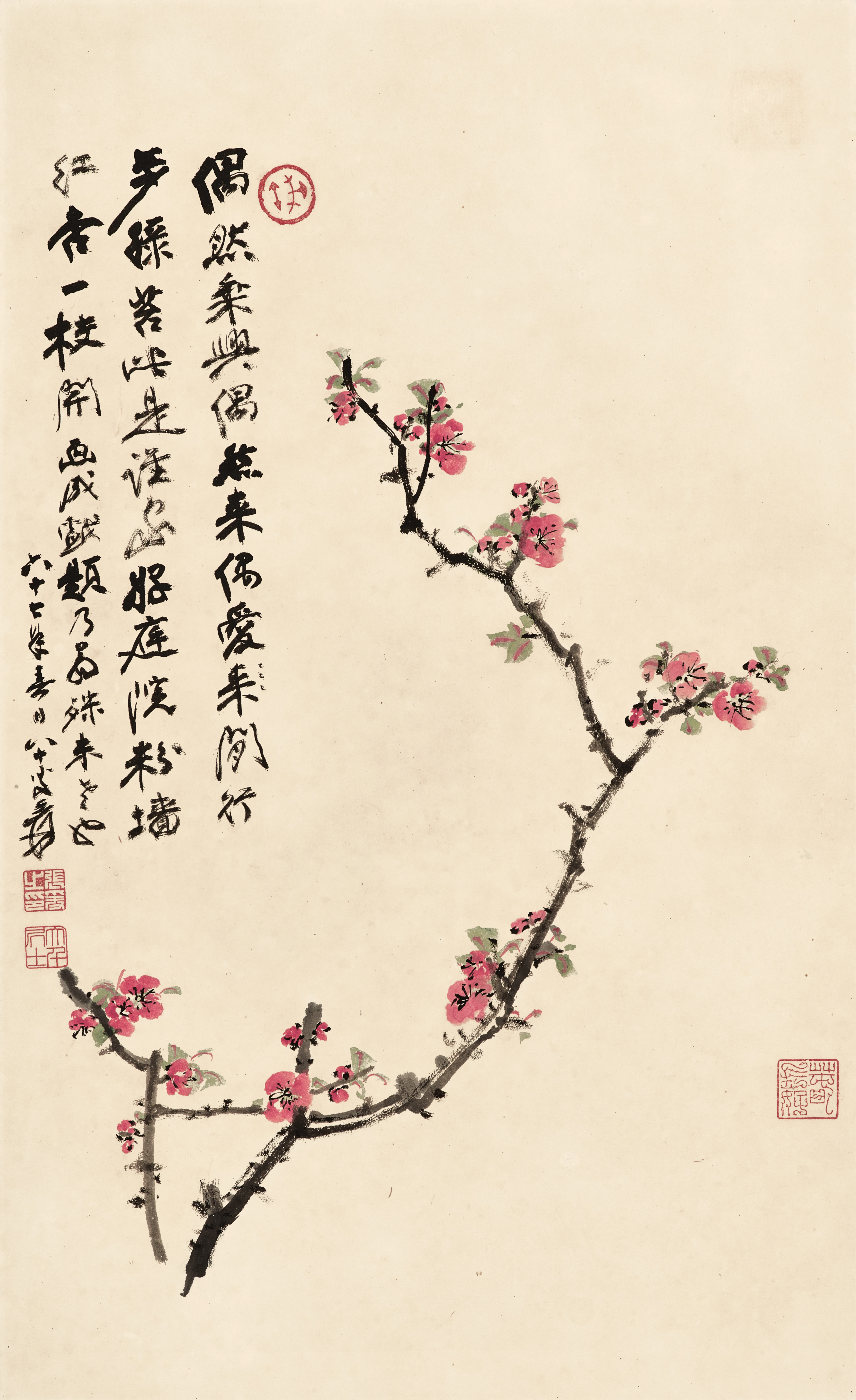
The Peony and Apricot Flowers demonstrate his consummate skill with boneless flower painting, a technique in which colour is applied without ink outlines to achieve luminous, almost breathing floral forms. White Lotus, on a hanging scroll, carries the spiritual resonance that lotus imagery has held in Chinese art for centuries, yet in Zhang's hands it feels freshly observed rather than conventionally rendered. The Calligraphy Couplet in Xingshu reveals the discipline underlying everything: his calligraphy was not merely decorative accompaniment to his painting but a complete artistic practice in its own right, shaped by decades of study across multiple script styles. And Misty Mountains of Qingcheng stands among the most exciting works in the group, a splashed ink and colour composition that captures the sacred mountain of his home province with both topographical feeling and abstract lyrical freedom.
Pine Cliffs and Waterfall completes the picture with its vigorous brushwork and commanding sense of vertical scale. For collectors, Zhang Daqian represents one of the most compelling propositions in the entire field of Asian art. His auction record has grown steadily over the past two decades, with major works appearing regularly at Sotheby's, Christie's, and Poly Auction in Hong Kong and Beijing, where they consistently attract serious competitive bidding. A significant landscape in his splashed ink manner achieved over thirty million Hong Kong dollars at auction in recent years, reflecting the sustained global appetite for his most adventurous mature works.
Zhang Daqian (Chang Dai-Chien, 1899-1983)
Zhang Daqian (Chang Dai-Chien, 1899-1983), Apricot Flowers
Collectors drawn to his floral and figure paintings find works of extraordinary refinement and historical depth, while those seeking something closer to mid century abstraction discover in his late landscapes a dialogue with the gestural and lyrical currents of international modernism that feels entirely natural and unforced. Provenance, seal impressions, and accompanying inscriptions all carry weight when assessing individual works, and the most sought after pieces combine technical mastery with the evidence of his sustained engagement with a subject or theme. Within the broader context of art history, Zhang Daqian occupies a position of rare breadth. His work resonates alongside that of his contemporary Fu Baoshi, whose atmospheric ink landscapes share something of Zhang's emotional intensity, and Qi Baishi, the beloved master of simplified, joyful natural imagery.
Yet Zhang's range was wider than either, encompassing classical figure subjects, devotional Buddhist imagery, calligraphy, floral painting, and ultimately a form of abstract landscape that places him in meaningful conversation with artists like Mark Tobey and the practitioners of American Abstract Expressionism, though the roots of his abstraction were entirely his own. He was also one of history's most gifted and knowledgeable connoisseurs of classical Chinese painting, and his understanding of the tradition gave his innovations a grounding that purely instinctive abstraction could not have achieved. Zhang Daqian died in Taipei in 1983, leaving behind an output of extraordinary scale and ambition. Institutions from the Sichuan Museum in Chengdu to the San Francisco Museum of Modern Art hold significant holdings of his work, and each passing decade seems to deepen rather than diminish his reputation.
He was an artist who understood that tradition and innovation are not opposites but partners, that looking deeply into the past is one of the most reliable ways to see clearly into the future. For collectors and lovers of painting, engaging with his work is not simply an act of connoisseurship. It is an encounter with one of the most alive and generous artistic minds the modern world has known.
Explore books about Zhang Daqian (Chang Dai-Chien, 1899-1983)
Chang Dai-chien: A Retrospective
Wen C. Fong
The Art of Chang Dai-chien
James Cahill
Chang Dai-chien: Master of Traditional Chinese Painting
Fu Shen
The Life and Art of Chang Dai-chien
Marilyn W. Fu
Chang Dai-chien: Catalogue Raisonné
Multiple contributors
The Eclectic Brush: Chang Dai-chien (1899-1983)
Hsiao-yen Peng
Chang Dai-chien and His World
Richard M. Barnhart