Yuan Fang

Yuan Fang Blooms Between Two Worlds
Artist Spotlight · The Collection Editorial
Something is stirring in the international conversation around contemporary Chinese painting, and Yuan Fang sits at the center of it. Over the past several years, works by this Beijing rooted artist have moved steadily through auction rooms in both mainland China and abroad, drawing the attention of collectors who sense they are looking at a practice still in the act of becoming something remarkable. The canvases arrive charged with energy: layers of acrylic and spray paint colliding with the measured stillness of ink traditions, ancient and urgent at once. For anyone paying attention to where Chinese contemporary art is headed, Yuan Fang is a name that keeps returning.
Yuan Fang

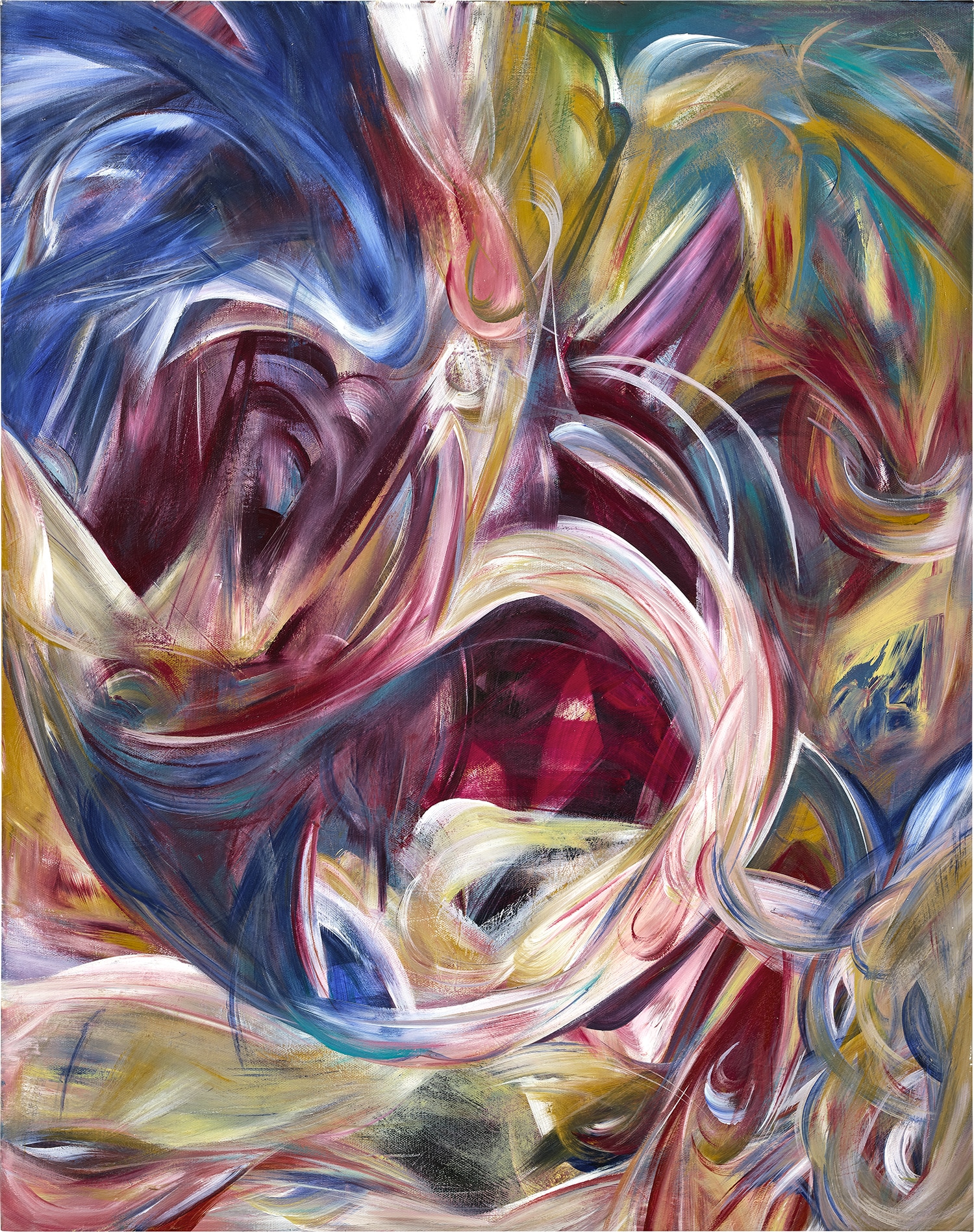
Bursting 06 爆裂 06
Fang's formation as an artist was shaped by the particular tension that defines so much of contemporary Chinese cultural life: the experience of inheriting one of the world's oldest continuous artistic traditions while coming of age in cities that transform almost faster than memory can record them. Classical Chinese painting, with its devotion to negative space, its reverence for the natural world, and its meditative rhythms, forms the bedrock of Fang's visual vocabulary. But that vocabulary is spoken in an accent that is unmistakably of the present moment, inflected by the noise and velocity of contemporary urban existence. The result is a practice that feels neither nostalgic nor nihilistic, but genuinely alive to its own contradictions.
Fang's artistic development traces an arc from more traditional ink based work toward an increasingly bold embrace of mixed media. The shift is not a rejection of origins but an expansion of them. India ink remains a recurring presence in the studio, but it now shares space with acrylic, oil pastel, and spray paint, materials that carry entirely different histories and energies. This willingness to hold multiple traditions and multiple timescales within a single composition is one of the defining qualities of Fang's practice.
Yuan Fang
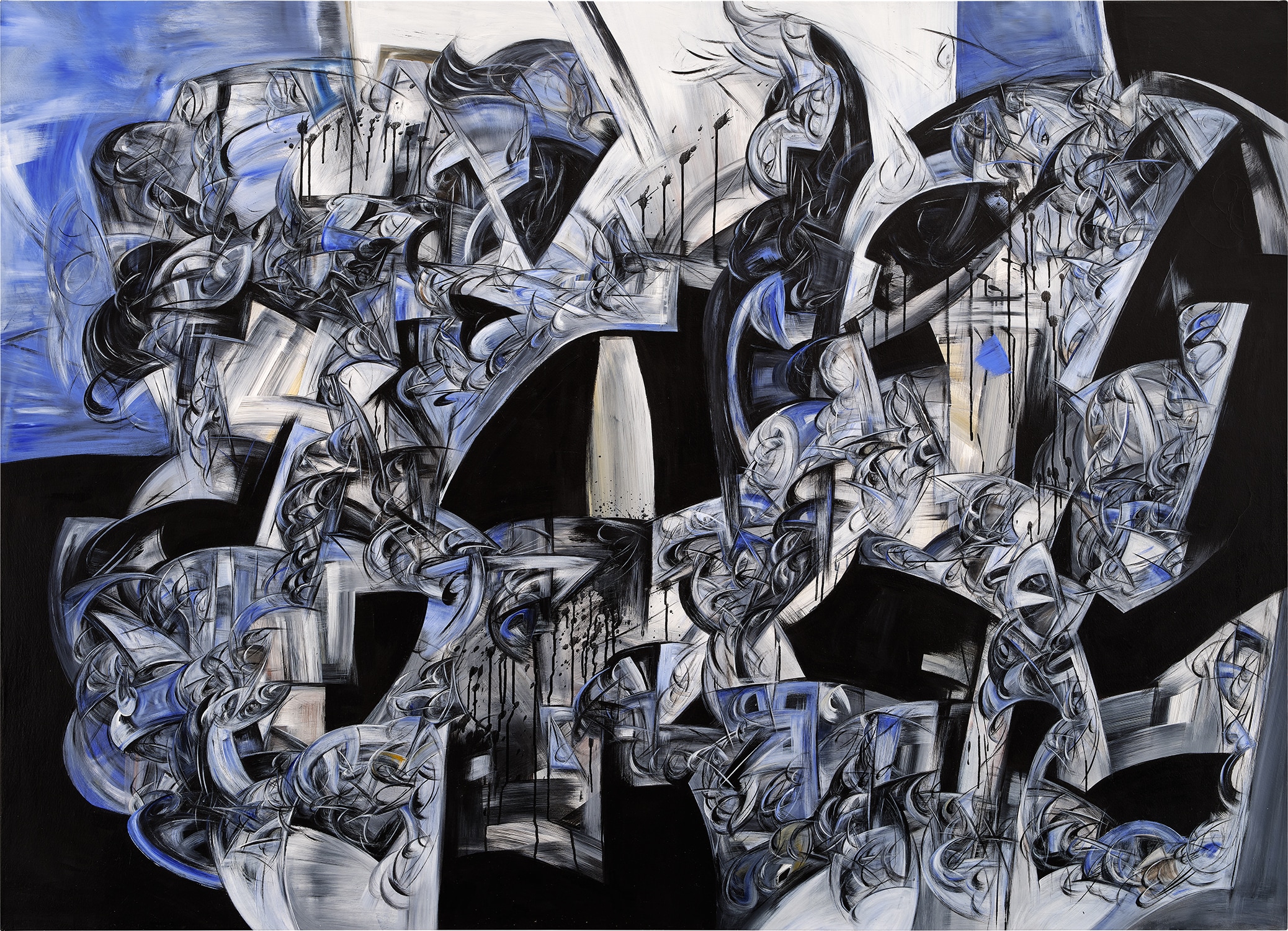
Meditation Garden, 2021
Works from 2020 and 2021 already show a confident command of this layered approach, and the 2022 series demonstrate a further deepening of ambition. Among Fang's most celebrated works, the "Expanse" series from 2022 deserves particular attention. Comprising canvases such as "Expanse (Blossoming)," "Expanse (Three Figures)," and "Expanse (Mask)," the series uses acrylic and spray paint to conjure spaces that feel simultaneously vast and intimate. Figures emerge and dissolve within fields of color and mark, suggesting the way individual identity negotiates with collective experience and historical weight.
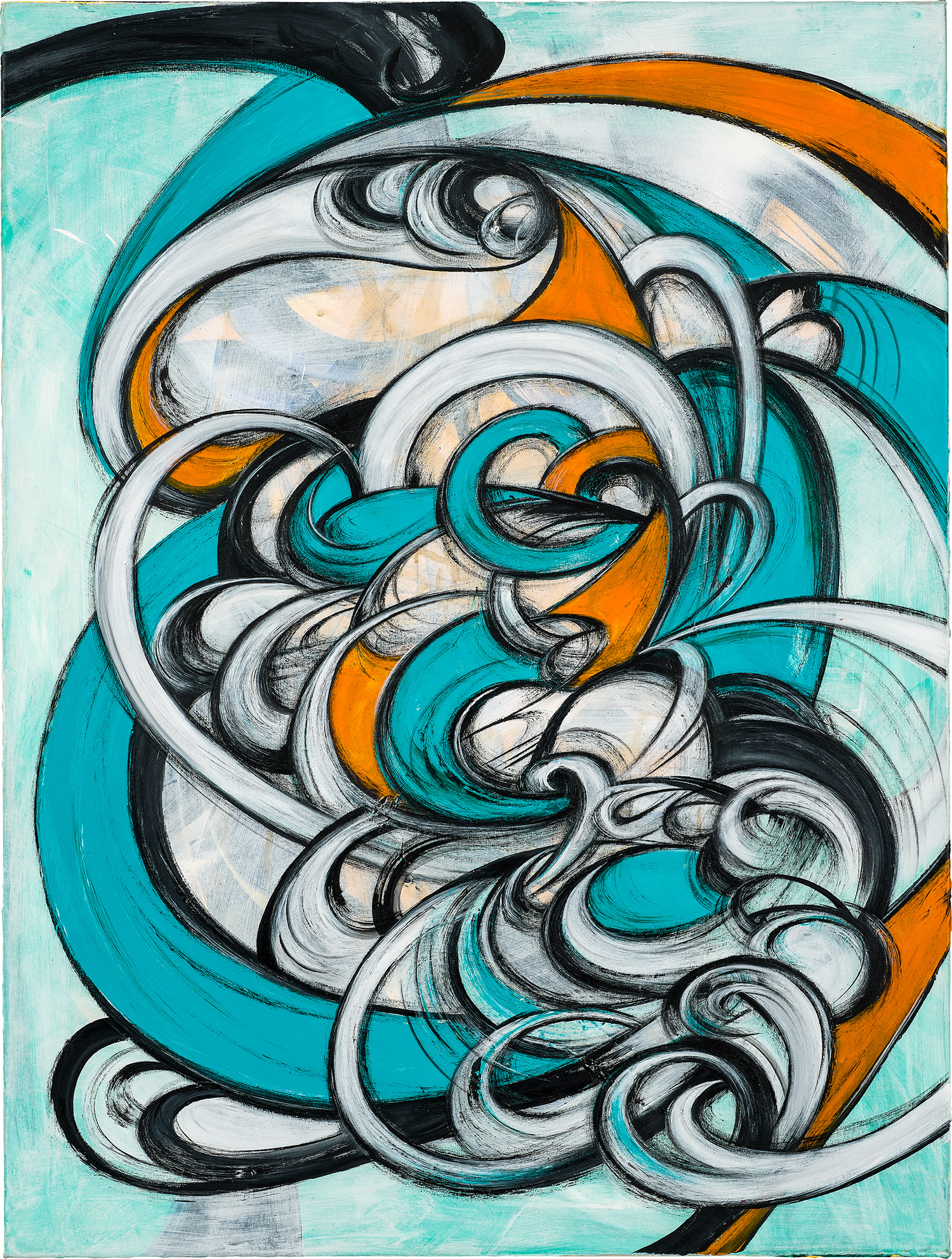
"Meditation Garden" from 2021, rendered in India ink and acrylic on canvas, represents perhaps the most direct conversation Fang holds with classical Chinese landscape traditions, yet even here the composition bristles with a contemporary unease that keeps the viewer from settling into easy contemplation. "Battleground 05" from 2022 and the earlier "Bird, Goldfish and Firework" from 2020 round out a body of work that is remarkable for its emotional and formal range. The work titled "Bursting 06" (with the Chinese subtitle "Bao Lie 06") is among the most immediately arresting in Fang's output. Combining acrylic, oil pastel, and spray paint on canvas, it exemplifies the productive chaos that Fang orchestrates with such apparent ease.
Yuan Fang
Battleground 05, 2022
The title itself announces a kind of rupture, something pressing outward against a boundary, and the surface of the work makes good on that promise. This is painting as an act of controlled release, and it speaks directly to collectors who are drawn to work that carries genuine physical and emotional conviction. "Seeding 02" from 2021 offers a counterpoint, its title and atmosphere suggesting patience, growth, and the longer rhythms of nature, revealing the full emotional register Fang commands. From a collecting perspective, Yuan Fang represents a genuinely compelling opportunity.
The artist occupies a meaningful position within the broader international conversation about contemporary Chinese art, alongside peers who navigate similar terrain between tradition and modernity, including artists such as Liu Wei, Minyuan Li, and others working at the intersection of ink tradition and contemporary visual language. Fang's auction presence in both mainland Chinese and international markets suggests a collector base that is already diverse and growing. The mixed media works in particular, with their layering of techniques and their density of cultural reference, tend to reward close and repeated looking, a quality that serious collectors consistently value in works they choose to live with. It is also worth noting the clarity of Fang's thematic preoccupations.
Yuan Fang
Bird, Goldfish and Firework, 2020
Cultural identity, memory, and the negotiation between inherited forms and contemporary experience are not peripheral concerns in Fang's work but its very subject matter. This gives the practice a kind of intellectual coherence that distinguishes it within a crowded field. A collector who acquires a Yuan Fang is not simply acquiring a beautiful object, though the objects are frequently beautiful. They are acquiring an argument about what it means to be Chinese and contemporary, traditional and urgent, rooted and in motion, all at once.
The legacy that Yuan Fang is in the process of building belongs to a lineage that stretches back through the great ink masters of Chinese art history while reaching forward into a genuinely uncertain and genuinely exciting future. The works feel like documents of a specific historical moment, the early decades of the twenty first century in China, rendered with enough formal intelligence and emotional honesty to transcend that moment and speak to something more enduring. For collectors, for curators, and for anyone who cares about where painting is going, Yuan Fang is an artist worth following with care and with genuine enthusiasm.