YoYo Lander
YoYo Lander Finds Beauty in Layered Paper
Artist Spotlight · The Collection Editorial
There is a particular kind of quiet confidence that announces itself through restraint rather than spectacle, and YoYo Lander possesses it in abundance. In a contemporary art landscape often drawn toward the monumental and the loud, Lander has built a practice around the intimate, the careful, and the deeply considered. The work arriving on platforms and in private collections right now invites a different kind of attention, one that rewards slow looking and rewards it generously. Lander works primarily in collage, with a focus on stained and washed watercolor paper as both material and surface.
YoYo Lander
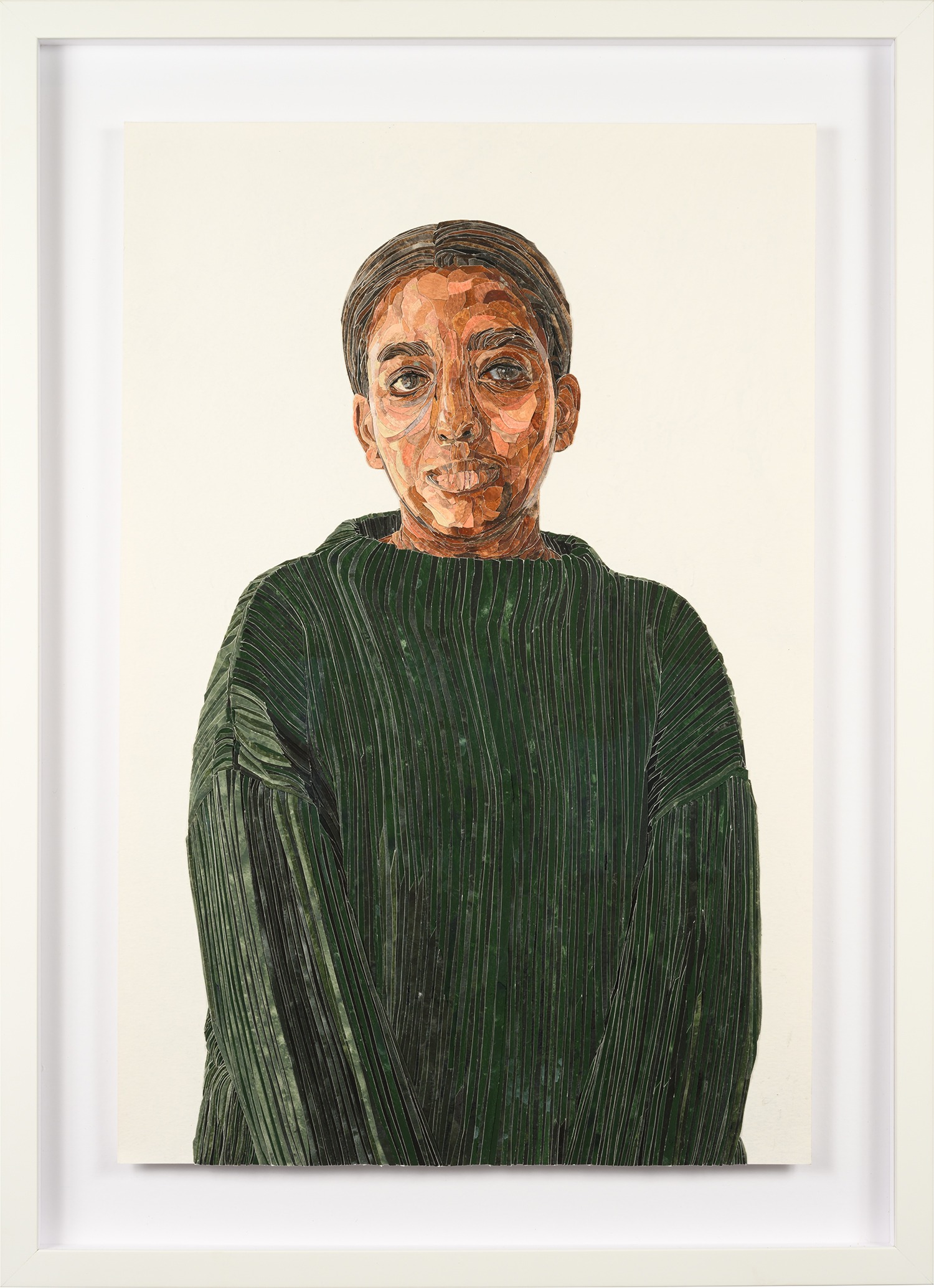
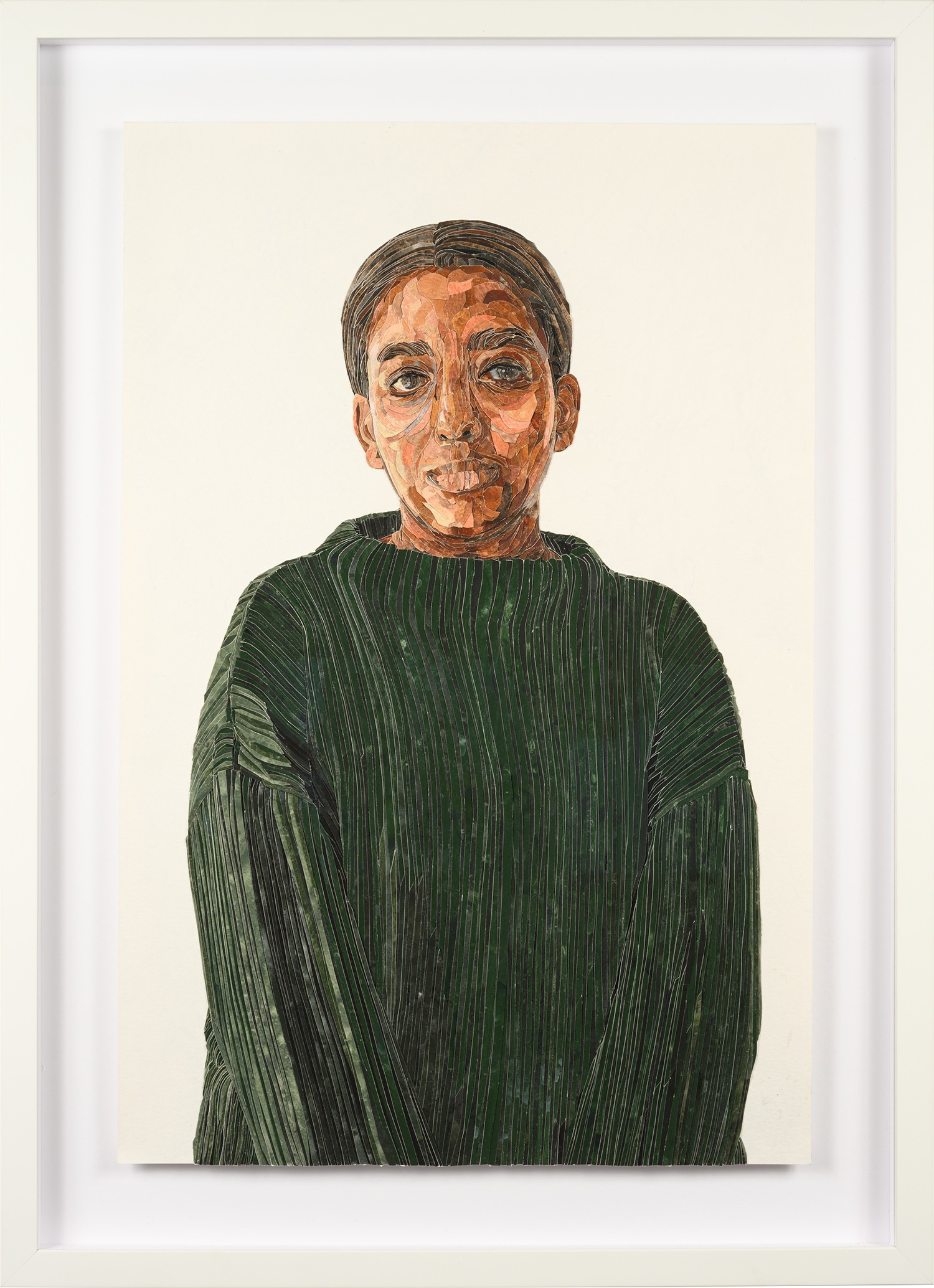
Helen, 2023
This is not collage in the casual sense of assembled fragments but something closer to a sustained meditation on how paper holds memory, absorbs color, and carries the traces of process. Each piece begins with paper that has already lived a life of sorts, already been touched by water and pigment before the artist begins composing. The result is a layered history embedded in the surface before a single compositional decision has been made. The practice reflects a sensibility shaped by close observation and a genuine love for the physical nature of making.
Where many contemporary artists have moved toward the digital or the conceptually distanced, Lander remains committed to the hand, to the material, and to the kinds of meaning that only emerge through direct contact with a medium over time. There is something almost devotional about this commitment, a sense that the work demands a relationship rather than simply a transaction. The work titled Helen, completed in 2023, offers perhaps the clearest window into what makes Lander's practice so compelling. Executed in stained and washed watercolor paper collage on watercolor paper and presented in the artist's own frame, Helen carries the full weight of Lander's approach in a single object.
The choice to present the work in a frame made by the artist is significant and speaks to a desire for total authorship, a refusal to allow any part of the object's encounter with the world to pass outside the artist's consideration. The frame is not an afterthought but a continuation of the work itself, the final gesture in an extended act of making. The name Helen evokes a long lineage of artistic and literary invocation, from the classical tradition to the deeply personal, and Lander allows that resonance to breathe within the piece without anchoring it to any single interpretation. This is characteristic of Lander's broader approach to titling and subject matter, an openness that trusts the viewer to bring their own experience while still offering a clear emotional anchor.
The watercolor paper in Helen bears evidence of its preparation, the staining and washing visible as a kind of underpinning that gives the final composition its atmospheric depth and warmth. For collectors, work like Helen represents exactly the kind of acquisition that grows in significance over time. Lander is working in a tradition that connects to some of the most celebrated practitioners of collage and works on paper in the twentieth century. Artists such as Kurt Schwitters, whose assemblages of found paper materials redefined what collage could mean, and Cy Twombly, whose works on paper occupy a space between drawing, painting, and writing, offer useful historical context for understanding where Lander's practice sits within the longer story of art made from and with paper.
More recent reference points include the works on paper of Cecily Brown and the material sensitivity of Kiki Smith, both of whom have demonstrated how intimate formats can carry enormous emotional and critical weight. The art market has increasingly recognized the importance and value of works on paper, particularly those that demonstrate a sophisticated understanding of material process. Collectors who have built serious collections in this area understand that works on paper offer an access point to an artist's thinking that is often more direct and unmediated than larger finished pieces. A Lander collage like Helen gives the collector not only a resolved and beautiful object but a record of a sensibility at work, which is ultimately what the most lasting collecting decisions are founded upon.
What distinguishes Lander from many contemporaries working in adjacent territory is the combination of process awareness and emotional directness. The work does not hide behind conceptual scaffolding or demand that the viewer come equipped with theoretical preparation. It asks instead for presence and a willingness to look carefully. That accessibility, which should never be confused with simplicity, is a genuine achievement and a rare one.
The layered surfaces of Lander's collages reveal themselves gradually, offering something new with each return visit in a way that speaks to real depth of construction. The artist's frame, as a signature element of finished works like Helen, also signals something important about Lander's understanding of the complete artwork as an object in the world. This attention to how a work will exist in a room, on a wall, in a collector's life, reflects a maturity of practice that goes beyond the making of individual images and into the territory of sustained artistic vision. It is the kind of detail that serious collectors notice and that, over time, becomes part of what defines an artist's contribution to the larger conversation.
Lander's place in the current moment feels both well earned and still full of possibility. The practice is established enough to demonstrate consistency and depth, yet there is every sense that the most ambitious work is still emerging. For collectors with genuine curiosity and a taste for work that rewards close attention over time, Lander represents one of the more interesting opportunities available in the intimate and endlessly rich field of collage and works on paper. To collect Lander now is to participate in a story that is clearly still finding its fullest expression, and that is among the most exciting positions a collector can occupy.