Yasuhiro Ishimoto
Yasuhiro Ishimoto: Two Worlds, One Vision
Artist Spotlight · The Collection Editorial
There is a photograph by Yasuhiro Ishimoto that stops you cold. A young girl stands barefoot on a Chicago sidewalk, holding a package of candy cigarettes, her gaze direct and unguarded. The gelatin silver print, made no later than 1962, carries the weight of an entire city in a single face. It is the kind of image that reminds you why photography, at its greatest, is not documentation but revelation.
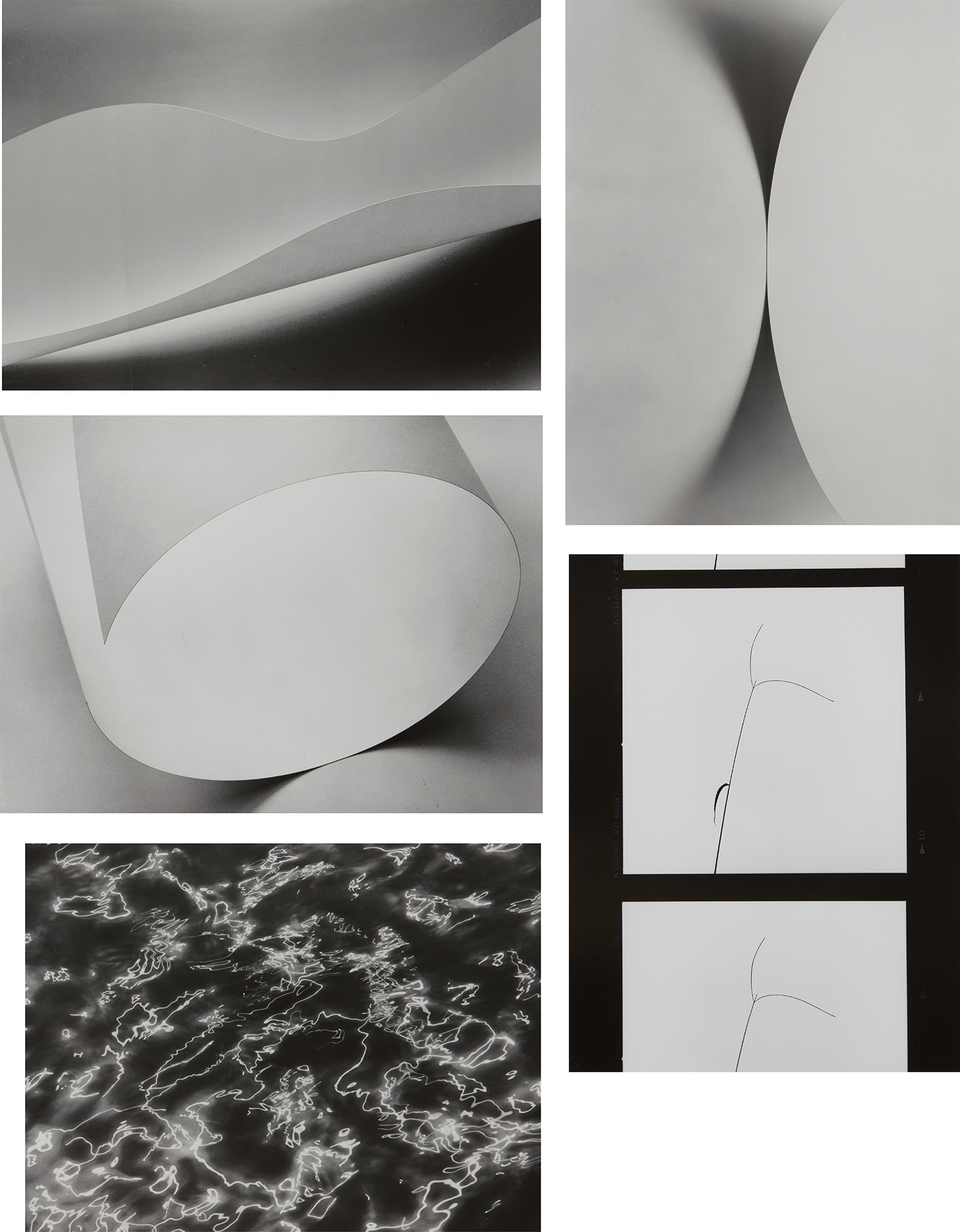
Yasuhiro Ishimoto
Five Selected Abstract Studies
Ishimoto made thousands of such images across six decades, and yet his name remains, for many collectors, an invitation waiting to be accepted. Ishimoto was born in San Francisco in 1921 to Japanese immigrant parents and spent his formative years being raised in Kochi Prefecture, Japan, after his family returned when he was still a child. That early oscillation between two cultures was not a rupture but a foundation. When he was interned at the Amache War Relocation Center in Colorado during the Second World War, he turned to photography as a way of seeing his way through confinement.
It was an act of quiet defiance and profound aesthetic awakening in equal measure. By the time the war ended, Ishimoto knew exactly where he needed to go next. In 1948 he enrolled at the Institute of Design in Chicago, then one of the most intellectually charged photography programs in the world. He studied under Harry Callahan and Aaron Siskind, two figures who were reshaping American photography around rigorous attention to form, light, and the textures of everyday urban life.
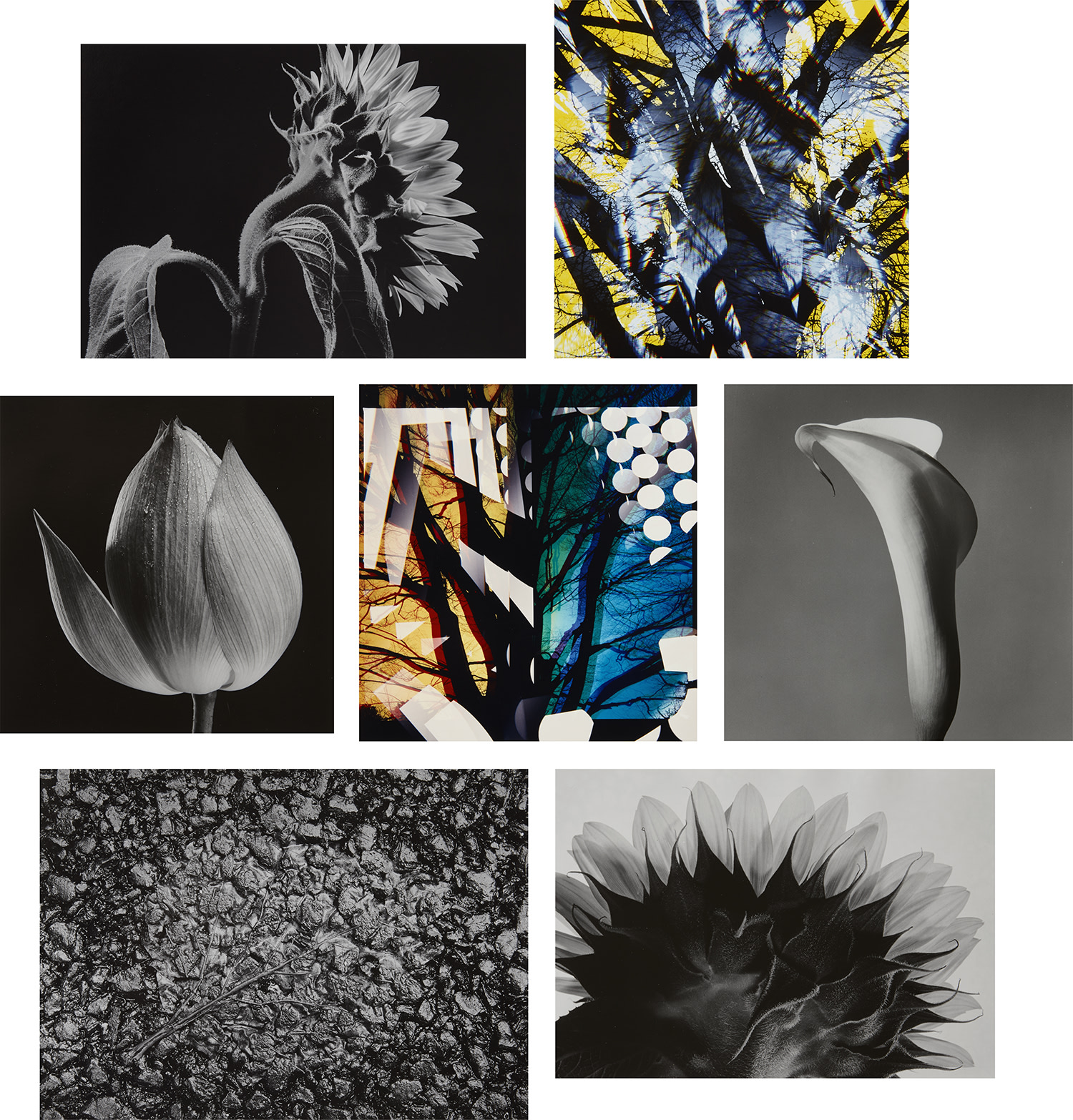
Yasuhiro Ishimoto
Five Selected Floral Studies
The Institute of Design, carrying the legacy of the Bauhaus through its founder László Moholy Nagy, pushed its students toward abstraction as a mode of truth telling. For Ishimoto, already attuned to the Japanese aesthetic traditions of ma (the eloquence of negative space) and wabi sabi (the beauty found in imperfection and transience), the program felt less like an education and more like a confirmation. He graduated in 1952 and immediately began contributing to both American and Japanese photographic discourse. His work across the 1950s and into the 1960s established two parallel and equally compelling bodies of work: street photography in Chicago and architectural studies that would define how the world understood Japanese design.
His Chicago street photographs rank among the finest made in that city by any photographer of any nationality. He moved through the South Side and the Loop with an eye tuned to geometry and chance, finding in the American urban vernacular the same compositional tensions he had absorbed from Japanese visual culture. The image of a turn only sign floating above a street scene, the flattening of space, the choreography of light across asphalt, these images sit comfortably alongside the work of Robert Frank and Garry Winogrand while remaining entirely their own thing. Then there is Katsura.
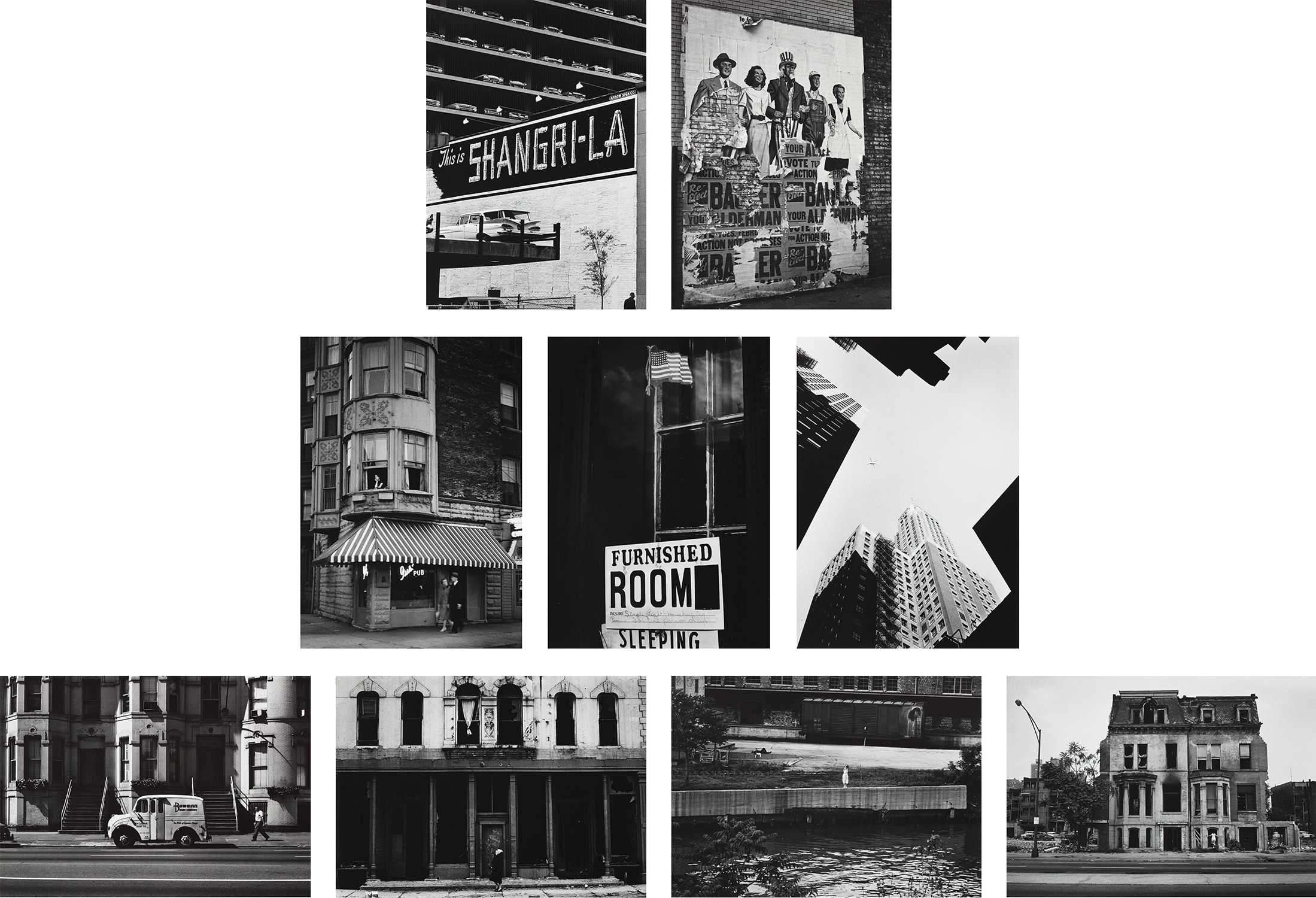
Yasuhiro Ishimoto
Selected Images from Chicago
In 1953, Ishimoto photographed the Katsura Imperial Villa in Kyoto, and the resulting work, published in book form in 1960 with text by the architect Kenzo Tange, became one of the most celebrated photobooks of the twentieth century. Katsura is a seventeenth century imperial retreat, a masterwork of Japanese spatial thinking, and Ishimoto approached it with a combination of structural precision and meditative patience. His photographs revealed the villa not as a historical monument but as a living argument about the relationship between architecture and nature, between intention and accident. The book brought Ishimoto international recognition and helped establish him as a photographer who could bridge Japanese aesthetics and Western modernist photography without flattening either tradition into the other.
His abstract studies, both the floral series and the more purely formal investigations, demonstrate another dimension of his practice that collectors are increasingly drawn to. The floral works do not romanticize their subjects. Instead they press petals and stems into zones of shadow and light that feel closer to sculpture than botanical illustration. The abstract studies from the Peter C.
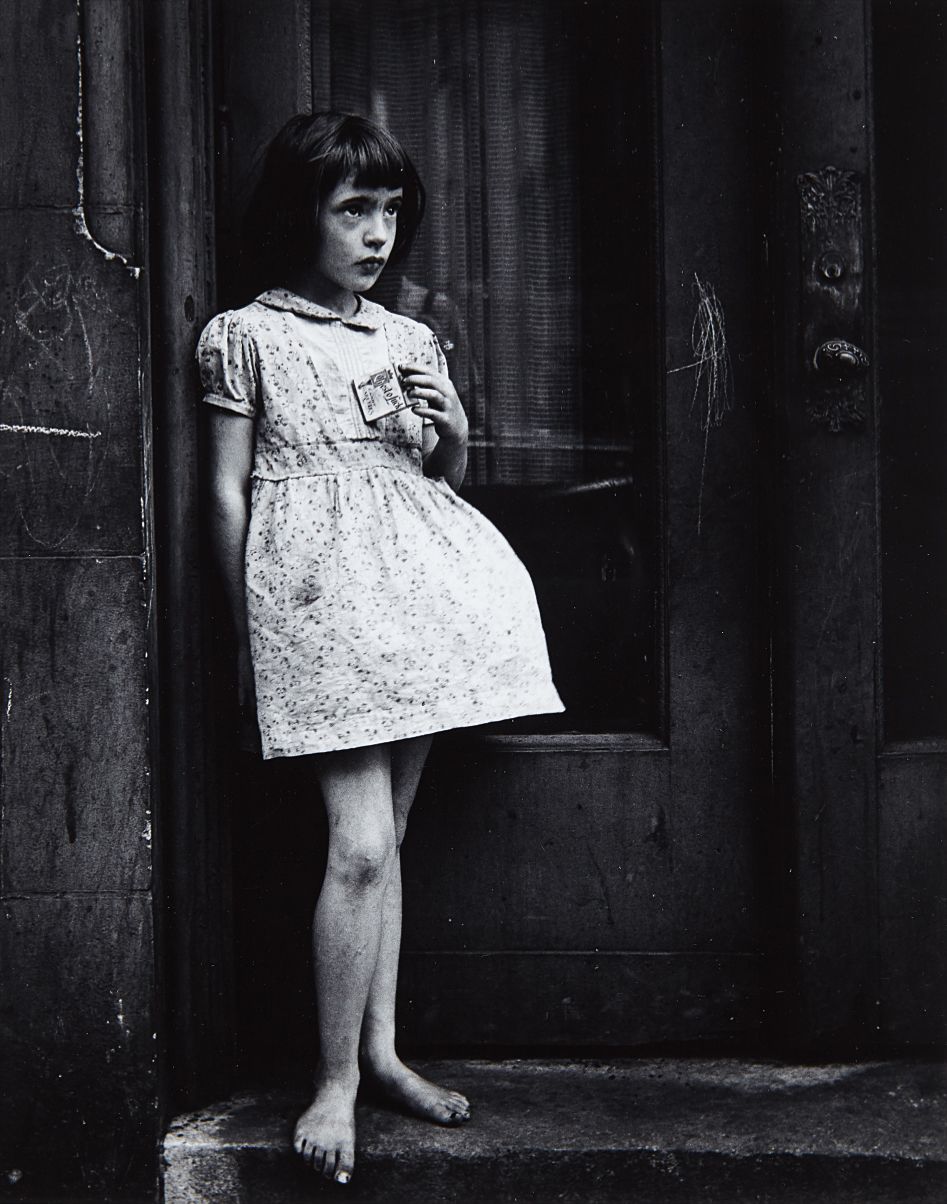
Yasuhiro Ishimoto
Young Girl, Barefoot, Holding Package of Candy Cigarettes
Bunnell Collection at Princeton University Art Museum, which have brought renewed critical attention to this aspect of Ishimoto's output, reveal an artist who was never content to master one register. He returned again and again to abstraction as a testing ground, a place where he could strip away narrative and ask what photography itself was actually capable of. For collectors, Ishimoto represents a genuinely compelling convergence of rarity and significance. His gelatin silver prints, many made or printed across the 1960s through the 1990s, are precise physical objects, demanding in their tonal range and rewarding to live with.
Works from the Chicago series and the bathers photographs carry both documentary energy and formal sophistication, appealing to collectors drawn to street photography while offering the depth expected of fine art photography from the same period. The connection to Callahan and Siskind places Ishimoto within one of the most admired lineages in American photography, while his Japanese reception and his Katsura project position him equally within the canon of postwar Japanese visual culture. That dual citizenship within art history is genuinely rare and, for a collector thinking about long term significance, enormously meaningful. In terms of context, Ishimoto belongs in conversation with photographers such as Shomei Tomatsu and Daido Moriyama in Japan, who were similarly navigating questions of modernity and national identity through the camera, and with his direct teachers Callahan and Siskind in the American tradition.
He also merits comparison with the German photographer Otto Steinert, whose subjective photography movement shared certain formal preoccupations with the Institute of Design approach. What distinguishes Ishimoto from all of them is the sustained ease with which he moved between worlds, never appearing to strain across the cultural distance he was crossing. Ishimoto moved back to Japan in 1961 and continued working prolifically until late in his life, receiving the Photographic Society of Japan Annual Award and numerous honors that reflected his standing in Japanese cultural life. He died in Tokyo in 2012, leaving behind an archive of extraordinary range and consistency.
The renewed attention to his abstract and street work through exhibitions and collections such as those documented by the Bunnell Collection suggests that his full significance is still being absorbed. For those who discover him now, that is not a reason for regret but for genuine excitement. The photographs are there, patient and luminous, waiting to be seen.
Explore books about Yasuhiro Ishimoto
Yasuhiro Ishimoto: A Photographer
Yasuhiro Ishimoto
Yasuhiro Ishimoto: Photographs
David Travis
The World of Yasuhiro Ishimoto
John Szarkowski
Yasuhiro Ishimoto: Bauhaus to Landscape
Deborah Berke
Yasuhiro Ishimoto: Chicago and Tokyo
Aperture