Yan Pei-Ming
Yan Pei-Ming Paints the World Unflinchingly
Artist Spotlight · The Collection Editorial
“I paint what I see. I paint from photographs, from memory, from life. The subject is always the same: power.”
Yan Pei-Ming, interview with Le Monde
When the Louvre invited Yan Pei Ming to exhibit within its storied galleries in 2009, the institution did something quietly radical. It placed a living Chinese French painter in direct dialogue with the masters of Western portraiture, hanging his monumental canvases of Mao Zedong, Pope John Paul II, and his own father alongside masterworks by Titian and Rembrandt. The pairing was not merely curatorial theater. It announced, with considerable force, that Yan Pei Ming had earned a seat at the most consequential table in the history of painting.
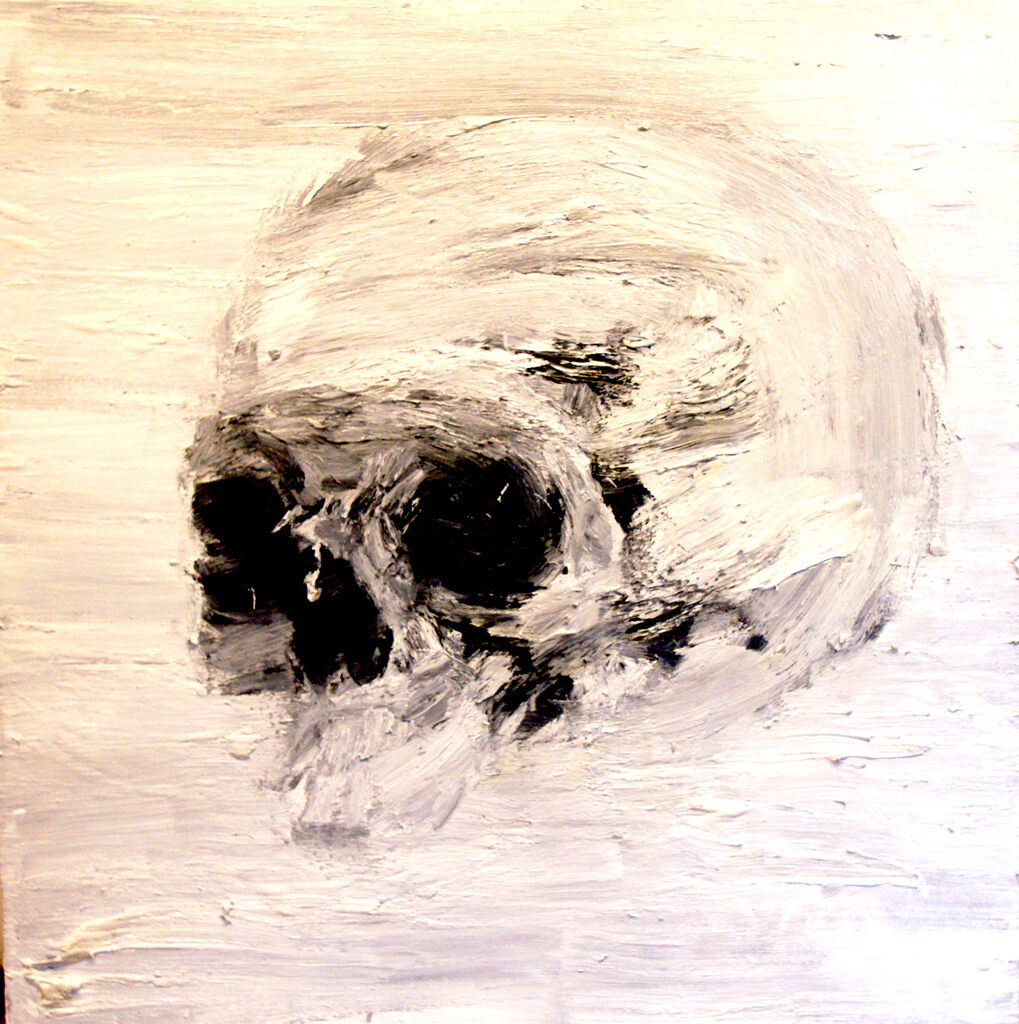
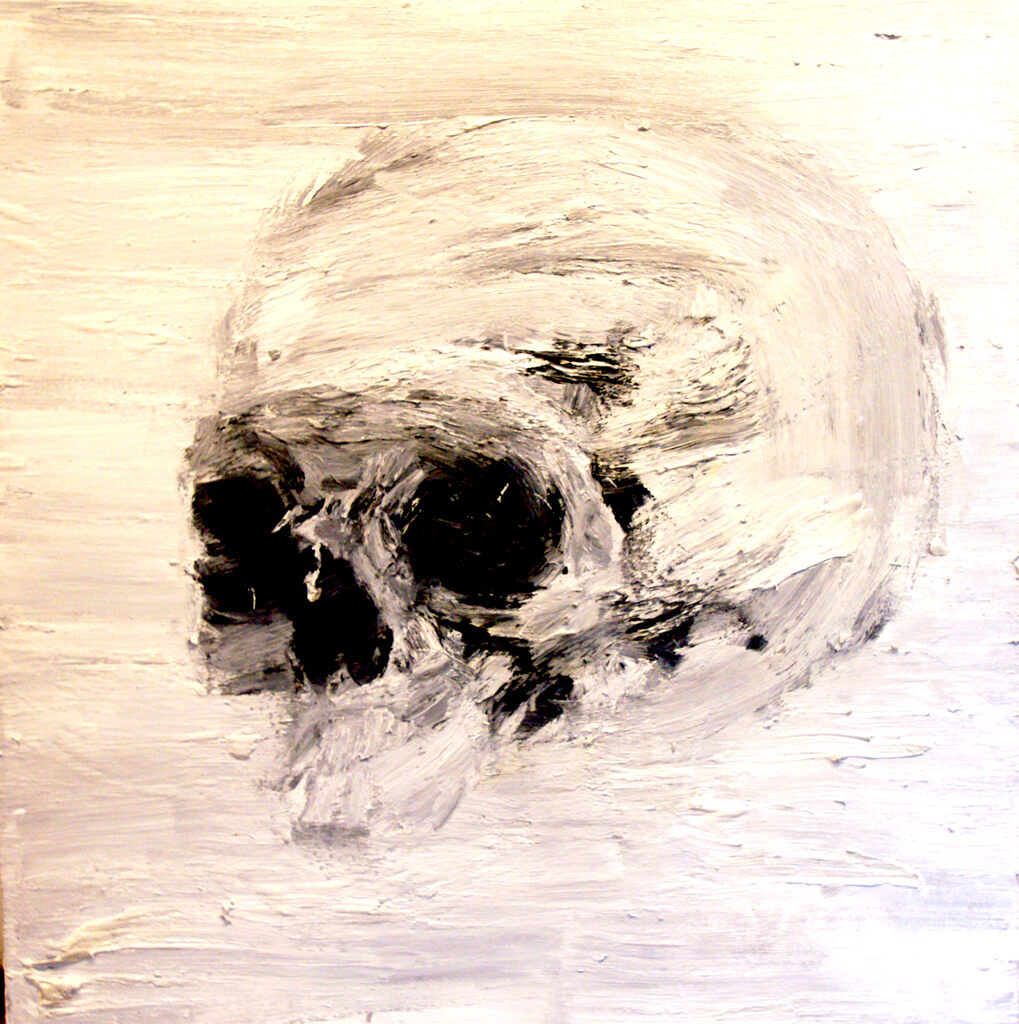
Yan Pei-Ming
White skull, 2007
More than a decade and a half later, that claim has only grown more persuasive. Yan Pei Ming was born in Shanghai in 1960, the son of a fishmonger, during a period of intense political and social upheaval in China. He grew up surrounded by the iconography of the Cultural Revolution, a visual culture saturated in images of Mao Zedong rendered in heroic reds and idealized proportions. That formative immersion in state sanctioned portraiture, with all its weight of propaganda and collective identity, would never fully leave him.
It became, instead, the raw material he would spend a career interrogating and transforming. In 1980, at the age of twenty, he left China for France, enrolling at the École Nationale Supérieure des Beaux Arts in Dijon. The move was audacious and, as it turned out, definitive. His years in Dijon shaped the painter he would become.
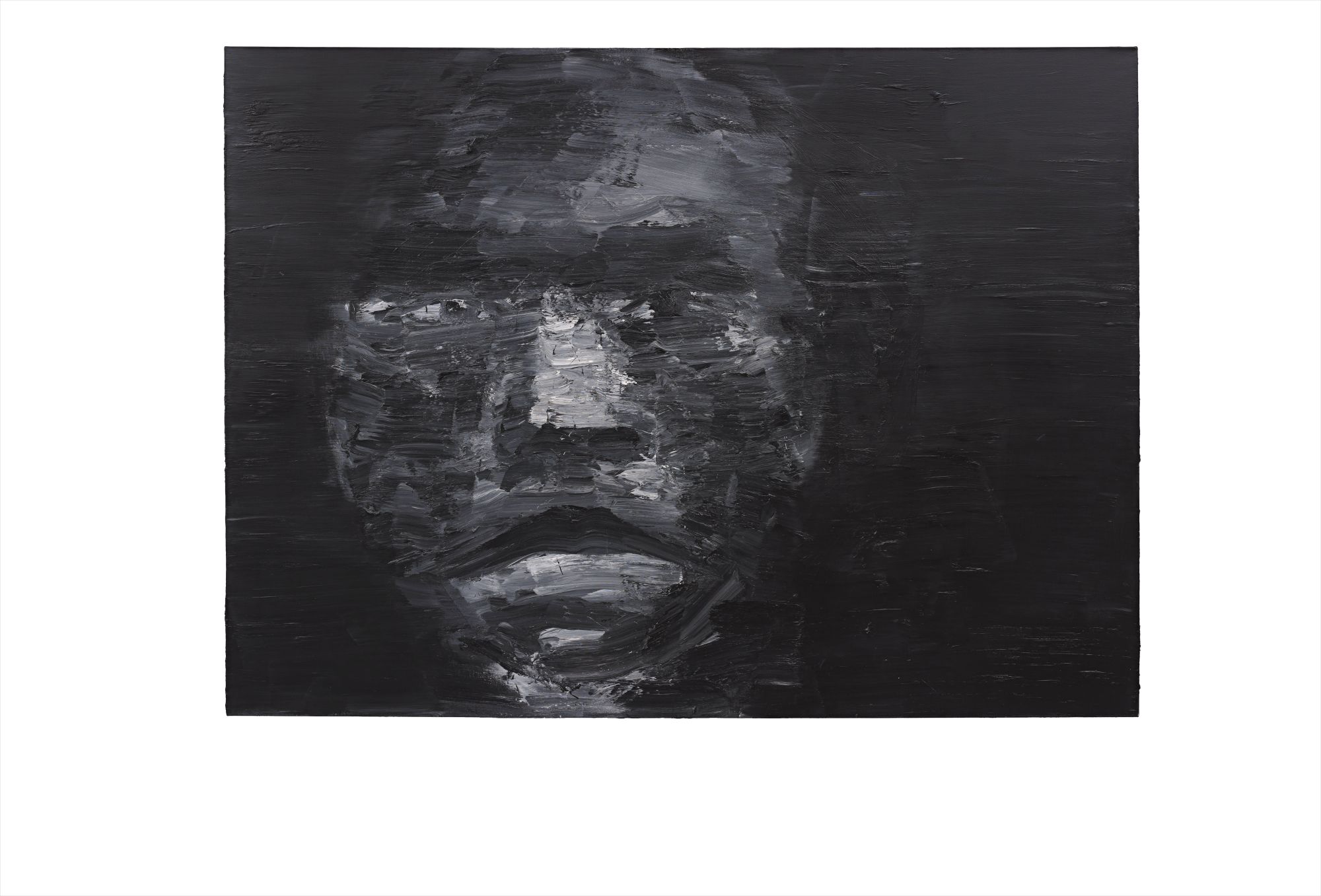
Yan Pei-Ming
Invisible Man no. 1
France gave him distance from the imagery of his childhood and access to the full sweep of European figurative tradition, from Velázquez to Francis Bacon. Yet Yan Pei Ming resisted easy assimilation. Rather than absorbing the French canon and producing its polite extension, he absorbed it and then attacked it, developing a technique of ferocious, gestural brushwork applied at a scale that commands physical confrontation. His canvases, often several meters wide, are made at speed, with large brushes that leave visible marks of urgency and intention.
The resulting surfaces feel simultaneously raw and deeply considered, as though the painter is racing to capture something that might otherwise escape. The signature of his mature practice is the self imposed constraint of near monochrome. Working primarily in blacks, whites, and grays, with occasional excursions into red or ochre, Yan Pei Ming strips portraiture down to something essential and severe. The effect is not austerity for its own sake but a kind of visual insistence, a demand that the viewer confront the subject without the distraction of decorative color.
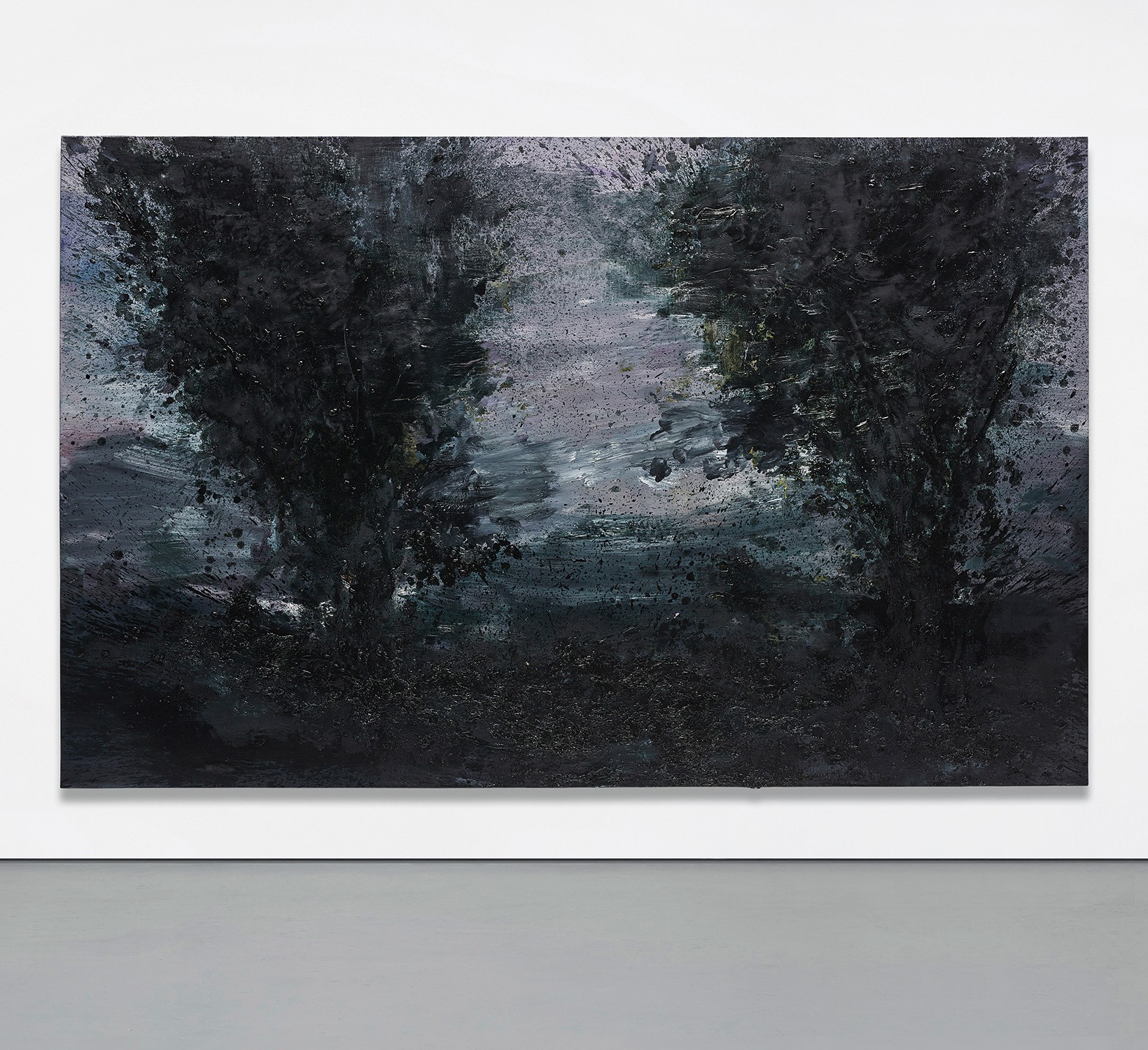
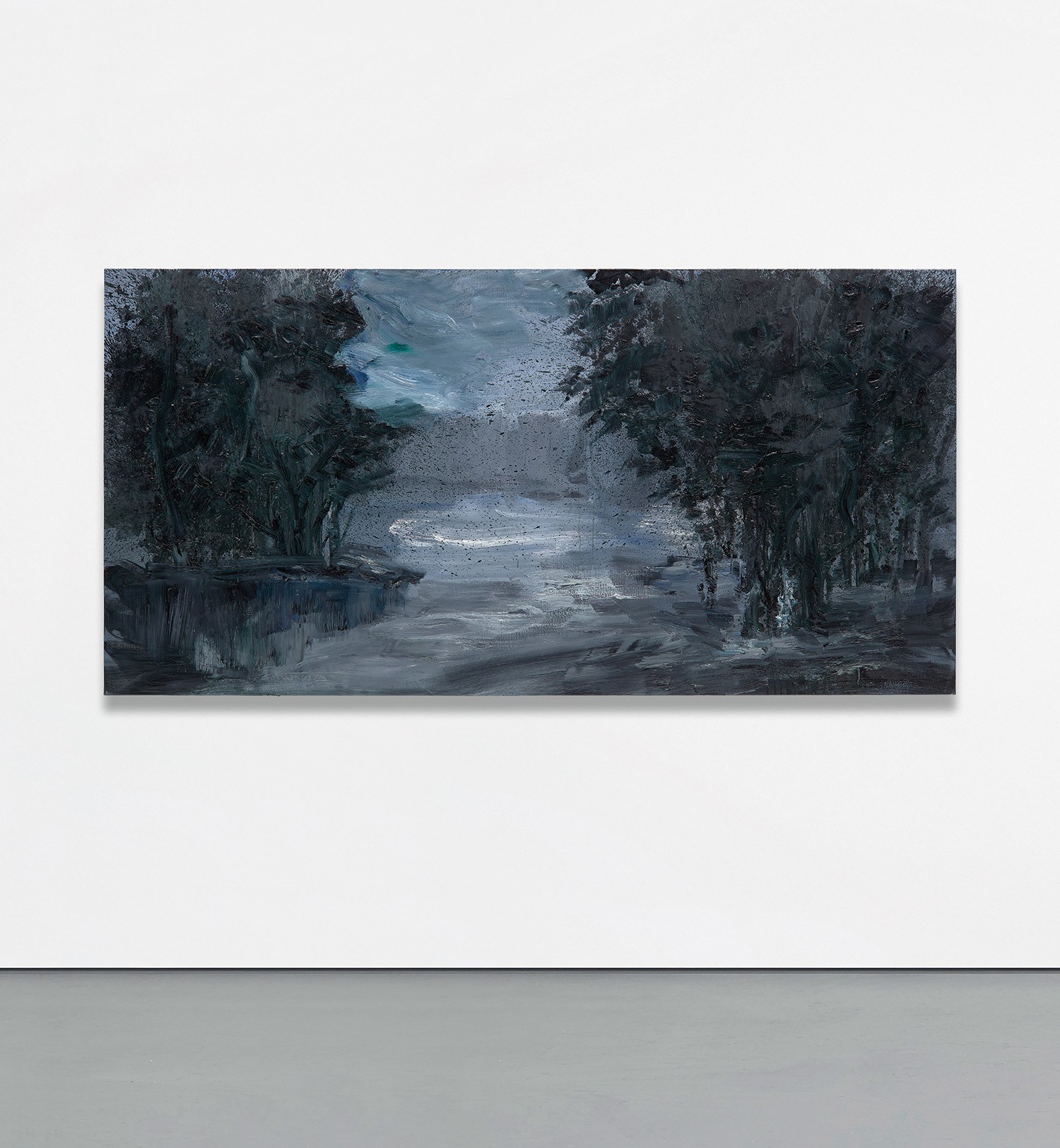
Yan Pei-Ming
Paysage International, 2013
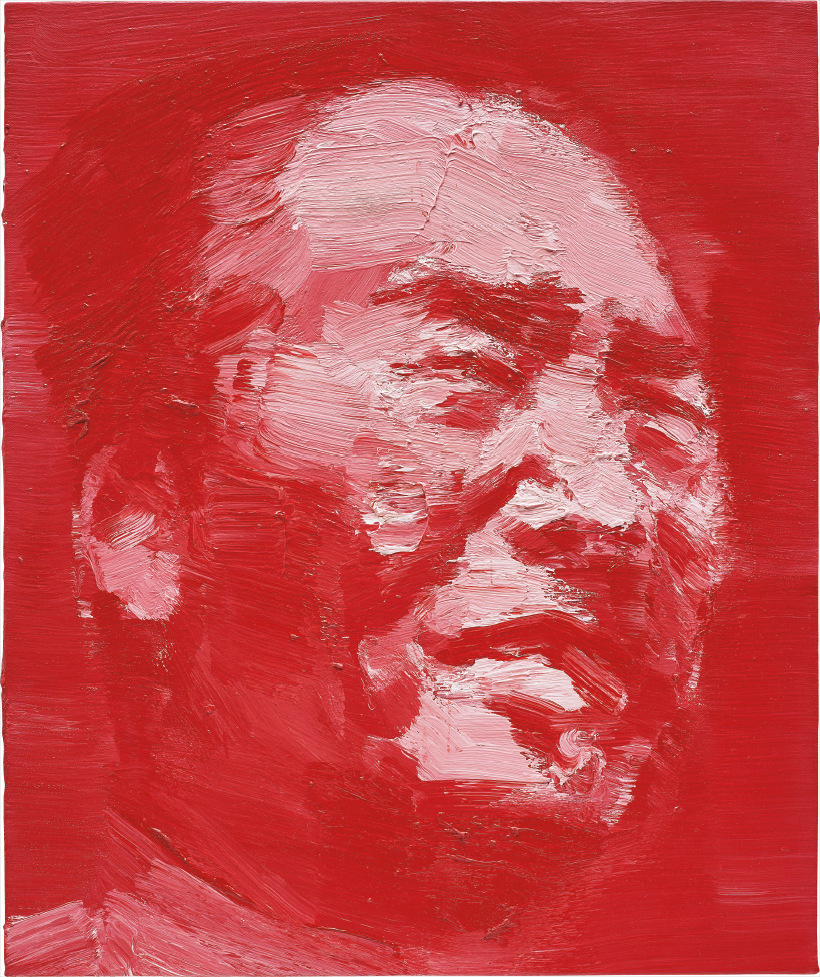
His portraits of Mao, including works from his Mao series begun in the 1990s, are among the most discussed political paintings of the contemporary era. They are neither celebration nor simple critique. They occupy a more uncomfortable and more interesting space, acknowledging the image's power while making visible its construction as myth. Works such as Mao.
Chinese Vermilion Number 4 from 2001 demonstrate how even a rare deployment of red can carry the full freight of ideology and memory. Beyond political figures, Yan Pei Ming has extended his gaze to popes, movie stars, and intimate subjects. His Portrait of Isabelle Huppert III from 2013 brings the same ferocious attention to a contemporary cultural figure that he directs at historical icons, treating the actress not as celebrity but as face, as presence, as a formal problem of extraordinary interest. His self portraits, a recurring thread throughout his career, turn that same unflinching scrutiny inward.
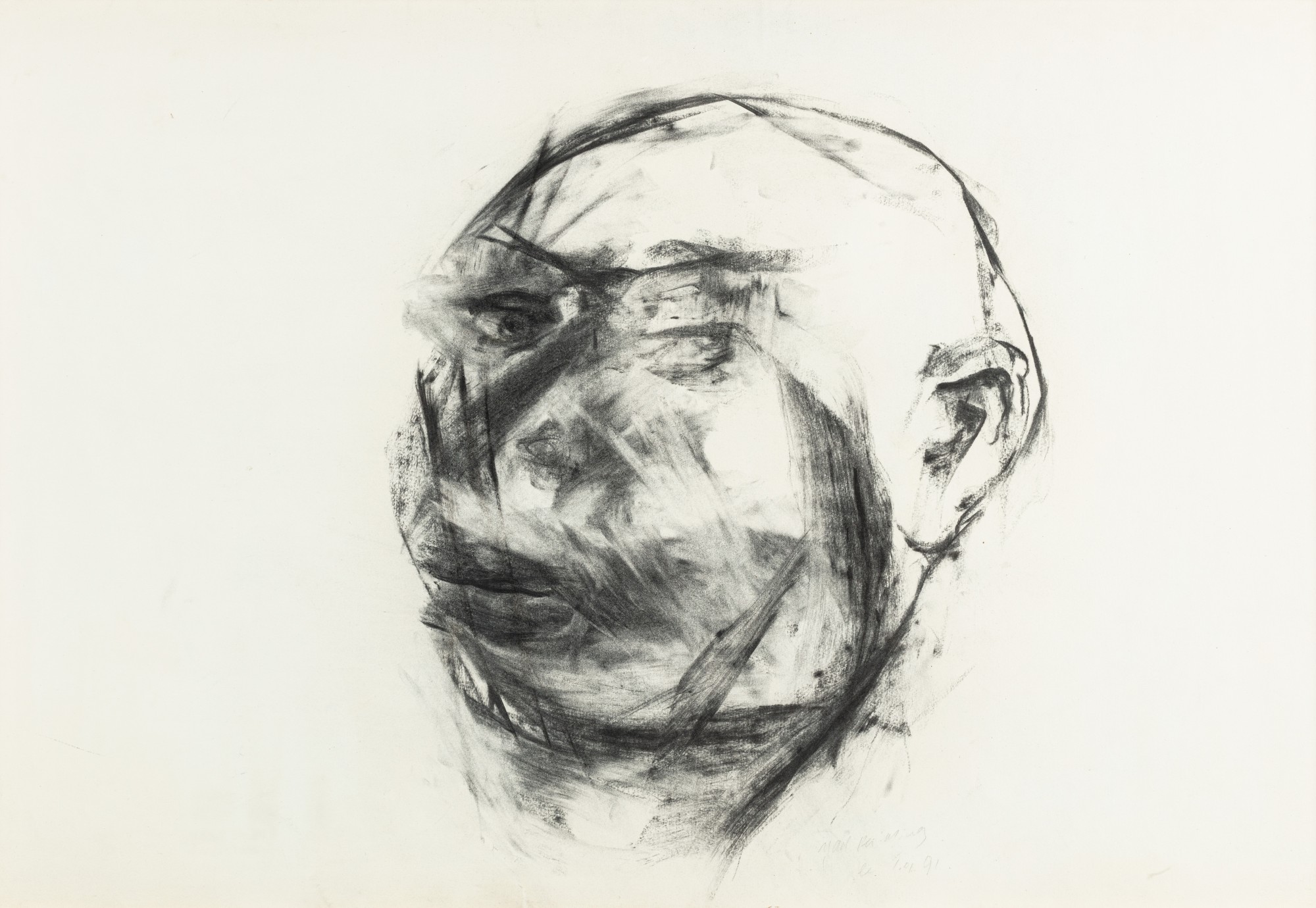
Yan Pei-Ming
Untitled, 1991
They are among the most searching works in the contemporary figurative tradition, portraits that ask what it means to paint oneself as both subject and instrument. His watercolors and works on paper, including the Red Buddha from 2008, reveal a quieter but equally assured dimension of his practice, one in which his brushwork finds intimacy without losing authority. For collectors, Yan Pei Ming represents one of the genuinely significant figurative painters working today, an artist whose institutional recognition is matched by sustained market interest. His works are held in the permanent collection of the Centre Pompidou in Paris, one of the defining validations for any artist working in France, as well as in numerous important private collections across Europe and Asia.
Works on paper offer a compelling entry point into his practice, combining the directness of his brushwork with a more accessible scale. His prints, including screenworks from the 2013 period, are carefully editioned and bear the full intensity of his visual thinking in a reproducible format. Collectors drawn to Neo Expressionism and large scale figurative painting will find natural companions in the work of Georg Baselitz, Luc Tuymans, and Marlene Dumas, artists who share with Yan Pei Ming a commitment to the painted figure as a site of psychological and political inquiry. The broader art historical context for his work is rich and instructive.
Yan Pei Ming emerged at a moment when figurative painting was reasserting itself against the dominance of conceptual and minimalist practice, and he became one of its most compelling advocates. Yet his position within that movement is singular. He brings to it a biography that spans two of the twentieth century's most consequential cultures, a formal education rooted in the French academic tradition, and a subject matter drawn from the deepest wells of collective memory and power. He is not simply a French painter or simply a Chinese painter.
He is both, and neither, and the friction between those identities generates the particular electric charge his work carries. What Yan Pei Ming has built over four decades is a body of work that refuses comfort while offering something rarer and more valuable: genuine confrontation with the images that shape how we understand power, mortality, and the human face. His exhibitions at institutions including the Fondation Maeght and his continued presence in major international venues confirm that his relevance is not a matter of fashion. He is a painter of exceptional seriousness and ambition, one whose work grows more resonant the longer one spends with it.
For collectors who believe that painting at its best is an act of both courage and intelligence, Yan Pei Ming stands as one of the essential figures of his generation.
Featured Works