Xavier Veilhan
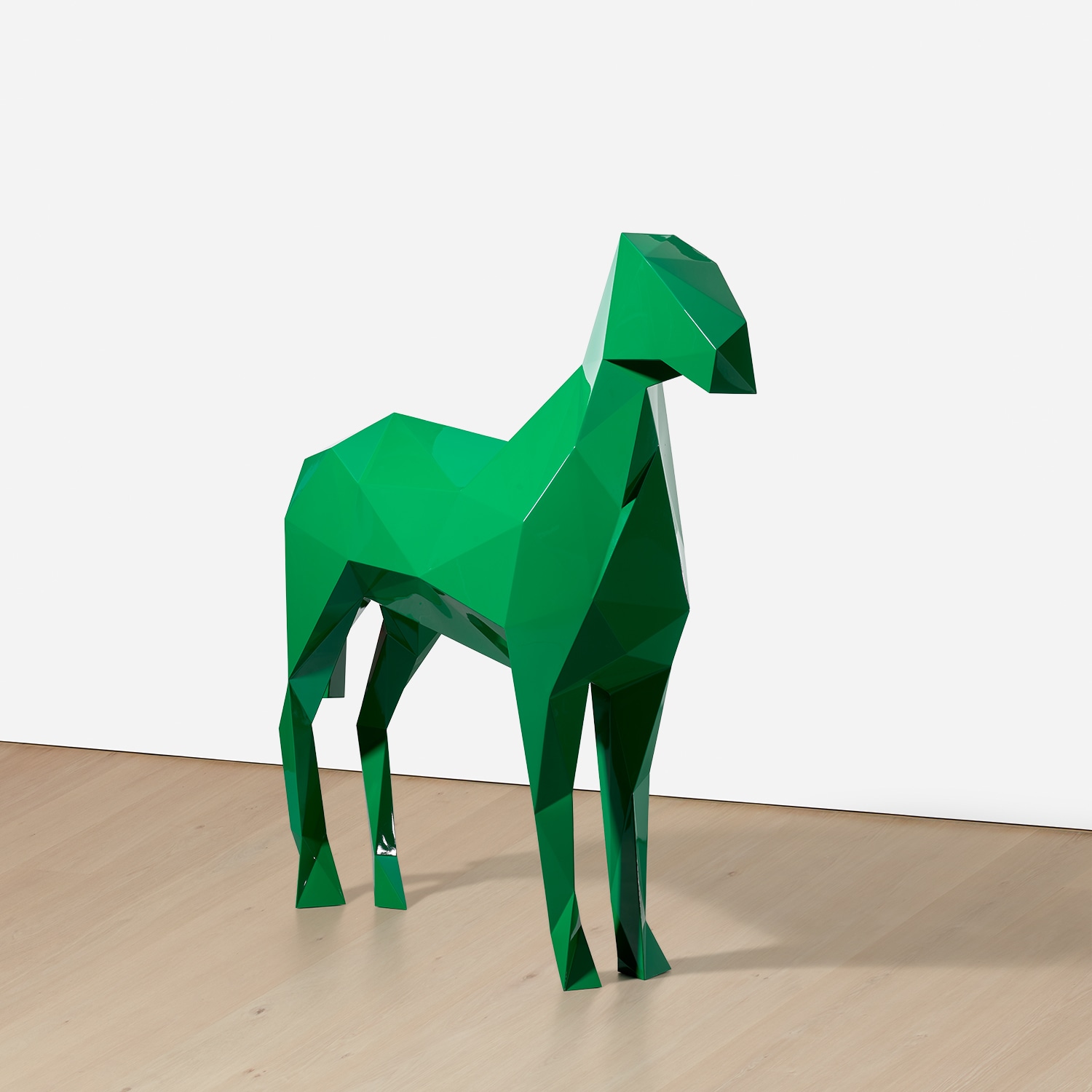
Xavier Veilhan Sculpts the World Anew
Artist Spotlight · The Collection Editorial
When France chose Xavier Veilhan to represent the nation at the 2017 Venice Biennale, the decision felt both surprising and entirely inevitable. Rather than filling the French Pavilion with finished objects to be contemplated from a respectful distance, Veilhan transformed the historic space into Studio Venezia, a fully functioning recording studio where composers, musicians, and performers from around the world arrived throughout the six month exhibition to create live music. Visitors did not simply look at art; they entered it, breathed alongside it, and heard it pulse with spontaneous sound. The project announced, to anyone still uncertain, that Veilhan occupies a singular position in contemporary art: an artist who constructs experiences as much as objects, and whose curiosity about the relationship between form, time, and human presence has no obvious ceiling.
Xavier Veilhan
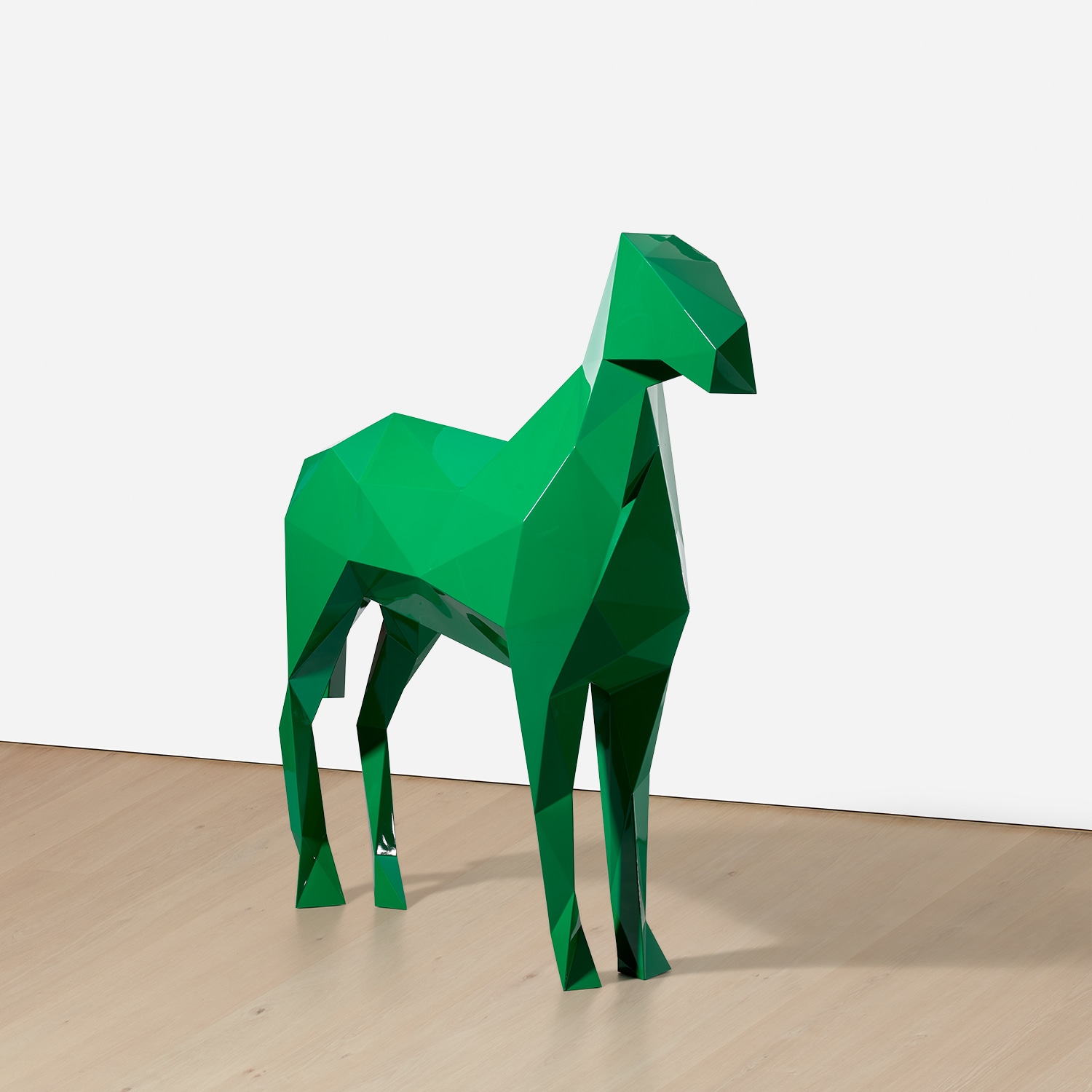
The Horse, 2009
Veilhan was born in Paris in 1963, and the city's particular combination of rigorous intellectual culture and deep investment in design, architecture, and public life left a lasting imprint on his sensibility. He studied at the École Nationale Supérieure des Beaux Arts in Paris and later at the Institut des Hautes Études en Arts Plastiques, where he encountered a generation of thinkers who pushed artists to interrogate the conditions of their own practice. France in the 1980s was a country wrestling seriously with questions of representation and spectacle, and Veilhan absorbed those debates without being imprisoned by them. From the beginning, his impulse was to move outward, toward audiences who might never set foot in a gallery, rather than inward toward critical self reference.
His early career established a clear and confident visual language built around the tension between the recognizable and the abstract. Veilhan has long been drawn to the human figure and to animals, subjects so familiar they risk sentimentality, but he approaches them through a process of geometric reduction that strips away anecdote and replaces it with pure formal presence. The faceted surfaces that have become his signature are not a stylistic affectation; they are a philosophical position. By breaking a horse or a human body into planar segments, Veilhan asks viewers to hold two readings simultaneously: the memory of the living form and the cool logic of the constructed object.
Xavier Veilhan
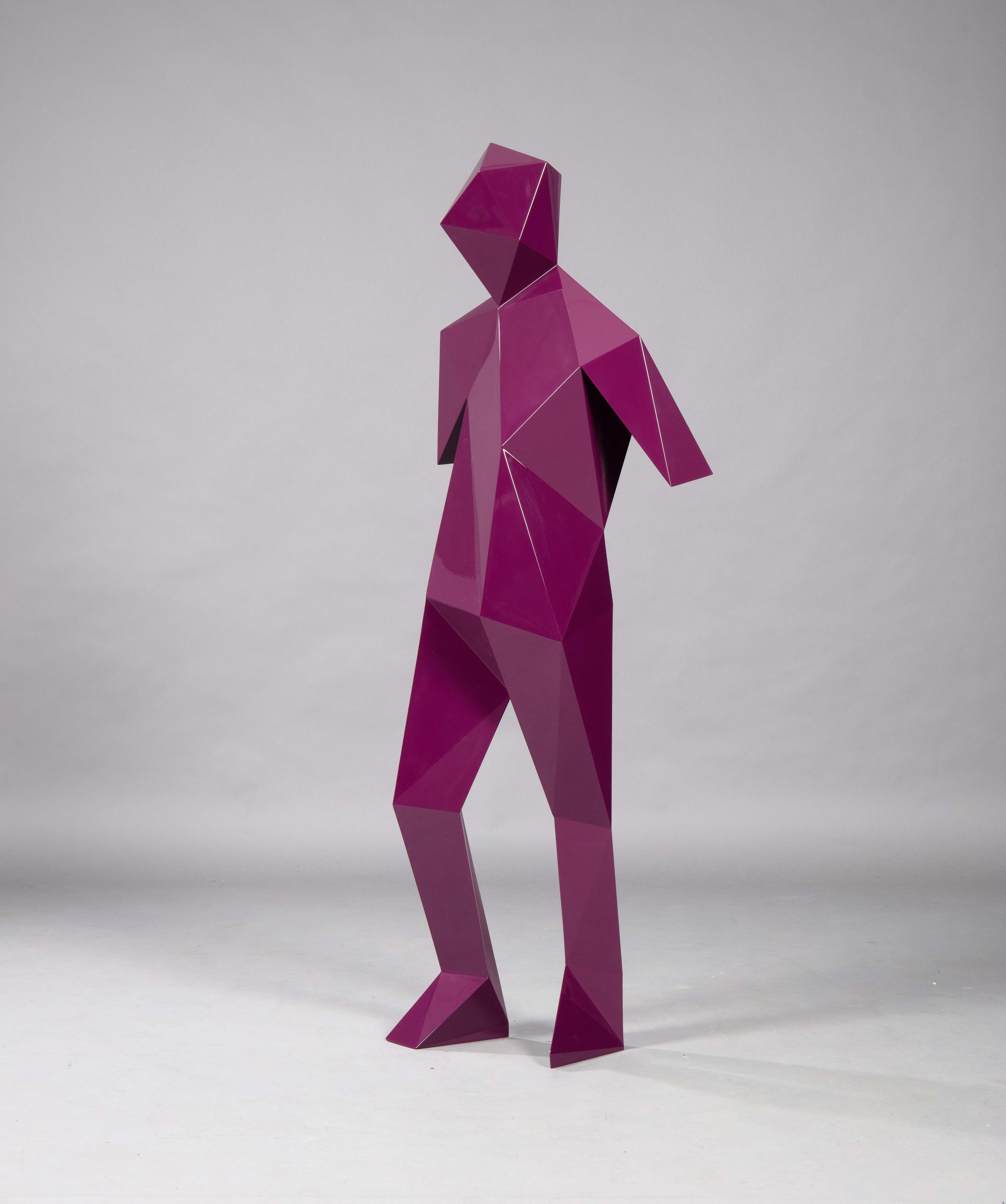
Michael, 2007
This double awareness is where his work lives, and it gives even his most playful pieces an underlying intellectual seriousness. Among the works that have defined his reputation, The Horse from 2009, realized in painted steel, stands as one of the most eloquent expressions of his method. The sculpture captures the monumental authority of equestrian tradition while refusing every romantic convention attached to it. The animal becomes something closer to a diagram of power and grace than a portrait of any particular creature, and collectors who live with the work report that it changes character entirely depending on the light and the angle of approach.
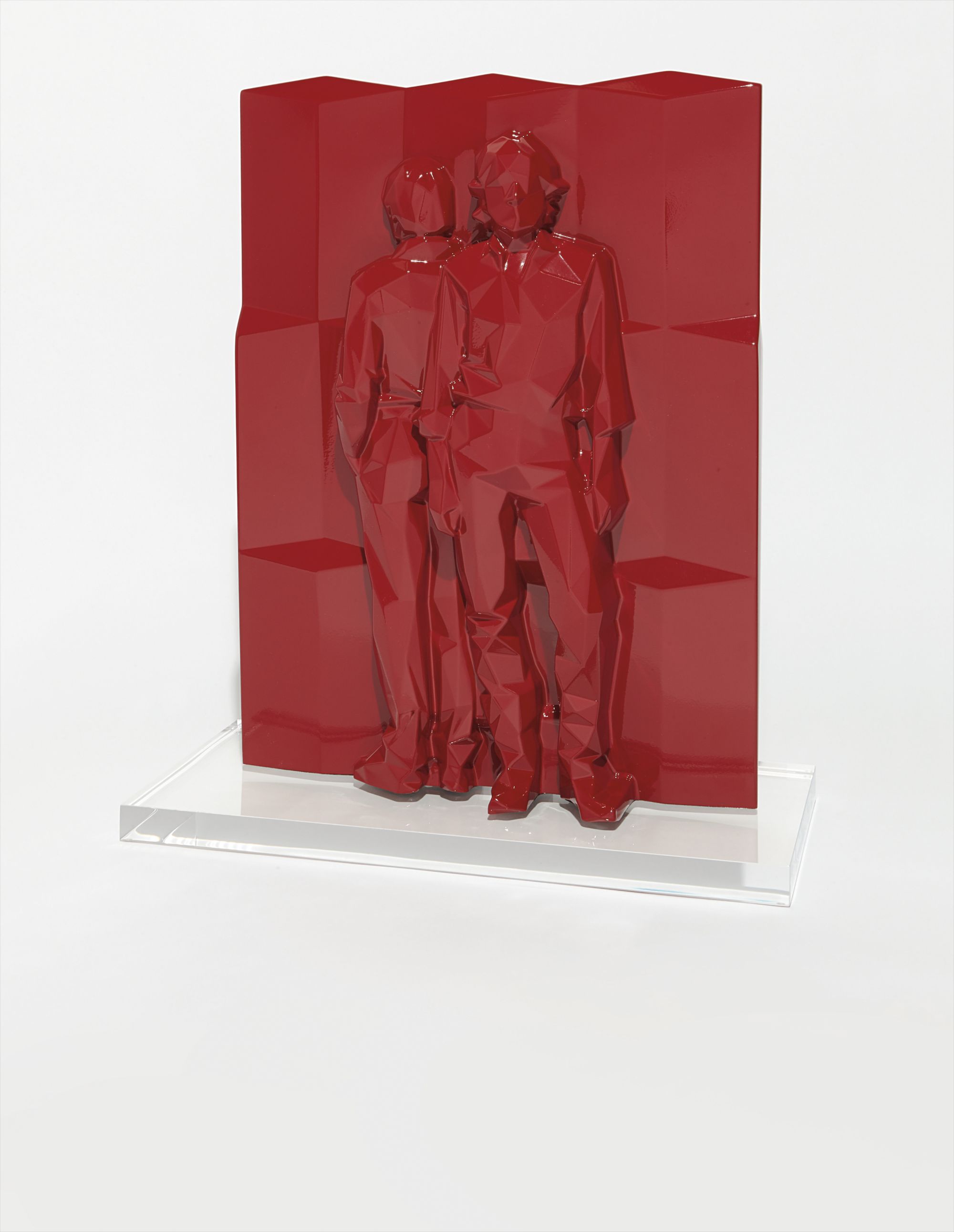
Michael, created in 2007, demonstrates a similar quality applied to the human form: a figure that is immediately legible as a person yet resists any effort to assign it a specific psychology or narrative. Works such as Debora in polished stainless steel and Sophie no. 1 in aluminum and steel extend this thinking into materials that reflect their environments, making the sculptures active participants in whatever space they inhabit. Air, realized in polyurethane resin, shows Veilhan's willingness to push his palette toward the ethereal, while Les Crânes in Styrofoam and enamel introduces a dry wit that prevents his practice from ever becoming too earnest.
Xavier Veilhan
Air
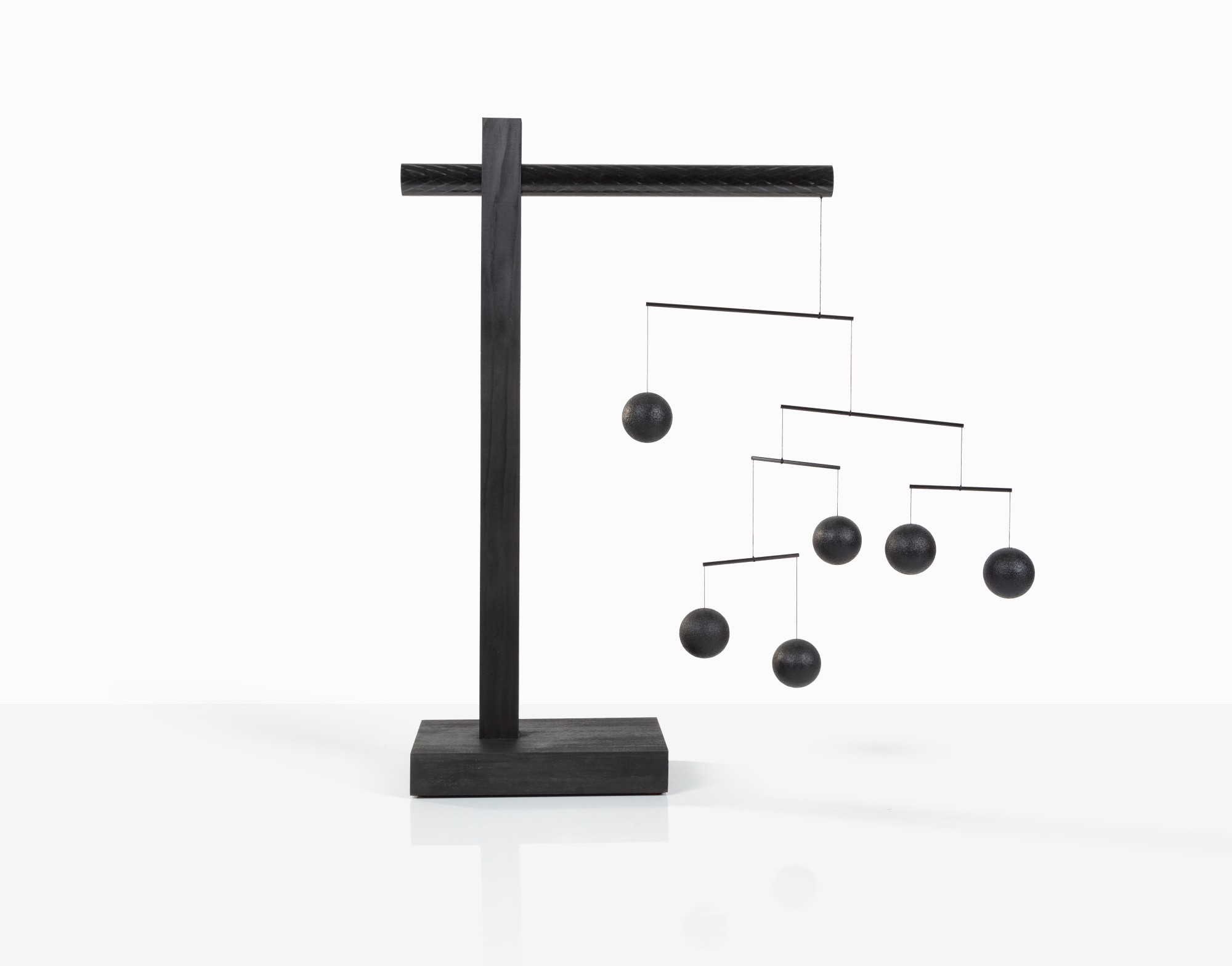
Mobile n°13 from 2016, assembled from plastic, wood, and mixed media, points toward his ongoing engagement with movement and kinetic possibility. Veilhan has exhibited widely across institutions that matter. His work has been shown at the Musée d'Art Moderne de la Ville de Paris, and his large scale interventions in public space have introduced his forms to audiences far beyond the primary market. The Château de Versailles hosted his work in 2009 in an exhibition that placed his geometric figures in dialogue with the baroque grandeur of the palace gardens, a pairing that generated considerable critical attention and demonstrated his sculptures' ability to hold their own against the most imposing historical contexts.
Galleries including Emmanuel Perrotin, with whom he has maintained a long and productive relationship, have brought his work to international art fairs in Miami, New York, Hong Kong, and beyond, steadily building a collector base that spans continents. From a collecting perspective, Veilhan represents something genuinely valuable: an artist with a coherent, evolving body of work that rewards sustained engagement. His sculptures in steel and aluminum have proven durable in the secondary market, and works from key series attract consistent interest at auction. Collectors who have followed him across multiple bodies of work often speak of a cumulative experience, where each new acquisition reframes the ones that came before.
Xavier Veilhan
Mobile n°13, 2016
For those entering his practice now, the portrait works and the animal sculptures offer the most accessible entry points, combining immediate visual impact with the conceptual depth that gives serious collecting its long term satisfaction. Works in reflective stainless steel are particularly sought after for their ability to integrate dynamically into both domestic and institutional settings. In the broader landscape of contemporary sculpture, Veilhan invites comparison to artists who have similarly negotiated the space between Minimalism's formal discipline and a warmer, more humanistic impulse. The legacy of Constantin Brancusi hovers productively over his reductive figures, and there are points of contact with the serial thinking of Donald Judd, though Veilhan's refusal to abandon the figure entirely places him in a different emotional register.
Among his contemporaries, he shares a commitment to ambitious scale and material precision with artists such as Thomas Houseago and Koons era fabrication aesthetics, though his sensibility is notably more restrained and more European in its distrust of spectacle for its own sake. What ultimately makes Veilhan matter, and matter more with each passing year, is his refusal to separate the beautiful from the intelligent. At a moment when contemporary art can feel pressured to choose between accessibility and rigor, his practice insists that the choice is false. Studio Venezia was not a compromise between art and entertainment; it was a demonstration that the most open and generous gestures can also be the most formally advanced.
His sculptures do not ask viewers to decode them before they can be enjoyed, but they reward every additional hour of looking with new structural and conceptual discovery. That combination, pleasure deepening into understanding, is the mark of work built to last, and Xavier Veilhan is building it with exceptional confidence and grace.
Explore books about Xavier Veilhan
Xavier Veilhan
Various authors
Xavier Veilhan: Retrospective
Museum curators
Xavier Veilhan: Works 1990-2010
Phaidon Press
Veilhan: Sculpture and Form
Contemporary art publishers
Xavier Veilhan: Objets Trouvés
Gallery documentation