Wynn Bullock
Wynn Bullock: Light, Time, and Wonder
Artist Spotlight · The Collection Editorial
“I don't think of light as a quality of an object. I think of it as a medium in which things exist.”
Wynn Bullock
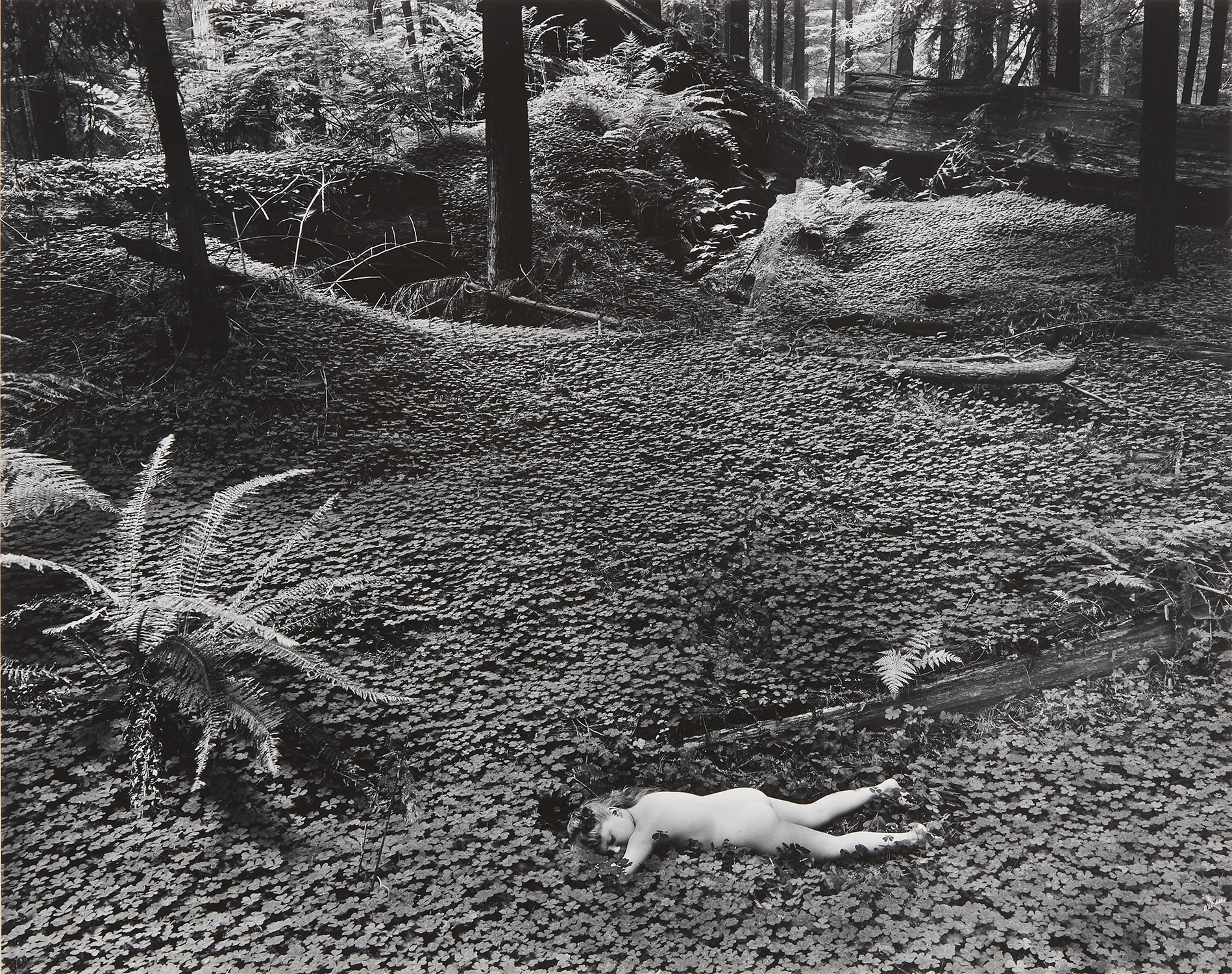
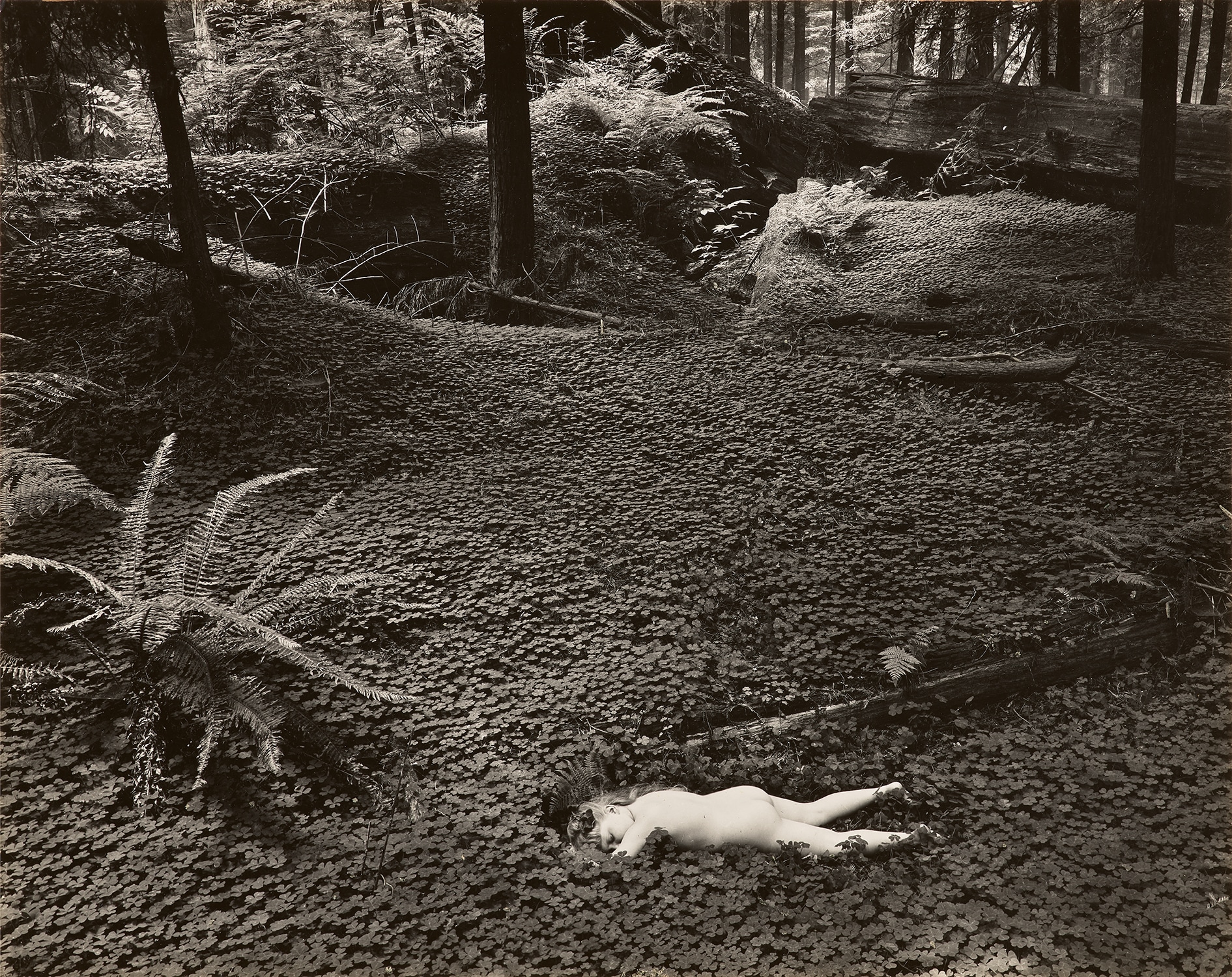
There is a photograph that stops people cold. A small child lies curled and sleeping on a forest floor, surrounded by ferns and fallen leaves, the dappled light of the California redwoods falling over her as though the forest itself has drawn a breath and held it. Wynn Bullock made this image in 1951, and it remains one of the most quietly astonishing photographs in the history of the medium. Decades after its creation, it continues to appear in museum retrospectives, scholarly collections, and the carefully curated holdings of serious photography collectors.
Wynn Bullock
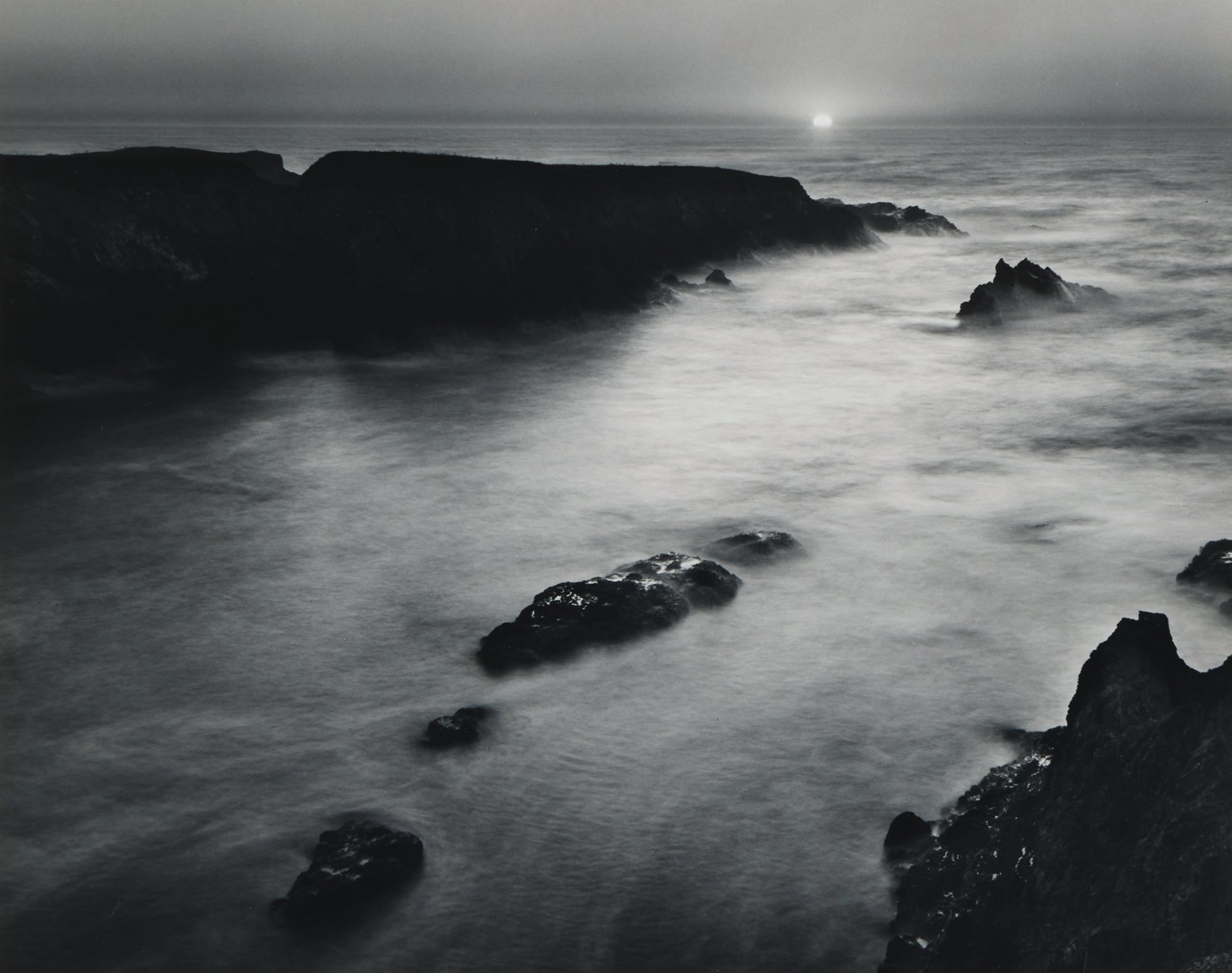
Mendocino Coast
It is a picture that does not age because it is not really about a moment at all. It is about the nature of existence itself. Wynn Bullock was born in Chicago in 1902 and spent his early years moving between the American Midwest and California, eventually finding himself drawn to music as a young man. He studied voice in New York and later in Paris, immersing himself in European culture during the late 1920s.
It was during this period abroad that he first encountered serious photography, and something in the medium spoke to instincts that music alone could not satisfy. He returned to the United States and began studying photography in earnest, enrolling at the Los Angeles Art Center School in the late 1930s and developing the technical foundation that would eventually support one of the most philosophically rich bodies of work in American photography. Bullock's development as an artist was neither swift nor linear. Through the 1940s he worked as a commercial photographer while simultaneously experimenting with the medium's expressive possibilities.
Wynn Bullock
Child in Forest
He became deeply interested in the work of László Moholy Nagy and in the conceptual possibilities of light manipulation, teaching himself solarization and other darkroom techniques that allowed him to push beyond straightforward representation. By the early 1950s, after settling on the Monterey Peninsula in California, something fundamental shifted in his practice. The landscape of the central California coast, its ancient forests, its tidal shores, and its particular quality of light seemed to unlock in Bullock a vision that was entirely his own. The pictures he made in this period are among the most distinctive works in the photographic canon.
“When I photograph, what I'm really doing is seeking answers to things.”
Wynn Bullock
What separates Bullock from his contemporaries is not technique alone, though his mastery of the gelatin silver print is beyond question. It is the philosophical dimension of his seeing. Bullock was deeply influenced by the philosopher Alfred Korzybski and by the physicist David Bohm, and he brought to his work a genuine intellectual curiosity about the nature of reality, time, and human perception. He did not photograph nature as scenery.
Wynn Bullock
Child in the Forest
He photographed it as a living system in which human beings participate but do not dominate. Works like Child in Forest and The Shore are not documents of places. They are meditations on presence, on the relationship between organic life and the passage of time, on what it means to exist in a body in a world that was here long before us and will persist long after. Torso in Window, in which a female nude is set against an exterior landscape glimpsed through glass, performs a similar alchemy, dissolving the boundary between interior and exterior, between the human and the natural.
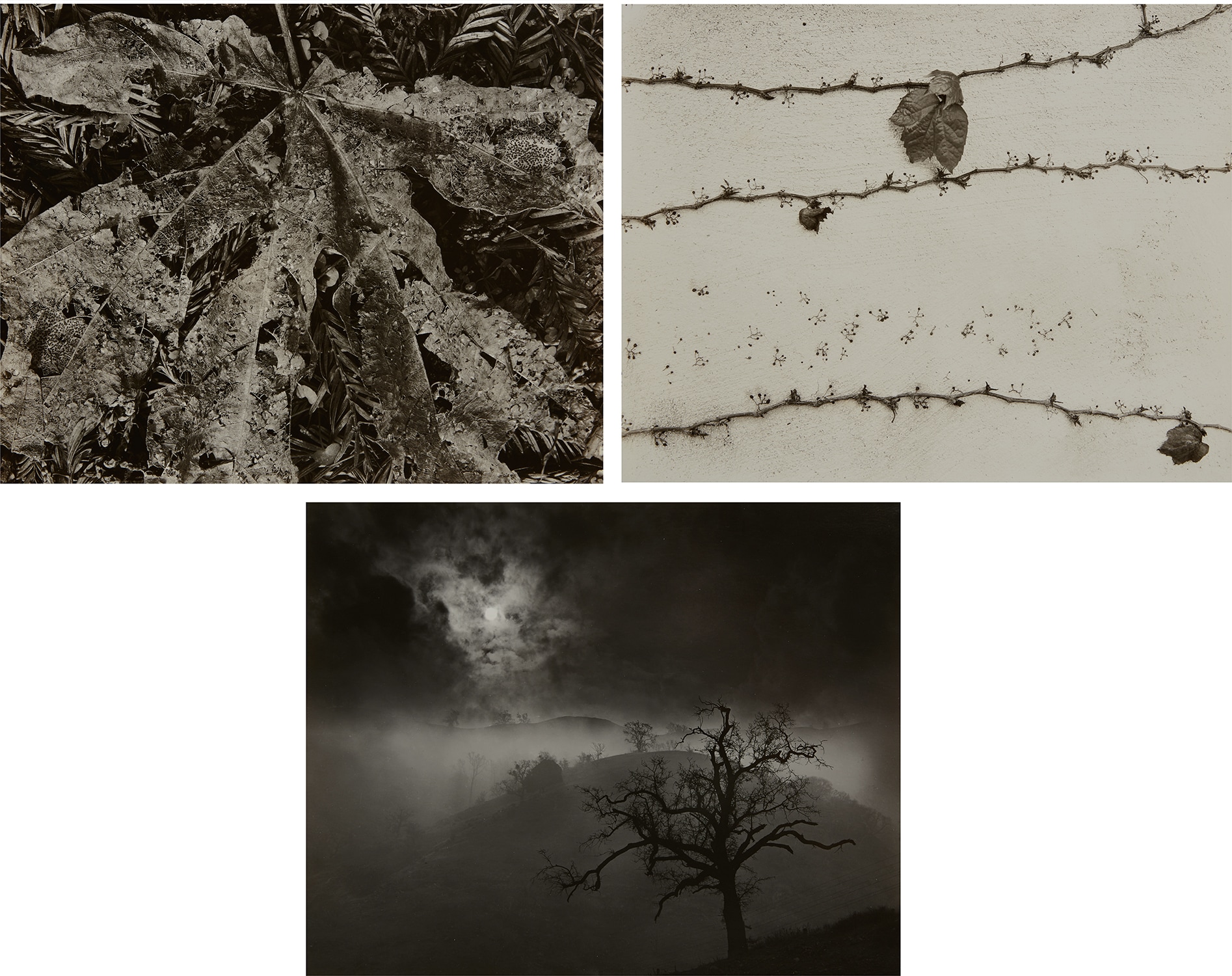
The Mendocino Coast and Mendocino, California belong to a sustained engagement with the northern California shoreline that produced some of Bullock's most celebrated images. These coastal works share a quality of temporal suspension, as though the photograph has somehow captured not a single moment but an accumulated duration, the geological weight of the ocean pressing against stone over centuries compressed into a single silver print. Three Nature Studies, preserved in the Peter C. Bunnell Collection at Princeton University's Art Museum, demonstrates the breadth of his formal intelligence and his capacity to find within natural subjects an almost abstract visual logic.
Wynn Bullock
Three Nature Studies
Bunnell, one of the great champions of photography as a serious fine art, recognized in Bullock a practitioner of the highest order, and his institutional attention helped secure Bullock's place in the scholarly record. Bullock's relationship to the broader community of American photography was warm and collegial. He was a close friend and colleague of Edward Weston, whose own passionate engagement with the California landscape clearly resonated with Bullock's sensibilities, though the two men arrived at very different visual conclusions. Ansel Adams included Bullock's work in the landmark exhibition and publication This Is the American Earth, created in 1955 with writer Nancy Newhall for the Sierra Club.
Minor White, another towering figure of mid century American photography, shared Bullock's interest in the spiritual and perceptual dimensions of the medium. Together these photographers constitute a tradition of deeply serious, deeply felt engagement with the natural world that has no real equivalent in any other national photography tradition of the period. For collectors, Bullock's work occupies a particularly compelling position. His prints exist at the intersection of technical accomplishment and genuine artistic vision, a combination that sustains value over time.
Vintage prints from the 1950s and early 1960s, made during the peak years of his creative output, represent the most sought after material. Works printed in the 1960s under Bullock's own supervision retain strong collector interest, and institutions including the Museum of Modern Art, the Art Institute of Chicago, and the San Francisco Museum of Modern Art hold his work in their permanent collections, providing the kind of institutional endorsement that anchors a collecting market. The imagery itself, particularly the Child in Forest series, the coastal work, and the figure studies, has a quality of emotional directness that appeals equally to seasoned photography collectors and those approaching the medium for the first time. Wynn Bullock died in 1975, leaving behind a body of work that his family, particularly his daughter Edna Bullock, has worked thoughtfully to steward and contextualize in the decades since.
His legacy endures not simply because his pictures are beautiful, though they are undeniably that. It endures because he asked photography to do something genuinely difficult: to make visible the felt experience of being alive in a world of almost unbearable richness and complexity. In an era when images are produced and consumed at a speed that would have been incomprehensible to him, Bullock's photographs insist on slowness, on attention, on the radical act of looking carefully at a single thing until it yields its deeper nature. That insistence feels not like a relic of another time but like a gift offered freshly to anyone willing to receive it.
Explore books about Wynn Bullock
Wynn Bullock: Photography
Wynn Bullock
The Photography of Wynn Bullock
Wynn Bullock, Barbara Bullock-Wilson
Wynn Bullock: The Enchanted Landscape
Wynn Bullock, Barbara Bullock-Wilson
Wynn Bullock: Color Light Abstractions
Wynn Bullock, Barbara Bullock-Wilson
Wynn Bullock: Photography and Philosophy
Barbara Bullock-Wilson