Winifred Nicholson
Winifred Nicholson: Light Made Beautifully Visible
Artist Spotlight · The Collection Editorial
“Colour is the living quality in painting, the breath of life.”
Winifred Nicholson, cited in Unknown Colour: Paintings, Letters, Writings, 1987
There is a particular kind of joy that radiates from the paintings of Winifred Nicholson, a joy so unguarded and so precisely rendered that it feels almost startling to encounter it in a gallery. In recent years, major institutions have returned to her work with fresh enthusiasm. Tate Britain has held her paintings in its permanent collection for decades, and growing scholarly attention to overlooked modernists of the interwar period has brought her name back into the most serious conversations about British art. Critics and curators who once treated her primarily as a biographical footnote to the better known careers of men around her are now reassessing her on entirely her own terms, and what they find is an artist of rare luminosity and genuine intellectual daring.
Winifred Nicholson
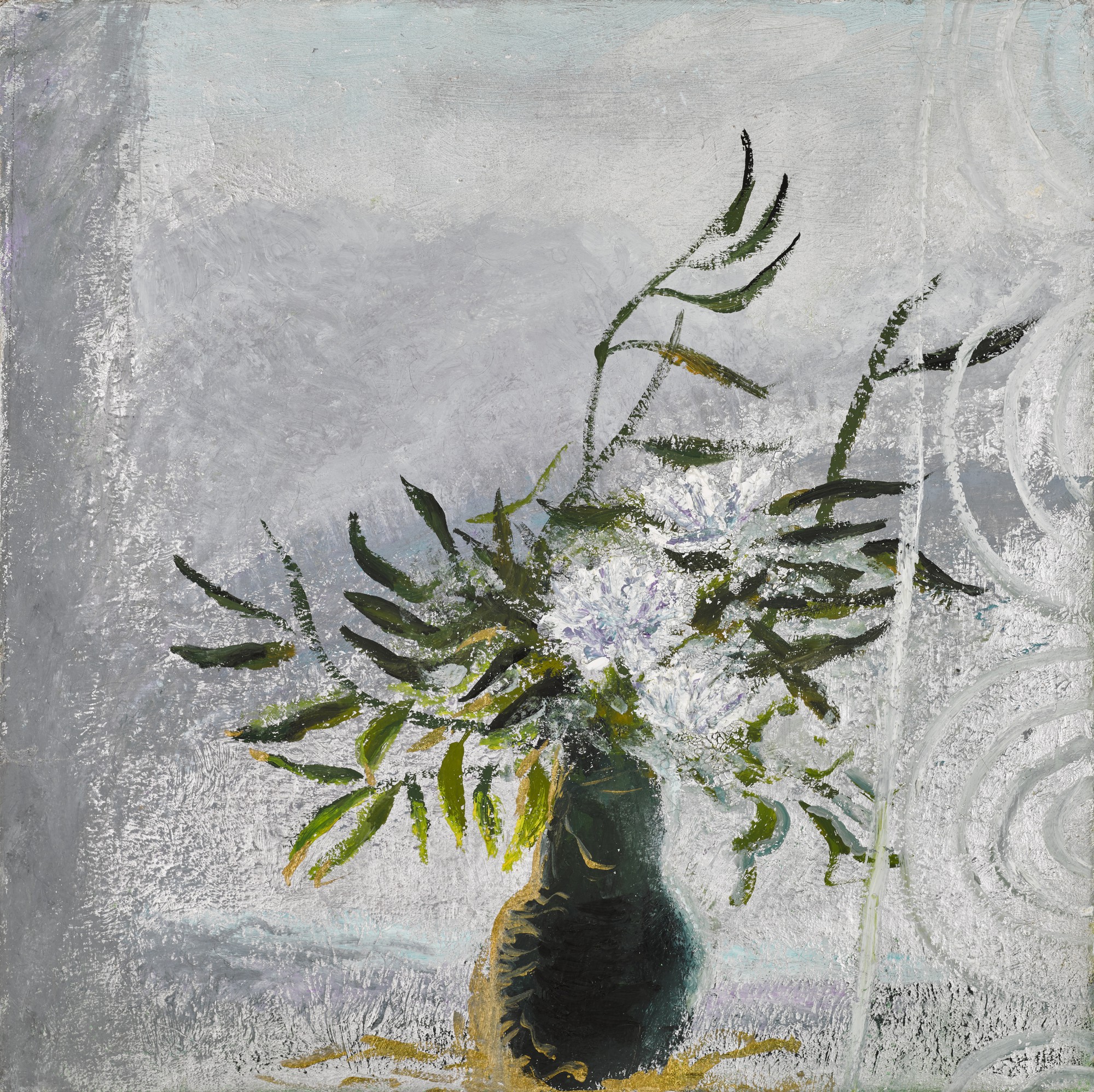
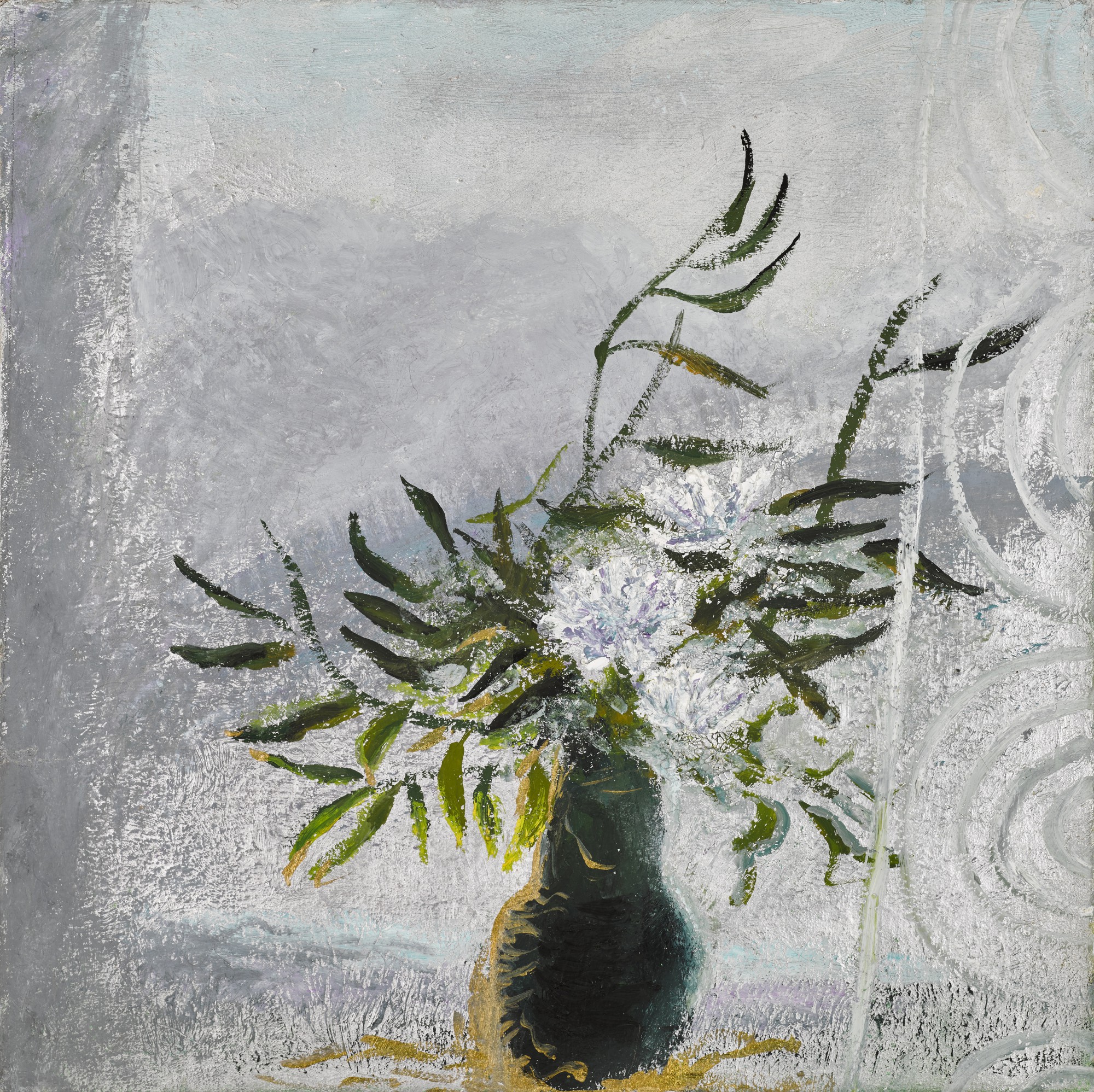
White Chrysanthemum, 1971
Winifred Dacre was born in 1893 into an aristocratic family with deep roots in English cultural life. Her grandfather was George Howard, the ninth Earl of Carlisle, a painter himself and a significant patron of the Pre Raphaelites. Growing up at Naworth Castle in Cumberland and at Castle Howard in Yorkshire, she was surrounded by great art from childhood, and the landscape of the North of England would remain a spiritual and visual touchstone throughout her long life. She studied at the Byam Shaw School of Art in London, where she received a thorough grounding in the technical traditions of painting, before travelling to Paris, where the full force of modernism made itself felt.
It was in Paris and later in London that Nicholson came into her own as an artist and as a thinker about art. Her marriage in 1920 to Ben Nicholson, one of the central figures of British modernism, placed her at the heart of an extraordinary artistic circle. The couple spent time in Lugano and later on the island of Iona, and these experiences of Mediterranean and Atlantic light became formative for her understanding of colour as a living, spiritual force rather than a merely decorative one. She was introduced to the work of the Cubists and encountered the ideas of Constructivism through her friendships with Piet Mondrian, Naum Gabo, and Barbara Hepworth during the 1930s, a period of intense creative ferment in which London briefly became a capital of the European avant garde.
Winifred Nicholson
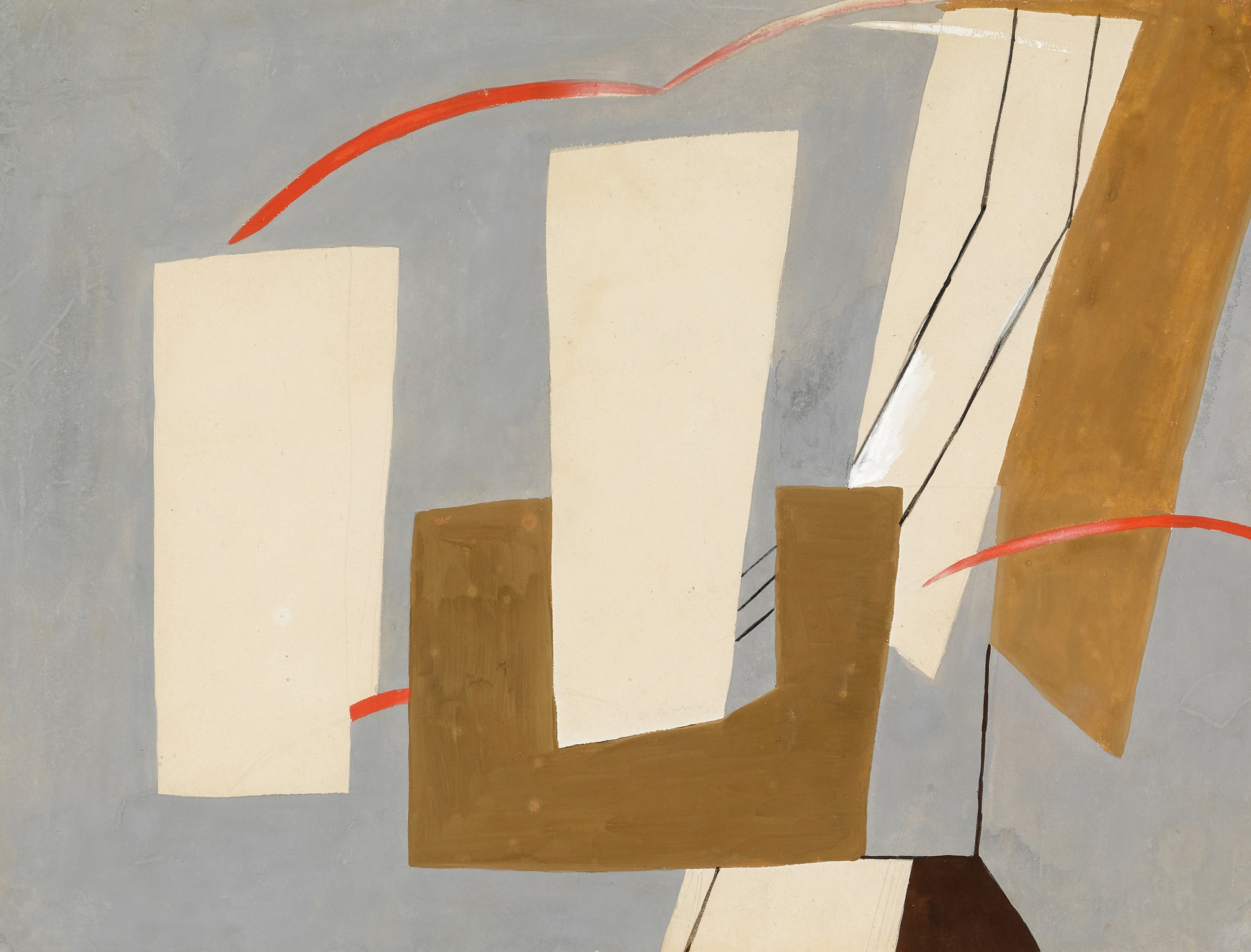
Abstract sequence: Untitled (Variation on Axis gouache), 1935
Nicholson's artistic development traces a distinctive and deeply personal arc. In the 1920s and early 1930s she was producing interior scenes and flower paintings of extraordinary chromatic sensitivity, works that seem conventional in subject matter but are anything but conventional in their handling of light and colour relationships. By the mid 1930s she was moving into more fully abstract territory, creating geometric compositions that reflected her engagement with Constructivist principles and her abiding belief that colour itself was a form of spiritual communication. This was not a dry or theoretical abstraction.
Her paintings pulse with warmth. She had a particular gift for making pure colour feel inhabited, as though light itself had decided to settle on the canvas and rest there a while. Among her most celebrated works, the paintings of flowers on windowsills occupy a uniquely important place. Works such as Cyclamen on a Window Ledge represent one of her signature preoccupations: the threshold between interior and exterior space, where domestic intimacy meets the vast and shifting world of weather and light beyond the glass.
Winifred Nicholson
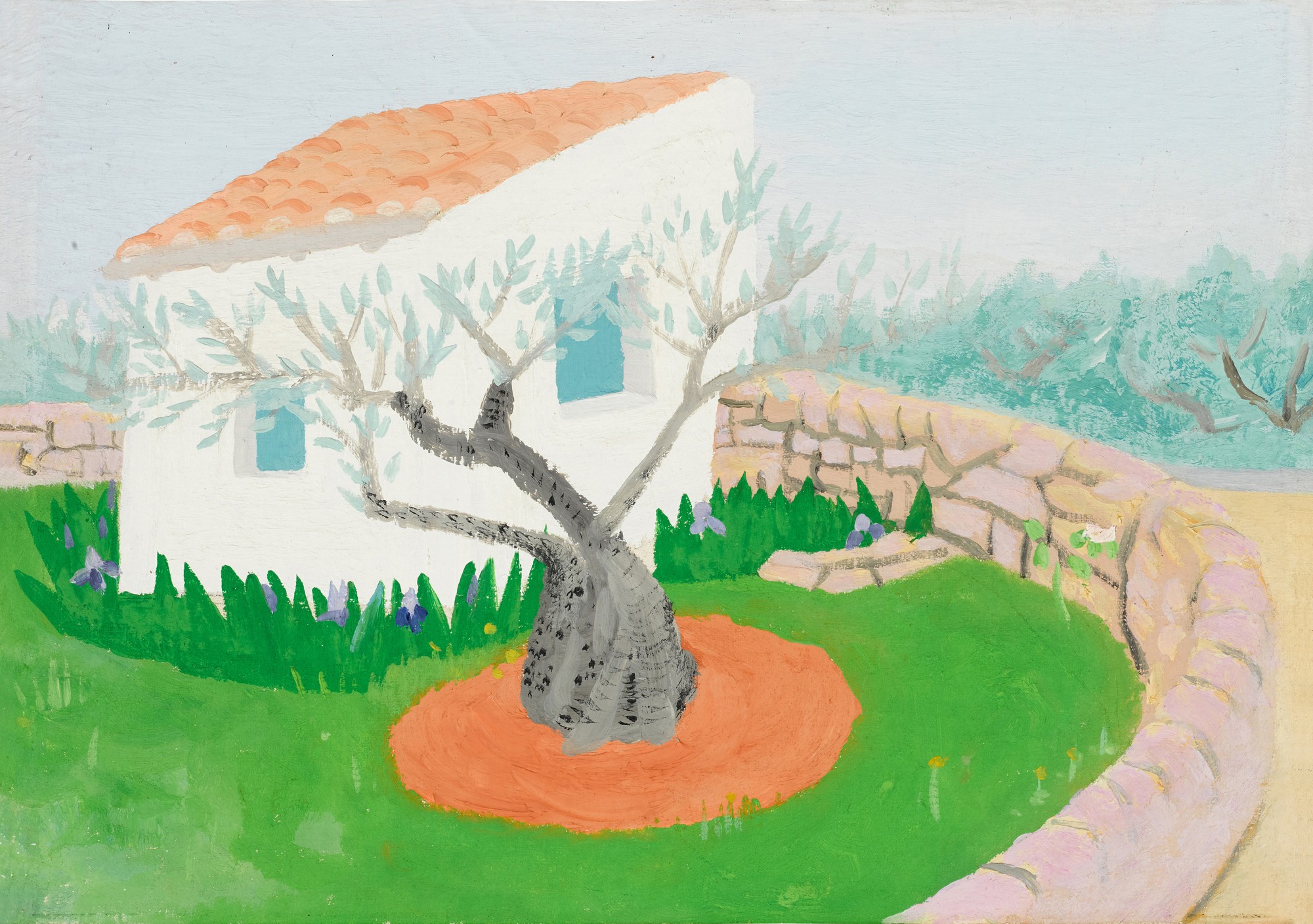
The Olive Tree, 1936
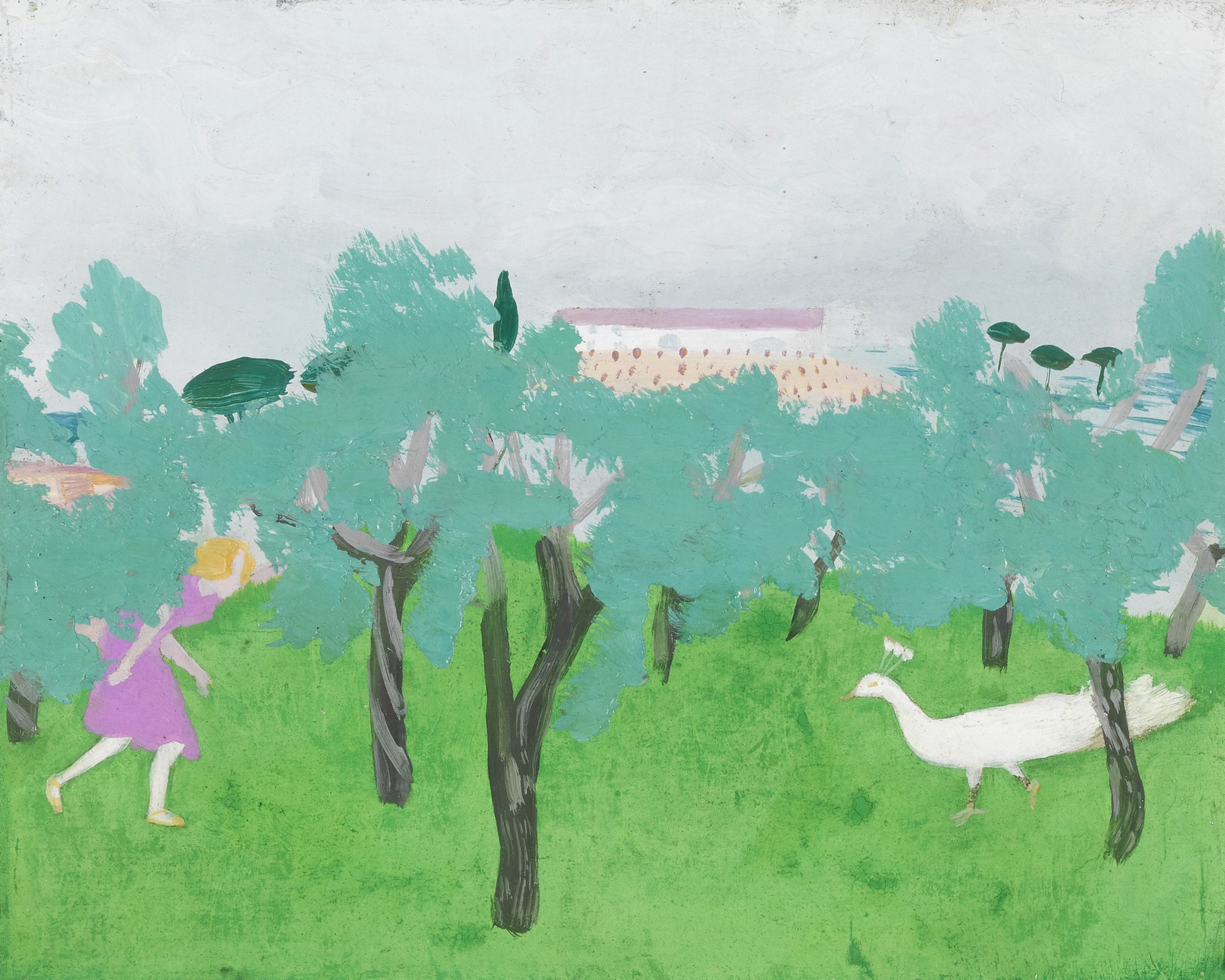
These are not simple still lifes. They are meditations on perception, on the way colour changes as it passes through glass, on the way the eye negotiates between the near and the far. Her 1971 work White Chrysanthemum, painted in oil and acrylic on canvas, shows how she continued to develop and deepen these concerns well into the final decades of her career, bringing a lifetime of looking to bear on a subject she had never tired of exploring. The Olive Tree and The White Peacock, both from 1936 and both painted in the years when her engagement with European modernism was at its most intense, demonstrate the breadth of her vision, her ability to move between observed nature and distilled abstraction with complete assurance.
For collectors, Nicholson represents one of the genuinely compelling propositions in the market for British modernism. Her work has appeared at Bonhams and Christie's with increasing regularity, and prices have risen steadily as her critical reputation has been rehabilitated. Works on paper, including gouaches from the abstract sequence of the 1930s, offer a point of entry that is both financially accessible and historically significant. The Untitled Variation on Axis gouache from 1935 is exactly the kind of work that rewards close attention: modest in scale, radical in intention, and deeply connected to one of the most important moments in British art history.
Winifred Nicholson
The White Peacock, 1936
Collectors who have come to Nicholson through her better known contemporaries, whether through Ben Nicholson, Barbara Hepworth, or Paul Nash, frequently find that her work holds the wall in a way that surprises and delights them. There is a warmth and an approachability to her paintings that draws people in before the full depth of her thinking becomes apparent. Nicholson's place in art history is now understood to be far more than contextual or associative. She was a genuinely original thinker about colour, one who drew on Goethe's colour theory as well as on the formal innovations of Mondrian and the Bauhaus.
She belongs in the company of Vanessa Bell and Ivon Hitchens among British painters who found ways to fuse the emotional directness of Post Impressionism with the structural ambitions of abstraction. Internationally, her sensibility connects her to artists such as Agnes Martin and Giorgio Morandi, painters for whom restraint and repetition become vehicles for an almost transcendent attentiveness to the visible world. She died in 1981 at Bowalley House in Cumwhitton, the Cumbrian farmhouse that had been her home and her studio for much of her adult life, leaving behind a body of work that continues to grow in stature. What makes Winifred Nicholson matter today is precisely what made her unusual in her own time.
She refused to separate the spiritual from the formal, the intimate from the universal, the domestic from the avant garde. At a moment when collectors and institutions are actively seeking to tell a fuller and more honest story about modernism, one that includes the women who shaped it and not merely the men who overshadowed them, her paintings offer something genuinely rare: beauty that is also rigorous, warmth that is also radical, and light that, once seen, is very difficult to forget.
Explore books about Winifred Nicholson
Winifred Nicholson: A Life
Jennifer Halley
Winifred Nicholson
Andrew Forge
Winifred Nicholson: An Introduction to Her Life and Work
Tom Normand
Winifred Nicholson: Paintings and Drawings
Several contributors
The Art of Winifred Nicholson
Andrew Causey