Wim Wenders
Wim Wenders Sees the World Whole
Artist Spotlight · The Collection Editorial
“Every image I take is a proof that I was there and that something existed.”
Wim Wenders
In 2024, Wim Wenders arrived at the Academy Awards with two films nominated simultaneously, a feat achieved by only a handful of filmmakers in the history of the ceremony. Perfect Days, his quietly luminous portrait of a Tokyo toilet cleaner, and Anselm, his immersive documentary portrait of the sculptor Anselm Kiefer, placed Wenders at the center of global cultural conversation in a way that felt less like a career resurgence and more like a confirmation. The world had finally caught up to what devotees of his work had long understood: that Wenders operates in a register entirely his own, one defined by patience, wonder, and an almost sacred attention to the textures of everyday life. Ernst Wilhelm Wenders was born on August 14, 1945, in Düsseldorf, Germany, arriving into a country in the process of rebuilding itself from rubble, both physical and psychological.
Wim Wenders
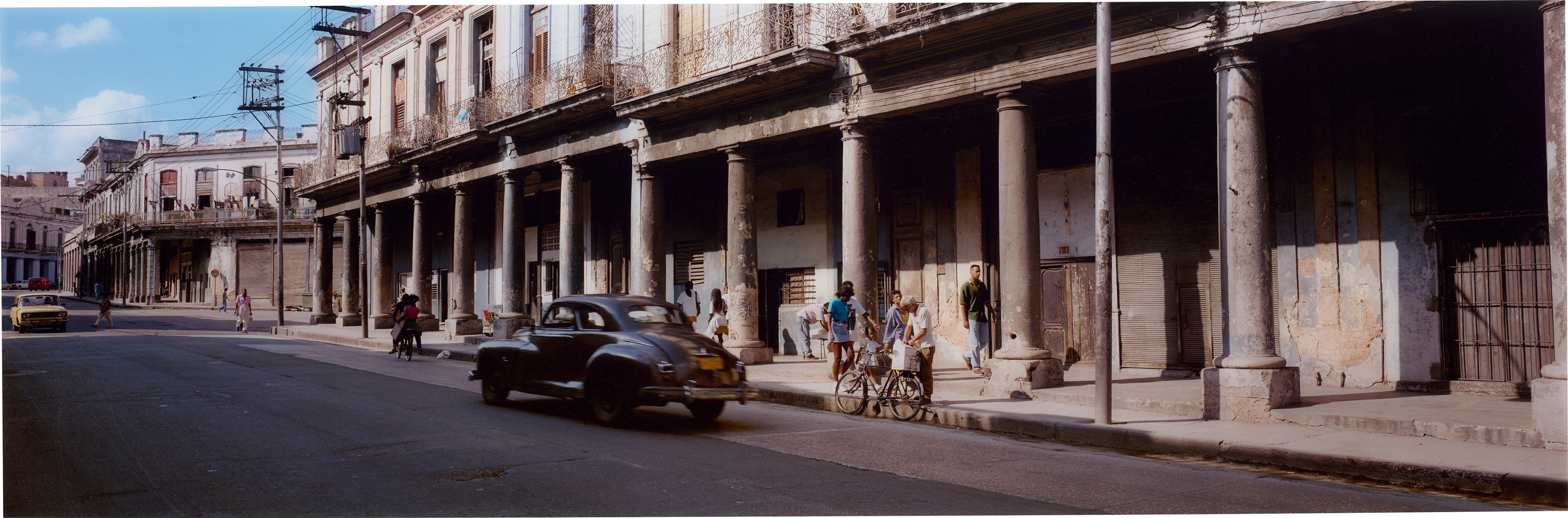
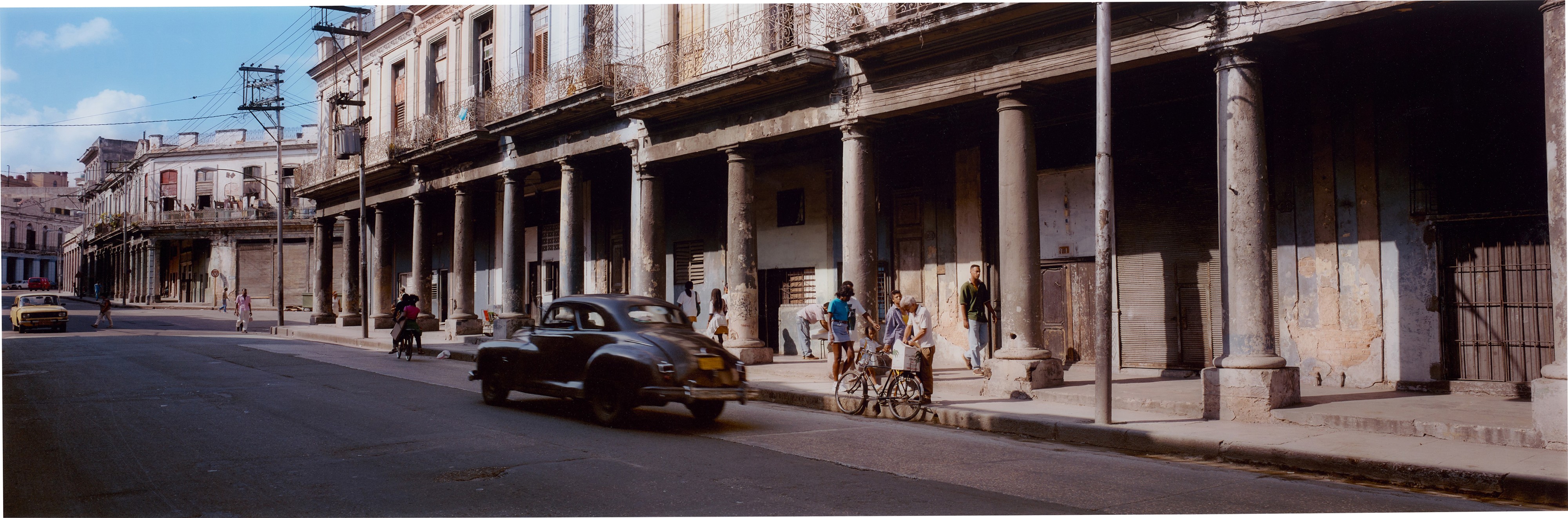
The Black Car, Havana
His father was a surgeon, and the family moved frequently during his childhood, a restlessness that would become one of the defining themes of his creative life. He studied medicine briefly, then philosophy, before finding his way to painting and eventually to film. He attended the Hochschule für Fernsehen und Film München, the Munich Film and Television School, graduating in 1970, and almost immediately announced himself as a filmmaker of uncommon seriousness and visual authority. The 1970s were his formative decade as a director, producing a series of road movies that drew deeply on American culture while maintaining a distinctly European melancholy.
Alice in the Cities in 1974, Wrong Move in 1975, and Kings of the Road in 1976 formed a loose trilogy that mapped the interior landscape of postwar German identity against the open road. Paris, Texas in 1984, his masterpiece for many, won the Palme d'Or at Cannes and introduced his sensibility to a genuinely international audience. Wings of Desire followed in 1987, transforming Berlin into a city of angels and longings, and cementing his reputation as one of the great poets of cinema. But Wenders has always been as much a visual artist as he is a filmmaker, and his photographic practice deserves to be understood on its own terms rather than as a footnote to his films.
Wim Wenders
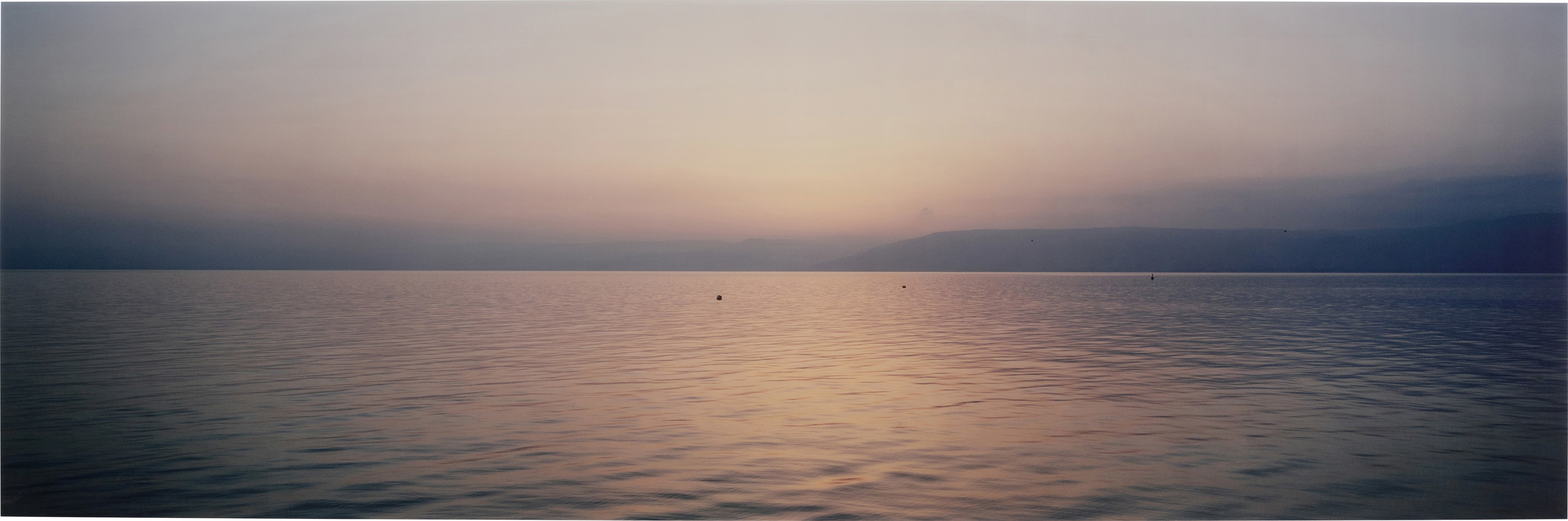
Lake Galilee Before Sunrise, 2000
He began making large format photographs with serious intent in the 1980s and 1990s, and the resulting body of work shares with his films a quality of stillness, of time held suspended. His photographs have been exhibited at major institutions including the Guggenheim Museum in Bilbao and the Kunstfoyer in Munich, and they have found an enthusiastic audience among collectors who respond to their cinematic scale and emotional precision. Each image feels like a frame from a film that does not exist, or perhaps from a film that exists entirely in the imagination of the viewer. The works available through The Collection offer an exceptional window into his photographic vision across geography and light.
“The more you photograph, the more you realize what can and cannot be put into pictures.”
Wim Wenders
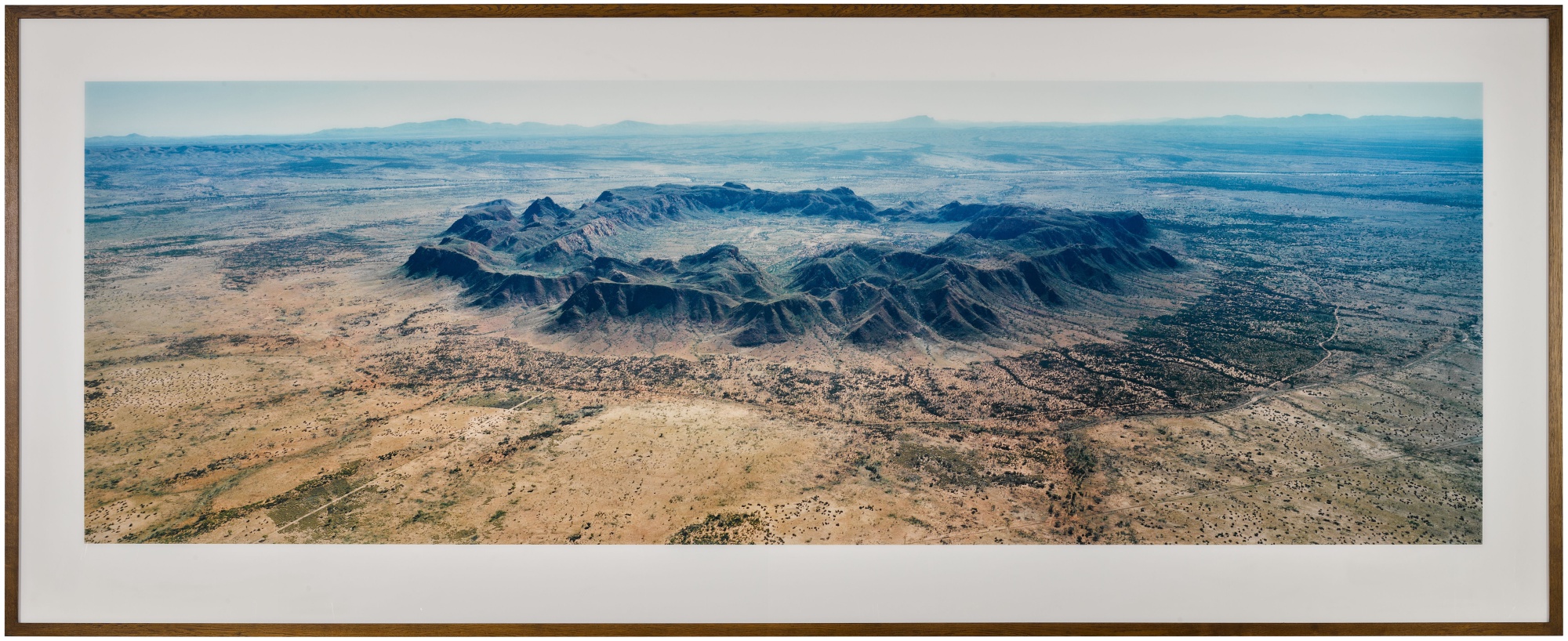
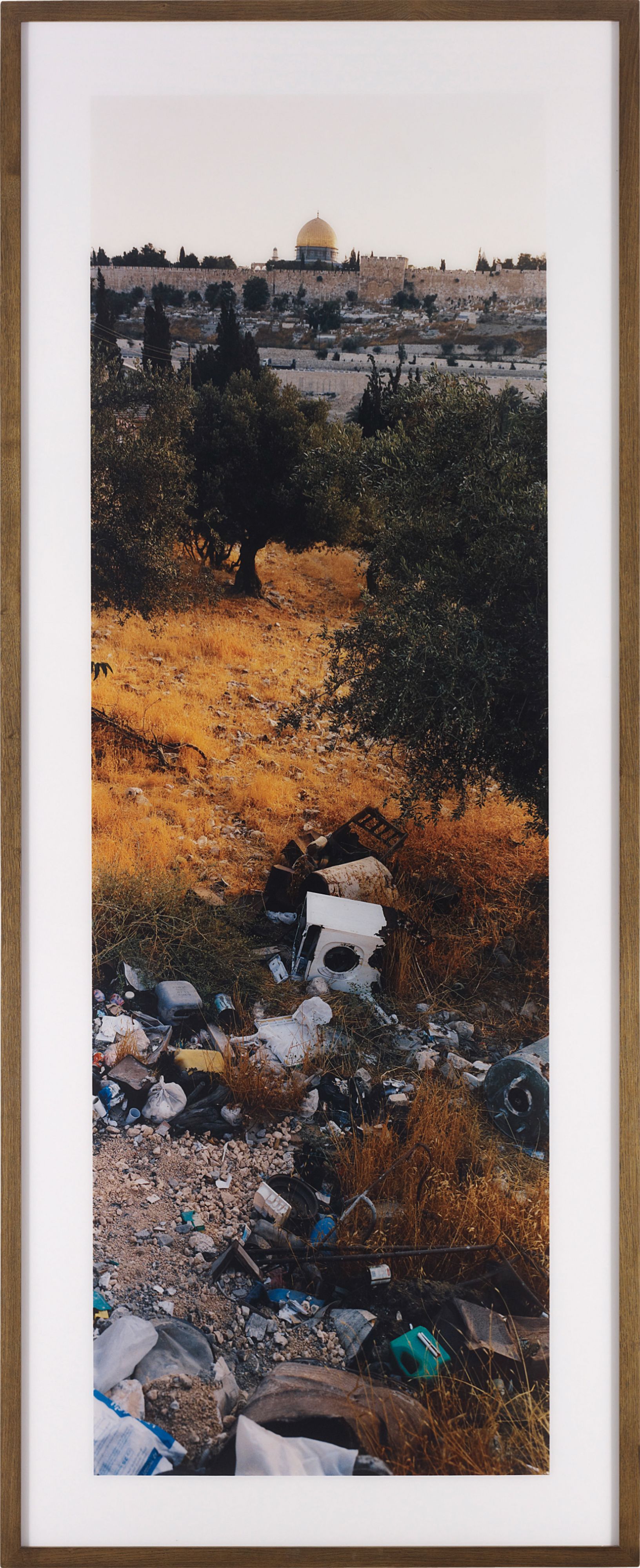
The Black Car, Havana is characteristic of his approach to urban environments: the image holds a charged stillness, a sense that the street has just exhaled before beginning again. Presented as a chromogenic print with face mounting, it achieves a depth and luminosity that rewards extended looking. Dust Road, West Australia, also a chromogenic print mounted in Diasec, demonstrates his profound attunement to landscape, the road stretching into distance as both literal path and existential proposition. Lake Galilee Before Sunrise, made in 2000, and Jerusalem Seen from the Mount of Olives speak to his sustained engagement with places weighted by history and spiritual resonance, locations where the visible world seems to carry the memory of everything that has ever happened there.
Wim Wenders
Meteorite Crater, West Australia
For collectors, the appeal of Wenders as a photographer is inseparable from his stature as a filmmaker, but it goes well beyond name recognition. His photographs are made with a rigorous technical commitment and a compositional intelligence honed over decades of working with cinematographers of the caliber of Robby Müller and Henri Alekan. The large format prints, particularly those presented in Diasec or with face mounting, have a physical presence that commands space and holds it. As the art market has grown increasingly attentive to artists who work across disciplines and who bring a genuinely literary or cinematic intelligence to the still image, Wenders has emerged as a figure of real collecting significance.
His work shares an aesthetic kinship with photographers such as Gregory Crewdson and Andreas Gursky, artists who approach the photographic image as a constructed world rather than a captured moment, and with filmmakers turned visual artists such as David Lynch. What distinguishes Wenders within this company is a quality of gentleness that is rare in contemporary art at any scale. His images do not confront or destabilize. They invite.
Wim Wenders
Jerusalem Seen from the Mount of Olives
There is in his photographs, as in his films, a deep and abiding respect for the dignity of the ordinary, for the beauty that accumulates in places and things that the world tends to pass without noticing. Jerusalem Seen from the Mount of Olives does not dramatize conflict or impose ideology. It simply looks, with an attention so sustained and so loving that the image becomes a form of devotion. This is the quality that makes his work not merely beautiful to live with but genuinely sustaining, capable of revealing something new on each encounter.
Wenders turns eighty this year, and the recognition that has surrounded him in recent seasons feels entirely earned. He is a filmmaker who has made works that will be studied for generations, and a photographer whose prints belong in the company of the most significant visual art of the late twentieth and early twenty first centuries. His career is a model of artistic integrity maintained across more than five decades, a refusal to simplify or to stop asking questions about what it means to see and to be seen. For collectors who believe that a great work of art is a genuine companion in the fullest sense of the word, Wenders offers something rare: images made by a man who has spent his entire life learning how to pay attention, and who brings that attention to every frame.
Explore books about Wim Wenders
Wim Wenders: Interviews
Edited by Amen Eckardt
The Cinema of Wim Wenders: From Paris, France to Paris, Texas
Edited by Kathe Geist
Wim Wenders and Peter Handke: Collaboration and Adaptation
Peter Handke and Wim Wenders
The Logic of Images: Essays and Conversations
Wim Wenders
Wim Wenders: A Life
Jean Gundlach
Wim Wenders: Filmmaker
Edited by Karen Jaehne