William Wegman
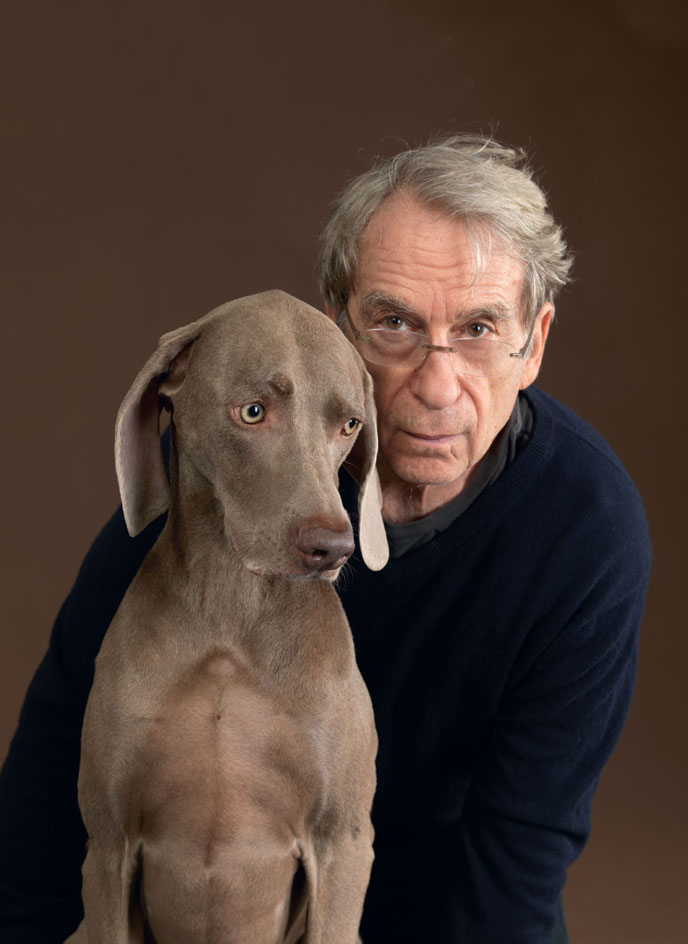
William Wegman: Portrait of Pure Artistic Joy
Artist Spotlight · The Collection Editorial
“I never thought of the dog work as a separate thing. It was always part of everything else I was doing.”
William Wegman, interview with The New York Times
There is a moment, somewhere between the first glance and the slow smile, when a William Wegman photograph does something few works of contemporary art manage: it disarms you completely. In recent years, major institutions have continued to affirm what devoted collectors have long understood. The Smithsonian, MoMA, and the Centre Pompidou all hold Wegman's work in their permanent collections, and retrospective interest in his practice has only deepened as scholars and curators reckon more seriously with the role of humor, conceptualism, and the human and animal bond in postwar American art. Wegman is not a footnote in that conversation.
William Wegman
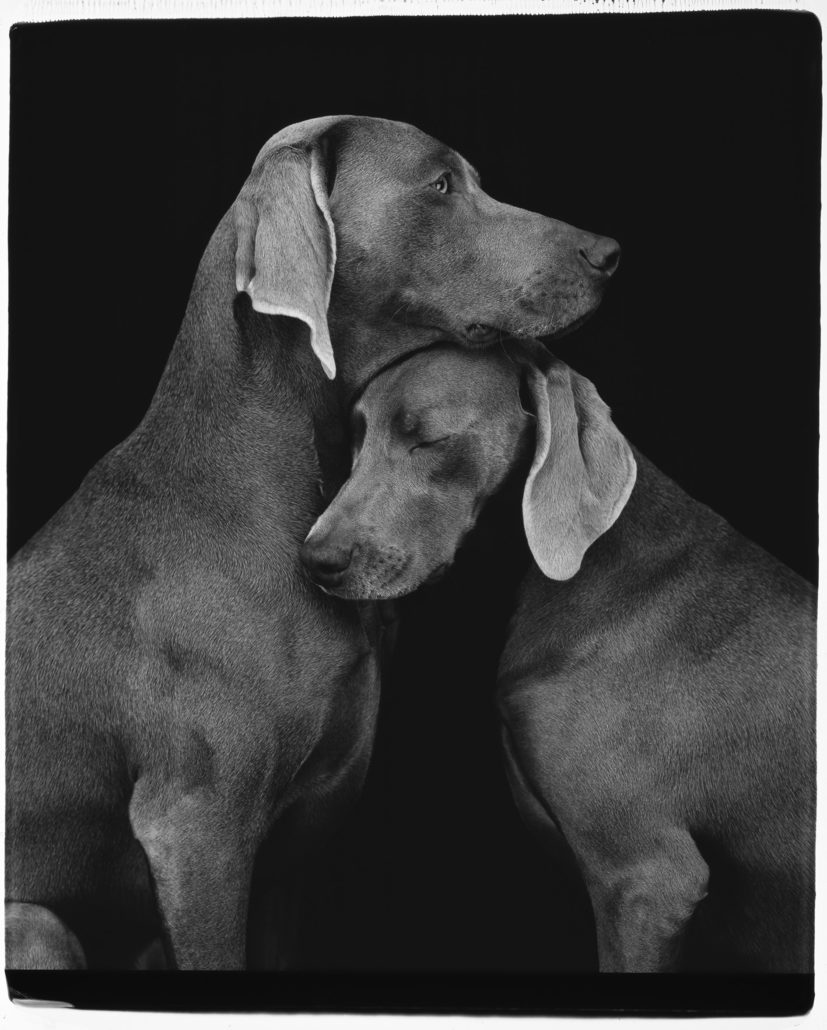
Friends, 2010
He is one of its most original and enduring voices. Wegman was born in 1943 in Holyoke, Massachusetts, and came of age in a cultural moment defined by radical experimentation. He studied painting at the Massachusetts College of Art in Boston before earning his MFA from the University of Illinois at Urbana Champaign in 1967. Those years placed him squarely within a generation of artists questioning what art could be, what it could say, and who it could speak to.
Rather than retreating into formalism, Wegman moved toward performance, language, and the absurd, finding in those registers a way to say something genuinely new. His early video work from the late 1960s and 1970s established him immediately as a singular presence. Working with simple setups and deadpan delivery, Wegman made short videos that were funny in the way that great comedy is always funny: structurally precise, philosophically loaded, and impossible to fully explain. These pieces, made with minimal production and maximum wit, circulated through the emerging conceptual art world and earned him a reputation as one of the sharpest and most playful minds of his generation.
William Wegman
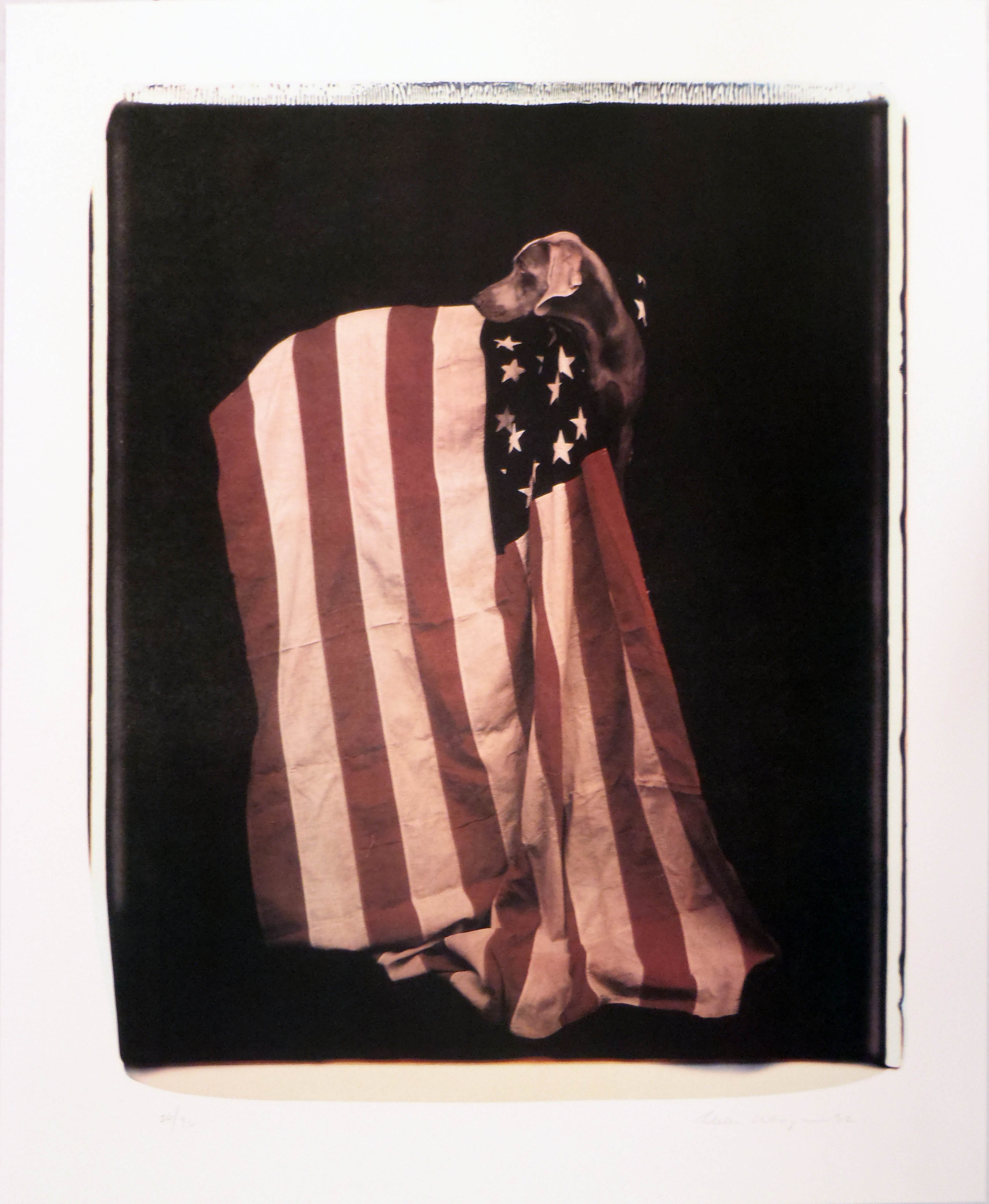
Profiles in Patriotism (from Freedom of Expression) , 1992
It was during this period that he acquired his first Weimaraner, a dog he named Man Ray, and the course of his career shifted in ways neither he nor the art world could have anticipated. Man Ray became more than a subject. He became a collaborator, a muse, and a kind of conceptual device through which Wegman could explore portraiture, identity, costume, and the strange theater of looking. The Polaroid Corporation gave Wegman access to their large format 20x24 camera in 1979, and the resulting photographs announced a new chapter in his practice.
The scale and lushness of the Polaroid format suited Wegman's sensibility perfectly, allowing him to construct elaborate tableaux with his dogs that felt simultaneously absurd and deeply considered. After Man Ray passed in 1982, Wegman continued with subsequent Weimaraners, most notably Fay Ray and her descendants, building over decades a cast of animal collaborators whose dignity and patience in front of the camera became legendary. The works available through The Collection offer a remarkable window into the full arc of this practice. "Man Ray," the 1982 portfolio published by Holly Solomon Editions in New York, is a landmark object: ten prints, including eight gelatin silver and two dye transfer prints, documenting the collaboration that launched everything.
William Wegman
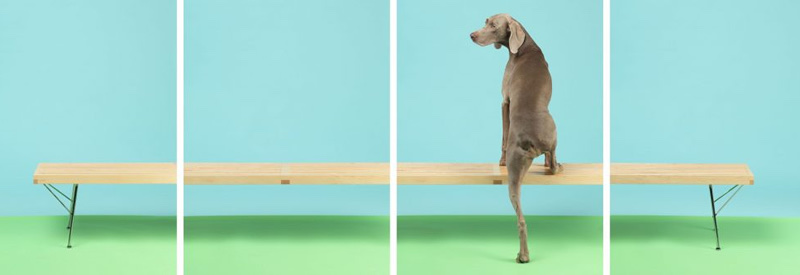
On Up (Set of 4), 2015
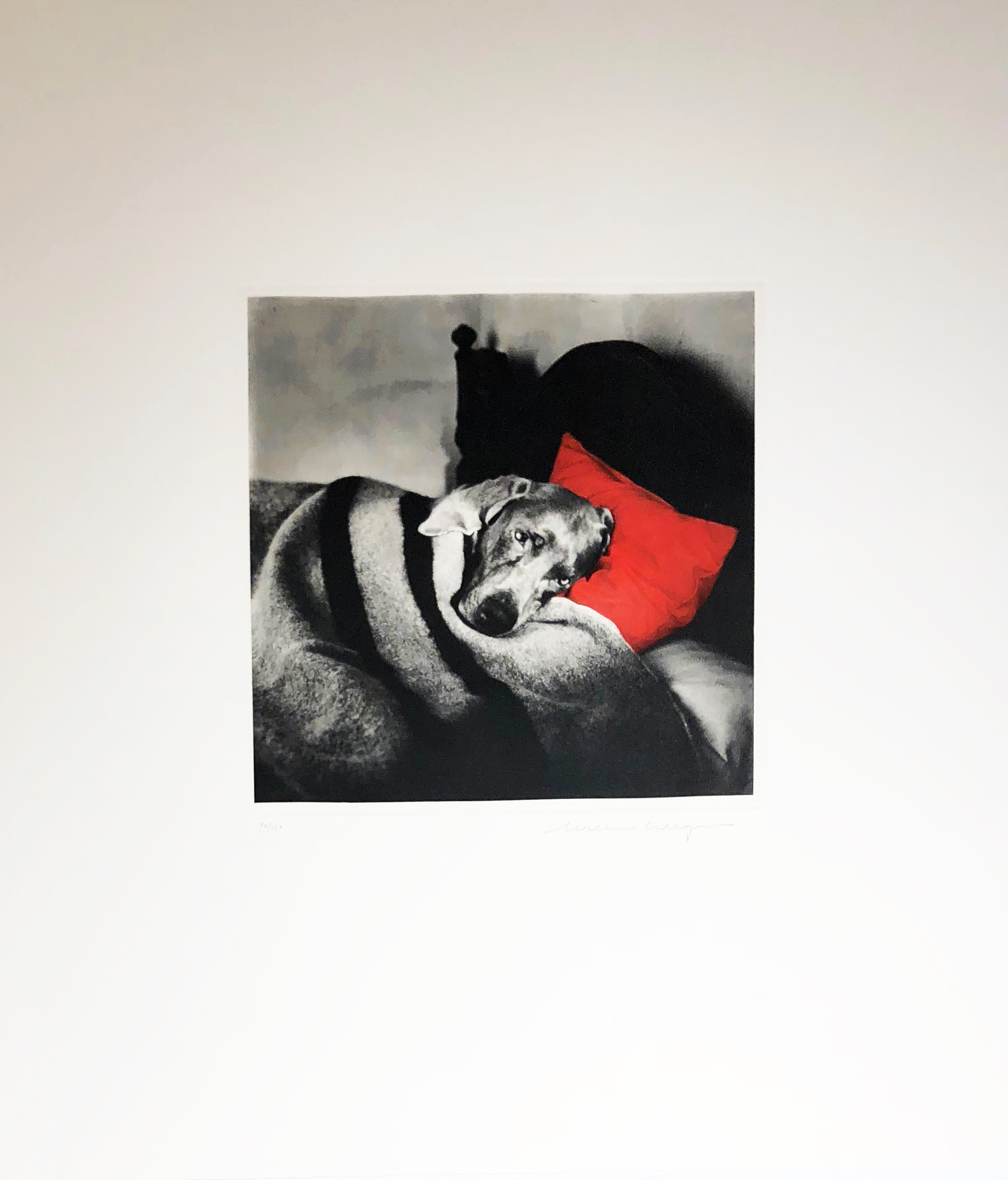
"Cinderella Sleeping" from 1994, a photo etching with aquatint on Fabriano Tiepolo paper, reveals Wegman's ease across multiple printmaking traditions, his imagery translating into etched line with the same warmth and wit it carries in photography. "Profiles in Patriotism" from the 1992 Freedom of Expression series, rendered as a lithograph, shows how comfortably his social and conceptual instincts sit alongside his more intimate work. And "Friends" from 2010, an archival pigment print on Museo Silver Rag, demonstrates the continued freshness of a practice now spanning more than five decades. For collectors, Wegman occupies a rare and genuinely enviable position in the market.
His work is blue chip in the truest sense: institutionally validated, broadly recognized, and consistently sought after, while remaining accessible across a range of price points that few artists of his stature can offer. Prints, photo etchings, and pigment prints provide entry points for collectors building a first serious collection, while major Polaroid works and unique photographs command serious attention at auction. What draws collectors is not simply the charm of the dogs, though that charm is real and should not be underestimated, but the intelligence behind every image. Wegman's compositions are formally rigorous.
William Wegman
Cinderella Sleeping, 1994
His use of light, scale, and staging reflects a painter's eye and a conceptualist's mind working in perfect alignment. Within the broader landscape of American photography and conceptual art, Wegman sits in stimulating company. His wit and structural clarity invite comparison to artists like Bruce Nauman and John Baldessari, both of whom used video and performance in the late 1960s and 1970s to disrupt expectations about what art could look like. His approach to portraiture and costume connects to a long tradition of staged photography, placing him in dialogue with artists like Cindy Sherman, whose work also interrogates identity through theatrical construction.
Yet Wegman's voice is finally irreducible to any single comparison. The combination of formal elegance, genuine warmth, and conceptual rigor that defines his work is entirely his own. What makes Wegman matter today, and what will ensure his place in the history of photography and American art, is precisely this refusal to choose between seriousness and joy. At a moment when much of the art world privileges difficulty and critique, Wegman's work is a reminder that humor is not the opposite of depth.
It can be its highest expression. His images have entered the visual culture so thoroughly that they feel familiar even to those who have never set foot in a gallery, and yet they reward close looking with the same generosity they offer at first glance. To live with a Wegman is to live with something that gives back a little more each time you look. That is the rarest quality in art, and it is reason enough to pay attention.
Explore books about William Wegman
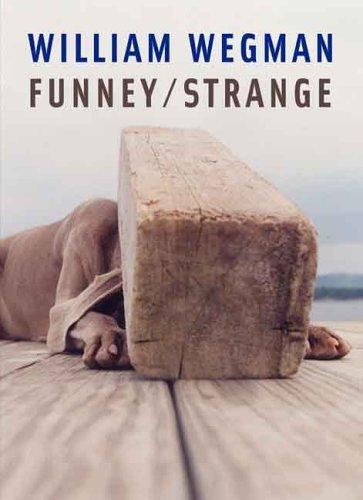
William Wegman: Paintings, Drawings, Photographs, Videotapes
William Wegman
William Wegman: Fashion Photographs
William Wegman
William Wegman: ABC
William Wegman
William Wegman: Cinderella
William Wegman
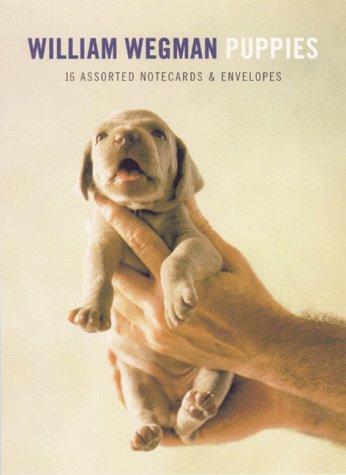
Puppies
William Wegman
William Wegman: Retrospective
Guggenheim Museum

Hello, I'm Special
William Wegman