William Valentine Schevill
William Schevill, A Master of Radiant Humanity
Artist Spotlight · The Collection Editorial
There is a particular quality of stillness that greets you when you stand before a painting by William Valentine Schevill. It is the stillness of a room just before someone speaks, of light settling on a face at the precise moment feeling becomes visible. Schevill spent the better part of a long and productive life chasing that moment, and across portraits, genre scenes, and devotional compositions, he caught it with a consistency that marks him as one of the more quietly distinguished American painters working across the late nineteenth and early twentieth centuries. That his reputation has taken time to reassemble itself in the broader conversation about academic realism only makes the rediscovery more rewarding.
William Valentine Schevill
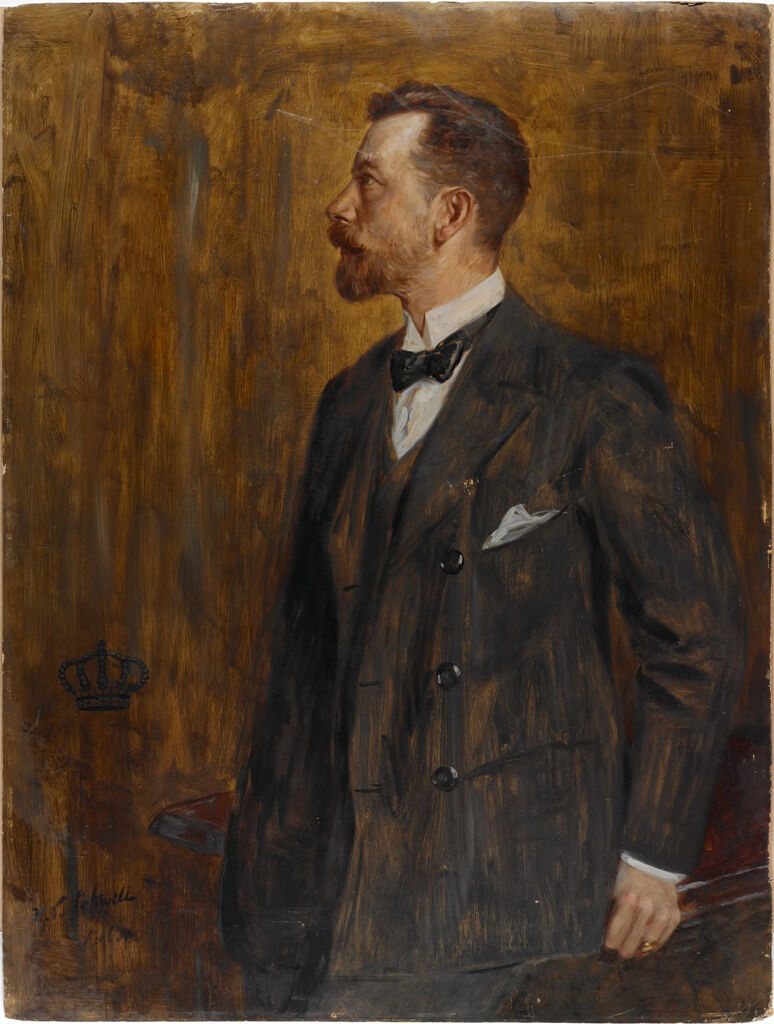
Portrait of Prince Heinrich Hohenzollern
William Valentine Schevill was born in Cincinnati, Ohio, in 1864, a city that in the decades following the Civil War was developing a genuine appetite for the fine arts. Cincinnati had established its Museum of Art in 1881 and its Art Academy even earlier, and the broader cultural ambition of the city shaped the aspirations of young artists who grew up within it. Schevill came of age in an environment that understood painting as a serious vocation, not a decorative afterthought. That grounding gave him the discipline to pursue formal training abroad at a time when Europe remained the essential finishing school for any American painter with serious intentions.
Like many of the most accomplished American painters of his generation, Schevill made the transatlantic journey that defined serious artistic formation in the latter half of the nineteenth century. He studied in Munich, which in those decades offered a rigorous and slightly darker alternative to the French academic tradition, with an emphasis on strong tonal contrasts, confident brushwork, and a respect for the materiality of paint itself. The Munich school produced painters who could handle the figure with authority, and Schevill absorbed those lessons thoroughly. He subsequently studied in Paris, where the lightening influence of French academic painting and the ambient excitement of Impressionism and its aftermath added suppleness and luminosity to a technique that might otherwise have remained too anchored in northern European gravity.
William Valentine Schevill
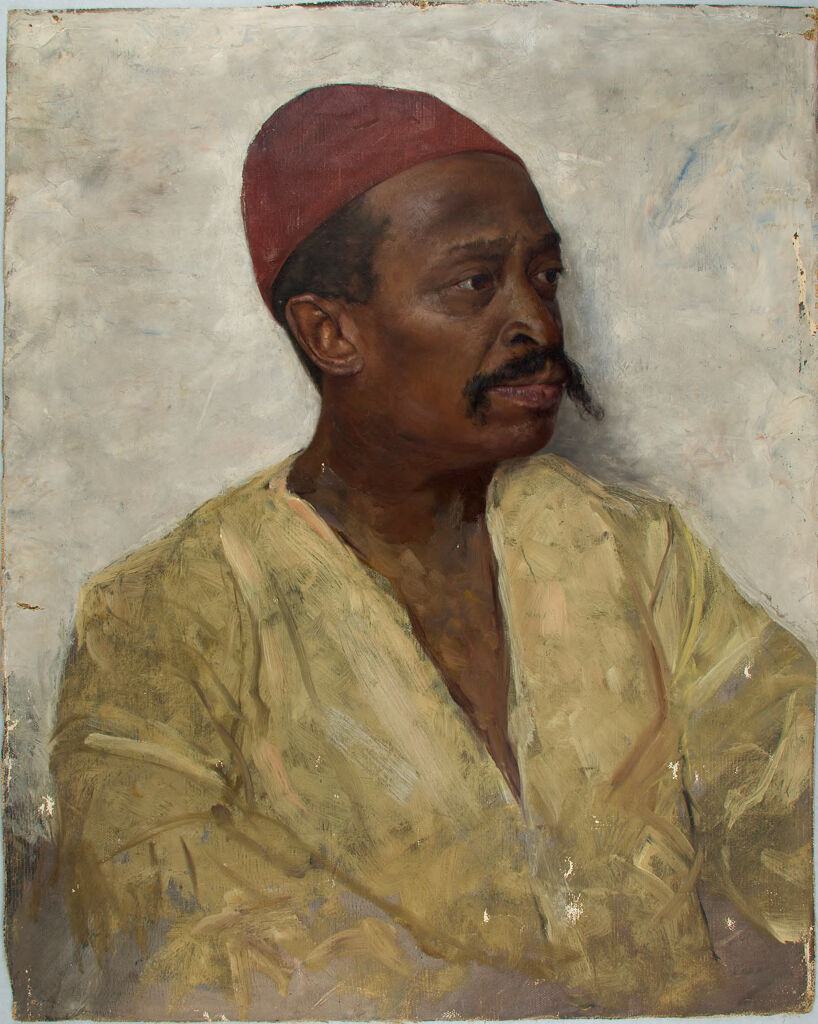
Portrait of a Man
The combination proved formative and gave his mature work its distinctive character: structured, assured, but never rigid. Schevill's practice was fundamentally figurative, and within that broad territory he moved with ease between portraiture, narrative genre painting, and subjects drawn from religious and classical tradition. His portraits carry the hallmark of a painter who genuinely observed the people in front of him. The Portrait of Prince Heinrich Hohenzollern is an arresting demonstration of his ability to handle a formal commission with both decorum and psychological presence, balancing the expected conventions of aristocratic portraiture with a sensitivity to individual character that keeps the image alive.
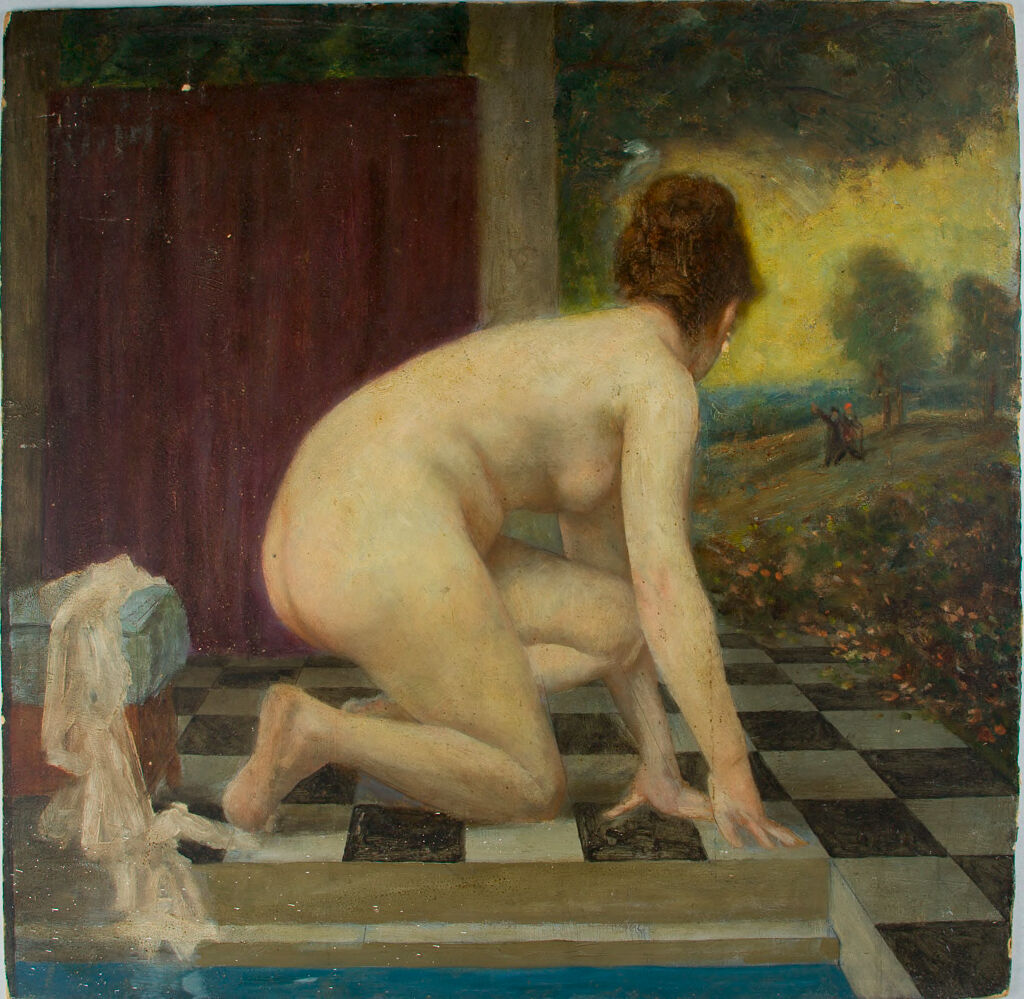
His Self Portrait offers something more intimate, a direct and unflinching account of a man who understood his own craft and was unafraid to test it against his own face. Portrait of a Man and the simply titled Portrait from 1899 further confirm his range within the genre, each bringing a distinct sense of occasion and interiority to the sitter. Beyond portraiture, Schevill produced works that reveal a painter with broader intellectual and imaginative ambitions. Susannah and the Elders engages one of the most charged subjects in Western art history, a narrative that had occupied painters from Tintoretto to Rembrandt to Artemisia Gentileschi, and Schevill approached it with compositional confidence and an evident awareness of the pictorial tradition he was entering.
William Valentine Schevill
Susannah and the Elders
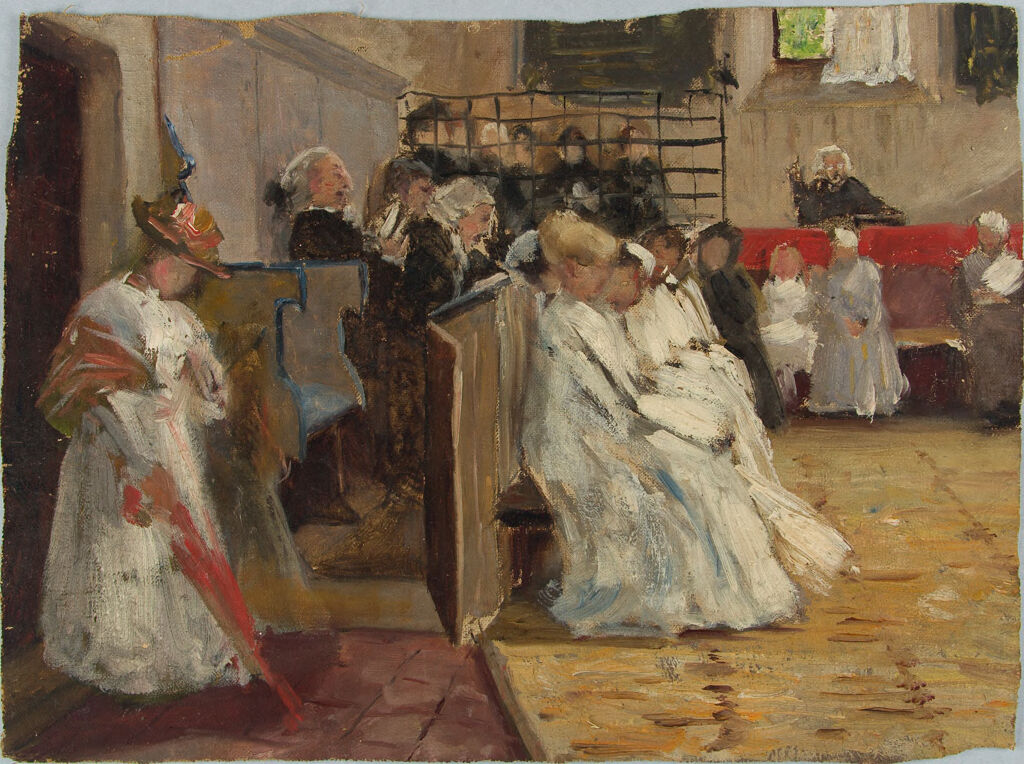
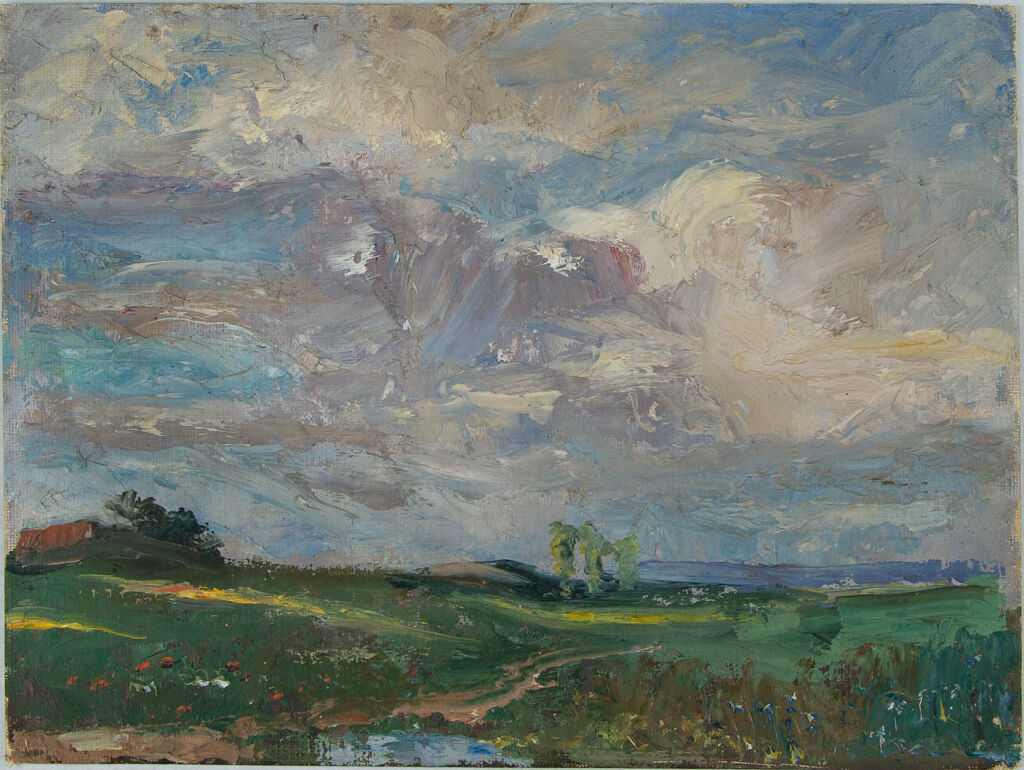
Virgin and Child with the Magi, likewise, places him in dialogue with centuries of devotional painting, and the fact that he chose such subjects speaks to an artist who thought seriously about the conversation between his own work and the canon. In the Meeting House introduces a quieter note, a scene of interior American life rendered with the careful observation of the genre tradition at its best. His Landscape and Garden demonstrate that even when departing from the figure, Schevill brought the same attentiveness to light and atmosphere that animates his best figurative work. For collectors, Schevill represents a genuinely compelling opportunity within the broader field of American academic realism.
His generation, which includes painters such as William Merritt Chase, Cecilia Beaux, and Edmund Tarbell, has attracted sustained scholarly and market attention over the past several decades as the field has rightly come to appreciate the technical seriousness and human warmth of the academic tradition. Schevill shares with these contemporaries a command of the figure, a sophisticated handling of light, and an ability to locate emotional truth within formal restraint. Works on composition board appear with some regularity in his output alongside traditional canvas supports, and in both cases the paint handling rewards close looking. Collectors drawn to the quieter voices within American realism, those who find themselves pausing before a Tarbell at the Museum of Fine Arts in Boston or a Beaux at the National Portrait Gallery, will find in Schevill a painter whose work repays the same quality of attention.
William Valentine Schevill
Landscape
The art historical context in which Schevill worked is one of the richest and most contested in American cultural history. The late nineteenth century saw American painters negotiating constantly between European training and American subject matter, between the prestige of the academy and the gathering energies of modernism, between cosmopolitan ambition and regional loyalty. Schevill navigated those tensions with apparent ease, producing work that is clearly informed by his European formation while remaining rooted in American subjects and sensibilities. His place within that generation of Munich and Paris trained painters who returned to the United States and helped define what serious American painting could look and feel like deserves wider acknowledgment.
William Valentine Schevill lived until 1951, a long life that saw the art world transform almost beyond recognition around him. That he continued to work through the rise and apparent triumph of modernism, maintaining his commitment to the figure and to the values of careful observation, speaks to an integrity that collectors and historians alike can admire. At a moment when the field is reassessing academic realism with fresh eyes and genuine enthusiasm, Schevill emerges as a painter whose warmth, skill, and seriousness of purpose feel not merely historical but genuinely present. To encounter his work is to be reminded of what painting, at its most humane and most attentive, can do.