William Scott
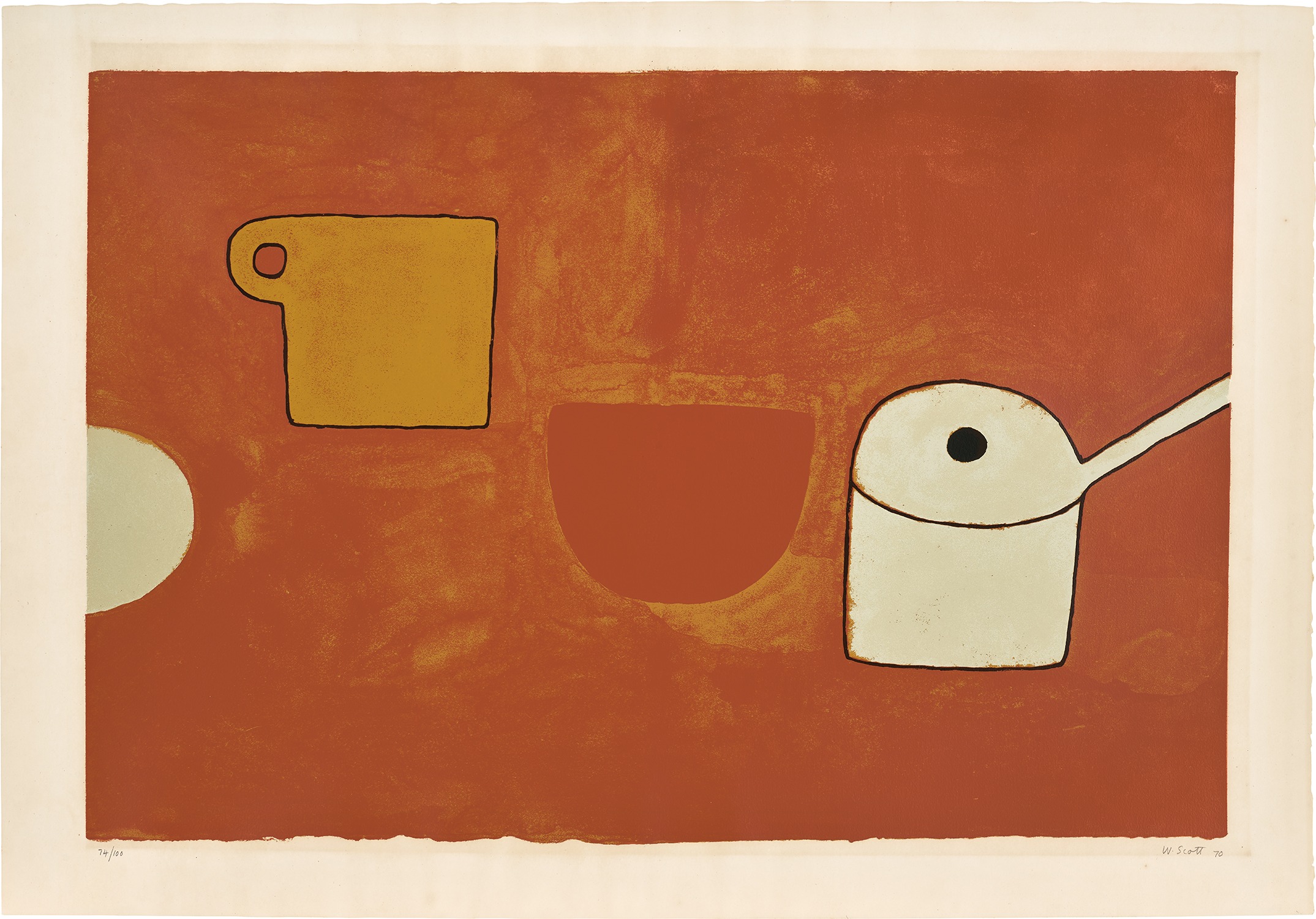
William Scott: Poetry Found in Everyday Forms
Artist Spotlight · The Collection Editorial
“I am always trying to find the simplest possible means of expression.”
William Scott
There are moments in art history when simplicity becomes its own kind of radicalism. Standing before a William Scott canvas, whether it is a frying pan rendered in warm ochre and brown or a spare arrangement of bowls that seems to hover between object and pure geometry, one is struck by how much emotional and intellectual weight a single curved line can carry. The Tate Britain retrospective of 2013, mounted to mark the centenary of his birth, reminded a new generation of collectors and museum goers just how vital and quietly revolutionary Scott's contribution to postwar British painting had been. That exhibition, drawing together works spanning five decades, confirmed his position not as a footnote to the Abstract Expressionist moment but as a singular voice who had found his own way through the competing pressures of European modernism and American ambition.
William Scott
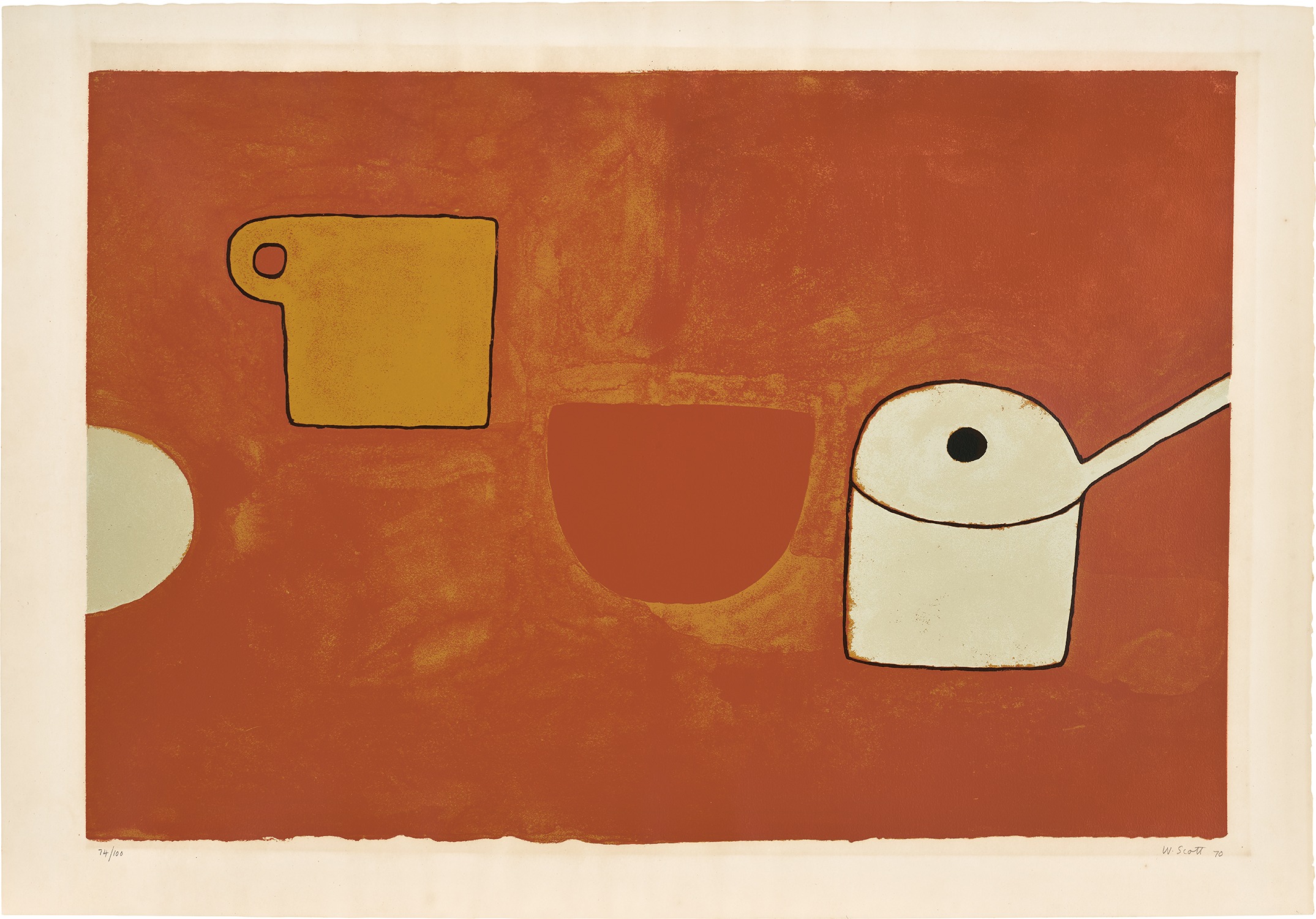
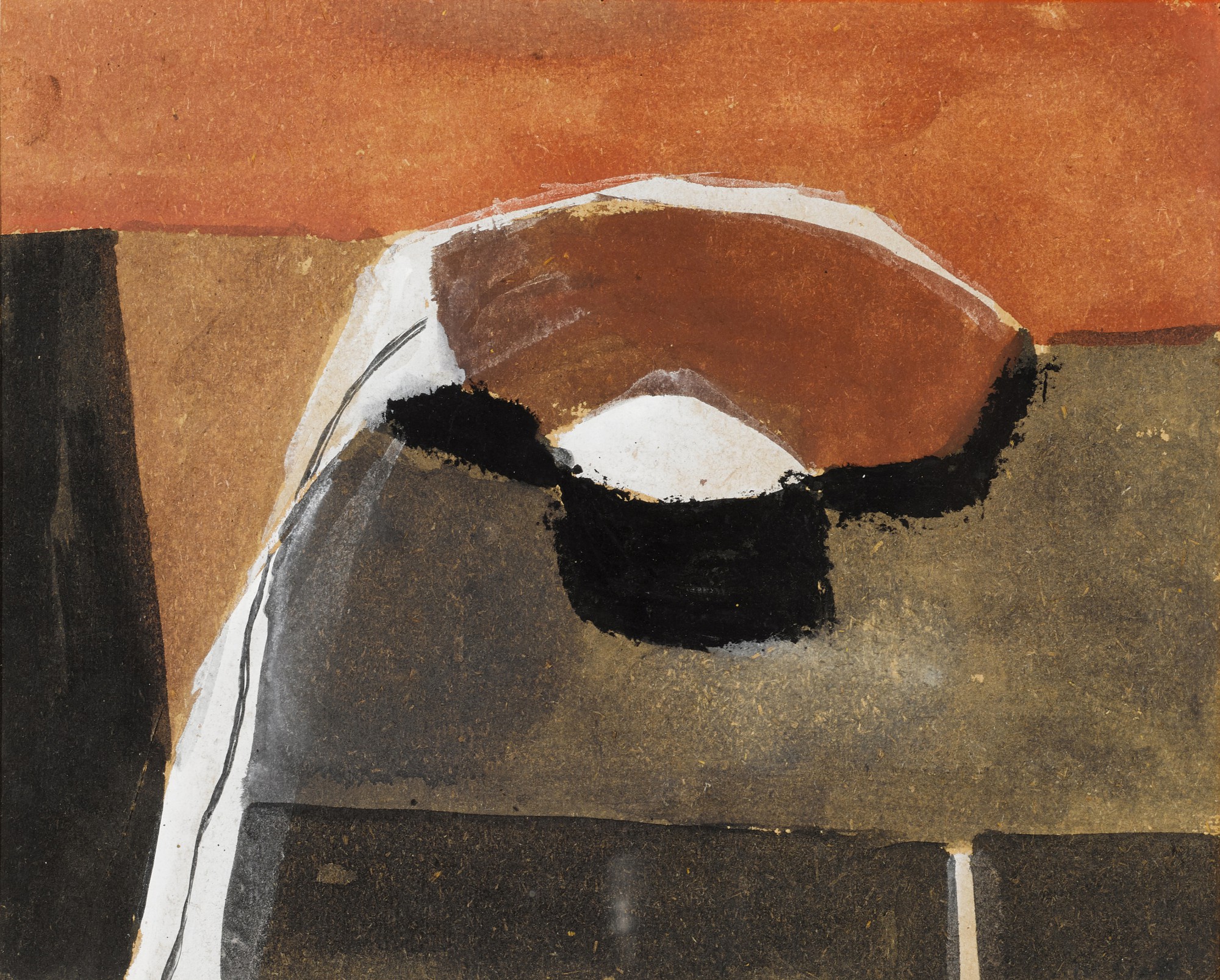
Cup, Bowl, Pan, Browns and Ochres (A. 28)
William Scott was born in 1913 in Greenock, Scotland, to an Irish father, and the family soon returned to Enniskillen in County Fermanagh, Northern Ireland, where he grew up. That particular geography mattered. The light of the west of Ireland, the modest domestic interiors of a working family, and a cultural background that sat at the edges of the established British art world all shaped the sensibility that would eventually produce some of the most quietly powerful paintings of the twentieth century. He studied at Belfast College of Art before winning a scholarship to the Royal Academy Schools in London in 1931, a remarkable achievement that signalled both his early gifts and his ambition to move beyond the provincial.
The late 1930s brought Scott and his wife Mary to Brittany, where he ran summer painting schools and immersed himself in the French tradition. The encounter with Chardin, Cézanne, and the Parisian avant garde was formative and lasting. He absorbed the lessons of Cubism and the way Matisse could flatten and simplify a domestic scene into something almost musical without ever losing the warmth of lived experience. When the Second World War forced him back to Britain, Scott spent years teaching at the Bath Academy of Art in Corsham, one of the most intellectually fertile art schools in postwar England, where he encountered and influenced a generation of younger British painters.
William Scott
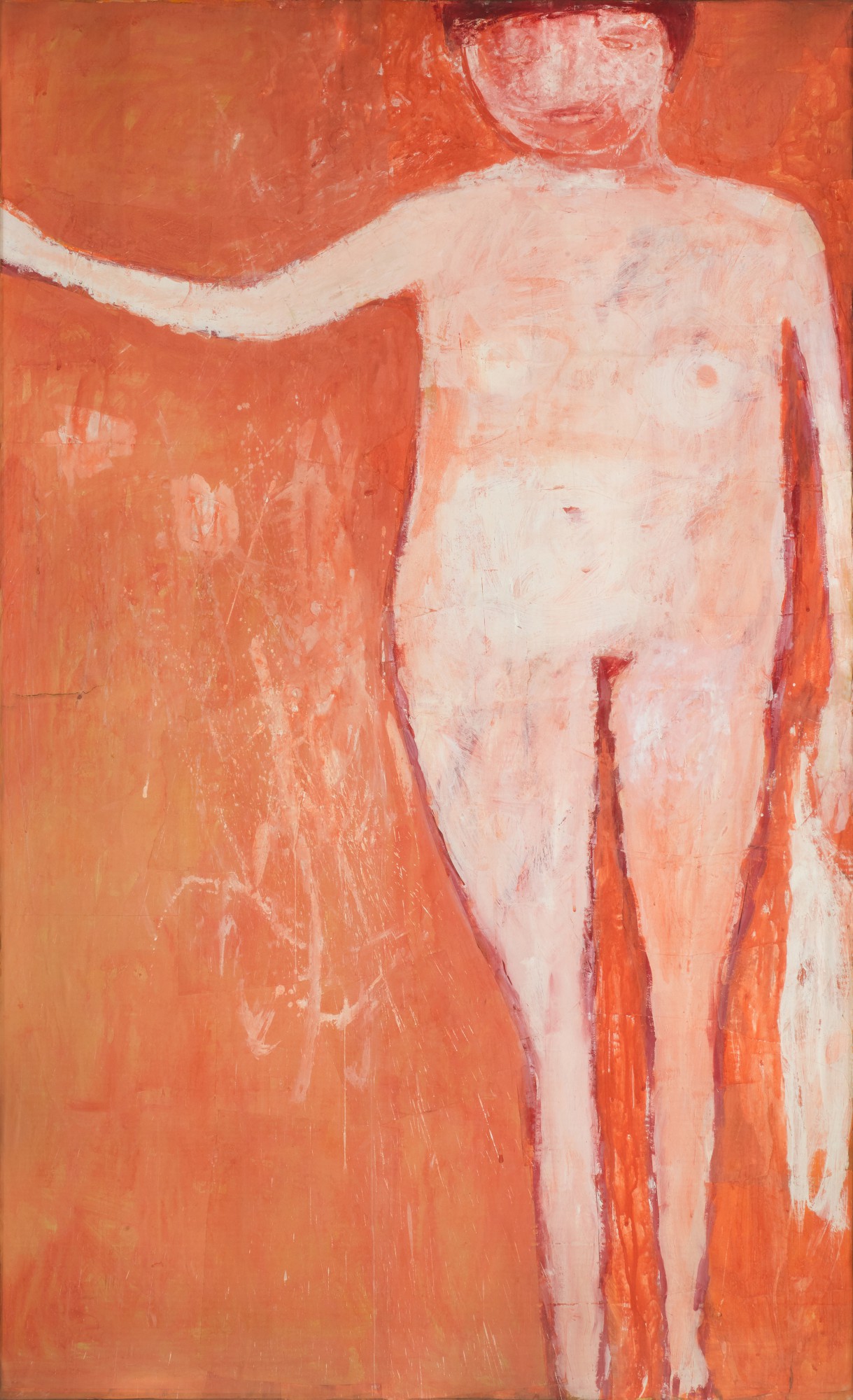
Standing Figure, 1957
The pivotal turn in Scott's development came with a visit to New York in 1953, where he met Mark Rothko, Franz Kline, and Jackson Pollock. The encounter with American Abstract Expressionism at its height was both exhilarating and clarifying. Rather than abandoning figuration, Scott used the encounter to strip his own vocabulary down even further. The kitchen objects that had always populated his canvases, pots, pans, eggs, bowls, and jugs, became increasingly abstract presences, their forms simplified to arcs and rectangles that rhymed with pure painting while retaining a faint warmth of recognition.
This negotiation between the legible and the abstract became his defining achievement and the quality that separates him from both the pure abstractionists and the conventional still life painters of his era. Scott's signature works from the 1950s and 1960s represent the fullest expression of this balancing act. A painting like Brown Composition from 1959 presents forms so reduced they seem to be dissolving back into the canvas ground, yet the residual memory of a kitchen table persists, lending the picture an intimacy that pure abstraction rarely achieves. His palette of warm browns, ochres, muted oranges, and chalky whites is wholly distinctive, almost edible in its richness, and immediately identifiable.
William Scott
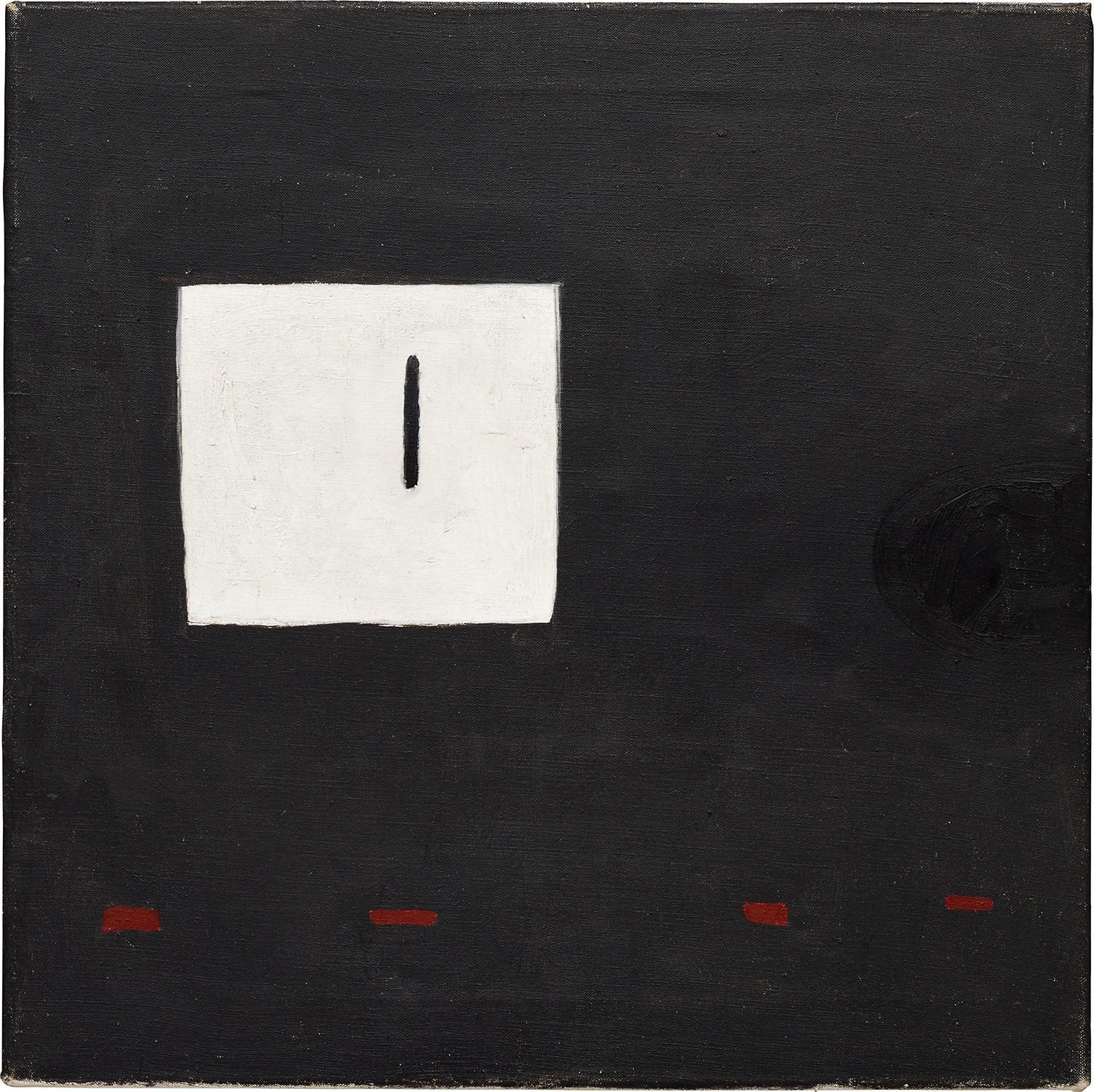
White Square on Black Ground, 1980
The prints and works on paper are equally important to understanding his practice. The screenprints, including the exquisite Cup, Bowl, Pan, Browns and Ochres, demonstrate how his compositional thinking translated across media, with the simplified forms gaining a new graphic directness on paper. His draughtsmanship, visible in works like the 1953 charcoal Seated Girl, reveals the figurative foundation beneath even his most abstract canvases. For collectors, Scott represents one of the genuinely rewarding opportunities in the postwar British market.
His work appears regularly at auction at Sotheby's, Christie's, and Bonhams, where significant oil paintings have achieved prices in the hundreds of thousands of pounds, while works on paper, prints, and gouaches offer accessible entry points into a distinguished body of work. Collectors are drawn to the warmth and psychological comfort of his imagery alongside the intellectual seriousness of his formal decisions. The works on paper in particular, studies, gouaches, and the elegant print editions, allow new collectors to live with Scott's language before stepping into the primary market for his oils. The tapestry works, such as the Still Life with Orange Notes, add yet another dimension to a practice that was never confined to a single medium.
William Scott
Brown Still Life, 1952
Scott's place in art history becomes richer when understood in relation to his contemporaries. He shares with Giorgio Morandi a devotion to the humble object as a vehicle for metaphysical enquiry, though Scott's surfaces are warmer and less austere than the Italian master's. Among his British peers, he is most naturally grouped with Peter Lanyon, Roger Hilton, and Patrick Heron, artists who similarly sought a middle path between the figuration of the School of London and the pure abstraction coming from New York. He exhibited widely with the Hanover Gallery in London and maintained strong ties with the international art world throughout his career, showing in Venice, New York, and across Europe.
His work entered major public collections on both sides of the Atlantic during his lifetime, a testament to how widely his particular achievement was recognised. The legacy of William Scott feels particularly alive at this moment, when the art world is reassessing the contributions of artists who worked outside the dominant narrative centres of their era. Scott was neither a Londoner nor a New Yorker. He came from a small town on the border of Northern Ireland, and he made work that was rooted in the most ordinary domestic experience.
That he transformed those pots and pans into something approaching the universal is the measure of his greatness. His paintings ask nothing more of the viewer than attention, and they repay it with a quiet, accumulating emotion that is entirely his own. To collect William Scott is to bring into your home a sensibility that is generous, rigorous, and deeply human, a painter who believed that a single curved line, placed with care, could hold everything that matters.
Explore books about William Scott
William Scott: A Retrospective
Mel Gooding
William Scott: Paintings, Drawings and Gouaches
Norbert Lynton
William Scott: The Still Life Paintings
Andrew Causey
William Scott: Drawings 1928-1986
Roger Hilton
Scott's Vision: Art and Abstraction
David Alan Mellor