William Morris
William Morris: Nature, Time, and Beauty
Artist Spotlight · The Collection Editorial
“I want the work to feel as if it has always existed, as if it were found rather than made.”
William Morris
There is a particular kind of looking that William Morris demands of those who encounter his work. It is slow, careful, and full of wonder, the kind of looking one might give to an object unearthed from a dig site or pulled from the depths of a natural history museum's storage vaults. In the permanent collections of the Metropolitan Museum of Art and dozens of other institutions worldwide, his blown glass vessels and suspended sculptural installations continue to stop visitors in their tracks, inspiring a reverence that bridges the ancient and the contemporary. That enduring capacity to make the present feel archaeological, to make glass feel like bone or amber or carved ivory, is what places Morris among the most significant figures in the history of American studio glass.
William Morris
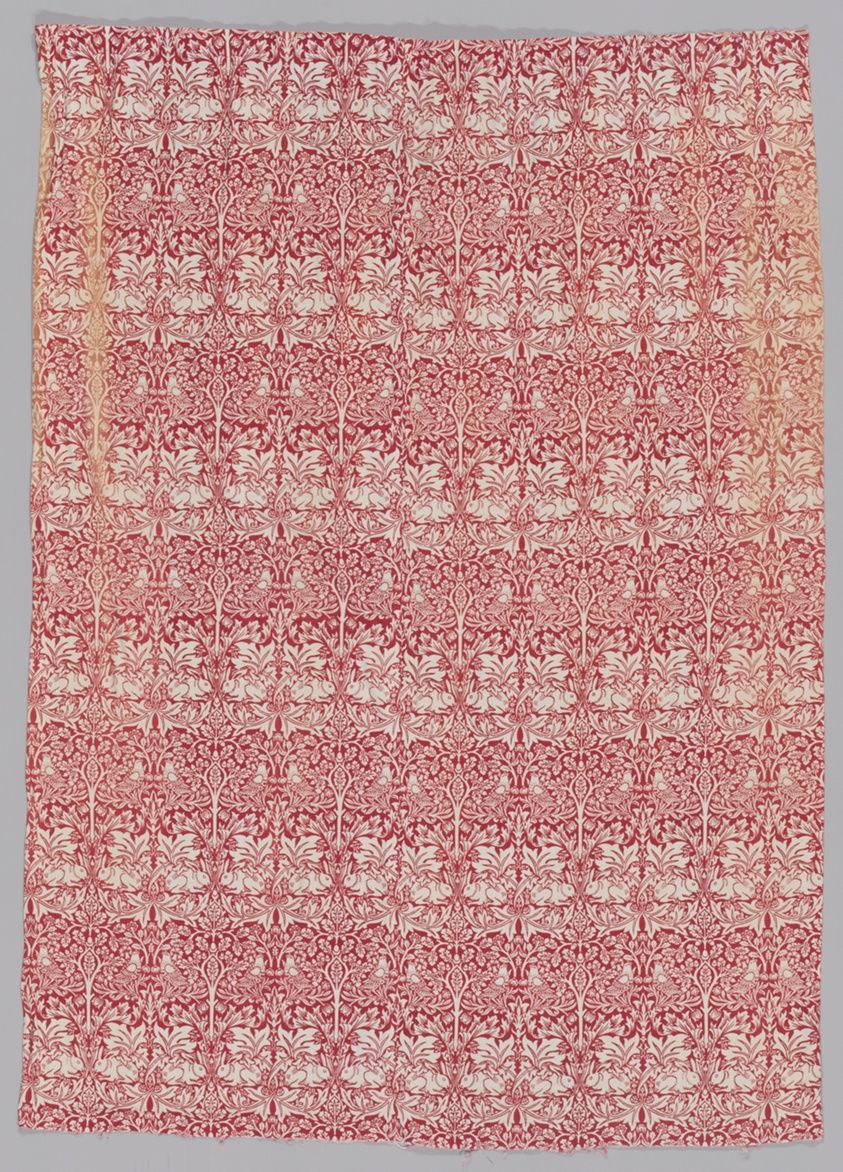
Brer Rabbit (or Brother Rabbit), 1881
William Morris was born in 1957 in Carmel, California, and grew up with a deep attunement to the natural world that would prove foundational to every aspect of his mature practice. He studied at the California College of Arts and Crafts and later at Central Washington University, where he encountered the Pilchuck Glass School in Stanwood, Washington. Pilchuck, founded in 1971 by Dale Chihuly and patrons John and Anne Gould Hauberg, was at that moment becoming the crucible of the American studio glass movement, and Morris arrived there as a young artist hungry for both technical mastery and artistic direction. What he found was a community, a set of tools, and a collaborator who would shape the first chapter of his career in profound ways.
Morris worked closely with Dale Chihuly throughout the late 1970s and into the 1980s, serving as his gaffer and primary collaborator during a period when Chihuly was producing some of his most celebrated series. The relationship gave Morris an extraordinary education in the physical demands and expressive possibilities of hot glass, a medium that requires split second decisions and total physical commitment. Yet even within that collaboration, Morris was developing a vision that was distinctly his own, one oriented not toward the lush and proliferating organic forms that defined Chihuly's signature aesthetic but toward something older, quieter, and more mysterious. By the mid 1980s, Morris had established his own independent studio practice, and the work that followed announced him immediately as a force in his own right.
William Morris
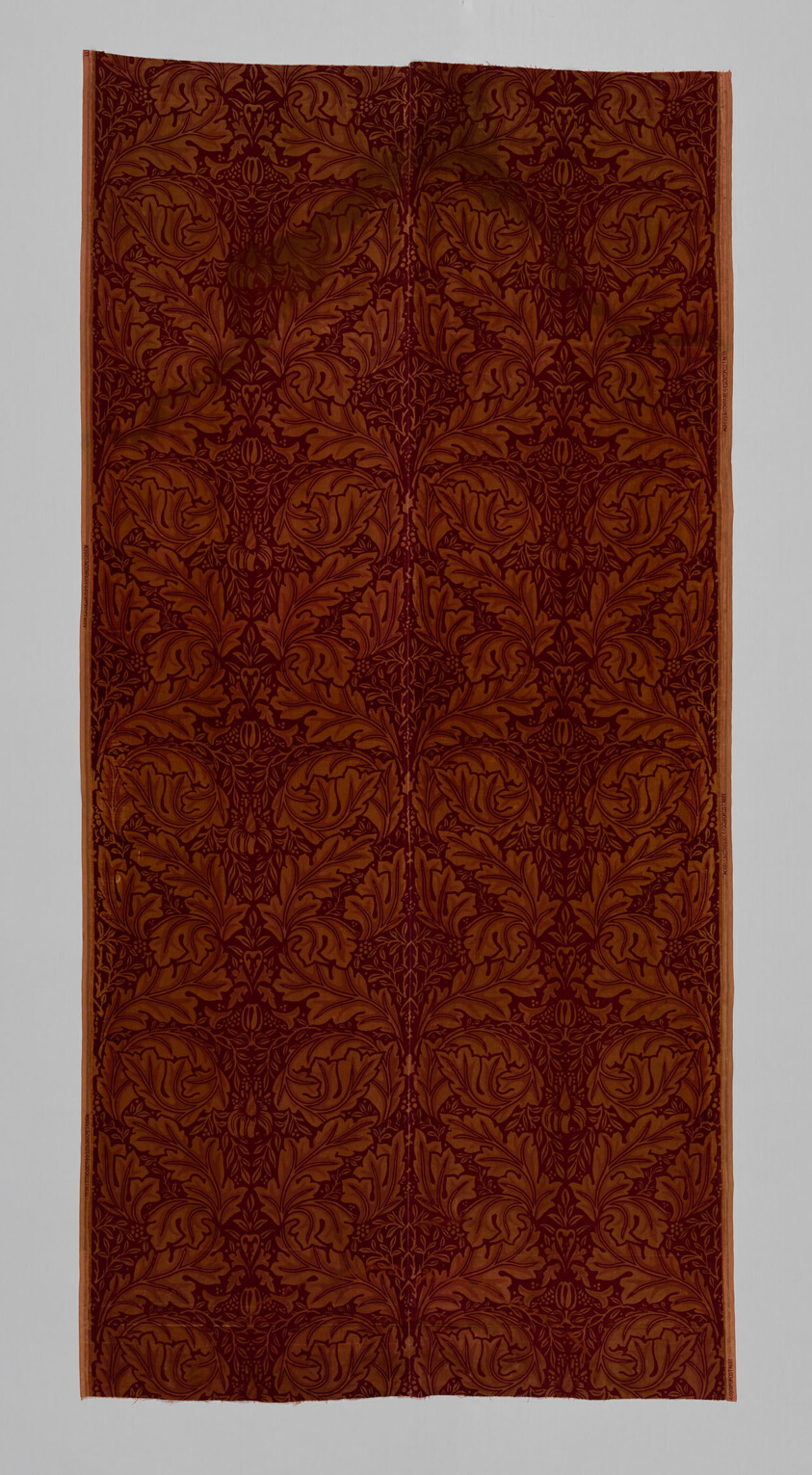
Acanthus, 1876
The body of work Morris has built over four decades is remarkable for its conceptual consistency and its technical ambition. His vessels, created through a process of blown and sculpted glass, evoke prehistoric ceramic forms, indigenous artifacts from cultures across the Americas and Central Asia, and the skeletal or fossilized remains of creatures from deep time. Works from his Artifact series present objects that appear to have survived centuries of burial, their surfaces etched and patinated with extraordinary skill. His suspended installations, in which life sized animal forms hang in apparent motion above the viewer, draw on traditions of natural history display while transforming them into something poetic and elegiac.
A suspended elk or salmon rendered in glass occupies a strange temporal zone, simultaneously specimen and spirit. Among the most celebrated bodies of work in his career are the Suspended Artifact installations, shown to significant critical attention at venues including the Renwick Gallery of the Smithsonian American Art Museum in Washington, D.C., and the Yellowstone Art Museum.
William Morris
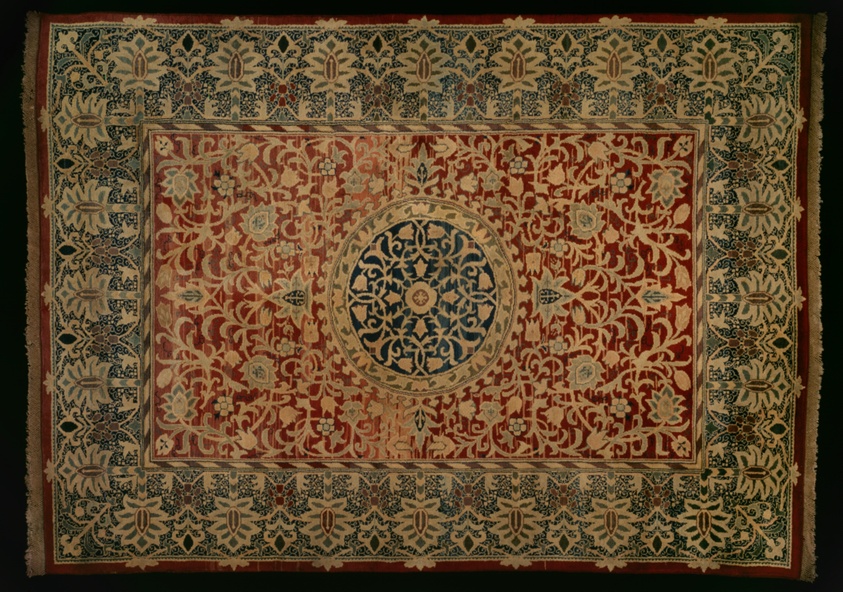
"Swan House" Carpet, 1883
These installations demonstrated that Morris was not simply a maker of beautiful objects but a sculptor thinking at architectural scale, capable of transforming a gallery into an immersive environment charged with narrative and feeling. His Man Adorned series, which presented glass figures ornamented with elaborate surface treatments referencing body adornment traditions from indigenous cultures worldwide, brought further recognition and deepened his engagement with questions of ritual, identity, and the human relationship to the natural world. Throughout all of these bodies of work, the technical virtuosity never overwhelms the content. Morris's glass always feels like it means something beyond itself.
For collectors, the appeal of Morris's work operates on several levels simultaneously. On the purely visual level, the objects are stunning, capable of holding their own against any work on paper, canvas, or in bronze. On the art historical level, they situate themselves within a lineage that includes not only the studio glass movement but also the traditions of ancient glassmaking from Rome, Persia, and Mesoamerica that Morris so deeply admires and references. Collectors who have built holdings in his work include major private collections in the United States and Europe, and his pieces appear regularly at auction through houses including Sotheby's and Christie's, where they perform with consistency.
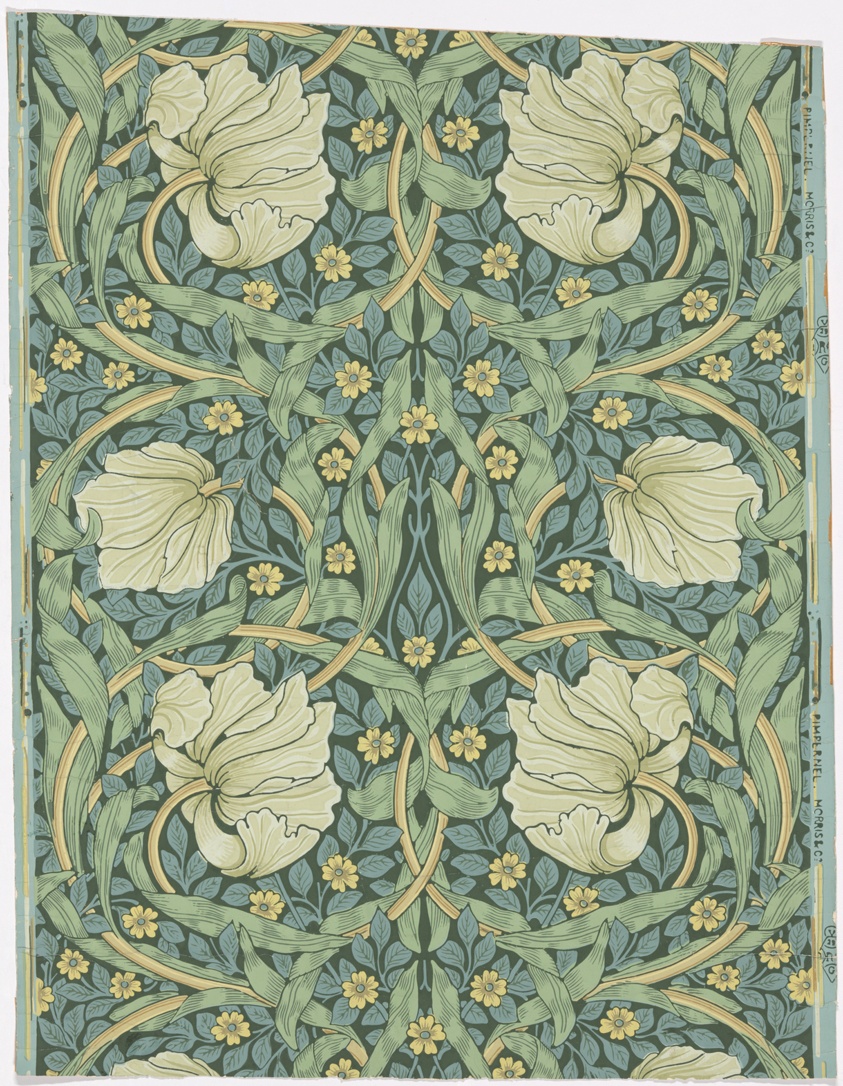
William Morris
Pimpernel, 1876
When evaluating a Morris work, collectors and advisors typically look to the series it belongs to, the scale and complexity of the piece, and its provenance, with works from the Artifact and Suspended Artifact series commanding particular attention. Within the broader context of American studio glass, Morris occupies a position of singular distinction. His peers and contemporaries include artists such as Dante Marioni, whose work similarly engages with vessel traditions from antiquity, and Lino Tagliapietra, the Venetian maestro whose influence on the Pilchuck community was transformative. Yet Morris's conceptual framework sets him apart from artists whose primary concern is formal beauty or technical innovation for its own sake.
He is an artist with something specific to say about time, about extinction, about the fragility of culture and species alike, and glass turns out to be the perfect medium for saying it. Nothing communicates fragility and permanence simultaneously quite like glass that has been made to look like bone. The legacy of William Morris is already assured by his presence in collections including the Metropolitan Museum of Art, the Corning Museum of Glass, the Los Angeles County Museum of Art, and the Victoria and Albert Museum in London, among many others. But his ongoing relevance feels particularly acute in a cultural moment preoccupied with ecological loss, with the disappearance of species and the erosion of indigenous knowledge systems.
His work has always been about those things, addressed through beauty rather than polemic, through wonder rather than argument. To collect Morris is to bring into one's home or institution a meditation on what survives and what does not, rendered in one of the most demanding and ancient of human crafts. That is a rare and genuinely moving proposition.
Explore books about William Morris

William Morris: His Life, Work, and Friends
Aymer Vallance
William Morris: A Life
Peter Stansky
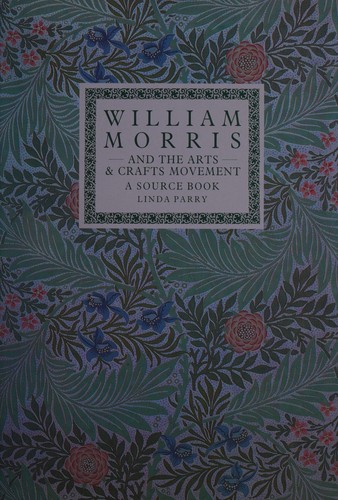
William Morris and the Arts and Crafts Movement
Linda Parry

The Work of William Morris
Gleeson White
William Morris: Design and Enterprise in Victorian Britain
Lionel Lambourne

William Morris Today
Leslie Pinder
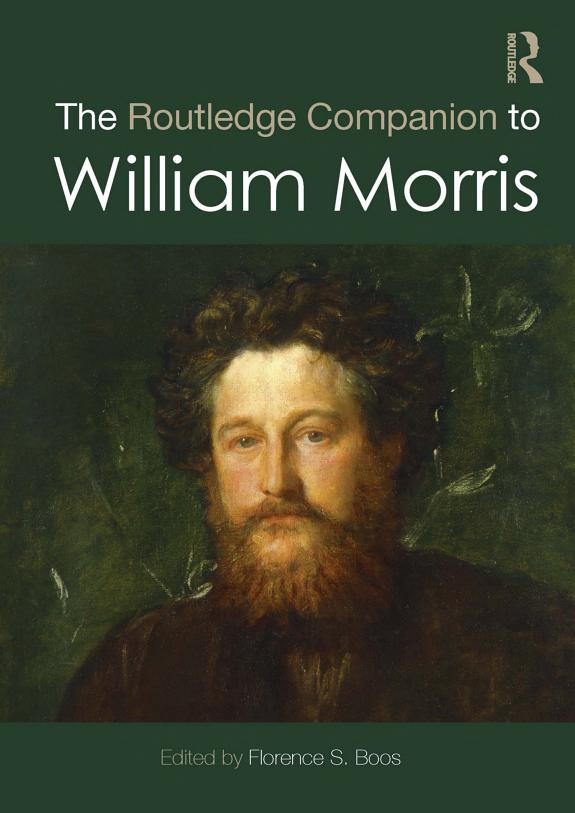
The Earthly Paradise: William Morris and the Utopian Vision
Florence S. Boos
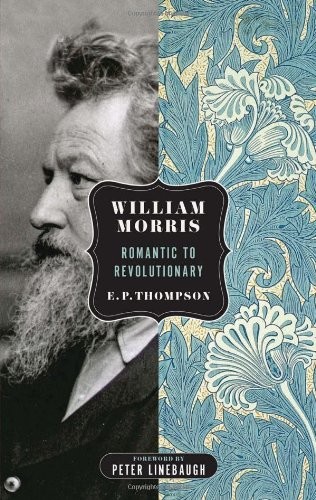
William Morris: Romantic to Revolutionary
E. P. Thompson