William Henry Fox Talbot
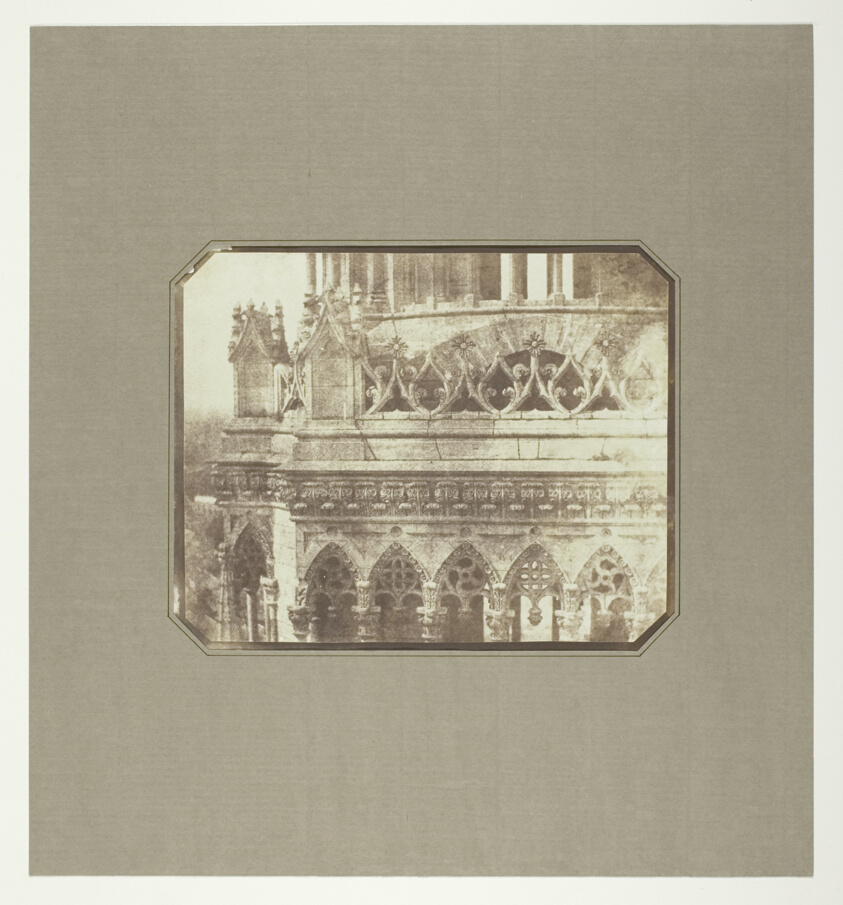
The Man Who Taught Light to Write
Artist Spotlight · The Collection Editorial
“The most transitory of things, a shadow, the proverbial emblem of all that is fleeting and momentary, may be fettered by our new art.”
The Pencil of Nature, 1844
There is a moment, quiet and almost domestic, that sits at the origin of modern visual culture. It is 1835, and William Henry Fox Talbot is standing inside Lacock Abbey, his ancestral home in Wiltshire, watching light fall through a latticed window onto a sheet of sensitised paper. What emerged from that paper was not simply an image. It was the first whisper of a language that would come to define how humanity sees itself.
William Henry Fox Talbot
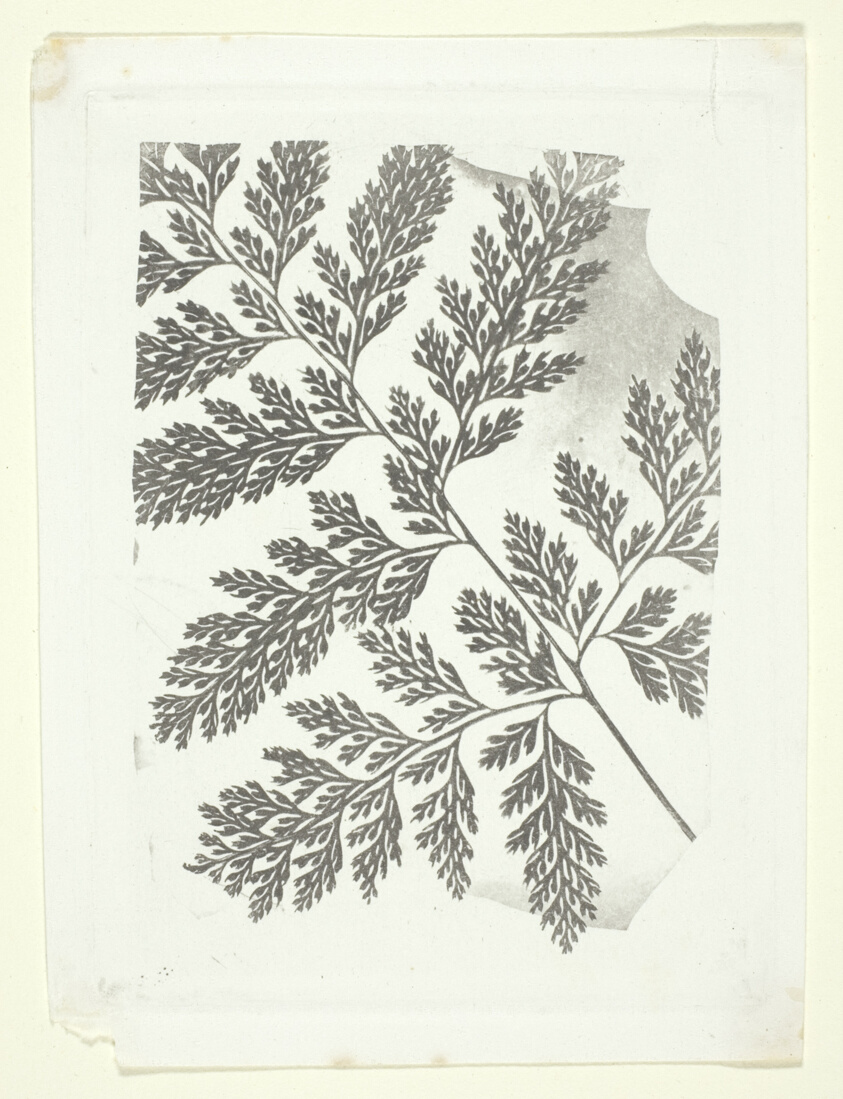
Branch of a Fern, 1853
Nearly two centuries later, Talbot's salted paper prints and calotypes occupy the most prestigious collections and institutions in the world, and the conversation around his genius has never felt more alive. Talbot was born in 1800 into a family of considerable intellectual and social standing. His father died when he was just five months old, and he was raised largely by his mother, Lady Elisabeth Fox Strangways, a woman of formidable curiosity and cultural ambition. Educated at Harrow and then Trinity College, Cambridge, where he graduated with distinction in mathematics, Talbot became a polymath of the first order.
He was a Fellow of the Royal Society, a linguist who made contributions to the decipherment of Assyrian cuneiform, and a mathematician who corresponded with the leading scientific minds of his age. This breadth of intellect was not incidental to his photographic work. It was its very foundation. The immediate spark for his photographic experiments is often traced to a visit to Lake Como in 1833, where Talbot, frustrated by his inability to draw the landscapes before him using a camera lucida, resolved to find a way to fix the images that light itself was projecting onto paper.
William Henry Fox Talbot
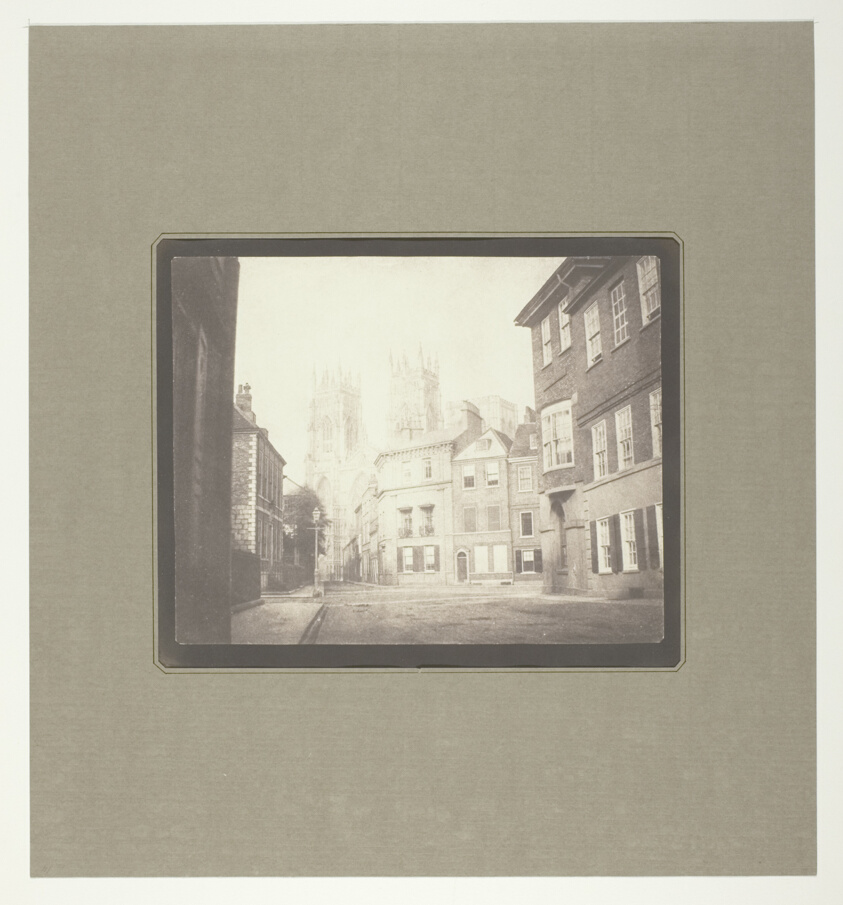
"A Scene in York" - York Minster from Lop Lane, 1845
By 1834 he had begun coating paper with silver chloride and exposing it to sunlight, producing what he called photogenic drawings. These were contact prints, often of leaves, lace, and botanical specimens, objects laid directly onto the sensitised surface. When he learned in January 1839 that Louis Daguerre had announced a competing process in Paris, Talbot moved quickly to present his own work to the Royal Institution, determined to establish the primacy of his discovery. What distinguished Talbot's contribution above all others was the invention of the calotype process, patented in 1841.
“It is a little bit of magic realised, of natural magic. You make the powers of nature work for you, and no wonder that your work is well done.”
William Henry Fox Talbot, correspondence
Unlike the daguerreotype, which produced a single, unrepeatable silver image on a copper plate, the calotype generated a paper negative from which any number of positive prints could be made. This negative to positive logic is the conceptual engine that powered photography for well over a century. Talbot did not merely invent a technique. He invented the architecture of photographic reproduction itself.
William Henry Fox Talbot
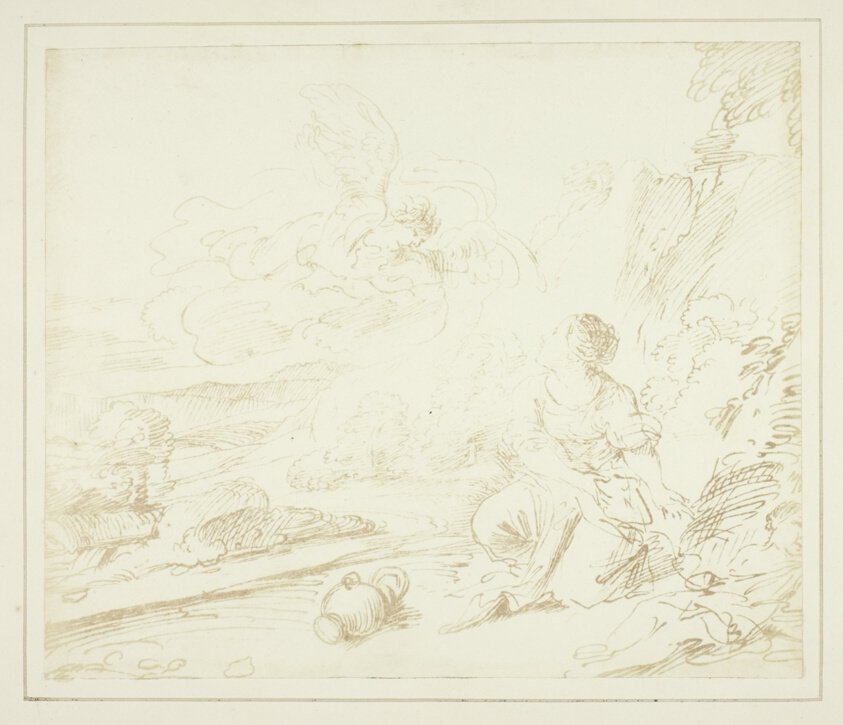
Hagar in the Desert, 1840
The calotype negative of the Base of Radcliffe Library in Oxford, dating to 1842, is a luminous example of the process at its most refined, capturing the stone geometry of the building with a softness and tonal depth that later practitioners would spend decades trying to emulate. Talbot's landmark publication, The Pencil of Nature, issued in fascicles between 1844 and 1846 by Longman, Brown, Green and Longmans in London, remains one of the most significant books in the history of art and science. It was the first commercially published book to be illustrated with actual photographic prints, each one tipped in by hand. The images ranged from architectural studies to still lifes of china, from reproductions of old master prints to views of his own bookshelves.
Works such as Articles of China, dated to 1843, and The Soliloquy of the Broom, also 1843, display a compositional intelligence that was entirely new. Talbot understood, perhaps better than anyone of his generation, that photography was not simply a recording device but a means of arranging the world into meaning. His studies of lace, with their extraordinary delicacy, demonstrated that the medium could render texture and pattern with an intimacy that no engraving could match. For collectors, Talbot's work presents one of the most compelling opportunities in the entire history of the photographic medium.
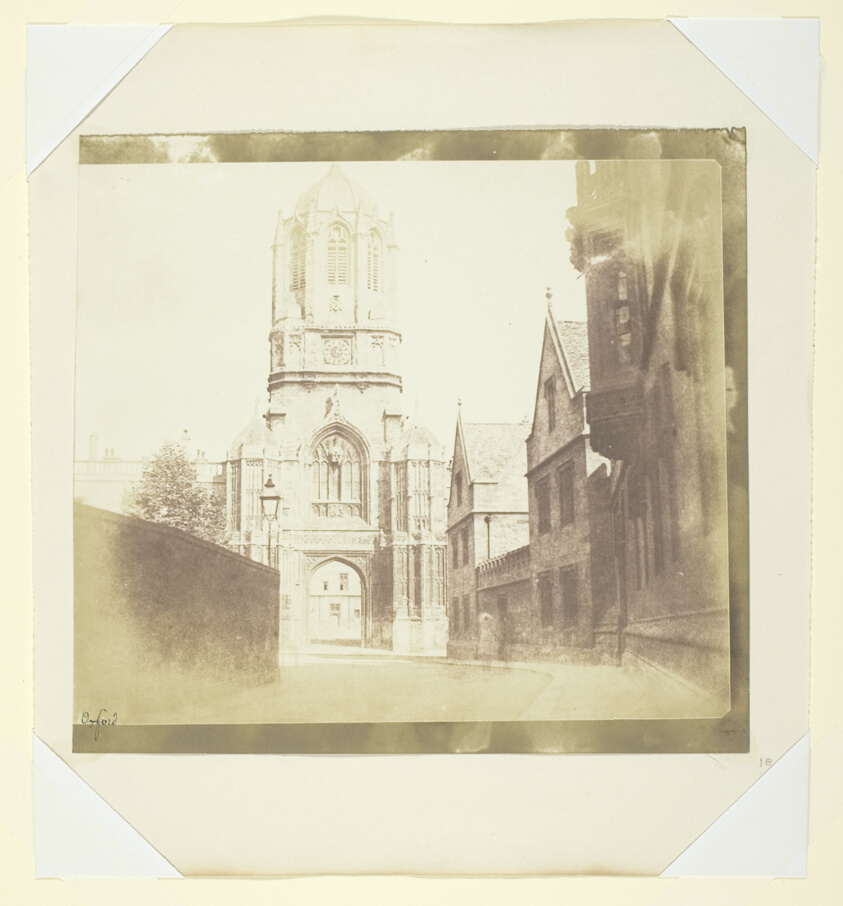
William Henry Fox Talbot
Gate of Christchurch, Oxford, 1844
Original salted paper prints and calotypes from the 1840s are held in the collections of the Victoria and Albert Museum, the Metropolitan Museum of Art in New York, the National Science and Media Museum in Bradford, and the Harry Ransom Center in Austin, among others. When examples do appear at auction, they command serious attention. Christie's and Sotheby's have both handled significant Talbot material over the years, with institutional and private buyers competing fiercely for prints with strong provenance, particularly those with documented connections to The Pencil of Nature or to Lacock Abbey itself. Condition, as with all works on paper of this period, is paramount, and the presence of original mounts or handwritten annotations adds materially to scholarly and market value.
The annotated works in The Collection, including pieces bearing handwritten inscriptions such as LA35 and LA20 on their verso, carry exactly this kind of documentary richness that serious collectors prize. To understand Talbot fully, it helps to place him within the extraordinary company of his moment. His near contemporary David Octavius Hill, working in Edinburgh with Robert Adamson from 1843 onwards, used Talbot's own calotype process to produce portraits of astonishing psychological depth. Roger Fenton, who would go on to document the Crimean War in the 1850s, was directly indebted to the negative to positive logic that Talbot had established.
On the continent, Gustave Le Gray pushed the salted paper print to its most poetic extremes in the 1850s, producing seascapes of breathtaking luminosity. All of these figures worked in the long shadow of Talbot's foundational thinking, even as they extended and transformed it. Talbot's later work, including his development of photoglyphic engraving in the 1850s and 1860s, a process for etching photographic images onto steel plates for printing, demonstrated that his inventive energy never diminished. The untitled photoglyphic engraving employing resin ground, dated to 1864 and held in The Collection, is a fascinating document of this later phase, connecting photography to the long tradition of printmaking and anticipating the photomechanical reproduction processes that would transform publishing in the decades that followed.
He died in 1877 at Lacock Abbey, the same house where so many of his most iconic images had been made. What makes Talbot matter today is not simply historical precedent, though the precedent is vast. It is the quality of his seeing. His photographs of the cloisters at Lacock Abbey, of Oxford's ancient gates and library facades, of humble domestic objects arranged with quiet dignity, carry an emotional weight that speaks across the distance of time.
He looked at the world with a scientist's precision and an artist's tenderness, and he found a way to preserve that double vision in light and silver. To collect Talbot is to hold in your hands the very beginning of something that still surrounds us everywhere we look.
Featured Works
Explore books about William Henry Fox Talbot
William Henry Fox Talbot: Father of Photography
H.J.P. Arnold
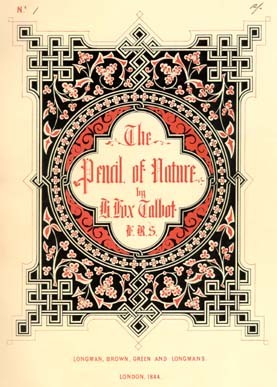
The Pencil of Nature
William Henry Fox Talbot
Sun Pictures: The Hill Adamson Albums
Sara Stevenson

William Henry Fox Talbot: A Photographic Pioneer
Gail Buckland

The Correspondence of William Henry Fox Talbot
Larry J. Schaaf (editor)
William Henry Fox Talbot and the Birth of Modern Photography
Mike Weaver
The Last of the Sun Pictures
Rodney Steel