William Anastasi
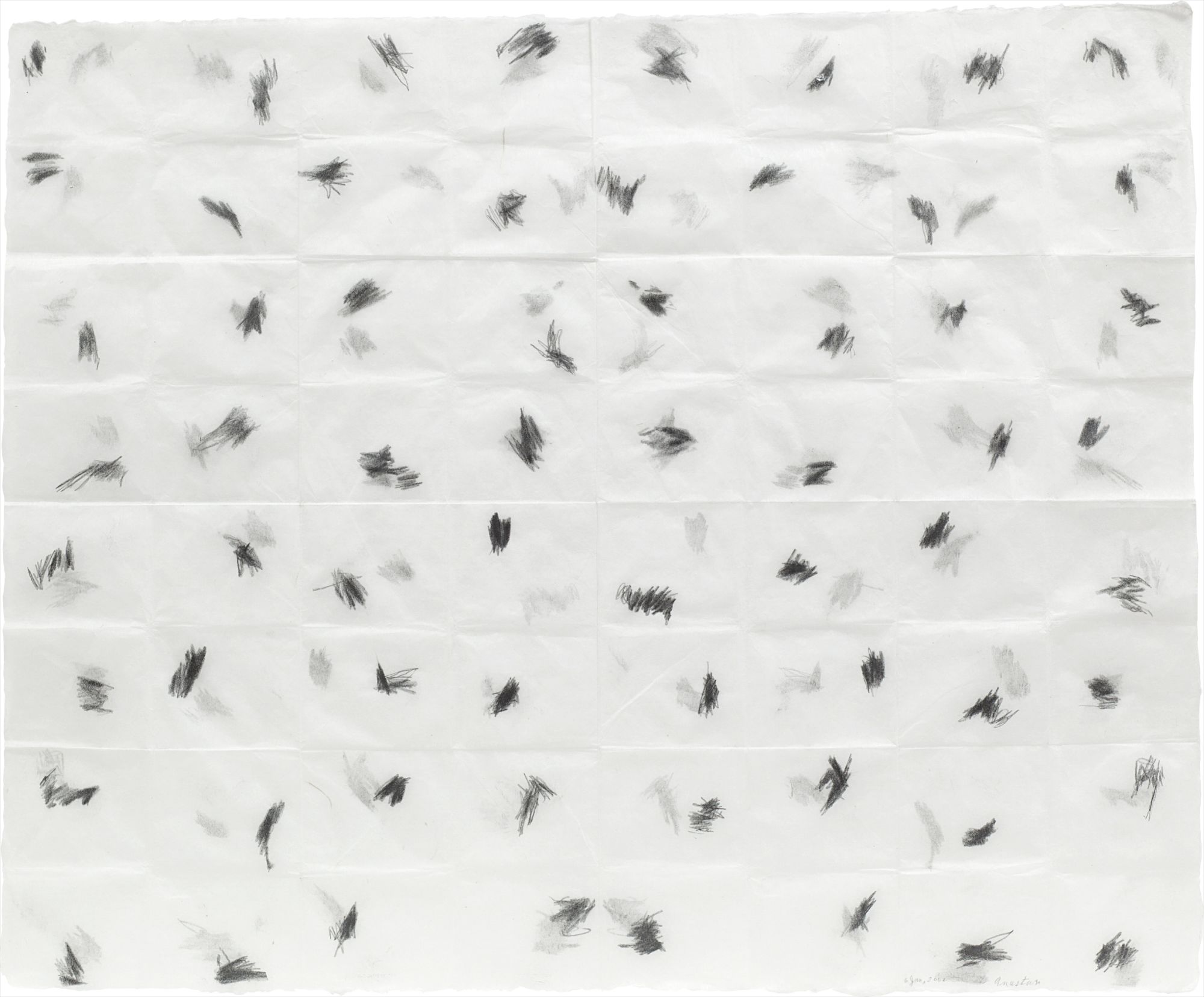
William Anastasi, Drawing the World Blind
Artist Spotlight · The Collection Editorial
There is a particular kind of artist who works not despite uncertainty but because of it, who makes the limits of perception into the very engine of creation. William Anastasi is that artist. Though he has never courted the spotlight with the aggression of some of his peers, his influence runs quietly and deeply through the history of American Conceptual and Minimalist art, and institutions including the Museum of Modern Art and the Solomon R. Guggenheim Museum have long recognized that his contributions belong in permanent collections.
William Anastasi
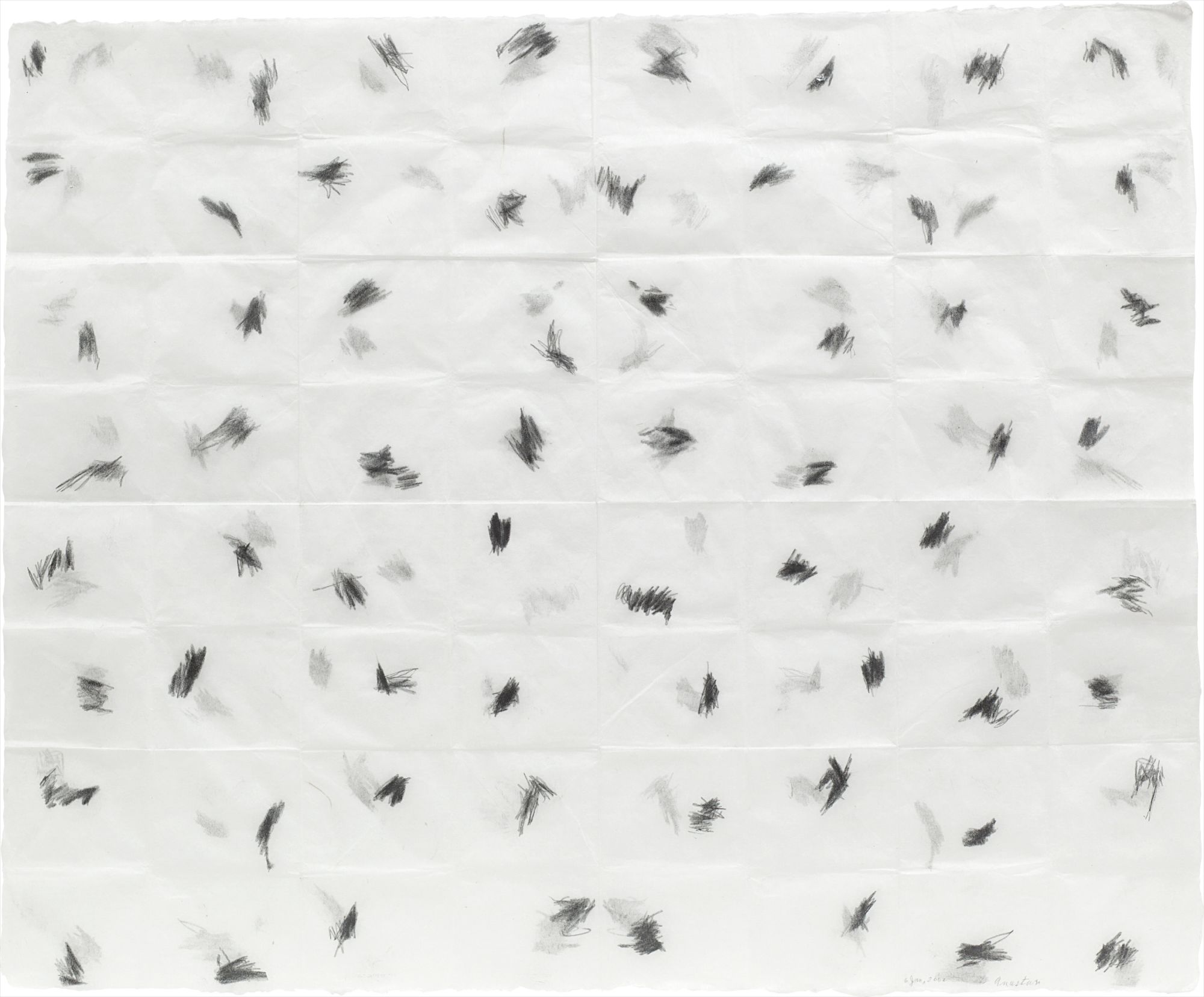
Pocket Drawing
In recent years, a growing community of discerning collectors has begun to rediscover his work with fresh urgency, drawn to its philosophical rigor and its surprising physical beauty. Anastasi was born in Philadelphia in 1933, and his formation as an artist took place against the charged backdrop of postwar American culture. He came of age intellectually during a moment when the New York art world was renegotiating every assumption about what art could be and what it was for. He was drawn early on to questions that were less about style than about epistemology, less about how a painting looked and more about what it meant to look at all.
This orientation would prove prescient. While many of his contemporaries were consumed by gesture and expression, Anastasi was already moving toward a practice grounded in systems, chance, and the honest acknowledgment of what we cannot fully control. The development of his mature practice in the 1960s placed him at the intersection of several of the decade's most generative conversations. He became closely associated with the composer and philosopher John Cage, a friendship that was not incidental but foundational to his thinking about indeterminacy and the role of the artist as someone who sets conditions rather than dictates outcomes.
William Anastasi
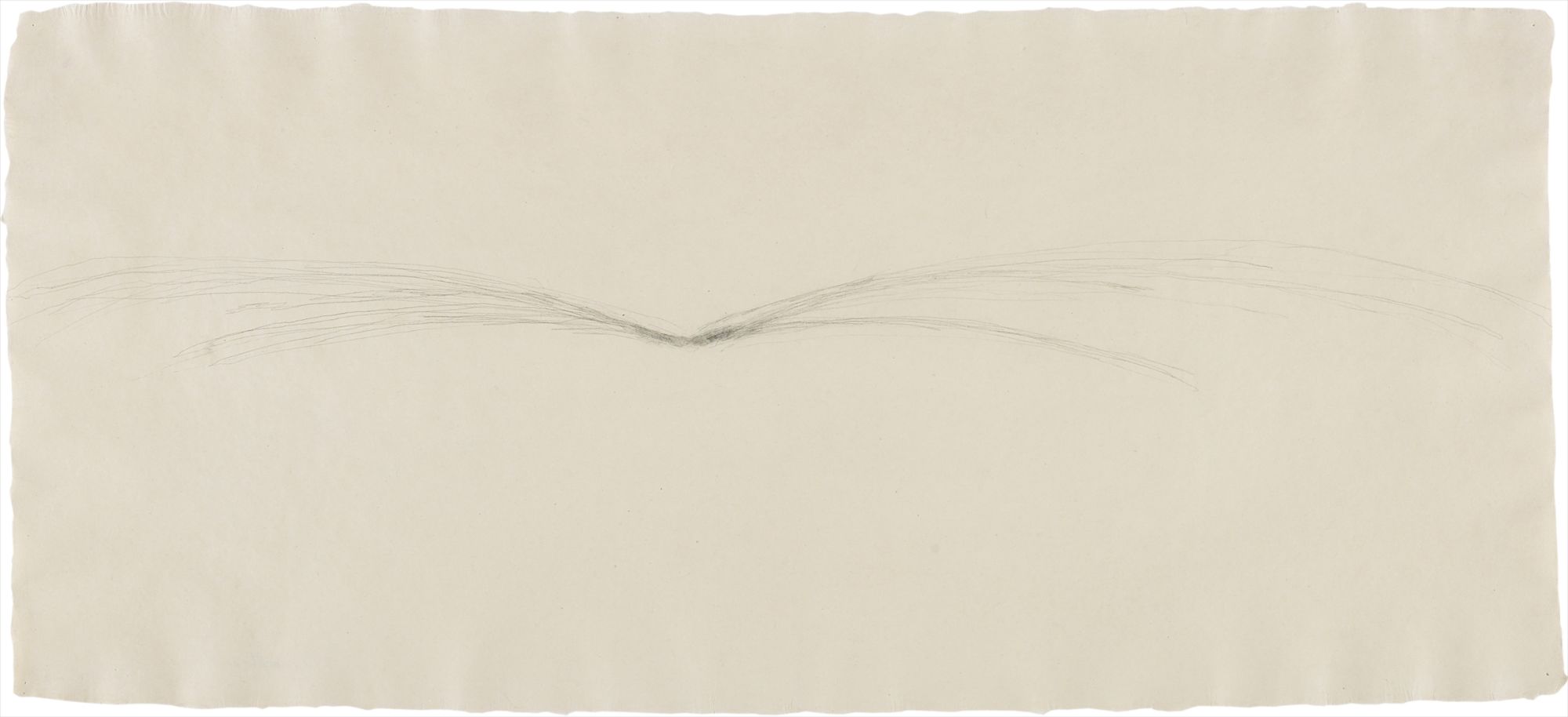
Blind Drawing
Cage's influence reinforced what Anastasi already suspected: that the most interesting art might emerge from removing the artist's conscious will from the process, or at least from putting that will in productive tension with forces it cannot govern. This was a radical proposition, and Anastasi pursued it with both intellectual conviction and a craftsman's care. The Subway Drawings are the works through which many collectors first encounter Anastasi, and they remain among the most quietly astonishing objects in American art of the late twentieth century. The concept is elegantly simple and deceptively demanding.
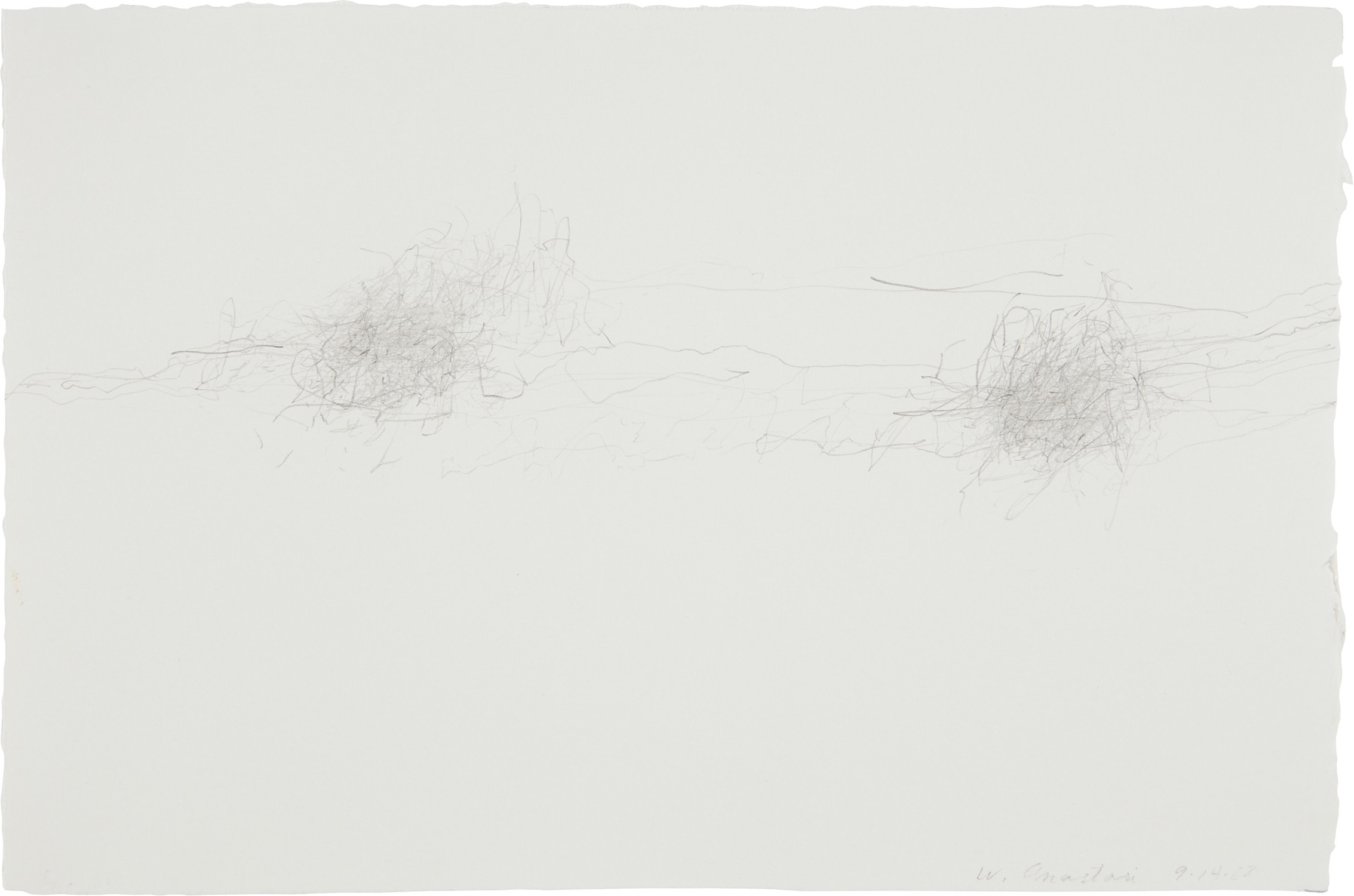
Anastasi would board the New York City subway holding paper against his thigh, pencil in hand, and draw without looking, allowing the motion of the train, the lurches and rhythms of the underground system, to guide his hand across the surface. The resulting marks are neither random nor controlled in any conventional sense. They are instead a kind of collaboration between the artist's body, the city's infrastructure, and pure physical chance. Works such as Subway Drawing Number 11 to 29 and others in this series carry an unmistakable energy, a trembling, searching quality that no amount of deliberate draftsmanship could replicate.
William Anastasi
graphite on paper, 1968
They are drawings that know something the hand alone does not. Alongside the Subway Drawings, Anastasi developed what he called Blind Drawings, works made with eyes closed or averted, including examples executed in pencil on Chinese silk paper. These pieces extend the same investigation of unseeing into a more intimate register. The silk paper used in some of these works absorbs the graphite in ways that amplify the delicacy of the process, transforming an act of deliberate not looking into something luminous and precise.
His Pocket Drawings, made by placing paper and pencil in a coat pocket and drawing while walking or conversing, extend this logic further still. Each series reframes the act of drawing as something that happens to the artist as much as through the artist, and this reframing gives the work its philosophical distinctiveness and its lasting relevance. For collectors, Anastasi's work presents a genuinely rare combination of intellectual depth and visual accessibility. The works on paper, including graphite on paper pieces from the 1960s and ink on paper works from the 2000s such as his 2006 Untitled, occupy that privileged zone where the conceptual premise and the sensory experience are inseparable.
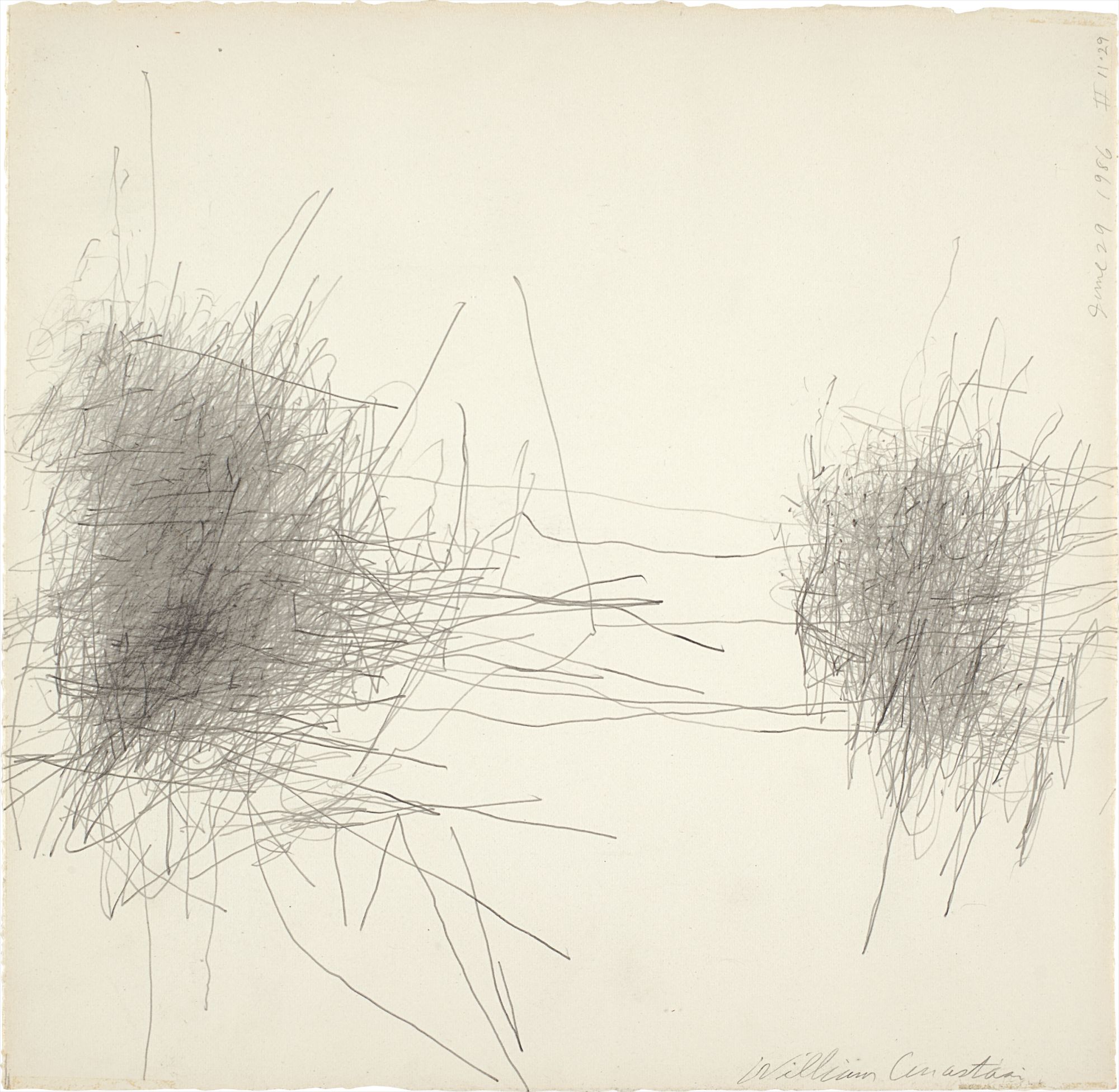
William Anastasi
Subway Drawing (#11-29)
You do not need a lengthy explanation to feel the aliveness of a Subway Drawing, but the explanation, when it comes, only deepens the pleasure. This is the hallmark of work that repays sustained attention. The medium is almost always modest, paper, pencil, ink, silk, linen, but the ambition is vast. Collectors who have built holdings around Minimalism and early Conceptualism will find in Anastasi a figure who bridges those movements with unusual elegance, someone who was thinking through the same problems as Donald Judd or Sol LeWitt but arriving at very different, very personal answers.
Anastasi belongs to a constellation of artists who, working through the 1960s and 1970s, permanently expanded the definition of what a drawing could do and what an artist's role could be. His investigations of perception and process share common ground with the systematic thinking of Sol LeWitt, the phenomenological concerns of Richard Serra, and the chance operations associated with John Cage and Merce Cunningham, with whom he was also closely connected. Yet his work retains a handmade intimacy, a bodily presence, that distinguishes it from the cooler registers of Minimalism. He is, in this sense, a humanist within a tradition that sometimes struggled to accommodate the human.
The Whitney Museum of American Art has exhibited his work, and MoMA and the Guggenheim hold examples in their permanent collections, which speaks clearly to the art historical consensus around his significance. Yet there remains a sense, among those who know his practice well, that Anastasi is still somewhat undervalued relative to peers of comparable importance. This is not uncommon for artists whose commitments were always more philosophical than promotional, but it does create a genuine opportunity. To collect Anastasi now is to participate in a recognition that is already underway, to join a community of engaged collectors who understand that the history of American art in the second half of the twentieth century is not fully legible without him.
His works do not shout, but they persist. They carry their ideas lightly and their beauty unmistakably, and they reward everyone who takes the time to look, or, in Anastasi's spirit, to look away.
Explore books about William Anastasi